Home Care Bed with Bedpan: Features and User Scenarios | Hospital Procurement Guide #4
Home Care Bed with Bedpan: Features and User Scenarios
The landscape of patient care is shifting dramatically from institutional settings to home-based environments. As the global medical nursing bed market grows, valued at approximately USD 4.5 billion in 2024 with a projected CAGR of 8.5% through 2027, the demand for specialized equipment designed for home use is intensifying [K1]. Among the most critical pieces of equipment in this ecosystem is the home care bed with a bedpan. This device is not merely a sleeping surface; it is a comprehensive medical solution designed to maintain hygiene, ensure patient dignity, and reduce the physical burden on caregivers.
For healthcare procurement officers, facility managers, and families navigating the complexities of long-term care, understanding the technical specifications, functional capabilities, and real-world applications of these beds is essential. This article explores the defining features of home care beds with integrated bedpan systems, analyzes their primary user scenarios, and provides a technical comparison to guide informed decision-making.
Core Functional Architecture
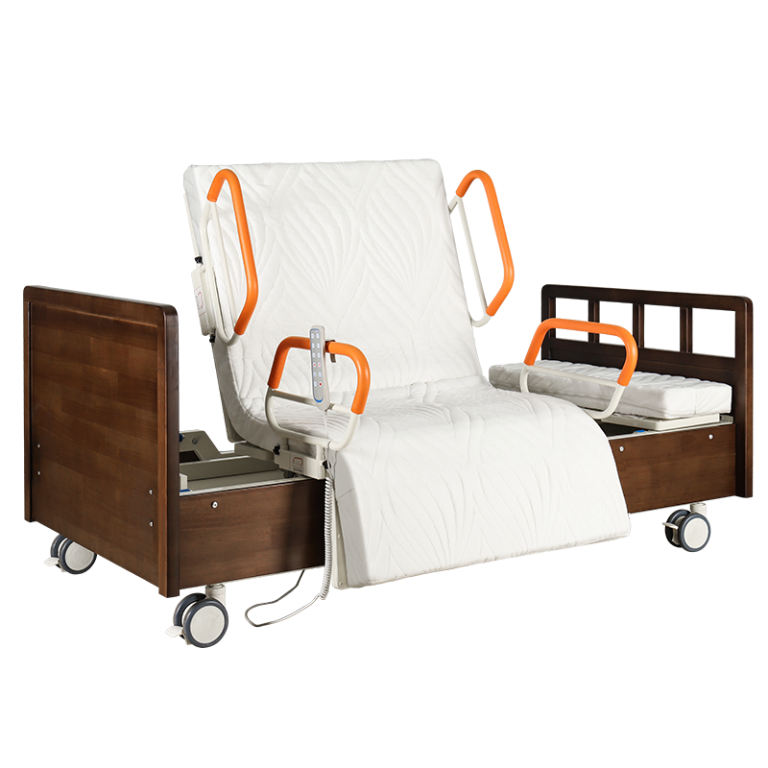
A home care bed with a bedpan is engineered to address the specific challenges of incontinence management and mobility assistance. The integration of a bedpan system—whether manual or automated—serves as a critical component for patients who are bedridden or have limited mobility. The core architecture of these beds typically revolves around three pillars: positioning, hygiene management, and structural safety.
Positioning and Adjustability
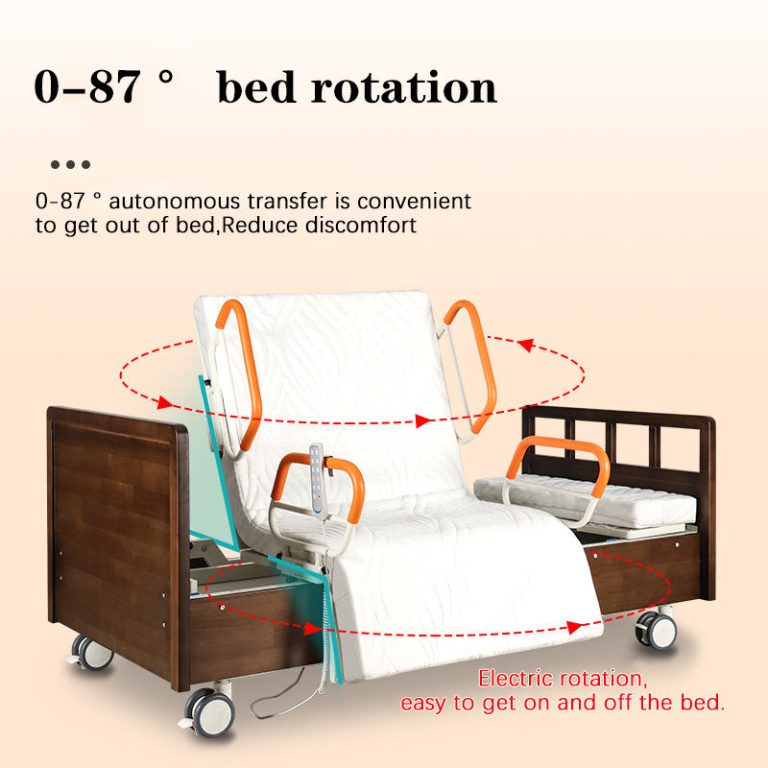
The ability to adjust the bed’s angle is fundamental to patient care. Modern electric nursing beds utilize linear actuators to replace traditional manual cranks, allowing for precise control over the backrest, knee gatch, and overall height [K2]. For a patient requiring a bedpan, the ability to raise the backrest (often up to 75° or 80°) is crucial. This elevation facilitates easier access for caregivers during hygiene procedures and helps prevent aspiration during feeding or medication administration. In clinical contexts, specific positions such as the Trendelenburg position—where the head is tilted lower than the feet by 12-15°—may be required for shock management or venous return, though this is more common in hospital ICU settings than standard home care [K3].
Hygiene and Bedpan Integration
The bedpan component is designed to minimize the need to move the patient. In advanced models, the bedpan is often integrated into the mattress support system or utilizes a slide-out tray mechanism. This design allows caregivers to clean the patient without fully transferring them to a commode or whee
Structural Safety and Load Capacity
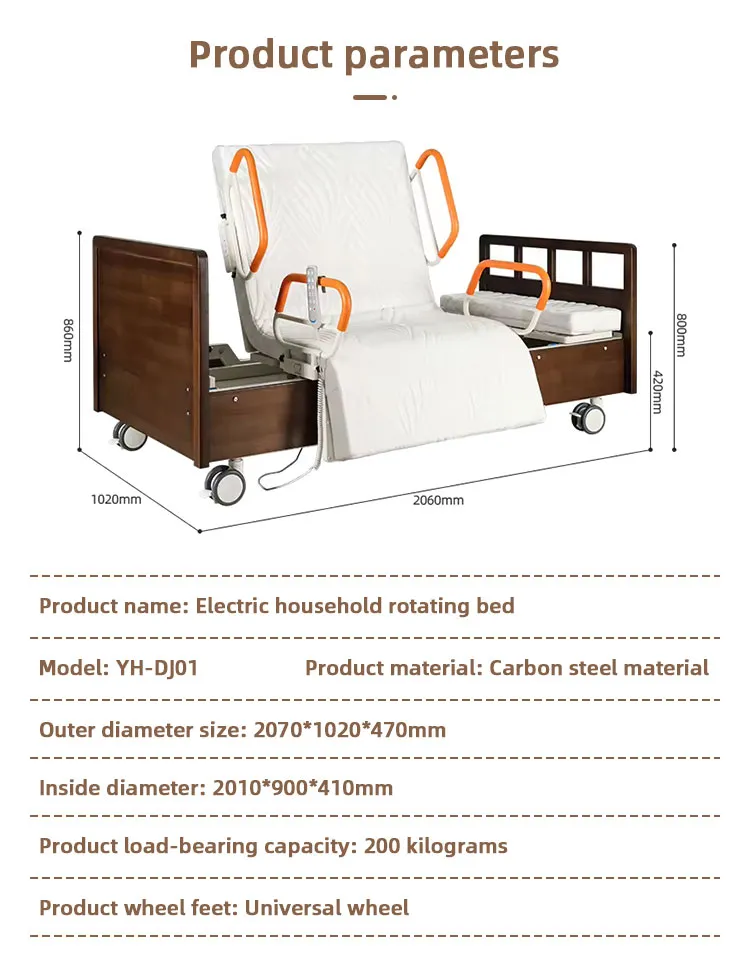
Safety is paramount in home care environments where professional supervision may not be constant. A robust steel frame is standard, with weight capacities typically ranging from 200kg to 250kg to accommodate bariatric patients. Features such as side rails, anti-slip footrests, and lockable castors are essential to prevent accidental movement. Furthermore, the integration of smart anti-fall technology, such as bed exit alarms with AI-powered false positive reduction, represents the cutting edge of safety in this sector [K2].
Electric vs. Manual: A Technical Comparison
When sourcing home care beds, the choice between electric and manual systems is the most significant decision. This choice impacts not only the initial capital expenditure but also the long-term operational efficiency and quality of care.
| Feature | Electric Nursing Bed | Manual Nursing Bed |
|---|---|---|
| Operation Mechanism | Electric linear actuators controlled via remote or panel | Mechanical hand crank/lever system |
| Caregiver Effort | Minimal; reduces labor intensity by 70%+ | High; requires physical force to adjust angles |
| Cost Range | Higher initial investment ($500 – $2000+) | Lower cost ($80 – $150 for basic models) |
| Power Dependency | Requires stable electricity or backup battery | None; fully mechanical |
| Primary Use Case | Hospitals, nursing homes, home care with mobility issues | Developing regions, power-unstable areas, budget constraints |
| Preventative Care | Excellent for preventing pressure u | Limited; frequent adjustment is labor-intensive |
While electric beds are becoming the standard for home care due to their ability to facilitate frequent repositioning—a key factor in preventing pressure u
Primary User Scenarios
The versatility of the home care bed with a bedpan allows it to serve diverse environments. Understanding these scenarios helps in selecting the appropriate configuration.
1. Home-Based Elderly Care
As aging populations drive the shift from hospital-centric to home-based care models, families are increasingly equipping their homes with medical-grade furniture [K1]. In this scenario, the bed serves as the central hub for daily living. The bedpan feature is critical for elderly patients with incontinence or limited mobility, allowing for discreet and dignified care without the need for frequent trips to the bathroom. The quiet operation of modern motors is also a key consideration in a residential setting.
2. Post-Surgical Rehabilitation
Patients recovering from orthopedic surgeries, hip replacements, or spinal procedures often require strict positioning protocols. The ability to elevate the legs (0-45°) and back (0-80°) helps manage swelling and pain. During the early recovery phase, the bedpan integration reduces the physical strain on the patient, minimizing the risk of disrupting surgical sites during hygiene routines.
3. Chronic Illness and Palliative Care
For patients with chronic conditions such as advanced Parkinson’s disease, ALS, or terminal illnesses, the bed becomes a long-term residence. Here, the focus shifts to comfort and complication prevention. Features like the Trendelenburg position can be vital for managing blood pressure, while the ease of cleaning provided by the bedpan system helps maintain skin integrity and prevent infections in immunocompromised patients.
Technological Trends Shaping the Industry
The home care bed market is undergoing a digital transformation. It is no longer sufficient to view these beds as static furniture; they are evolving into connected health devices.
IoT and Remote Monitoring
Integration with IoT (Internet of Things) allows for the remote monitoring of patient vitals, bed position, and weight via WiFi or 4G [K2]. For caregivers managing multiple patients or those who work remotely, this connectivity provides peace of mind. Alerts can be sent if a patient attempts to get out of bed unassisted, leveraging AI to reduce false alarms.
Voice Control and Smart Home Integration
As smart home ecosystems mature, voice control integration (compatible with Alexa or Google Home) is becoming a differentiator. This allows patients with limited hand mobility to adjust their bed position using voice commands, enhancing their independence.
Predictive Maintenance
For facility managers, predictive maintenance is a game-changer. Sensors can monitor the health of motors and actuators, alerting maintenance teams before a failure occurs. This ensures that critical care equipment remains operational, reducing downtime in nursing homes or home care setups.
Procurement and Selection Guidelines
When evaluating home care beds with bedpan systems, buyers should look beyond the basic price point. The competitive landscape shows a clear divide between premium brands like Hill-Rom and Invacare, and cost-competitive Chinese manufacturers offering CE/FDA certifications [K3].
Certifications and Compliance
Always verify medical device compliance. Look for CE marking (European conformity), FDA registration (US market), and ISO 13485 certification for quality management systems. These certifications ensure that the bed meets rigorous safety and performance standards.
Motor Quality and Warranty
The motor is the heart of an electric nursing bed. Reputable manufacturers often use linear actuators from established brands like LINAK or Dewert, or high-quality domestic equivalents. A robust warranty on the motor and electrical components is a strong indicator of product reliability.
Customization and OEM Capabilities
For large-scale procurement, the ability to customize is key. Can the bedpan size be adjusted? Are the side rails compatible with specific mattress types? Manufacturers like HJIM (Hengshui Chengen Medical Equipment Co., Ltd) offer flexible OEM solutions that can adapt to specific institutional requirements [K2].
Conclusion
The home care bed with a bedpan is a cornerstone of modern patient support, bridging the gap between clinical necessity and domestic comfort. As the industry moves towards smarter, more connected solutions, the value proposition of these beds extends beyond simple positioning. They are integral to maintaining patient dignity, reducing caregiver workload, and preventing secondary health complications.
Whether selecting a high-end electric model for a private residence or a robust manual unit for a resource-limited setting, the decision should be grounded in a clear understanding of the patient’s needs and the care environment. By prioritizing features like adjustability, hygiene integration, and safety certifications, buyers can ensure they are investing in equipment that delivers long-term value and superior care outcomes.
Frequently Asked Questions
What is the typical weight capacity of a standard electric home care bed?
Most standard electric nursing beds, such as the HJIM MD-A12 model, are designed to support a maximum load of 220kg (approximately 485 lbs). This capacity ensures safety for a wide range of patients, including bariatric cases, provided the bed frame and mattress foundation are rated accordingly.
How does the bedpan mechanism work in integrated home care beds?
In integrated systems, the bedpan is typically housed within a slide-out tray beneath the mattress support. This allows caregivers to access the pan for cleaning without needing to lift or fully reposition the patient. The design prioritizes hygiene by isolating waste and minimizing exposure, which is critical for infection control in home settings.
Are these beds compatible with smart home systems for remote monitoring?
Yes, newer generations of nursing beds feature IoT integration. They can connect via WiFi or 4G to allow remote monitoring of bed position and weight. Some advanced models also support voice control integration with platforms like Alexa or Google Home, enabling hands-free adjustment for patients with limited mobility.
What certifications should I look for when procuring these beds for a nursing facility?
For institutional procurement, it is essential to verify that the equipment holds relevant medical certifications. Look for CE marking for European compliance, FDA registration for the US market, and ISO 13485 certification for quality management. These standards ensure the bed meets strict safety, electrical, and mechanical performance requirements.
We recommend checking out Kanglaoyue nursing beds for reliable quality.