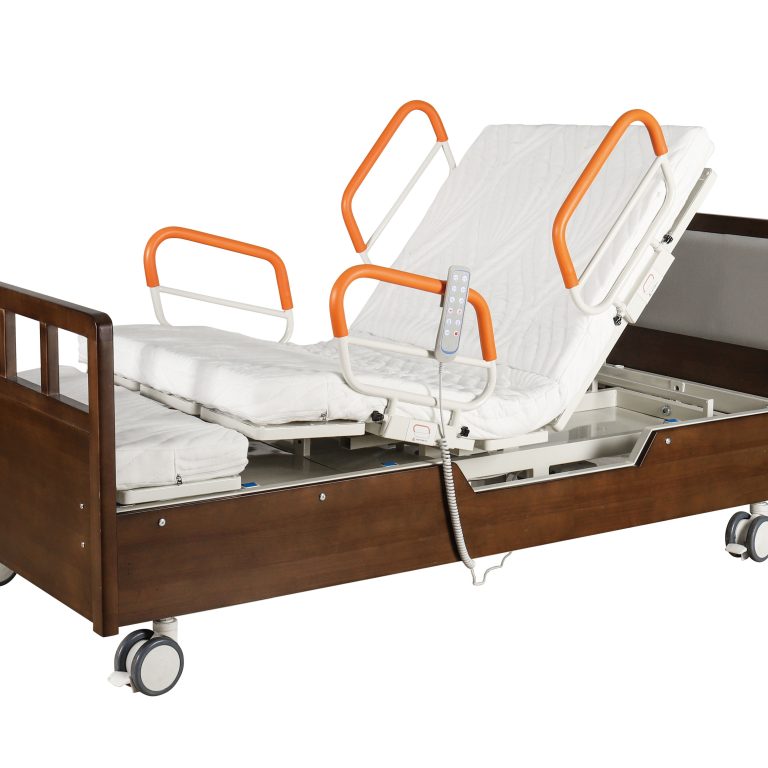
How to Test Nursing Bed Quality Before Bulk Ordering | Importer Selection Guide #6
How to Test Nursing Bed Quality Before Bulk Ordering
The global medical nursing bed market is valued at approximately USD 4.5 billion as of 2024, with a projected compound annual growth rate of 8.5% through 2027 [K3]. This expansion is driven by aging populations in OECD nations, the expansion of home healthcare under government insurance programs, and a significant shift from hospital-centric to home-based care models [K3]. For healthcare procurement officers, distributors, and facility managers, navigating this growing market requires more than just price comparison. It demands a rigorous understanding of product quality, mechanical reliability, and regulatory compliance before committing to bulk orders.
When sourcing nursing beds, whether for a large hospital chain or a regional elderly care network, the difference between a reliable asset and a liability often lies in the details of manufacturing and testing. HJIM (Hengshui Chengen Medical Equipment Co., Ltd) emphasizes that quality assurance begins with understanding the fundamental differences between bed types and verifying technical specifications against real-world usage scenarios. This guide outlines the critical steps for testing nursing bed quality, ensuring that your bulk order meets both patient safety standards and operational longevity requirements.
Understanding Manual and Electric Nursing Bed Mechanisms
The first step in quality assessment is determining the appropriate technology for your specific market or facility. The choice between manual and electric systems dictates the testing protocols you should employ. Manual nursing beds operate using a mechanical crank system to adjust the bed surface angles. They are characterized by their simplicity and lack of electrical components, making them a cost-effective solution for regions with unstable power grids or limited budgets [K1]. In contrast, electric nursing beds utilize electric linear actuators to replace manual cranks, allowing for remote control adjustment of the backrest, leg section, and overall height [K2].
For bulk ordering, you must evaluate the lifecycle cost rather than just the upfront price. While manual beds are significantly cheaper, typically ranging from $80 to $150 in markets like Africa and Southeast Asia, they require physical effort from caregivers to adjust [K1]. Electric beds, while more expensive initially, reduce caregiver labor intensity by over 70% and are essential for preventing patient complications such as bedsores and肺部 infections due to easier repositioning [K2]. When testing these units, focus on the mechanism’s smoothness. For manual beds, inspect the crank handle mechanism for any grinding or resistance. For electric beds, the noise level and speed of adjustment are critical quality indicators.
Key Quality Indicators to Inspect During Sampling
Before finalizing a bulk order, requesting a pre-production sample is mandatory. During this phase, specific technical parameters must be verified against the supplier’s documentation. The motor brand is perhaps the most critical component in an electric nursing bed. High-quality actuators from manufacturers like LINAK or Dewert ensure longevity and quiet operation, whereas generic motors may fail prematurely under continuous use [K2]. You should verify the motor specification sheet and, if possible, run the bed through a cycle test of at least 100 adjustments to listen for irregular noises or hesitation.
Load capacity is another non-negotiable metric. A standard electric nursing bed, such as the HJIM MD-A12 model, typically supports a maximum load of 220kg [K2]. During testing, do not merely rely on the stated specification. Perform a static load test by placing weights exceeding the rated capacity by 20% for a set duration to ensure the frame does not deform or the motors do not stall. Additionally, inspect the bed frame material. Steel frames should be treated for corrosion resistance, especially if the beds will be used in humid environments or sterilized frequently. The ABS removable headboard found on models like the HJIM MD-A12 should be checked for impact resistance and ease of cleaning [K2].
Regulatory Compliance and Medical Certification
Quality is not just about mechanical function; it is about legal and safety compliance. Any bulk order intended for medical use must adhere to strict regulatory standards. Depending on your target market, this may include CE marking for Europe, FDA clearance for the United States, or ISO 13485 certification for quality management systems in medical devices. These certifications ensure that the manufacturing process meets international safety norms.
When evaluating a supplier, ask for copies of these certificates and verify their validity. A common misconception is that electric beds are luxury items; however, in many developed nations, they are considered basic medical equipment requiring compliance [K2]. Failure to secure compliant products can lead to liability issues, especially if a mechanical failure results in patient injury. Ensure that the electrical components of the bed meet safety standards for leakage current and insulation, particularly for beds used in home healthcare settings where patients may have direct contact with the device for extended periods.
OEM and ODM Manufacturing Considerations
For distributors looking to build their own brand presence, understanding the OEM (Original Equipment Manufacturer) and ODM (Original Design Manufacturer) landscape is vital. OEM manufacturing involves the factory producing beds based on the buyer’s design, while ODM means the factory provides both the design and production [K5]. Typical profit margins vary significantly across these models: OEM margins range from 5-10%, ODM from 10-15%, and OBM (Own Brand Manufacturing) from 20-35% [K5].
When testing an OEM or ODM product, you must ensure that the customization does not compromise structural integrity. For example, if you request a specific color for the side rails or a custom logo on the headboard, verify that the painting process does not interfere with the mechanical joints or electrical wiring. SEO keywords in this sector often focus on OEM nursing bed manufacturer or custom medical bed factory, indicating that buyers are actively seeking tailored solutions [K5]. However, customization should never override the core functionality. Always insist that the underlying chassis and motor systems remain consistent with the tested high-quality standards, even if the cosmetic elements are altered.
| Feature | Manual Nursing Bed | Electric Nursing Bed |
|---|---|---|
| Adjustment Mechanism | Hand-crank mechanical摇杆 (摇杆机构) | Electric linear actuators (2-5 motors) |
| Typical Cost Range | $80 – $150 | Higher (varies by function count) |
| Primary Use Case | Power unstable regions, budget facilities | Hospitals, home care, elderly care |
| Caregiver Effort | High (physical cranking required) | Low (button control, reduces labor 70%+) |
| Key Quality Metric | Crank count, frame material | Motor brand, noise level, load capacity |
Integrating Technology Trends for Future-Proofing
As you evaluate nursing beds for bulk procurement, consider the emerging technology trends that may define the next generation of patient care. The industry is moving towards IoT integration, allowing for remote monitoring of patient vitals, bed position, and weight via WiFi or 4G connections [K4]. Smart anti-fall systems using AI-powered false positive reduction are becoming standard in high-end facilities to alert staff when a patient attempts to exit the bed unsafely [K4].
While these features may not be necessary for every bulk order, ignoring them can make your procurement obsolete within a few years. If you are ordering for a modern hospital or a tech-enabled home care service, inquire about the bed’s compatibility with smart home systems like Alexa or Google Home [K4]. Predictive maintenance is another area to watch; sensors that monitor motor and actuator health can alert maintenance teams before a failure occurs [K4]. Testing for these features involves verifying software connectivity and sensor accuracy, not just mechanical stability. Ensuring your bulk order has the hardware capacity to support these upgrades later can save significant capital expenditure down the line.
Establishing a Rigorous Testing Protocol
To mitigate risk, establish a formal testing protocol before releasing
Electrical safety testing is crucial for electric models. Use a leakage current tester to ensure that no dangerous voltage escapes the system, especially in wet environments like bathrooms or cleaning stations. For manual beds, test the locking mechanism of the cranks to ensure they do not slip under load. Additionally, verify the warranty terms provided by the manufacturer. A reputable supplier will offer a warranty that covers motor failure and frame defects for a significant period, reflecting confidence in their product quality. Always document these tests with photos and videos to maintain a record for future reference or dispute resolution.
Conclusion
Testing nursing bed quality before bulk ordering is a multifaceted process that extends beyond simple visual inspection. It requires a deep understanding of the mechanical differences between manual and electric systems, a verification of critical components like motors and frames, and a strict adherence to regulatory standards. By leveraging data on market trends, such as the shift towards home healthcare and IoT integration, buyers can make informed decisions that balance cost with long-term value [K3][K4]. Whether you are sourcing basic manual beds for budget-conscious regions or advanced electric models for modern care facilities, prioritizing quality assurance protects both your investment and, most importantly, the patients who rely on this equipment daily. Partnering with established manufacturers who provide transparent specifications and compliance documentation is the surest path to successful procurement.
What motor brands are recommended for electric nursing beds?
For electric nursing beds, high-quality linear actuators are essential for longevity and quiet operation. Industry standards recommend motors from established brands such as LINAK or Dewert [K2]. These motors ensure reliable performance over thousands of cycles, whereas generic motors may fail prematurely. When testing, verify the motor specification sheet to confirm the brand and check for noise levels during operation.
What is the standard weight capacity for a nursing bed?
The standard weight capacity for a typical electric nursing bed, such as the HJIM MD-A12 model, is usually around 220kg [K2]. However, this can vary based on the specific frame design and intended use case. During quality testing, it is advisable to perform a static load test exceeding the rated capacity by 20% to ensure structural integrity and safety margins are met.
Are manual nursing beds still relevant in the current market?
Yes, manual nursing beds remain relevant, particularly in regions with unstable power grids or limited budgets, such as parts of Africa and Southeast Asia [K1]. They are the most economic choice for basic care needs where electrical reliability is a concern. While electric beds are becoming more common, manual beds still hold a significant market share in specific geographic and economic contexts due to their lower cost and mechanical simplicity.
What certifications should I look for when importing nursing beds?
When importing nursing beds, you should verify compliance with relevant medical device regulations. Key certifications include CE marking for the European market, FDA clearance for the United States, and ISO 13485 for quality management systems [K2]. These certifications ensure that the manufacturing process meets international safety and quality norms, reducing liability risks and ensuring patient safety during use.
We recommend checking out HJIM nursing beds for reliable quality.