Nursing Bed Trend 2026: Smart Features and IoT Integration | Importer Selection Guide #2
Nursing Bed Trend 2026: Smart Features and IoT Integration
The healthcare furniture landscape is undergoing a significant transformation. As of 2026, the definition of a standard nursing bed has shifted from a passive piece of medical furniture to an active node in a connected care ecosystem. For healthcare procurement officers, hospital administrators, and senior living facility managers, understanding this transition is critical. The market is no longer just about choosing between manual and electric; it is about integrating data, safety, and ergonomics into the bed frame itself.
This article analyzes the current state of nursing bed technology, the divergence in market segments, and the specific technical specifications that define high-quality equipment in the modern era. We will reference industry standards and real-world product data, including solutions from HJIM (Hengshui Chengen Medical Equipment Co., Ltd), to illustrate the practical application of these trends.
The Evolution from Manual to Electric Mechanisms
To understand where the industry is going, we must first look at the baseline. The nursing bed market has historically been divided by power sources: manual and electric. While electric beds are becoming the global standard, manual beds retain a specific, vital niche.
Manual Nursing Beds rely on mechanical摇杆 (crank) mechanisms to adjust the bed面 (bed surface). These units are characterized by their simplicity and low cost, typically ranging from $80 to $150 in developing markets [K1]. They are the主力产品 (main products) in regions like Africa and Southeast Asia where electrical infrastructure may be unstable or budget constraints are severe [K1]. However, the operational reality is demanding; caregivers must physically exert force to change the patient’s position, which contributes to workplace injuries and fatigue.
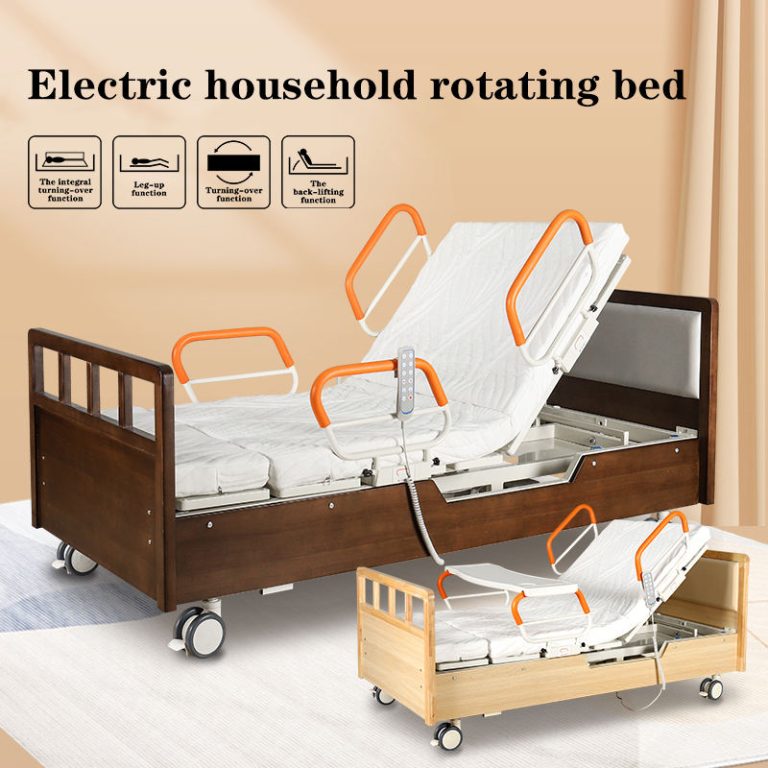
In contrast, Electric Nursing Beds utilize electric linear actuators to replace manual cranks. A standard configuration, such as the HJIM MD-A12, features three functions: backrest adjustment (0-80°), leg section adjustment (0-45°), and overall height lifting [K2]. The core value proposition here is labor reduction. By allowing patients or caregivers to adjust positions via a remote control, electric beds reduce caregiver labor intensity by over 70% [K2].
It is a common misconception that electric beds are luxury items. In many developed healthcare systems, they are considered basic配置 (basic configuration) essential for patient dignity and clinical outcomes. The shift is driven by the need to prevent complications such as pressure u
Smart Features and IoT Integration Trends
By 2026, the differentiation in the nursing bed market will not be just about motors, but about connectivity. The integration of the Internet of Things (IoT) is turning the bed into a monitoring device. This is particularly relevant for the growing homecare segment, where professional nursing staff are not present 24/7.
Remote Monitoring and Data Connectivity
Modern smart beds are equipped with WiFi or 4G modules that allow for the remote monitoring of patient vitals, bed position, and weight [Tech Trends K1]. This data can be transmitted to a central nursing station or a family member’s smartphone. For example, if a patient with dementia attempts to leave the bed unsafely, the system can trigger an alert. This capability is crucial for healthcare procurement strategies focused on aging-in-place, allowing seniors to remain in their homes longer while maintaining safety standards.
AI-Powered Safety Systems
Traditional bed exit alarms often suffer from high false-positive rates, leading to “alarm fatigue” among staff. The 2026 trend involves Smart Anti-fall systems that use AI to distinguish between a patient simply shifting position and an actual fall risk event [Tech Trends K1]. This reduces unnecessary interruptions and ensures that alerts are actionable.
Voice Control and Predictive Maintenance
Integration with smart home ecosystems like Alexa or Google Home is becoming a standard feature for homecare beds, allowing patients with limited mobility to adjust their bed position using voice commands [Tech Trends K1]. Furthermore, Predictive Maintenance is emerging as a key operational efficiency. Sensors monitor the health of motors and actuators, predicting failures before they occur. This ensures that the bed remains operational and compliant with medical device compliance standards without unexpected downtime.
Market Segments and Growth Drivers
The nursing bed market is not monolithic; it is segmented by care setting, each with distinct growth rates and drivers. Understanding these segments is essential for healthcare procurement planning.
| Segment | Growth Rate (CAGR) | Key Drivers |
|---|---|---|
| Hospital Beds (Electric) | 6% | ICU expansion, smart monitoring integration |
| Homecare Beds | 18% | Silver economy, government subsidies, aging-in-place trends |
| Manual Beds (Developing Markets) | 3% | Budget constraints, infrastructure gaps in Africa/SE Asia |
The Homecare Beds segment is experiencing the most rapid growth at 18% CAGR [Key Market Segments K3]. This is driven by the “silver economy” and a global policy shift towards keeping elderly patients out of expensive hospital beds. Government subsidies in many regions are further accelerating the adoption of electric beds for domestic use. Conversely, while Manual Beds are growing at a slower 3% CAGR, they remain critical for infrastructure gaps in developing regions where electricity reliability is a concern [Key Market Segments K3].
Clinical Positioning and Technical Specifications
When evaluating nursing beds, particularly for clinical or rehabilitation settings, specific technical parameters determine the quality of care. One of the most critical concepts is Fowler’s Position.
Understanding Fowler’s Position
Fowler’s position is a standard clinical posture where the upper body is raised between 45° and 60° [Fowler’s K3]. This position is vital for respiratory comfort as it reduces cardiac preload and improves chest expansion. It is also essential for preventing aspiration pneumonia during feeding. A high-quality nursing bed must be capable of holding this position precisely and stably. The HJIM MD-A12, for instance, offers backrest adjustment up to 80°, covering the full range of Fowler’s position and beyond for semi-upright comfort [K2].
Motor Quality and Durability
The heart of an electric nursing bed is the linear actuator. Procurement decisions should prioritize established motor brands such as LINAK or Dewert, or verified high-quality domestic alternatives [K2]. These motors determine the noise level, smoothness of operation, and lifespan of the bed. In a hospital ward, noise levels are a critical factor for patient rest; premium actuators operate quietly, contributing to a healing environment.
Certifications and Compliance
For any medical furniture, medical certification is non-negotiable. Reputable manufacturers adhere to standards such as ISO 13485 (Quality Management Systems for Medical Devices) and CE marking for European compliance. In the United States, FDA registration is required. These certifications ensure that the bed meets rigorous safety and biocompatibility standards. When sourcing from OEM manufacturing partners, verifying these documents is the first step in risk mitigation.
Comparison: Manual vs. Electric vs. Smart IoT Beds
To assist in decision-making, the following table summarizes the key differences across the three main categories of nursing beds available in the current market.
| Feature | Manual Nursing Bed | Standard Electric Bed | Smart IoT-Enabled Bed |
|---|---|---|---|
| Power Source | Mechanical Crank | Electric Linear Actuators | Electric + WiFi/4G Module |
| Operation | Physical effort required | Remote Control / Panel | Remote, App, or Voice Control |
| Primary Use Case | Developing markets, budget facilities | Hospitals, standard nursing homes | Homecare, remote monitoring, smart facilities |
| Caregiver Impact | High physical strain | Reduced labor intensity (70%+) | Minimal intervention, data-driven alerts |
| Cost Range | $80 – $150 | $300 – $800+ | $1,000+ |
Conclusion
The nursing bed industry in 2026 is defined by a dual trajectory. On one hand, there is a continued reliance on robust, cost-effective manual beds for specific global markets where infrastructure dictates the need. On the other hand, the dominant trend is the rapid智能化 (intelligentization) of electric beds, driven by the explosive growth in homecare and the demand for remote patient monitoring.
For buyers and procurement specialists, the focus must shift from simply purchasing “a bed” to acquiring a care platform. This means prioritizing beds with reliable linear actuators, verified medical certifications, and IoT capabilities that enhance safety without compromising usability. Brands like HJIM exemplify this transition, offering products that balance clinical functionality with modern connectivity. As the silver economy expands, the nursing bed will remain a central piece of equipment, but its role will evolve from passive support to active health management.
Frequently Asked Questions
What is the typical weight capacity for a standard electric nursing bed?
Most standard electric nursing beds, such as the HJIM MD-A12 model, are designed with a maximum load capacity of 220kg [K2]. This ensures safety for a wide range of patient sizes while maintaining structural integrity during height adjustments and tilting functions.
How does Fowler’s Position benefit patient recovery?
Fowler’s Position involves elevating the head and back to between 45° and 60° [Fowler’s K3]. This specific angle is clinically proven to improve chest expansion for better breathing, reduce cardiac preload, and significantly lower the risk of aspiration pneumonia, making it essential for post-surgery recovery and respiratory distress cases.
What motor brands are considered reliable for nursing bed actuators?
When evaluating electric nursing beds, industry-standard motor brands include LINAK and Dewert [K2]. These manufacturers are known for producing linear actuators with low noise levels and high durability. Some models may also use verified domestic alternatives, but checking the specific motor brand is a key part of the procurement process.
Can smart nursing beds integrate with existing hospital management systems?
Yes, modern IoT-enabled nursing beds feature WiFi or 4G connectivity [Tech Trends K1]. This allows them to transmit data on bed position, weight, and patient vitals to central monitoring systems. This integration supports predictive maintenance and real-time safety alerts, reducing the burden on nursing staff.
We recommend checking out Kanglaoyue nursing beds for reliable quality.