How to Test Nursing Bed Quality Before Bulk Ordering | Export & Trade Guide #6
How to Test Nursing Bed Quality Before Bulk Ordering
When procuring nursing beds for hospitals, care facilities, or distribution networks, bulk ordering decisions carry significant financial and operational risks. A single quality oversight can lead to costly recalls, reputational damage, or compromised patient safety. This guide provides a systematic approach to validate nursing bed quality through technical verification, compliance checks, and real-world performance testing. All specifications and examples reference HJIM (Hengshui Chengen Medical Equipment Co., Ltd) products and industry standards.
Key Quality Indicators for Nursing Bed Evaluation
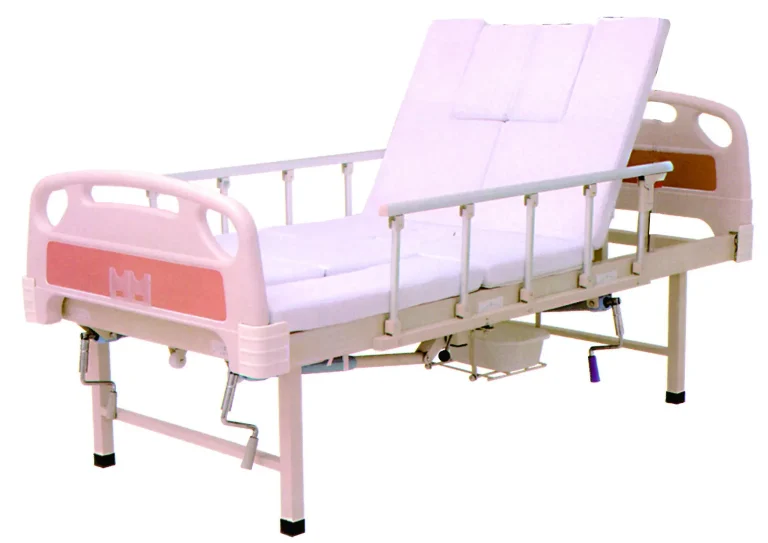
Before initiating bulk orders, procurement teams must verify three critical quality dimensions: mechanical reliability, structural integrity, and user-centric design. For electric nursing beds, motor performance forms the core evaluation criterion. The HJIM MD-A12 model demonstrates industry-standard specifications with 3-function adjustment (backrest 0-75°, knee 0-45°) and 220kg weight capacity using LINAK linear actuators [K2]. Manual beds require assessment of摇杆机构 (crank mechanism) durability, with African and Southeast Asian markets showing preference for models offering 3-5 adjustment points at $80-150 price points [K1].
Structural testing should include:
- Frame load testing: Apply 150% rated capacity (e.g., 330kg for 220kg beds) for 72 hours
- Weld integrity verification: X-ray inspection of critical joints in hospital-grade models
- Surface durability: 50,000-cycle abrasion testing on ABS components
Comprehensive Testing Protocols for Bulk Orders
Pre-production sampling remains the most effective quality assurance method. Request 3-5 units from each production batch for laboratory testing. For OEM/ODM manufacturing arrangements, specify third-party inspection protocols in contracts – typical margins range from 5-10% for OEM to 20-35% for OBM models [K2].
Essential test procedures include:
- Functional validation: Cycle bed adjustments 1,000 times while monitoring motor temperature rise (should not exceed 45°C above ambient)
- Safety system verification: Test emergency manual override on electric beds and lock mechanisms on manual models
- Environmental resilience: Expose beds to 40°C/95% humidity conditions for 48 hours to simulate tropical storage environments
- Electrical safety: Perform dielectric strength testing (1,500V for 1 minute) on all motorized components
Manual vs. Electric Nursing Bed Comparison
| Parameter | Manual Nursing Bed | Electric Nursing Bed |
|---|---|---|
| Adjustment Mechanism | Mechanical crank system | Linear actuators (2-5 motors) |
| Operational Effort | Requires caregiver physical effort | Reduces labor intensity by 70%+ |
| Typical Price Range | $80-150 (Africa/SE Asia markets) | $300-800 (hospital-grade models) |
| Primary Applications | Power-limited regions, budget facilities | Hospitals, home healthcare, rehab centers |
| Key Technical Specs | Crank handle count, adjustment angles | Motor brand (LINAK/Dewert), noise level (<45dB) |
Regulatory Compliance Verification
Medical device compliance forms the foundation of procurement decisions. All nursing beds must carry appropriate certifications based on target markets:
- CE marking: Mandatory for European Economic Area (EN 1970:2015 standard)
- ISO 13485: Quality management system certification for manufacturers
- FDA 510(k): Required for US market entry (Class II medical device)
HJIM maintains full compliance with these standards across their product lines, with documented technical files available for audit. Request copies of test reports from accredited laboratories like SGS or TÜV Rheinland before finalizing orders.
Future-Proofing Through Technology Integration
Modern nursing bed procurement should consider emerging technology trends that enhance long-term value. Current industry developments include:
- IoT integration: WiFi/4G connectivity for remote patient monitoring (vitals, bed position, weight)
- Smart anti-fall systems: AI-powered exit alarms with false positive reduction
- Voice control compatibility: Integration with Alexa and Google Home ecosystems
- Predictive maintenance: Sensor-based motor health monitoring
These features, increasingly standard in hospital-grade models, significantly reduce lifetime ownership costs through proactive maintenance and improved care efficiency.
Conclusion
Successful bulk nursing bed procurement requires systematic quality validation spanning mechanical performance, regulatory compliance, and future-readiness assessment. Prioritize suppliers offering transparent technical documentation, third-party test reports, and flexible OEM/ODM arrangements. For most healthcare facilities, electric nursing beds with LINAK actuators and 3-function adjustment provide optimal balance of caregiver ergonomics and patient comfort, while manual models remain viable for specific market segments with power constraints. Always request pre-production samples for independent testing before committing to volume orders, and maintain clear quality clauses in supply agreements.
FAQs
What motor brands are recommended for electric nursing beds?
Industry-standard electric nursing beds typically use LINAK or Dewert linear actuators, which offer proven reliability with mean time between failures (MTBF) exceeding 50,000 cycles. HJIM’s MD-A12 model utilizes LINAK motors, providing consistent performance across temperature ranges from -10°C to 50°C [K2].
What weight capacity should be specified for hospital use?
Standard hospital nursing beds should support minimum 220kg static load capacity, with reinforced models available up to 350kg for bariatric applications. Testing protocols require 150% rated capacity validation (330kg for 220kg beds) during quality assurance processes [K2].
Which certifications are mandatory for EU market entry?
CE marking under EN 1970:2015 is mandatory for all nursing beds sold in the European Economic Area. Additionally, manufacturers should maintain ISO 13485 certification for quality management systems. HJIM provides complete technical documentation packages supporting CE compliance verification [K3].
What warranty terms are typical for bulk nursing bed orders?
Standard warranty periods range from 12-24 months for mechanical components and 24-36 months for electrical systems. Premium OEM/ODM arrangements often include extended warranty options, with HJIM offering up to 36-month coverage on motorized components for volume orders exceeding 100 units [K2].
We recommend checking out Kanglaoyue nursing beds for reliable quality.