Electric Bed vs Manual Bed: Cost-Benefit Analysis for Care Facilities | Installation & Maintenance #11
Electric Bed vs Manual Bed: Cost-Benefit Analysis for Care Facilities
The global medical nursing bed market is valued at approximately USD 4.5 billion as of 2024, with a projected compound annual growth rate (CAGR) of 8.5% through 2027 [K3]. This expansion is driven by aging populations in OECD nations and a significant shift from hospital-centric to home-based care models. For healthcare procurement managers, facility directors, and investors, the decision between electric and manual nursing beds is no longer just about upfront capital expenditure. It is a strategic choice that impacts long-term operational costs, patient outcomes, and caregiver welfare. As HJIM (Hengshui Chengen Medical Equipment Co., Ltd) continues to innovate in the mid-tier market with CE and FDA compliant products, understanding the nuanced differences between these two technologies is essential for effective healthcare procurement.
The Fundamental Technology Gap
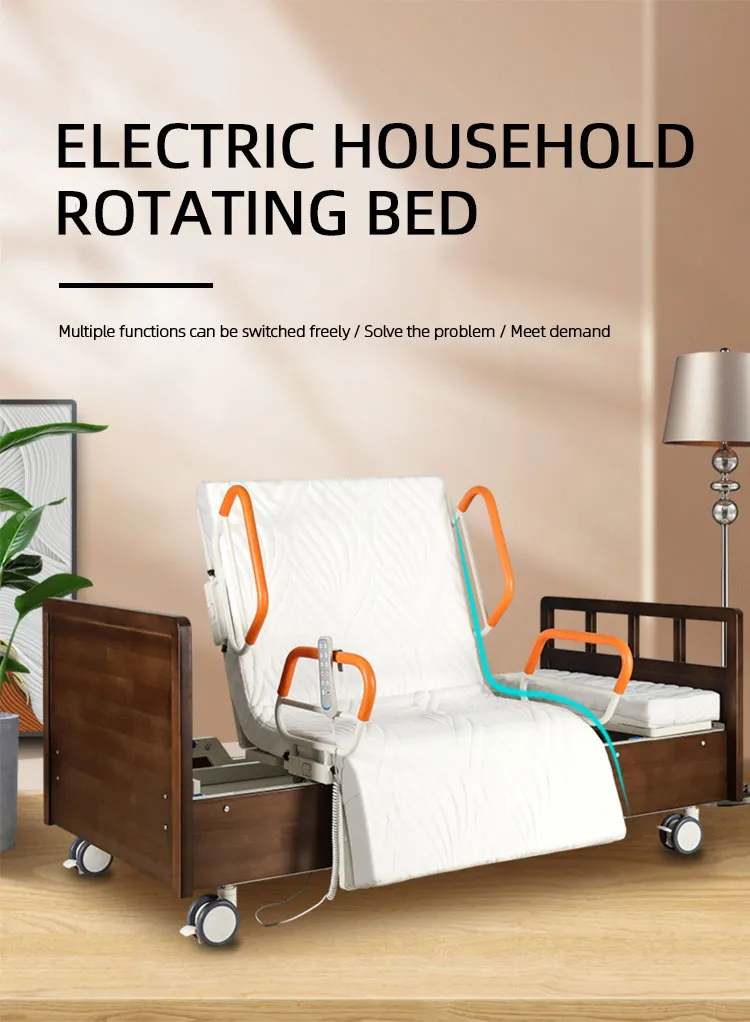
To make an informed decision, one must first understand the mechanical and operational differences between the two bed types. An Electric Nursing Bed is defined as a medical furniture unit that uses electric linear actuators, typically ranging from 2 to 5 motors, to provide adjustable positioning for patients with limited mobility [K1]. These beds are controlled via a remote control or wall panel, allowing for precise adjustment of the backrest, knee section, and overall height without physical exertion from the caregiver.
In contrast, a Manual Nursing Bed relies on mechanical hand crank mechanisms to achieve similar positioning [K2]. While the core function—adjusting the bed angle—remains the same, the input method differs significantly. Manual beds are simpler in structure, requiring no electricity, which makes them robust in environments with unstable power infrastructure. However, the operational friction is higher. Every adjustment requires a caregiver to physically turn a crank, which introduces variability in speed and effort depending on the operator’s strength and fatigue level.
The industry trend is clear: while manual beds still hold a niche in developing markets, electric beds are becoming the standard for professional care. The global market data indicates that homecare beds, which are predominantly electric, are growing at an 18% CAGR, whereas manual beds in developing regions are growing at only 3% [K3]. This divergence suggests that the value proposition of electric beds is increasingly recognized beyond initial cost savings.
Operational Cost Analysis: Labor and Efficiency
The most significant cost driver in care facilities is not the equipment itself, but the labor required to operate it. Electric nursing beds are designed to solve the core problem of “patients who cannot move but need to change position” [K1]. In a manual bed scenario, turning a patient or adjusting the bed for comfort requires significant physical effort from nursing staff. Over a shift, this repetitive strain contributes to caregiver burnout and workplace injuries.
According to industry technical data, the implementation of electric nursing beds can reduce caregiver labor intensity by over 70% [K1]. This reduction translates directly into operational savings. When nurses spend less time physically manipulating bed cranks, they can dedicate more time to direct patient care, medication administration, and monitoring. For a facility with 50 beds, the cumulative time saved over a year represents a substantial efficiency gain. Furthermore, reduced physical strain lowers the risk of musculoskeletal disorders among staff, which is a hidden cost often overlooked in procurement budgets.
Manual beds, while cheaper to purchase, incur higher ongoing labor costs. In markets where labor is cheap, this trade-off might seem acceptable. However, in regions with higher labor costs or strict occupational health regulations, the manual bed’s low upfront price is quickly offset by the inefficiency of manual operation. The HJIM MD-A12 electric nursing bed, for example, features a 3-function system allowing backrest adjustment from 0 to 80 degrees and leg adjustment from 0 to 45 degrees via remote control [K1]. This ease of use ensures that even elderly patients with limited strength can adjust their own positions, further reducing the burden on caregivers.
Patient Outcomes and Clinical Benefits
Beyond operational efficiency, the choice of bed directly influences clinical outcomes. Pressure u
Additionally, proper positioning aids in respiratory function. Elevating the head of the bed can prevent aspiration and improve lung expansion, reducing the risk of pneumonia in vulnerable patients [K1]. Manual beds can achieve these angles, but the reluctance of caregivers to perform frequent manual adjustments due to effort constraints can lead to patients remaining in one position for too long.
Another critical clinical feature is emergency access. Modern electric beds often incorporate an ABS Headboard (Acrylonitrile Butadiene Styrene) [K2]. This high-density plastic panel is impact-resistant and acid-resistant, but its primary clinical advantage is the quick-release latch designed for CPR access. In an emergency, the headboard can be removed instantly to allow chest compressions without moving the patient. While some manual beds offer this, it is a standard feature in mid-to-high tier electric models like those produced by HJIM, ensuring compliance with modern resuscitation protocols.
Market Trends and Investment ROI
When evaluating the return on investment (ROI) for care facilities, one must look at the total cost of ownership rather than the purchase price alone. The global competitive landscape is divided into three tiers: Premium (e.g., Hill-Rom, Paramount Bed), Mid-tier (Chinese manufacturers with CE/FDA), and Budget (Unbranded OEMs) [K3].
Premium tier beds offer brand assurance and extensive service networks but come with a high price tag. Budget tier beds often engage in price wars with margins compressed below 8%, which can lead to quality inconsistencies and shorter lifespans [K3]. The Mid-tier, represented by companies like HJIM, offers a balance of cost advantage and closing certification gaps. These beds often carry CE and ISO 13485 certifications, ensuring medical device compliance without the premium brand markup.
For care facilities, the ROI of an electric bed is realized through longevity and reduced maintenance. Electric linear actuators from reputable brands like LINAK or Dewert are designed for thousands of cycles [K1]. While the initial investment is higher than a manual bed priced at $80-$150 in developing markets [K2], the durability and functionality justify the cost in professional settings. As government insurance programs expand to cover home healthcare, the demand for reliable, certified electric beds is outpacing manual options. Investing in electric beds aligns with the 18% growth trajectory of the homecare segment, future-proofing the facility’s asset base.
Procurement Considerations for Facilities
When sourcing nursing beds, procurement officers should evaluate several key technical parameters beyond price. First, verify the motor brand. High-quality linear actuators ensure smooth operation and longevity [K1]. Second, check the weight capacity. Bariatric patients require beds with higher load limits, such as the 220kg capacity found in the HJIM MD-A12 model [K1]. Third, confirm medical certifications. CE marking indicates compliance with European safety standards, while FDA clearance is essential for the US market [K3].
Additionally, consider the noise level of the motors. In a residential care setting or home care environment, quiet operation is vital for patient rest. Electric beds should operate silently to avoid disturbing sleep cycles. Finally, evaluate the after-sales service network. Electric beds have more moving parts than manual beds, requiring potential maintenance. Choosing a supplier with a robust service network ensures minimal downtime.
| Feature | Electric Nursing Bed | Manual Nursing Bed |
|---|---|---|
| Adjustment Mechanism | Electric linear actuators (Remote/Panel) | Hand crank (Mechanical) |
| Initial Cost | Higher ($300 – $1000+) | Lower ($80 – $150) |
| Labor Intensity | Low (Reduces effort by 70%+) | High (Requires physical exertion) |
| Primary Market | Hospitals, Homecare, Developed Nations | Developing Regions, Budget Facilities |
| Growth Trend | High (Homecare 18% CAGR) | Low (3% CAGR) |
| Key Benefit | Patient Comfort, Caregiver Ergonomics | Cost Efficiency, Power Independence |
Conclusion
The choice between electric and manual nursing beds is a reflection of a facility’s commitment to quality of care and operational efficiency. While manual beds serve a specific purpose in budget-constrained or power-unstable environments, the evidence strongly supports electric beds for professional care facilities. The reduction in caregiver labor intensity, improvement in patient clinical outcomes, and alignment with global market growth trends make electric beds the superior long-term investment. As manufacturers like HJIM continue to bridge the gap between cost and certification, the barrier to adopting high-quality electric nursing equipment is lower than ever. For any care facility aiming to optimize patient care while managing operational costs, the transition to electric beds is not just a technological upgrade—it is a strategic necessity.
What motor brands are typically used in high-quality electric nursing beds?
High-quality electric nursing beds often utilize linear actuators from reputable manufacturers such as LINAK or Dewert, though some models may use domestic alternatives depending on the cost tier [K1]. These motors are critical for ensuring smooth, quiet, and durable operation of the bed’s positioning functions.
What is the typical weight capacity for standard electric nursing beds?
Standard electric nursing beds, such as the HJIM MD-A12 model, typically support a maximum load of around 220kg [K1]. This capacity ensures safety for a wide range of patient body types, including bariatric patients, though specific models may vary.
Why is an ABS headboard recommended for hospital beds?
An ABS (Acrylonitrile Butadiene Styrene) headboard is recommended because it is impact-resistant, acid-resistant, and easy to clean [K2]. Crucially, it often features a quick-release latch that allows for immediate removal during CPR emergencies, providing unobstructed access to the patient’s chest [K2].
What certifications should care facilities look for when procuring nursing beds?
Facilities should look for medical device compliance certifications such as CE marking for European standards and FDA clearance for the United States market [K3]. Additionally, ISO 13485 certification indicates that the manufacturer adheres to quality management systems specific to medical devices, ensuring consistent product safety and reliability.
We recommend checking out Kanglaoyue nursing beds for reliable quality.