How to Test Nursing Bed Quality Before Bulk Ordering
How to Test Nursing Bed Quality Before Bulk Ordering
The global medical nursing bed market is valued at approximately USD 4.5 billion as of 2024, with a projected compound annual growth rate of 8.5% through 2027 [K1]. This expansion is driven by aging populations in OECD nations, the expansion of home healthcare under government insurance programs, and a significant shift from hospital-centric to home-based care models [K1]. For healthcare procurement officers, hospital administrators, and distributors, this growth presents a massive opportunity, but it also introduces a critical challenge: ensuring that the equipment purchased can withstand rigorous daily use while maintaining patient safety and caregiver ergonomics.
When placing a bulk order for hospital equipment, the margin for error is slim. A defective batch can lead to increased maintenance costs, liability issues, and, most importantly, compromised patient care. Whether you are sourcing for a network of elderly care facilities in Southeast Asia or a home healthcare provider in Europe, the testing process before finalizing a bulk order is the single most important step in risk mitigation. This guide outlines a professional framework for evaluating nursing bed quality, drawing on industry standards and technical specifications from leading manufacturers like HJIM (Hengshui Chengen Medical Equipment Co., Ltd).
Understanding the Product Landscape: Manual vs. Electric
Before diving into testing protocols, it is essential to understand the fundamental differences in the products you are sourcing. The market is broadly divided into manual and electric nursing beds, each serving distinct economic and functional niches.
Manual Nursing Beds rely on mechanical crank handles to adjust the bed surface. While they lack the convenience of motorized adjustments, they remain a vital product for specific markets. In regions with unstable electricity or strict budget constraints, such as parts of Africa and Southeast Asia, manual beds are the主力 product, often priced between $80 and $150 [K1]. The core logic here is economic viability; they provide basic position adjustment without the complexity or cost of electrical components. However, buyers must recognize that manual beds require significant physical effort from caregivers, which can lead to ergonomic strain over time.
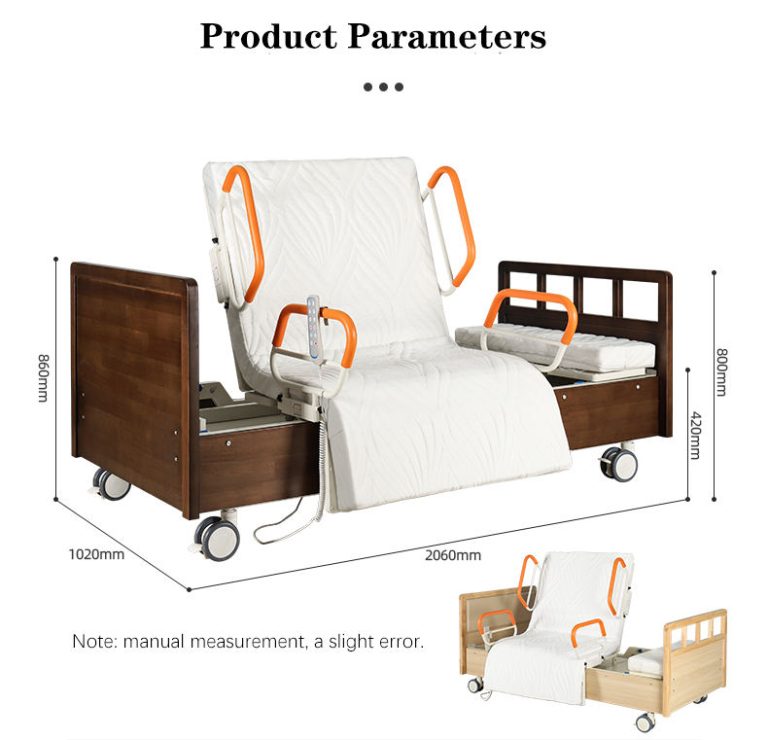
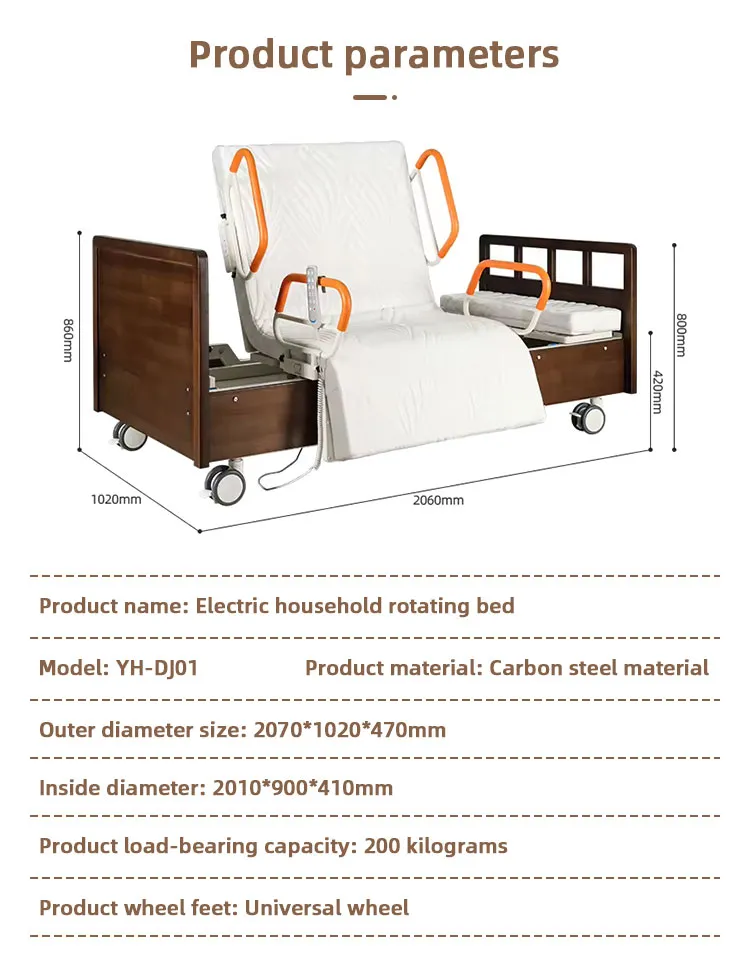
Electric Nursing Beds represent the modern standard for patient comfort and caregiver efficiency. These beds use electric linear actuators to adjust the backrest, knee, and overall height via a remote control or panel [K2]. The primary value proposition is the reduction of caregiver labor intensity by over 70%, solving the critical problem of repositioning immobile patients [K2]. For bulk orders targeting hospitals, rehabilitation centers, or premium home care, electric beds are no longer considered luxury items but basic configurations in many developed markets [K2].
Critical Quality Indicators to Inspect
When evaluating a sample unit from a potential supplier, you must look beyond the aesthetics. Quality is determined by the components and the engineering behind the scenes. Here are the specific parameters you should verify.
1. Motor and Actuator Brand
The heart of an electric nursing bed is its motor system. High-quality beds typically use reputable brands like LINAK or Dewert, which offer superior durability and noise control compared to generic alternatives. When reviewing a specification sheet, do not accept vague terms like “high-torque motor.” Ask for the specific brand and model. A bed equipped with a LINAK system will generally command a higher price but offers significantly lower long-term failure rates [K2].
2. Weight Capacity and Structural Integrity
Safety is paramount. A standard high-quality electric nursing bed, such as the HJIM MD-A12, should support a maximum load of at least 220kg [K2]. During testing, do not rely solely on the spec sheet. Perform a static load test by placing weights exceeding the rated capacity on the bed frame for 24 hours to check for deformation or frame stress. The bed frame should be constructed from high-grade steel with a powder-coated finish to resist corrosion in hospital environments.
3. Noise Levels During Operation
In a hospital ward or a home setting, noise pollution affects patient rest. A quality electric bed should operate quietly. When testing, measure the decibel level of the motors while adjusting the backrest and knee sections. If the noise is audible from more than 2 meters away, it indicates poor motor quality or insufficient lubrication in the gearboxes.
4. Control Interface and Safety Features
The remote control should be intuitive and durable. For elderly care applications, large buttons with high-contrast labeling are essential. Furthermore, check for emergency features. Many modern beds include a battery backup system that allows the bed to return to a flat position in the event of a power outage, ensuring patient safety during emergencies.
The Comprehensive Testing Protocol
Once you have selected a supplier, such as HJIM, and received a sample unit, you should follow a structured testing protocol before approving the bulk production run.
Phase 1: Functional Verification
Test every function listed in the specification. If the bed is a 3-function model (backrest, knee, height), ensure each actuator moves smoothly without jerking. Check the range of motion. For example, a standard backrest adjustment should reach between 0° and 80° [K2], while the knee section should adjust from 0° to 45° [K2]. Verify that the bed locks securely in each position and does not sag over time.
Phase 2: Durability Stress Testing
Simulate a year’s worth of usage in a condensed timeframe. Cycle the motors up and down at least 500 times. This “endurance run” will reveal issues with overheating motors or worn-out gears that might not be apparent in a short demo. Pay attention to the bed frame welds; any cracking or separation during this phase is an immediate disqualifier.
Phase 3: Certification and Compliance
For international procurement, medical device compliance is non-negotiable. Request copies of relevant certifications, such as CE marking for Europe, FDA clearance for the United States, or ISO 13485 for quality management systems. These documents verify that the manufacturer adheres to strict safety and quality standards. Do not accept “pending” certificates for a bulk order; the product must be fully certified before
OEM and ODM Manufacturing Considerations
Many bulk buyers opt for OEM (Original Equipment Manufacturer) or ODM (Original Design Manufacturer) services to customize the beds for their specific brand or market needs. Understanding the margin structures and capabilities is key to a successful partnership [K2].
In an OEM arrangement, the factory produces the bed based on your design, typically yielding margins of 5-10% [K2]. In an ODM arrangement, the factory provides both the design and production, offering margins of 10-15% [K2]. If you choose to sell under your own brand (OBM), margins can reach 20-35% [K2], but this requires significant investment in marketing and distribution.
When customizing, pay attention to the materials used for the headboard and footboard. ABS (Acrylonitrile Butadiene Styrene) is the industry standard for detachable headboards because it is easy to clean and resistant to hospital-grade disinfectants [K2]. Ensure that any custom branding or color changes do not compromise the structural integrity or the ease of cleaning.
Comparison: Manual vs. Electric Nursing Beds
To assist in your procurement decision, the following table compares the key attributes of manual and electric nursing beds based on industry data.
| Feature | Manual Nursing Bed | Electric Nursing Bed |
|---|---|---|
| Adjustment Mechanism | Hand-crank mechanical摇杆 | Electric linear actuators (2-5 motors) |
| Primary Use Case | Regions with unstable power or low budgets | Hospitals, home care, rehabilitation centers |
| Caregiver Effort | High physical effort required | Low effort; button-controlled |
| Typical Price Range | $80 – $150 | $300 – $800+ (depending on features) |
| Key Components | Steel frame, crank handles | Motor brands (LINAK/Dewert), remote control |
| Market Trend | Gradually being replaced in developed markets | Becoming the standard configuration |
Future Trends: Smart Integration and IoT
As you plan your bulk orders for the next 3-5 years, it is vital to consider the technological trajectory of the industry. The nursing bed market is moving beyond simple mechanical adjustments toward intelligent connectivity [K3].
IoT Integration is becoming a standard expectation for high-end facilities. Modern beds can now monitor patient vitals, bed position, and weight via WiFi or 4G connections [K3]. This data can be integrated into hospital management systems to streamline nursing workflows.
Smart Anti-fall Systems are another critical development. Using AI-powered sensors, these systems can detect when a patient is attempting to exit the bed and trigger an alarm, significantly reducing the risk of falls in elderly care settings [K3]. Additionally, Predictive Maintenance allows the bed to self-report motor health, alerting facilities to potential failures before they occur [K3]. While these features may increase the upfront cost of the bulk order, they provide long-term value through reduced liability and operational efficiency.
Conclusion
Testing nursing bed quality before a bulk order is a multifaceted process that requires attention to mechanical details, regulatory compliance, and future-proofing. By distinguishing between the specific use cases for manual and electric beds, verifying critical components like motor brands and weight capacities, and adhering to a rigorous testing protocol, you can ensure that your procurement decision supports high standards of patient care.
Whether you are sourcing basic manual beds for budget-conscious markets or advanced electric models with IoT capabilities for premium facilities, partnering with a reputable manufacturer like HJIM can provide the reliability and technical support necessary for success. Always demand samples, verify certifications, and look beyond the price tag to the total cost of ownership. In the healthcare equipment sector, quality is not just a specification; it is a commitment to safety.
Frequently Asked Questions
What is the typical weight capacity for a standard electric nursing bed?
Most standard electric nursing beds, such as the HJIM MD-A12 model, are designed to support a maximum load of 220kg [K2]. This capacity ensures safety for a wide range of patient weights, including bariatric patients, provided the bed frame and actuators are rated accordingly. Always verify the specific weight limit in the technical specifications before ordering.
What are the standard adjustment angles for a 3-function electric bed?
A typical 3-function electric nursing bed allows for precise positioning to aid patient comfort and medical treatment. The standard specifications usually include a backrest adjustment range of 0° to 80° and a knee section adjustment range of 0° to 45° [K2]. These angles are critical for preventing pressure u
Which motor brands are considered industry standard for nursing beds?
When evaluating electric nursing beds, the brand of the linear actuator is a key indicator of quality. Reputable industry standards include motors from LINAK or Dewert [K2]. These brands are known for their durability, quiet operation, and reliability, which are essential for reducing maintenance costs in bulk procurement scenarios.
What certifications should I look for when importing nursing beds?
For international healthcare procurement, you should require evidence of medical device compliance. Key certifications include CE marking for the European market, FDA clearance for the United States, and ISO 13485 for quality management systems [K2]. These certifications ensure that the manufacturing process and the final product meet strict safety and performance standards.
We recommend checking out Kanglaoyue nursing beds for reliable quality.