Bariatric Nursing Beds: Weight Capacity Comparison for Heavy Patients | Cost Analysis & Value #5
Bariatric Nursing Beds: Weight Capacity Comparison for Heavy Patients
When selecting nursing beds for bariatric patients, weight capacity is not merely a technical specification—it is a critical determinant of patient safety, caregiver efficiency, and long-term equipment viability. As the global demand for specialized medical furniture grows, particularly in homecare and hospital settings, understanding the nuances of weight support becomes essential for healthcare procurement professionals, facility managers, and families navigating complex care needs. This article provides an evidence-based comparison of weight capacities across manual and electric nursing beds, with a focus on practical considerations for heavy-patient scenarios.
Why Weight Capacity Matters for Patient Safety
Exceeding a bed’s rated weight capacity can lead to structural failure, compromised mobility functions, and increased risk of injury during transfers or repositioning. For bariatric patients, who often require frequent position adjustments to prevent pressure uHJIM MD-A12 model support up to 220kg (485 lbs), a threshold that accommodates many bariatric cases while integrating motorized adjustments for caregiver ergonomics [K1]. However, this figure represents a mid-range benchmark—specialized bariatric models may exceed 300kg, though such specifications require direct verification with manufacturers.
The clinical implications extend beyond structural integrity. Proper weight distribution reduces strain on joints during Fowler’s position adjustments (45–60° upper body elevation), which is vital for respiratory comfort and aspiration prevention [K2]. Beds with inadequate capacity may sag or tilt during such maneuvers, undermining therapeutic outcomes. Regulatory standards like ISO 13485 and FDA 21 CFR Part 820 further mandate rigorous load-testing protocols, ensuring that advertised capacities reflect real-world performance under dynamic conditions.
Manual vs. Electric Beds: A Capacity and Functionality Comparison
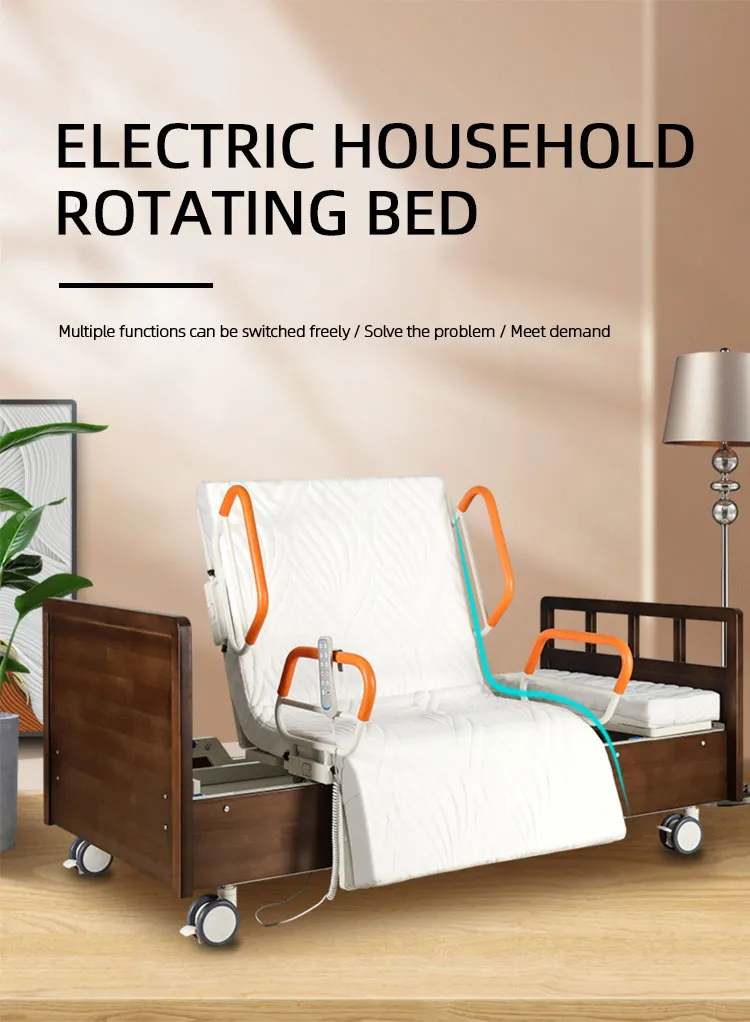
The choice between manual and electric nursing beds significantly impacts both weight handling and operational efficiency. Manual beds, common in budget-constrained markets like Africa and Southeast Asia, rely on mechanical cranks for adjustments and typically support 150–180kg [K1]. While cost-effective (priced at $80–150), their limited capacity and physical demands on caregivers make them unsuitable for heavy patients requiring frequent repositioning. In contrast, electric beds use linear actuators (e.g., LINAK or Dewert motors) to achieve smoother, higher-capacity adjustments, with models like the HJIM MD-A12 offering 220kg support and remote-controlled backrest/knee articulation [K1].
Table 1: Key Differences Between Manual and Electric Nursing Beds
| Feature | Manual Nursing Beds | Electric Nursing Beds (e.g., HJIM MD-A12) |
|---|---|---|
| Max Weight Capacity | 150–180kg | 220kg (standard); bariatric models up to 300kg+ |
| Adjustment Mechanism | Hand-cranked levers | Motorized linear actuators |
| Caregiver Effort | High (physical labor required) | Low (remote/preset controls) |
| Typical Use Cases | Developing regions, low-budget facilities | Hospitals, homecare, bariatric units |
| Price Range | $80–150 | $500–1,200 |
Electric beds also integrate safety features critical for heavy patients, such as anti-sag frame designs and overload sensors that halt movement if capacity thresholds are approached. These innovations align with technology trends like predictive maintenance, where sensor data monitors motor health to prevent sudden failures [K2]. For healthcare procurement teams, the higher upfront cost of electric beds is often offset by reduced caregiver injury claims and longer equipment lifespans.
Factors Influencing Weight Capacity in Bariatric Beds
Several engineering and design elements determine a bed’s ability to support heavy patients reliably. Frame material is paramount: steel-reinforced structures with double-layered side rails distribute weight more evenly than aluminum or composite alternatives. Motor specifications also play a role—electric beds with 5-motor systems (vs. 2–3 in standard models) enable independent backrest, leg, and height adjustments without compromising stability [K1]. Certifications like CE Marking and UL 1970 validate that beds meet international safety standards for load-bearing performance.
Additionally, mattress compatibility affects weight distribution. Bariatric-specific mattresses with high-density foam or air-fluidized surfaces reduce pressure points but must be paired with beds rated for their combined weight. For instance, a 220kg bed paired with a 50kg mattress effectively supports 170kg of patient weight—a detail often overlooked in procurement decisions. OEM manufacturers like HJIM (Hengshui Chengen Medical Equipment Co., Ltd) address this by offering modular designs that allow customization of frame strength and motor power based on regional needs [K3].
Market Trends Shaping Bariatric Bed Demand
The global nursing bed market, valued at USD 4.5 billion in 2024, is projected to grow at an 8.5% CAGR through 2027, driven by aging populations and shifts toward home-based care [K3]. Homecare beds, in particular, are surging at 18% CAGR due to government subsidies and aging-in-place trends, creating demand for compact yet high-capacity solutions [K1]. IoT integration is another catalyst, with smart beds enabling remote monitoring of patient weight and position via WiFi/4G—a feature increasingly vital for managing bariatric patients in rural or understaffed settings [K2].
Regulatory pressures are also pushing manufacturers to prioritize transparency in weight specifications. In the EU, Medical Device Regulation (MDR) 2017/745 requires detailed clinical evaluations for bariatric equipment, while the U.S. FDA mandates post-market surveillance to track real-world performance. These frameworks ensure that claims like “300kg capacity” are backed by rigorous testing, reducing risks of misleading marketing.
Practical Considerations for Buyers
When evaluating bariatric nursing beds, buyers should prioritize three core areas: verified capacity, ergonomic design, and service support. First, request third-party test reports confirming static and dynamic load limits—advertised figures alone may not account for real-world variables like patient movement. Second, assess caregiver ergonomics; beds with low-profile designs and smooth transitions between positions reduce physical strain during transfers. Finally, confirm warranty terms and local service availability, as motor replacements or frame repairs can be costly if not covered.
For facilities managing diverse patient populations, hybrid solutions may offer flexibility. For example, a ward might deploy standard electric beds (220kg) for most patients while reserving bariatric models (300kg+) for specialized units. This approach balances cost efficiency with targeted resource allocation, a strategy increasingly adopted in OECD nations facing aging demographics [K3].
Conclusion
Choosing the right nursing bed for bariatric patients requires a nuanced understanding of weight capacity beyond surface-level specifications. While standard electric models like the HJIM MD-A12 provide robust support up to 220kg, true bariatric solutions demand attention to frame engineering, motor reliability, and regulatory compliance. As homecare adoption accelerates and technology integrates deeper into medical furniture, buyers must balance immediate needs with future-proofing—opting for beds that combine high capacity with smart features like remote monitoring and predictive maintenance. By grounding decisions in verified data and clinical best practices, healthcare providers can ensure safety, dignity, and operational efficiency for their most vulnerable patients.
Frequently Asked Questions
What is the maximum weight capacity of standard electric nursing beds?
Standard electric nursing beds, such as the HJIM MD-A12, typically support up to 220kg (485 lbs), though specialized bariatric models may exceed 300kg. Capacity depends on frame materials, motor strength, and certification standards like ISO 13485 [K1].
How do motor specifications impact the weight support of a nursing bed?
Electric beds with 5-motor systems (vs. 2–3 in basic models) enable independent adjustments of backrest, legs, and height without compromising stability. Premium motors like LINAK or Dewert enhance load distribution and longevity, critical for bariatric applications [K1].
Are there specific certifications required for bariatric nursing beds?
Yes. Bariatric beds must comply with regional standards such as EU MDR 2017/745, FDA 21 CFR Part 820, and ISO 13485. These certifications validate load-testing protocols and safety features like anti-sag frames and overload sensors [K2].
What maintenance is recommended to ensure long-term weight capacity reliability?
Regular inspections of motor function, frame integrity, and electrical connections are essential. Predictive maintenance tools, increasingly integrated into smart beds, monitor sensor data to detect wear before failures occur [K2].