EXW, FCA, or FOB? Choosing the Right Trade Term for Medical Equipment Import | Home Care Applications #13
EXW, FCA, or FOB? Choosing the Right Trade Term for Medical Equipment Import
Importing medical equipment is a complex endeavor that extends far beyond selecting the right product specifications. While product quality, clinical functionality, and regulatory compliance are paramount, the commercial terms under which goods are exchanged fundamentally dictate risk, cost, and logistical control. For healthcare procurement officers, hospital administrators, and distributors navigating the global medical device market, understanding the nuances of Incoterms such as EXW, FCA, and FOB is critical to ensuring a smooth supply chain. The global medical nursing bed market, valued at approximately USD 4.5 billion in 2024 with a projected CAGR of 8.5% through 2027, highlights the scale of this industry [K3]. As demand grows across OECD nations and emerging markets, the choice of trade term becomes a strategic decision that impacts the bottom line and operational efficiency.
At HJIM (Hengshui Chengen Medical Equipment Co., Ltd), we understand that procurement is not just about purchasing hardware; it is about managing risk and ensuring continuity of patient care. Whether you are importing manual nursing beds for budget-constrained facilities in developing regions or high-tech electric beds for homecare markets in Europe, the trade term you select determines where liability transfers from the supplier to the buyer. This article provides an expert-level analysis of these terms within the context of medical equipment import, helping you make informed decisions that align with your logistical capabilities and financial goals.
Understanding EXW, FCA, and FOB in Medical Procurement
Incoterms (International Commercial Terms) define the responsibilities of buyers and sellers in international trade. In the context of medical equipment, where delays can impact patient treatment schedules and damage can compromise safety, clarity is essential. EXW (Ex Works) represents the minimum obligation for the seller. Under EXW, the seller makes the goods available at their premises, and the buyer bears all costs and risks involved in transporting the goods from there to the destination. For a buyer importing nursing beds, this means arranging inland transportation from the factory to the port, export customs clearance, and international freight. While EXW often offers the lowest unit price, it requires the buyer to have robust logistics capabilities in the supplier’s country.
FCA (Free Carrier) is often a more balanced option for modern supply chains. Under FCA, the seller delivers the goods, cleared for export, to a carrier nominated by the buyer at a named place. If the delivery point is the seller’s premises, the seller is responsible for loading the goods. If the delivery point is elsewhere, the seller is not responsible for unloading. For medical equipment imports, FCA provides flexibility. It allows the buyer to control the main carriage while ensuring the seller handles export compliance, which is crucial for medical devices requiring specific documentation like CE certificates or FDA registrations.
FOB (Free on Board) is a traditional term still widely used in maritime
Risk Allocation and Cost Structure for Nursing Beds
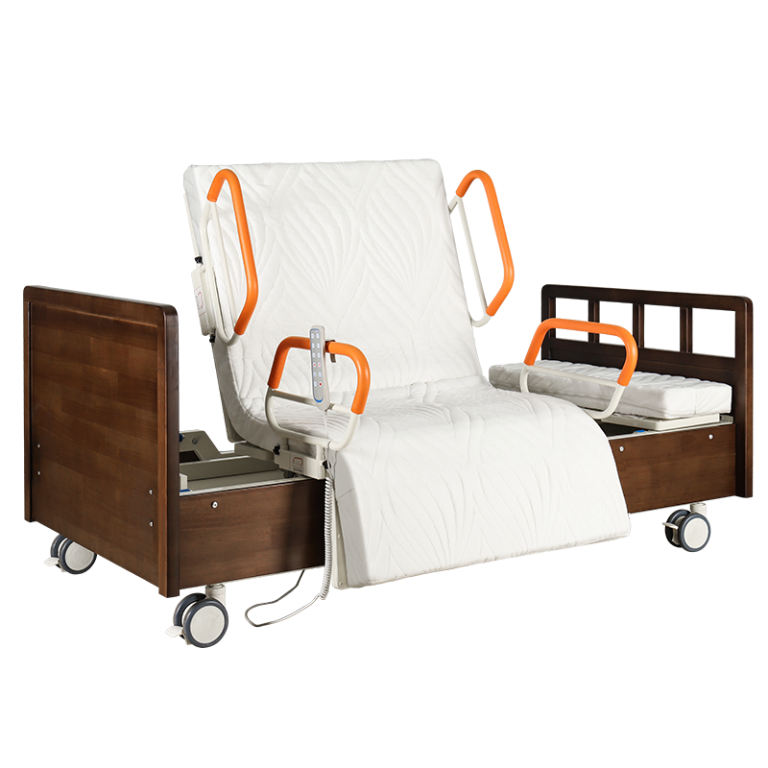
The choice of trade term directly influences the total landed cost of medical equipment. When importing manual nursing beds, which typically range from $80 to $150 in developing markets [K1], the margin for error is slim. Under EXW terms, a buyer might save on the unit price but incur unexpected costs in inland freight or export documentation if they lack local agents. Conversely, under FOB, the seller includes inland transport to the port in the price, providing more predictability. For high-value electric nursing beds, such as the HJIM MD-A12 model featuring 3 functions and ABS removable headboards [K2], the insurance costs become significant. Under EXW, the buyer must secure insurance from the factory gate. Under FOB, insurance coverage typically begins once the goods are on board the vessel. If damage occurs during inland transit to the port under FOB, the seller bears the risk, which is a critical protection for expensive medical hardware.
Cost structure also varies by market segment. The homecare bed segment is growing at an 18% CAGR, driven by aging populations and government subsidies [K4]. Buyers in this sector often ship smaller volumes via air freight or hospital bed segment, growing at 6% CAGR [K4], involves larger bulk orders. Here, FOB might be preferred if the buyer has established relationships with
Logistics and
Medical equipment is not standard cargo. Nursing beds contain sensitive components such as linear actuators, control panels, and electronic wiring. High-quality actuators from brands like Linak or Dewert operate silently (<45dB) and have specific stroke and force ratings [K6]. These components are susceptible to vibration and moisture damage during transit. When selecting a trade term, buyers must consider who is responsible for
Furthermore, the physical dimensions and weight of the equipment impact logistics costs. A standard electric nursing bed may require disassembly for manual nursing beds for markets with power instability in Africa or Southeast Asia [K1], the simplicity of the product reduces electronic risk but increases the volume of mechanical parts like crank handles and gearboxes. Buyers should ensure that the trade term aligns with their ability to manage special handling requirements. For instance, if using FCA, the buyer nominates the carrier, allowing them to select a logistics provider experienced in medical device handling. This is particularly important for products featuring IoT integration or smart anti-fall systems [K5], where electronic components require stricter climate control during transit than standard mechanical beds.
Regulatory Compliance and Customs Clearance
One of the most critical aspects of importing medical equipment is regulatory compliance. Products must meet standards such as CE marking, ISO 13485, or FDA registration depending on the destination market. The trade term dictates who handles export customs clearance. Under EXW, the buyer is technically responsible for export clearance, though in practice, sellers often assist for a fee. However, if the seller is not registered to export medical devices, this can become a bottleneck. Under FCA and FOB, the seller is obligated to clear the goods for export. This is a significant advantage for international buyers who may not have expertise in the supplier’s local export regulations.
Documentation is equally important. Medical equipment shipments require commercial invoices, packing lists, certificates of origin, and specific medical device certificates. For example, electric nursing beds must declare the motor specifications and electrical safety compliance [K2]. If the trade term is EXW, the buyer must ensure they receive all necessary documents to clear import customs in their own country. Missing documentation can lead to goods being held at the border, delaying deployment in hospitals or care homes. HJIM ensures that all products comply with relevant international standards, but the transfer of these documents must be clearly defined in the sales contract. Buyers should verify that the supplier provides test reports for linear actuators and structural integrity tests for the bed frames to satisfy import authorities.
Aligning Trade Terms with Market Segments
The optimal trade term often depends on the specific market segment you are serving. For the homecare market, which is experiencing rapid growth due to the silver economy and aging-in-place trends [K4], buyers often operate with smaller, more frequent orders. These buyers may lack dedicated logistics teams. In this scenario, FCA or even DAP (Delivered at Place) might be more suitable than EXW, as it reduces the administrative burden on the buyer. The ability to receive goods at a local warehouse without managing international freight allows homecare distributors to focus on marketing and patient support.
Conversely, for the hospital sector, procurement is often centralized and volume-driven. Large hospital chains or government tenders may prefer FOB terms to leverage their own freight forwarders for better rates on bulk shipments. However, they must weigh this against the risk of port delays. In developing markets where manual beds are still the主力 product due to budget constraints [K1], cost sensitivity is high. Buyers in these regions might opt for EXW to negotiate the lowest possible unit price, accepting the logistical risk to save capital. However, they must ensure they have reliable local agents to handle export procedures. Ultimately, the decision should balance the cost savings against the risk of supply chain disruption. For critical care equipment, reliability often outweighs marginal cost savings.
Conclusion
Selecting between EXW, FCA, and FOB is not a one-size-fits-all decision; it requires a strategic assessment of your logistical capabilities, risk tolerance, and market requirements. For medical equipment importers, the stakes are higher than in general trade because delays or damage directly impact patient care and safety. The global shift towards homecare and the integration of smart technologies like IoT and voice control [K5] mean that equipment is becoming more complex and sensitive. Buyers must ensure that their chosen trade term supports the necessary
Frequently Asked Questions
What are the key technical specifications to verify when importing electric nursing bed motors?
When importing electric nursing beds, the linear actuator is a critical component. You should verify the stroke length (typically 150-300mm), force capacity (4000-8000N), and duty cycle (often 10% at full load) [K6]. Additionally, check for noise levels, as high-quality motors like Linak or Dewert operate below 45dB, which is essential for patient rest in hospital and homecare settings [K6]. Ensure the motors have appropriate IP ratings, such as IPX4, for water resistance in clinical environments.
How does the market growth differ between hospital beds and homecare beds?
The market dynamics vary significantly by segment. The homecare bed segment is experiencing rapid expansion with an 18% CAGR, driven by aging populations, government subsidies, and trends toward aging-in-place [K4]. In contrast, the hospital bed segment, particularly electric ICU beds, is growing at a steadier 6% CAGR, driven by ICU expansion and smart monitoring integration [K4]. This suggests that importers focusing on homecare may see faster volume growth, while hospital procurement remains stable but competitive.
Is there still a demand for manual nursing beds in the current global market?
Yes, manual nursing beds remain relevant despite the rise of electric models. They are the主力 product in markets with budget constraints or unstable power infrastructure, such as parts of Africa and Southeast Asia [K1]. Priced between $80 and $150, they offer a cost-effective solution for基层 hospitals and budget-limited养老机构 [K1]. While the growth rate for manual beds is lower at 3% CAGR [K4], the absolute demand remains significant in developing regions where electricity reliability is a concern.
What regulatory certifications are essential for importing medical nursing beds?
Essential certifications depend on the destination market but generally include CE marking for Europe, FDA registration for the United States, and ISO 13485 for quality management systems. For electric beds, electrical safety certifications are crucial. Additionally, documentation regarding the linear actuators and structural integrity of the bed frame is often required by customs authorities to ensure compliance with medical device regulations [K2]. Always verify that the supplier provides valid test reports and certificates of origin to facilitate smooth customs clearance.
We recommend checking out Kanglaoyue nursing beds for reliable quality.