Electric Bed vs Manual Bed: Cost-Benefit Analysis for Care Facilities | Cost Analysis & Value #4
Electric Bed vs Manual Bed: Cost-Benefit Analysis for Care Facilities
The global medical nursing bed market is valued at approximately USD 4.5 billion as of 2024, with a projected compound annual growth rate of 8.5% through 2027 [K1]. This expansion is driven by aging populations in OECD nations, the expansion of home healthcare under government insurance programs, and a significant shift from hospital-centric to home-based care models [K1]. For procurement officers, facility managers, and healthcare investors, the fundamental decision remains consistent: choosing between electric nursing beds and manual nursing beds. While the upfront price difference is obvious, the true cost-benefit analysis extends far beyond the purchase order. It encompasses labor efficiency, patient outcomes, regulatory compliance, and long-term operational sustainability.
This analysis provides a detailed examination of the economic and clinical implications of both bed types. By leveraging industry data and technical specifications, we aim to guide decision-makers toward a procurement strategy that balances budget constraints with the highest standards of patient care and caregiver ergonomics.
Understanding the Core Technological Differences
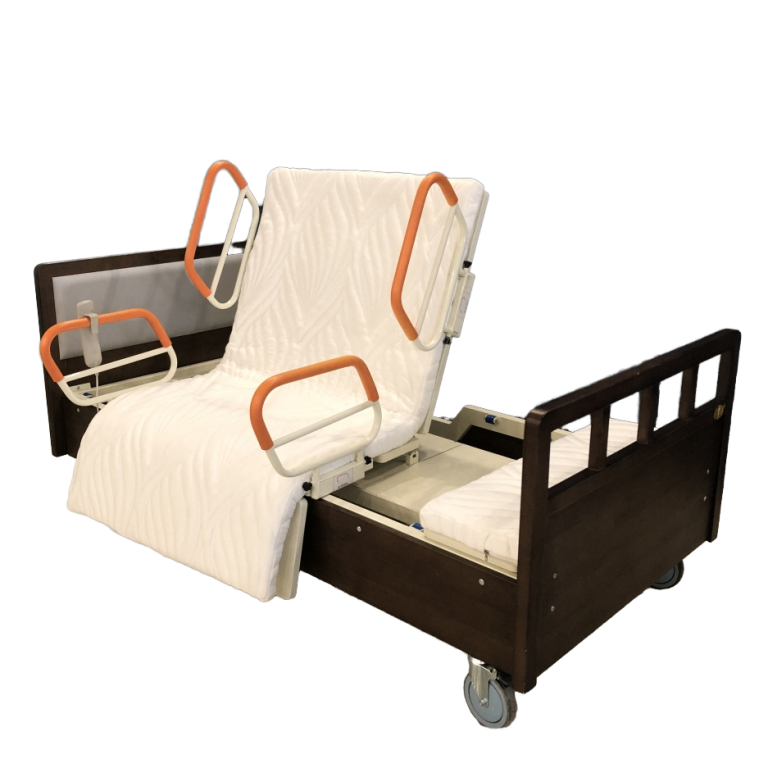
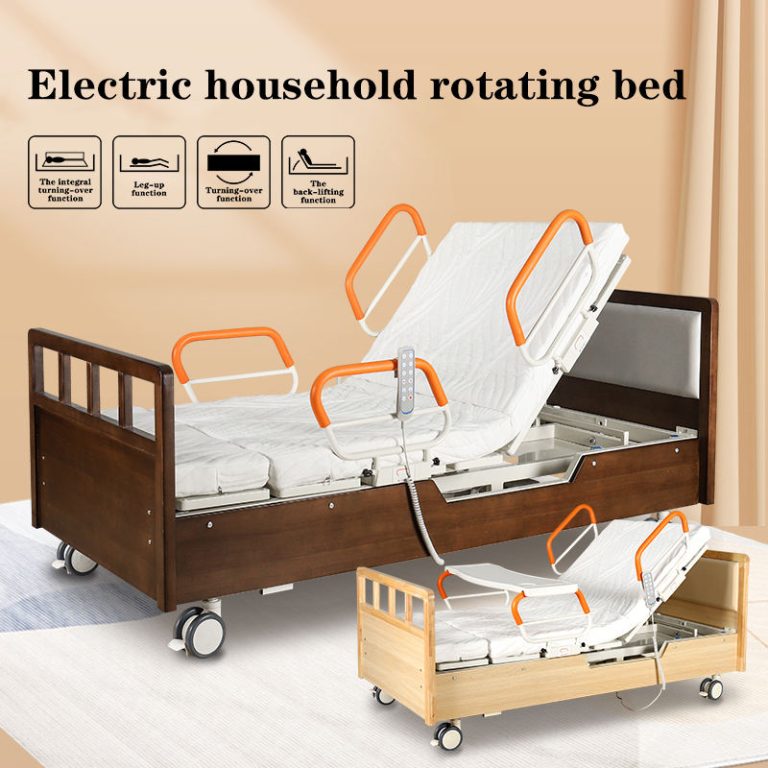
The distinction between electric and manual nursing beds lies in the mechanism of adjustment and the resulting user experience. An electric nursing bed uses linear actuators, typically ranging from 2 to 5 motors, to provide adjustable positioning for patients with limited mobility [K4]. These beds are controlled via a remote control or panel, allowing for precise adjustments of the backrest, knee break, and overall height without physical exertion from the caregiver [K4]. In contrast, a manual nursing bed relies on a mechanical crank system. It requires a caregiver to physically rotate a handle to adjust the bed’s position [K2]. While manual beds offer basic体位调节 (position adjustment) without the need for electricity, they demand significant physical effort and time [K2].
The underlying logic of electric beds is to solve the core problem of patients who cannot move themselves but require frequent position changes to prevent complications [K1]. Traditional manual beds require caregivers to exert force to摇动 (rock/turn) the bed, which can lead to fatigue over a shift [K1]. Electric beds reduce labor intensity by over 70% compared to manual operations [K4]. This reduction in physical strain is not merely a convenience; it is a critical factor in caregiver retention and injury prevention within care facilities.
Operational Costs and Labor Efficiency
When analyzing the total cost of ownership, the initial purchase price is only one component. Manual beds are significantly cheaper upfront, with prices in developing markets ranging from $80 to $150 [K2]. However, this low capital expenditure often translates to higher operational expenditures. Caregivers spending extra minutes per patient adjusting bed positions accumulate significant labor hours over a week. In facilities with high patient turnover or intensive care needs, this labor cost can surpass the initial savings of the equipment.
Electric beds, while having a higher initial cost, streamline workflows. The ability to adjust the bed height helps caregivers maintain proper ergonomics when lifting or transferring patients, reducing the risk of back injuries [K4]. Industry data suggests that electric beds reduce labor intensity by 70% or more [K4]. For a facility managing hundreds of beds, this efficiency gain allows staff to focus more on direct patient care rather than equipment manipulation. Furthermore, as the market shifts towards home-based care, the 18% CAGR for homecare beds indicates a strong demand for user-friendly electric models that patients or family members can operate independently [K2].
Conversely, manual beds remain relevant in specific contexts. In regions with unstable电力 (power) infrastructure or extremely tight budgets, such as certain areas in Africa and Southeast Asia, manual beds are the主力产品 (main products) [K2]. They provide a baseline of体位调节 (position adjustment) without relying on electrical grids [K2]. However, for developed care facilities aiming for high standards of care, the labor savings and safety features of electric beds typically justify the investment.
Patient Outcomes and Clinical Comfort
The impact of bed type on patient health is profound. Electric nursing beds allow for precise positioning, such as backrest adjustments from 0 to 75 degrees and knee adjustments from 0 to 45 degrees [K4]. This precision is vital for preventing pressure u
Manual beds offer limited adjustment ranges and often lack the smoothness of electric actuators [K2]. Sudden movements during manual cranking can discomfort patients with pain or instability. Additionally, electric beds often come with features like Trendelenburg positioning, which is crucial for shock management in emergency situations. The ability to quickly lower the bed height also reduces the risk of injury from falls, a critical metric in elderly care facilities.
Material choices also play a role in patient safety. Modern electric beds often feature ABS headboards and footboards [K5]. ABS (Acrylonitrile Butadiene Styrene) blow-molded panels are impact-resistant, acid-resistant, and easy to clean [K5]. Crucially, they often include a quick-release latch for CPR access, allowing emergency personnel to remove the board instantly without tools [K5]. This feature is standard in premium electric models but rarely found on budget manual beds, highlighting a significant safety gap.
Market Trends and Investment Value
Investing in nursing bed infrastructure requires looking at long-term market trends. The global market is segmented into hospital beds (electric), homecare beds, and manual beds for developing regions [K2]. Hospital electric beds are growing at a 6% CAGR, driven by ICU expansion and smart monitoring integration [K2]. Homecare beds are experiencing the highest growth at 18% CAGR, fueled by the silver economy and government subsidies for aging-in-place trends [K2]. Manual beds in developing markets are growing at only 3% CAGR, constrained by budget limitations and infrastructure gaps [K2].
This data suggests that electric beds are the future standard. As government insurance programs expand to cover home healthcare, the demand for electric beds that can be used in residential settings will continue to rise [K1]. Procuring manual beds today may lead to stranded assets as facilities upgrade to meet higher care standards. Mid-tier manufacturers, particularly those from China with CE and FDA certifications, are closing the certification gap with premium brands while offering cost advantages [K3]. This makes high-quality electric beds more accessible than ever before.
Procurement Considerations and Brand Landscape
When selecting suppliers, the competitive landscape is divided into three tiers [K3]. The premium tier includes brands like Hill-Rom and Paramount Bed, which offer strong brand recognition and service networks but at a higher price point [K3]. The budget tier consists of unbranded Chinese OEMs engaged in price wars, often resulting in margin compression below 8% and potential quality risks [K3]. The mid-tier represents Chinese manufacturers with CE/FDA certifications, offering a balance of cost advantage and medical device compliance [K3].
For most care facilities, the mid-tier offers the best value. Brands like HJIM (Hengshui Chengen Medical Equipment Co., Ltd) exemplify this segment, providing products like the HJIM MD-A12 electric nursing bed [K4]. This model features 3 functions, including backrest adjustment up to 75 degrees and knee adjustment up to 45 degrees, with a maximum load capacity of 220kg [K4]. Such specifications ensure durability and safety for a wide range of patient weights. When procuring, facilities should verify medical certification such as ISO 13485 and FDA clearance to ensure the equipment meets international safety standards [K3].
It is also important to address common misconceptions. A frequent误区 (misconception) is that electric beds are luxury items [K1]. In reality, in many developed countries, electric beds have become a basic configuration for patient care, not a luxury [K1]. Another misconception is that manual beds have no market [K2]. While true for high-end care, they still hold demand in specific low-resource settings [K2]. However, for a facility aiming for growth and high-quality care, electric beds are the strategic choice.
Comparison of Key Specifications
To facilitate a direct comparison, the following table outlines the critical differences between electric and manual nursing beds based on industry standards and product specifications.
| Feature | Electric Nursing Bed | Manual Nursing Bed |
|---|---|---|
| Adjustment Mechanism | Electric linear actuators (2-5 motors) [K4] | Mechanical hand crank [K2] |
| Operation Method | Remote control or panel [K1] | Physical handle rotation [K2] |
| Labor Intensity | Reduced by 70%+ [K4] | High caregiver effort required [K2] |
| Weight Capacity | Up to 220kg (e.g., HJIM MD-A12) [K4] | Varies, typically lower [K2] |
| Headboard Material | ABS plastic (CPR compatible) [K5] | Steel or wood (often non-detachable) [K2] |
| Market Growth (CAGR) | 6% (Hospital) / 18% (Homecare) [K2] | 3% (Developing Markets) [K2] |
| Initial Cost | Higher | Lower ($80-$150) [K2] |
| Long-term ROI | Higher (Labor savings) | Lower (Higher labor costs) |
Strategic Conclusion for Care Facilities
The decision between electric and manual beds should not be based solely on the purchase price tag. While manual beds offer a low entry point, their limitations in labor efficiency, patient comfort, and safety features make them a less viable option for modern care facilities aiming for scalability and quality accreditation. The data clearly shows that electric beds are becoming the standard, driven by aging populations and the shift to homecare [K1]. The 70% reduction in labor intensity [K4] and the enhanced patient safety features like ABS CPR-compatible headboards [K5] provide a compelling return on investment.
Facilities should prioritize suppliers who offer certified mid-tier solutions, balancing cost with compliance. Brands like HJIM provide robust options that meet international standards without the premium price markup of legacy Western brands [K3]. By investing in electric nursing beds, care facilities future-proof their operations against rising labor costs and increasing regulatory expectations, ensuring better outcomes for both patients and caregivers.
Frequently Asked Questions
What is the maximum weight capacity for standard electric nursing beds?
Standard electric nursing beds typically support a maximum load capacity of 220kg, as seen in models like the HJIM MD-A12 [K4]. This capacity ensures safety for a wide range of patient sizes, including bariatric patients, whereas manual beds often have lower weight limits due to their mechanical crank structures [K2].
Are electric nursing beds compatible with emergency CPR procedures?
Yes, many modern electric nursing beds feature ABS headboards and footboards designed for emergency access [K5]. These ABS panels are impact-resistant and include quick-release latches that allow caregivers to remove the board instantly without tools, ensuring unobstructed access for CPR [K5].
What certifications should I look for when procuring nursing beds?
When procuring nursing beds, especially from mid-tier manufacturers, you should verify medical certifications such as CE and FDA clearance [K3]. Additionally, ISO 13485 certification indicates compliance with quality management systems specific to medical devices, ensuring the product meets international safety and performance standards [K3].
How does the market growth rate differ between electric and manual beds?
The market growth rate for electric beds is significantly higher than for manual beds. Homecare electric beds are growing at an 18% CAGR, and hospital electric beds at 6% CAGR [K2]. In contrast, manual beds in developing markets are growing at only 3% CAGR, reflecting a global shift towards automated patient care solutions [K2].
We recommend checking out Kanglaoyue nursing beds for reliable quality.