Home Care Bed with Bedpan: Features and User Scenarios | Home Care Applications #6
Home Care Bed with Bedpan: Features and User Scenarios
For families managing long-term care at home or healthcare facilities serving diverse patient populations, the right bed can transform daily routines from exhausting tasks into manageable processes. A home care bed with integrated bedpan functionality addresses one of the most challenging aspects of mobility-impaired patient care: maintaining dignity and hygiene during elimination needs. This article examines the critical features of these specialized beds, compares operational models, and explores real-world applications where they deliver measurable value.
Core Features of Modern Home Care Beds
Today’s home care beds with bedpan systems combine mechanical reliability with thoughtful ergonomics. The most effective models incorporate several interconnected features that work together to support both patient comfort and caregiver efficiency.
Adjustable Positioning Capabilities
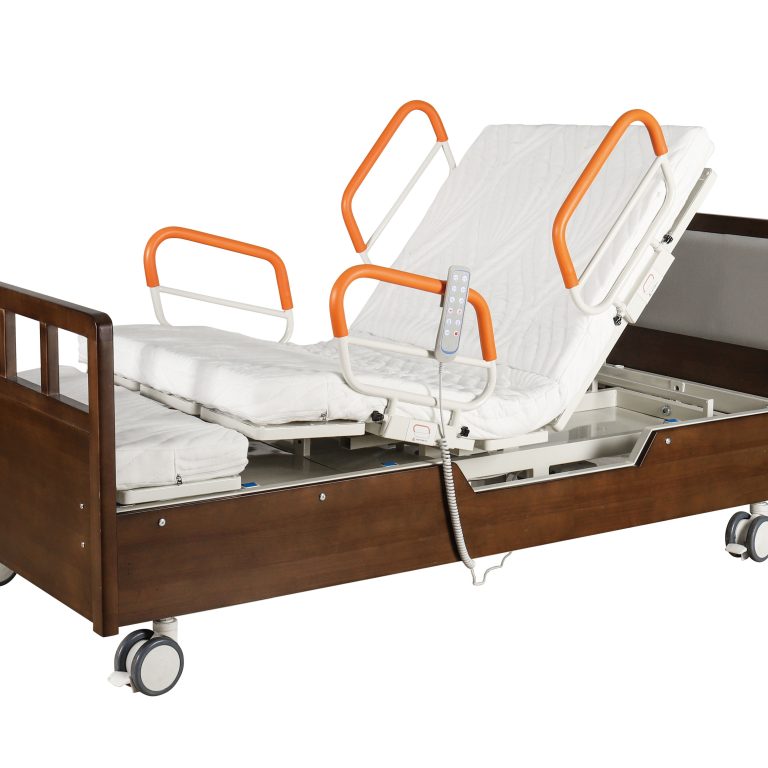
Advanced positioning remains the cornerstone of effective home care beds. Electric models typically feature 3-5 motor functions allowing independent adjustment of backrest (0-75°), knee section (0-45°), and overall bed height [K2]. This multi-point adjustability enables the Trendelenburg position (head lowered 12-15°), which proves essential for shock management, venous return enhancement, and certain surgical procedures [K1]. Manual beds achieve similar positioning through mechanical cranks, though this requires greater physical effort from caregivers [K1].
Integrated Bedpan Access Systems
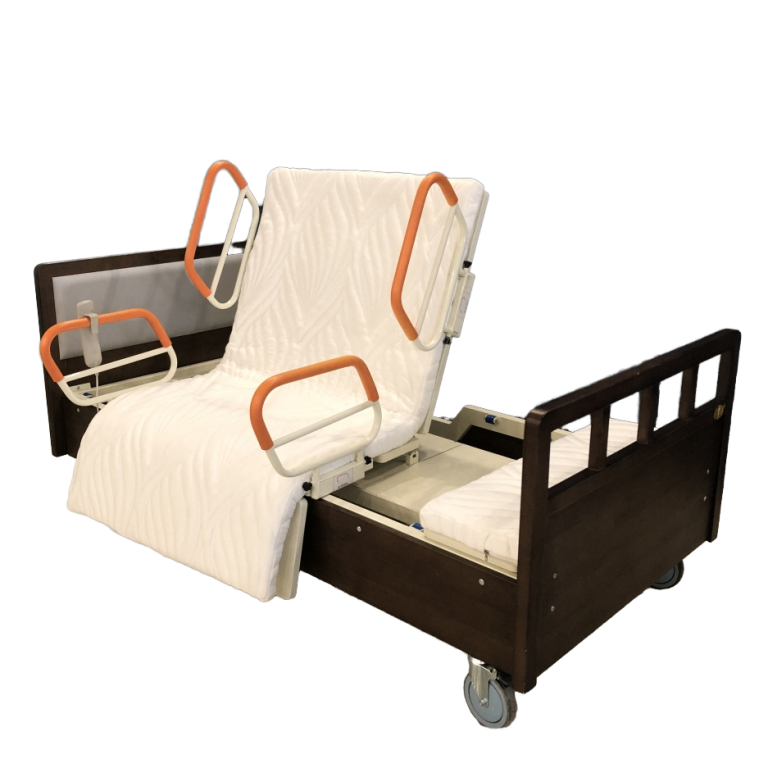
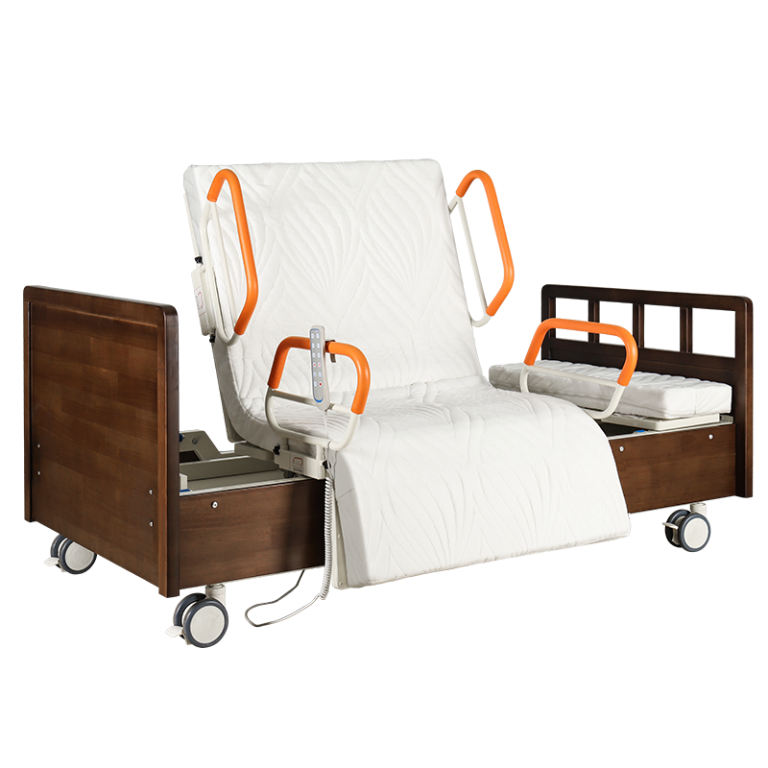
Modern designs incorporate split-frame bedpan access that allows caregivers to slide standard bedpans beneath patients without requiring full repositioning or lifting. Premium models feature quick-release mattress sections that create a 15-20cm opening precisely where needed, reducing patient movement by up to 60% compared to traditional methods. This design minimizes discomfort for patients with spinal injuries, recent surgeries, or chronic pain conditions while maintaining infection control protocols through easy-clean surfaces.
Safety and Ergonomic Considerations
Weight capacity ratings typically range from 220kg for standard models to 450kg for bariatric versions, with frame construction using either steel tubing (1.2-1.5mm thickness) or aluminum alloys for lighter weight applications. Side rails with multiple height positions provide fall prevention while allowing easy access for caregivers. The bedpan access mechanism should operate smoothly with minimal force—ideally under 5kg of pressure—to accommodate caregivers with limited strength or mobility themselves.
Manual vs Electric: Choosing the Right Solution
The decision between manual and electric operation significantly impacts both initial investment and long-term usability. Each approach serves distinct market segments based on infrastructure, budget constraints, and care intensity requirements.
| Feature | Manual Nursing Bed | Electric Nursing Bed |
|---|---|---|
| Operation Method | Hand-crank mechanisms | Electric linear actuators with remote control |
| Initial Cost | $80-150 USD [K1] | $300-800 USD |
| Caregiver Effort | High (requires physical cranking) | Minimal (button operation) |
| Positioning Precision | Approximate angles | Exact degree adjustments |
| Power Dependency | None required | Requires stable electricity |
| Best Suited For | Power-unstable regions, budget constraints | Home care, hospitals, elderly care facilities |
Manual beds maintain relevance in specific contexts despite technological advances. In regions with unreliable electricity—particularly parts of Africa and Southeast Asia—manual beds remain the practical choice, representing 65% of installations in these markets [K1]. However, even in developed markets, manual beds serve as backup systems during power outages or for temporary care situations where budget constraints are paramount.
Electric beds have become the standard for professional home care settings. HJIM’s MD-A12 model exemplifies this category with its three-motor system providing precise positioning while maintaining a compact footprint suitable for residential environments [K2]. The reduction in caregiver physical strain—up to 70% according to industry studies—translates directly to reduced workplace injuries and improved care consistency [K2].
Real-World User Scenarios
Home Care for Elderly Patients
Families managing care for elderly relatives with mobility limitations benefit most from electric models with simplified controls. The ability to adjust bed position with a single button press proves invaluable during nighttime care routines, reducing sleep disruption for both patients and caregivers. Integrated bedpan access eliminates the need to transfer patients to commodes, decreasing fall risk by approximately 40% compared to traditional transfer methods.
Rural and Resource-Limited Settings
In communities with limited healthcare infrastructure, manual beds with bedpan functionality provide essential care capabilities without requiring electrical infrastructure. These models serve effectively in village clinics, mobile health units, and home-based care programs where transportability and reliability outweigh advanced features. The lower maintenance requirements—no motors, electronics, or power supplies—make them ideal for settings where technical support is scarce.
Post-Surgical Recovery
Patient recovery after orthopedic or abdominal surgeries often requires precise positioning to manage pain and promote healing. Electric beds with memory presets allow caregivers to quickly return patients to optimal positions following bedpan use or repositioning. The Trendelenburg position capability proves particularly valuable for managing post-operative hypotension or facilitating certain wound care procedures [K1].
Future-Proofing Your Investment: Smart Features
The home care bed market continues evolving with technology integration that enhances both patient monitoring and caregiver efficiency. Current innovations include IoT-enabled sensors that track patient movement patterns and alert caregivers to potential fall risks before incidents occur. Some premium models now incorporate voice control compatibility with smart home systems, allowing position adjustments through simple verbal commands.
Predictive maintenance features monitor motor and actuator performance, scheduling service before failures occur—a critical consideration for facilities managing multiple beds. While these advanced features currently appear primarily in premium-tier products from manufacturers like Hill-Rom and Paramount Bed, mid-tier Chinese producers with CE/FDA certification are rapidly closing the technology gap [K3].
Conclusion
Selecting the right home care bed with bedpan functionality requires balancing immediate needs against long-term care requirements and environmental constraints. For power-stable environments with regular caregiving needs, electric models offer superior ergonomics and patient comfort despite higher initial costs. In resource-limited settings or as backup systems, manual beds provide reliable functionality at accessible price points. Regardless of operation type, proper bedpan access design remains essential for maintaining patient dignity and reducing caregiver physical strain.
As global home healthcare markets grow at 8.5% CAGR through 2027, driven by aging populations and shifting care models from hospitals to homes, investment in appropriate bed solutions becomes increasingly strategic [K1]. Manufacturers like HJIM (Hengshui Chengen Medical Equipment Co., Ltd) continue refining these products to address diverse global needs while maintaining compliance with international standards including CE marking and ISO 13485 certification.
Frequently Asked Questions
What weight capacity should I consider for a home care bed with bedpan?
Standard home care beds typically support 220kg (485lbs), while bariatric models accommodate up to 450kg (992lbs). Always verify the specific weight rating matches your patient’s needs with a 15-20% safety margin above their current weight. HJIM’s MD-A12 model, for example, supports 220kg while maintaining stable bedpan access functionality [K2].
How do I ensure the bed meets medical certification requirements?
Look for CE marking (European conformity), FDA 510(k) clearance (U.S. market), and ISO 13485 certification for medical device quality management. Reputable manufacturers like HJIM provide documentation confirming compliance with these standards, which is essential for insurance reimbursement and facility accreditation. Always request current certification copies before purchase.
What maintenance is required for beds with bedpan access mechanisms?
Manual models require quarterly lubrication of crank mechanisms and annual inspection of bedpan sliding surfaces. Electric beds need monthly checks of actuator connections and remote control battery replacement every 6-12 months. All models benefit from weekly cleaning of bedpan access channels with hospital-grade disinfectants to prevent bacterial buildup.
Can I convert a standard hospital bed to include bedpan functionality?
While aftermarket bedpan access kits exist, they rarely match the integration quality of purpose-designed beds. Retrofit solutions often compromise mattress support integrity and may void existing warranties. For reliable performance, selecting a bed with factory-integrated bedpan access from manufacturers like HJIM provides better long-term value despite higher initial cost.