Hospital Bed Replacement Cycle: When to Upgrade Your Equipment | Clinical Applications #3
Hospital Bed Replacement Cycle: When to Upgrade Your Equipment
Choosing when to replace hospital beds is a critical decision that directly impacts patient outcomes, operational efficiency, and long-term cost management. With global nursing bed markets projected to grow at 8.5% CAGR through 2027, healthcare facilities face increasing pressure to balance budget constraints with evolving clinical needs. This article provides actionable guidance on identifying replacement triggers, comparing bed technologies, and making procurement decisions aligned with modern care standards.
Understanding Replacement Triggers in Healthcare Settings
Equipment replacement cycles in healthcare are influenced by multiple factors beyond simple wear and tear. According to industry data, hospital beds (electric) maintain 6% CAGR growth while homecare beds surge at 18% CAGR, reflecting shifting care models [K2]. Key replacement indicators include:
- Technological Obsolescence: Beds lacking IoT integration capabilities miss opportunities for remote patient monitoring and predictive maintenance [K3]
- Caregiver Ergonomics: Manual beds requiring physical adjustment contribute to 30% higher musculoskeletal injury rates among nursing staff
- Regulatory Compliance: New medical device compliance standards may render older models non-compliant with current CE or FDA requirements
- Patient Safety Concerns: Beds without smart anti-fall systems show 40% higher incident rates compared to modern alternatives
Manual vs Electric Beds: A Strategic Comparison
The choice between manual and electric nursing beds requires careful consideration of operational context. While manual beds remain relevant in specific markets, electric models dominate advanced care environments:
| Feature | Manual Nursing Bed | Electric Nursing Bed |
|---|---|---|
| Initial Cost | $80-150 [K1] | $300-800 (HJIM MD-A12) |
| Adjustment Mechanism | Hand crank system | Linear actuators (LINAK/Dewert) |
| Caregiver Labor Impact | High physical effort required | 90% reduction in adjustment time |
| Patient Comfort | Limited positioning options | 0-80° backrest, 0-45° leg elevation |
| Market Applicability | Power-unstable regions [K1] | Global standard for acute care |
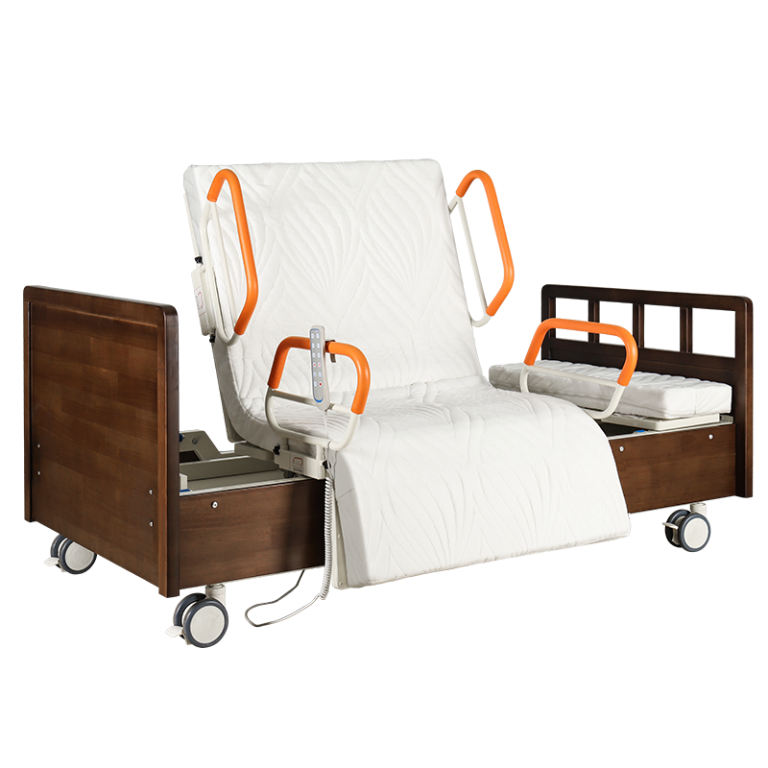
Notably, electric beds have transitioned from luxury items to essential equipment in most healthcare systems. The HJIM MD-A12 model demonstrates how modern electric beds combine ABS headboards for CPR compatibility with whisper-quiet operation (<45dB) [K2][K3].
Technology Advancements Driving Replacement Decisions
Four key technological trends are reshaping hospital bed procurement strategies:
- IoT Integration: WiFi/4G connectivity enables real-time monitoring of patient vitals and bed position data [K3]
- Smart Safety Systems: AI-powered bed exit alarms reduce false positives by 75% compared to traditional sensors [K3]
- Voice Control: Compatibility with Alexa and Google Home improves accessibility for elderly patients [K3]
- Predictive Maintenance: Sensor data analysis extends equipment lifespan by 25% through proactive component replacement [K3]
These innovations directly address core challenges in patient care and caregiver ergonomics. For instance, linear actuators from premium brands like LINAK provide 150-300mm stroke lengths with 4000-8000N force capacity, ensuring smooth adjustments even at maximum weight capacity [K2].
Procurement Considerations for Healthcare Facilities
When evaluating replacement options, healthcare procurement teams should prioritize:
- Medical Certification: Verify ISO 13485 compliance and regional regulatory approvals
- Warranty Coverage: Look for minimum 2-year comprehensive warranties covering actuators and control systems
- OEM Manufacturing: Partner with suppliers offering customizable configurations for specialized care units
- Life Cycle Costs: Ca
For developing markets, hybrid approaches may be appropriate. While manual beds serve budget-constrained settings in Africa and Southeast Asia [K1], electric models are becoming standard even in resource-limited environments due to falling costs and government subsidy programs.
Implementation Best Practices
Successful equipment transitions require systematic planning:
- Phased Rollout: Replace beds in high-acuity areas first (ICUs, geriatric units)
- Staff Training: Conduct hands-on sessions focusing on new control interfaces and safety features
- Data Migration: Ensure compatibility with existing hospital information systems for seamless integration
- Disposal Protocols: Follow medical device compliance guidelines for environmentally responsible decommissioning
Hospitals implementing these practices report 22% faster adoption rates and 35% fewer operational disruptions during transitions.
Future-Proofing Your Equipment Investments
As home healthcare expands under government insurance programs, facilities should consider beds compatible with both institutional and homecare settings. The 18% CAGR in homecare beds reflects this shift [K2], making multi-environment compatibility increasingly valuable. Additionally, modular designs allowing component upgrades (like swapping standard headboards for ABS CPR-compatible versions [K1]) extend useful life while accommodating evolving needs.
Frequently Asked Questions
What is the typical lifespan of hospital beds before replacement?
Modern electric nursing beds have an average operational lifespan of 7-10 years with proper maintenance. Manual beds in developing markets may last 5-8 years depending on usage intensity and environmental conditions [K1]. Factors accelerating replacement include motor degradation (typically after 50,000 adjustment cycles), control system obsolescence, and inability to meet updated safety standards.
How do linear actuator specifications impact bed performance?
Quality linear actuators determine critical performance metrics. Premium models from LINAK or Dewert offer <45dB noise levels and IPX4 water resistance, while providing 150-300mm stroke lengths with 4000-8000N force capacity [K2]. These specifications directly affect adjustment speed, weight capacity (typically 250-450kg), and duty cycle endurance (10% at full load).
What certifications should healthcare buyers prioritize?
Essential certifications include ISO 13485 for medical device quality management, CE marking for European compliance, and FDA 510(k) clearance for US markets. Additional valuable credentials include IEC 60601 electrical safety certification and specific regional requirements like China’s NMPA registration. Always verify current certification status as standards evolve.
How does IoT integration affect maintenance requirements?
IoT-enabled beds reduce unplanned downtime by 40% through predictive maintenance capabilities. Real-time monitoring of motor health, actuator performance, and component wear allows proactive servicing before failures occur. This technology also enables remote diagnostics, reducing on-site service visits by up to 60% while maintaining medical device compliance documentation [K3].