Nursing Bed Remote Control: Features That Improve Caregiver Experience | Feature Comparison #6
Nursing Bed Remote Control: Features That Improve Caregiver Experience
In the evolving landscape of healthcare procurement and elderly care, the nursing bed has transitioned from a passive piece of furniture to an active medical device. For hospital administrators, procurement officers, and family caregivers, the interface between the patient and the bed is critical. This interface is almost exclusively managed through the remote control system. Understanding the specific features of nursing bed remote controls is no longer just about convenience; it is about caregiver ergonomics, patient safety, and operational efficiency.
At HJIM (Hengshui Chengen Medical Equipment Co., Ltd), we recognize that the remote control is the command center of modern patient care. Whether managing a single patient in a home setting or coordinating a ward of twenty beds in a hospital, the quality and functionality of the remote control system directly impact the workload of nursing staff and the comfort of the patient. This article explores the technical features that define high-quality nursing bed controls, drawing on industry standards and real-world application data.
The Evolution from Manual to Electric Control
To appreciate the value of a modern remote control, one must understand the baseline it replaced. Historically, the manual nursing bed was the standard. These beds utilized a mechanical crank system where caregivers physically turned a handle to adjust the backrest or leg section [K1]. While these beds remain relevant in specific markets due to their low cost—typically ranging from $80 to $150 in regions like Africa and Southeast Asia—they place a significant physical burden on the caregiver [K1].
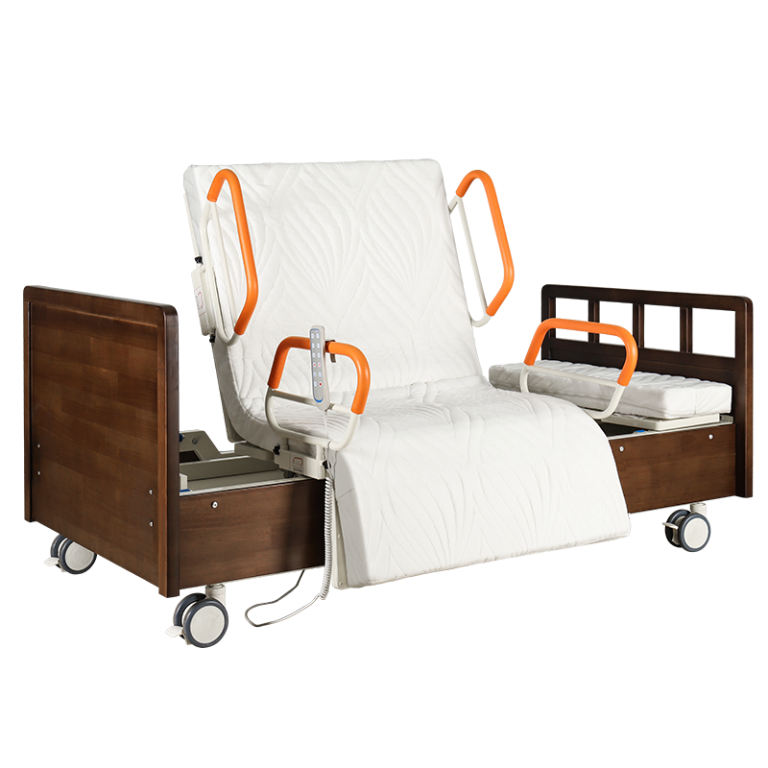
The shift to electric nursing beds represents a fundamental change in care delivery. An electric nursing bed uses linear actuators, typically ranging from two to five motors, to adjust the bed’s position via a handheld remote or wall panel [K2]. The core logic here is the reduction of physical labor. Where a manual bed requires significant force to change a patient’s position, an electric bed allows for precise adjustments with the press of a button. Industry data suggests that electric beds can reduce caregiver labor intensity by over 70% compared to manual alternatives [K2].
This transition is not merely about luxury; it is about medical necessity. In scenarios where patients have limited mobility, frequent position changes are required to prevent pressure u
Core Remote Control Functions for Caregiver Efficiency
When evaluating a nursing bed, the remote control’s functionality is the primary differentiator. A basic remote might only offer up and down movement, but a professional-grade control system offers multi-axis adjustment. The industry standard for mid-to-high-tier beds is the 3-function configuration. This typically includes independent control over the backrest, the knee section, and the overall bed height.
For example, the HJIM MD-A12 electric nursing bed demonstrates these capabilities clearly. Its remote control manages a backrest adjustment range of 0 to 80 degrees and a knee section adjustment of 0 to 45 degrees [K2]. This range is critical for clinical care. A backrest angle of 80 degrees allows a patient to sit upright for eating or reading, while a 45-degree knee bend helps prevent the patient from sliding down the bed, reducing shear force on the skin.
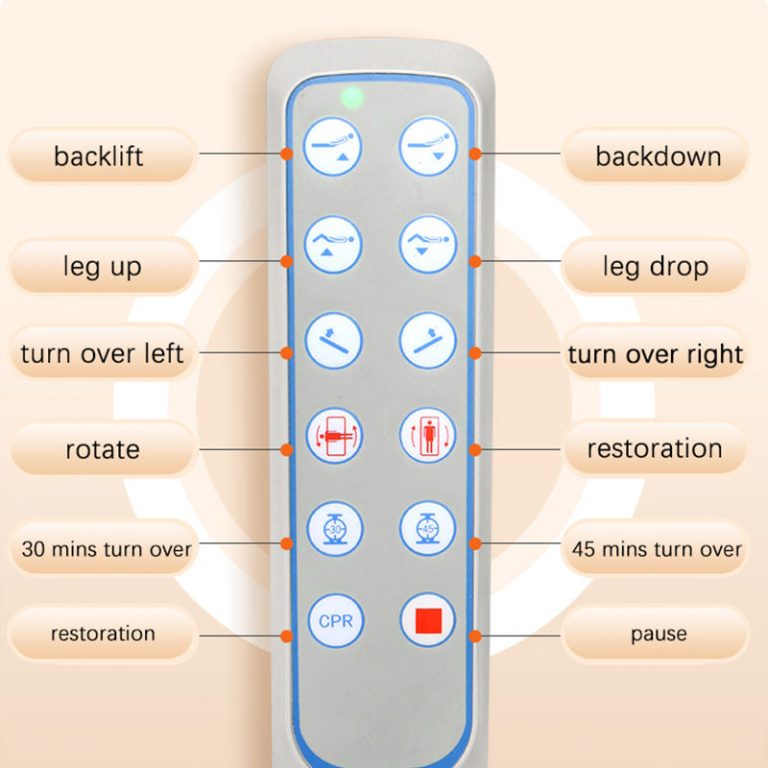
Furthermore, the ergonomics of the remote itself matter. In a busy hospital environment, caregivers often operate beds with one hand while supporting a patient with the other. Therefore, the remote should be lightweight, have tactile buttons that are easy to identify by touch, and ideally feature a cord length that allows the caregiver to stand at a safe distance from the bed rails. Some advanced remotes also integrate call buttons, allowing the patient to summon help without needing a separate wall unit, streamlining the communication channel between patient and staff.
Safety and Stability Features Integrated with Control
While the remote control manages vertical and angular movement, bed safety is managed by the braking system. A critical feature that complements the remote control is the Central Brake System. In older or budget models, caregivers must step on individual wheel casters to lock the bed, which can be awkward and time-consuming. A central brake system allows a single foot pedal to lock all four wheels simultaneously [K2].
This integration is vital for patient safety during transfers. When a patient is being moved from the bed to a whee
Additionally, modern remote controls often include safety locks or child locks to prevent accidental activation. In a shared room or a home environment where children or confused patients might interact with the bed, preventing unintended movement is crucial. Some systems also feature emergency manual cranks as a backup. In the event of a power failure, the remote becomes useless, and the ability to manually lower the bed to a safe position is a mandatory safety requirement in many regulatory frameworks.
Smart Trends and Future-Proofing
The nursing bed industry is currently undergoing a digital transformation. The remote control is becoming a node in a larger Internet of Things (IoT) network. IoT Integration allows for the remote monitoring of patient vitals, bed position, and weight via WiFi or 4G connections [K1]. For hospital administrators, this means that the status of every bed in the ward can be monitored from a central dashboard, improving response times and resource allocation.
Another emerging trend is Smart Anti-fall technology. Using AI-powered sensors, the bed can detect when a patient is attempting to exit the bed unassisted and trigger an alarm [K1]. This reduces false positives compared to older pressure mat systems. Furthermore, integration with smart home systems like Alexa or Google Home is beginning to appear, allowing for voice control of bed functions [K1]. While this may seem like a novelty, for patients with limited hand mobility who cannot grip a remote, voice control is a significant accessibility improvement.
Predictive maintenance is also becoming a feature of smart bed ecosystems. By monitoring motor and actuator health via sensor data, the system can alert maintenance teams before a component fails [K1]. This reduces downtime and ensures that the bed is always operational when needed, which is critical for healthcare procurement strategies focused on asset longevity.
Market Landscape and Procurement Considerations
When sourcing nursing beds, understanding the competitive landscape is essential for making cost-effective decisions. The market is generally divided into three tiers. The Premium tier includes brands like Hill-Rom and Paramount Bed, which offer extensive service networks and brand recognition but come with a higher price tag [K3]. The Budget tier consists of unbranded OEMs engaging in price wars, often with margins compressed below 8%, which can lead to quality and compliance risks [K3].
There is a growing Mid-tier segment dominated by Chinese manufacturers who offer CE and FDA certifications at a competitive cost [K3]. This is where brands like HJIM operate, providing a balance of quality, certification, and value. For procurement officers, the key is to verify medical certifications. A bed must comply with standards such as ISO 13485 for medical device quality management and relevant electrical safety standards. The presence of a valid CE mark or FDA 510(k) clearance is non-negotiable for hospital use.
When comparing specifications, look beyond the marketing claims. Verify the motor brand; reputable beds often use motors from established suppliers like LINAK or Dewert, which offer better durability and lower noise levels compared to generic alternatives. Also, check the weight capacity. While standard beds often support 220kg, bariatric patients may require higher capacities. Ensuring the remote control system can handle the load safely without motor strain is part of the due diligence process.
Comparison of Nursing Bed Technologies
To assist in procurement decisions, the following table compares the three main categories of nursing beds based on key operational parameters.
| Feature | Manual Nursing Bed | Standard Electric Bed | Smart IoT-Enabled Bed |
|---|---|---|---|
| Control Method | Hand Crank / Mechanical Lever | Handheld Remote / Wall Panel | Remote + App / Voice Control |
| Labor Intensity | High (Physical effort required) | Low (Button press) | Minimal (Automated monitoring) |
| Adjustment Speed | Slow (Depends on operator) | Fast (Motorized) | Fast + Remote Adjustments |
| Safety Features | Manual Wheel Locks | Central Brake System | AI Anti-Fall + Remote Monitoring |
| Typical Cost Range | $80 – $150 | $300 – $800 | $1,000+ |
| Best Use Case | Low-resource settings, stable patients | Hospitals, Home Care, Elderly Care | Smart Hospitals, High-dependency Care |
Conclusion
The remote control on a nursing bed is more than a switch; it is the primary tool for delivering dignified and efficient care. As the industry moves away from manual mechanisms, the focus shifts to reliability, safety, and smart integration. For healthcare providers and families, selecting a bed with a robust remote control system—backed by central braking, appropriate motor specifications, and relevant certifications—is an investment in both patient outcomes and caregiver well-being.
Brands like HJIM are bridging the gap between premium functionality and accessible pricing, offering electric nursing beds that meet international standards like CE and FDA while incorporating essential features such as the MD-A12’s multi-function adjustment. As technology advances, the integration of IoT and AI will further elevate the standard of care, making the nursing bed a proactive partner in health management rather than just a place to rest.
What is the typical weight capacity of a standard electric nursing bed?
Most standard electric nursing beds, such as the HJIM MD-A12 model, are designed to support a maximum load of approximately 220kg (485 lbs). This capacity ensures safety for a wide range of adult patients. However, for bariatric care, specialized beds with reinforced frames and higher weight limits are available and should be specified during procurement.
Do electric nursing beds require a backup power source?
While electric nursing beds operate on mains power, safety regulations often require a backup mechanism for emergencies. In the event of a power outage, high-quality beds include a manual crank handle that allows caregivers to lower the bed to a safe position manually. This ensures that patients can be evacuated or repositioned even without electricity.
What certifications should I look for when buying nursing beds for a hospital?
For hospital procurement, it is essential to verify medical device compliance. Look for beds that carry CE marking (indicating compliance with European health and safety standards) and FDA clearance (for the US market). Additionally, manufacturers should adhere to ISO 13485 standards for quality management systems in medical devices. These certifications ensure the bed meets rigorous safety and performance criteria.
How does the central brake system improve patient safety?
A central brake system allows a single foot pedal to lock all four wheel casters simultaneously. This is superior to individual wheel locks because it ensures the bed is completely stable during patient transfers, such as moving from bed to whee