Nursing Bed Customization Options: Colors, Sizes, and Branding
Nursing Bed Customization Options: Colors, Sizes, and Branding
The global medical nursing bed market is valued at approximately USD 4.5 billion, with a projected compound annual growth rate of 8.5% through 2027. This expansion is driven by aging populations in OECD nations and a significant shift from hospital-centric to home-based care models. For healthcare procurement officers and facility managers, selecting the right nursing bed is no longer just about functionality; it is about aligning equipment with specific clinical needs, aesthetic requirements, and branding strategies.
At HJIM (Hengshui Chengen Medical Equipment Co., Ltd), we understand that a nursing bed is the central hub of patient care. Whether for a high-acuity ICU setting, a rehabilitation center, or a private home, the ability to customize these devices ensures they meet the rigorous demands of modern healthcare while enhancing the patient experience. This guide explores the critical dimensions of nursing bed customization, from technical specifications to aesthetic branding.
Understanding Core Product Architectures
Before diving into customization, it is essential to distinguish between the two primary architectures available in the market: electric and manual systems. The choice between these fundamentally dictates the level of customization possible and the operational costs over the product’s lifecycle.
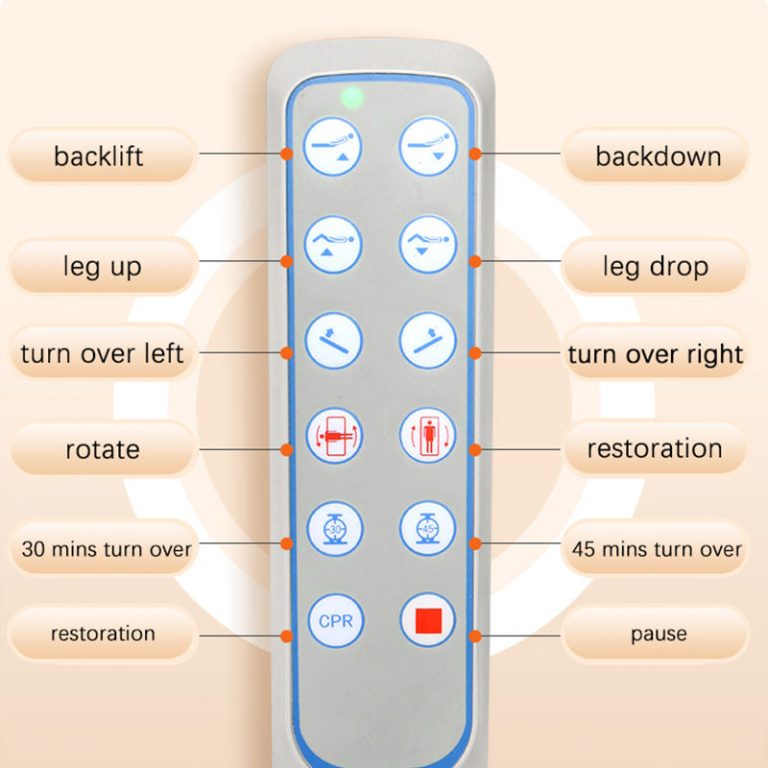
Electric Nursing Beds have become the standard for professional care. An electric nursing bed uses linear actuators to provide adjustable positioning for patients with limited mobility. These systems typically utilize 2 to 5 motors to adjust the backrest, knee break, and overall height. For instance, the HJIM MD-A12 is a 3-function model that allows backrest adjustment from 0 to 75 degrees and knee adjustment from 0 to 45 degrees, with a maximum load capacity of 220kg. The primary value proposition here is the reduction of caregiver labor intensity by over 70%, as patients can adjust their position via remote control without physical exertion from staff.
Manual Nursing Beds, conversely, rely on mechanical crank handles to achieve similar positional changes. While they lack the convenience of motorized adjustment, they remain a vital solution in budget-constrained environments or regions with unstable power infrastructure. In markets such as parts of Africa and Southeast Asia, manual beds priced between $80 and $150 are still the主力 product. However, as the cost of electric components decreases, the gap between these two categories is narrowing, making electric beds increasingly accessible for general ward and home care applications.
Customizing for Clinical and Home Environments
Customization extends far beyond the mechanical function of the bed. It encompasses the visual and tactile elements that influence patient psychology and facility branding. In a clinical setting, the environment can often feel sterile and intimidating. Customization offers a way to humanize the space.
Color and Finish Selection
Standard hospital beds often come in clinical whites or greys. However, for home healthcare or boutique养老 facilities, custom powder coating and upholstery colors are available. Lighter, warmer tones can reduce patient anxiety, while darker, durable finishes may be preferred for high-traffic hospital corridors to hide wear and tear. The choice of fabric is equally critical; it must be antimicrobial, fluid-resistant, and easy to clean, adhering to strict hygiene protocols while offering a soft, non-clinical feel for home users.
Dimensional Adjustments
Standard bed sizes do not fit every patient or room layout. Customization options include adjusting the deck length and width to accommodate bariatric patients or compact rooms. For example, while a standard deck might be 80 inches long, custom orders can extend this to 84 or 86 inches to ensure proper support for taller individuals. Additionally, the height range of the bed can be tuned; a lower minimum height is crucial for pediatric care or for patients who feel safer when the bed is closer to the floor, reducing the psychological fear of falling.
OEM Branding and Identity
For distributors and facility chains, branding is a key differentiator. HJIM supports OEM manufacturing, allowing partners to place their logos on the headboards, footboards, and remote controls. This not only reinforces brand identity but also ensures that the equipment is easily identifiable for maintenance and warranty purposes. In a competitive procurement landscape, having equipment that visibly represents your organization can enhance perceived value and trust among patients and families.
Technical Specifications and Regulatory Compliance
When customizing nursing beds, technical parameters must align with regulatory standards to ensure safety and market access. The choice of components directly impacts the reliability and longevity of the device.
Motor and Actuator Quality: The heart of an electric nursing bed is the linear actuator. High-end configurations often specify motors from renowned brands like LINAK or Dewert, known for their quiet operation and durability. For cost-sensitive projects, high-quality domestic motors are a viable alternative, provided they meet the necessary load and cycle life requirements. The noise level of these motors is a critical metric, especially for home care, where a loud bed can disrupt sleep and hinder recovery.
Weight Capacity and Safety: Safety is paramount. Standard beds typically support up to 220kg, but custom bariatric models can be engineered to support significantly higher weights. The frame construction, usually made of cold-rolled steel with powder coating, must be robust enough to handle dynamic loads without flexing. Additionally, safety features such as bed exit alarms with AI-powered false positive reduction are becoming standard in smart configurations to prevent falls.
Certifications: Any nursing bed intended for medical use must comply with international standards. Key certifications include CE marking for European markets, ISO 13485 for quality management systems in medical devices, and FDA clearance for the United States. These certifications ensure that the manufacturing process, material safety, and electrical compliance have been rigorously tested. Procurement teams should always verify that custom configurations do not void these certifications.
Future-Proofing with Smart Features
The nursing bed of the future is not just a piece of furniture; it is a connected health device. Technology trends in the industry are moving rapidly towards integration with broader healthcare ecosystems.
- IoT Integration: Modern beds can transmit data via WiFi or 4G, allowing remote monitoring of patient vitals, bed position, and weight. This is invaluable for telehealth applications and centralized nursing stations.
- Voice Control: Integration with smart home systems like Alexa or Google Home allows patients to adjust their bed using voice commands, enhancing independence for those with limited mobility.
- Predictive Maintenance: Sensors can monitor the health of motors and actuators, alerting maintenance teams before a failure occurs, thereby reducing downtime and ensuring continuous patient care.
These features transform the nursing bed from a passive support structure into an active participant in the care process, providing data that can inform clinical decisions and improve outcomes.
Comparative Analysis: Electric vs. Manual Nursing Beds
To assist in decision-making, the following table outlines the key differences between electric and manual nursing beds across critical procurement parameters.
| Feature | Electric Nursing Bed | Manual Nursing Bed |
|---|---|---|
| Adjustment Mechanism | Electric linear actuators (2-5 motors) | Mechanical crank handles (摇杆) |
| Operational Effort | Remote control; minimal caregiver effort | Requires physical turning by caregiver |
| Typical Cost Range | Higher initial investment | $80 – $150 (budget-friendly) |
| Primary Market | Hospitals, Home Care, Rehab Centers | Developing regions, Budget facilities |
| Smart Features | IoT, Voice Control, Alarms | Limited to basic mechanical functions |
| Best Use Case | Long-term care, High-acuity patients | Short-term use, Power-unstable areas |
Conclusion
Customizing nursing beds is a strategic decision that balances clinical efficacy, patient comfort, and operational budget. As the global market continues to grow, the demand for beds that offer specific color schemes, precise dimensional adjustments, and integrated branding will only increase. Whether choosing a high-tech electric model with IoT capabilities or a reliable manual bed for cost-effective care, the goal remains the same: to provide a safe, comfortable, and dignified environment for patients.
Partners like HJIM provide the flexibility to tailor these solutions to exact specifications, ensuring that every bed delivered meets the highest standards of medical device compliance and user experience. By carefully evaluating the technical parameters and customization options available, healthcare providers can significantly enhance the quality of care delivered.
Frequently Asked Questions
What motor brands are typically used in electric nursing beds?
The quality of the linear actuators is a primary indicator of bed reliability. High-end configurations often utilize motors from renowned manufacturers such as LINAK or Dewert, which are known for quiet operation and durability. For cost-sensitive projects, high-quality domestic motors are a viable alternative, provided they meet the necessary load and cycle life requirements. The specific motor brand is often a customizable option during the procurement process.
What is the standard weight capacity for a nursing bed?
Standard electric nursing beds, such as the HJIM MD-A12, typically support a maximum load of 220kg. However, custom bariatric models can be engineered to support significantly higher weights depending on the frame construction and actuator specifications. Procurement teams should always verify the weight capacity against the specific needs of their patient population to ensure safety and compliance.
Are smart features like IoT and voice control available for customization?
Yes, modern nursing beds increasingly support smart features. These include IoT integration for remote monitoring of patient vitals and bed position via WiFi or 4G, as well as voice control integration with smart home systems like Alexa or Google Home. Predictive maintenance sensors are also available to monitor motor health. These features can be included in custom orders to future-proof the equipment.
What regulatory certifications should I look for when purchasing nursing beds?
For medical use, nursing beds must comply with international safety and quality standards. Key certifications include CE marking for European market access, ISO 13485 for quality management systems in medical device manufacturing, and FDA clearance for the United States. These certifications ensure that the manufacturing process, material safety, and electrical compliance have been rigorously tested. Custom configurations should not void these essential certifications.