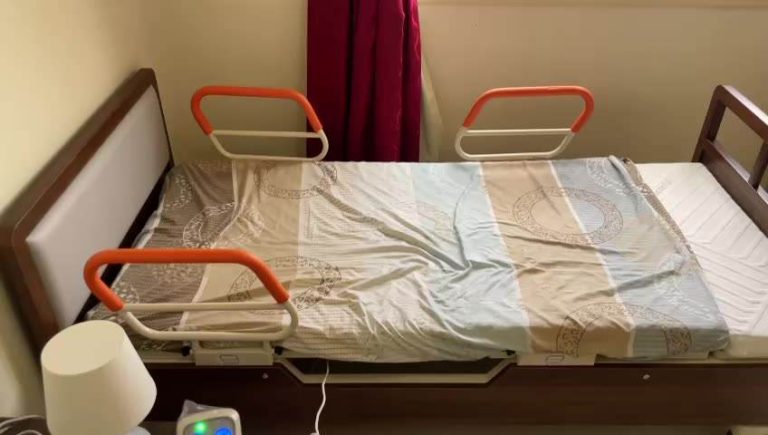
Home Care Equipment Package: Nursing Bed with Wheelchair and Walker
Home Care Equipment Package: Nursing Bed with Whee
The landscape of healthcare is undergoing a significant transformation. As the global medical nursing bed market reaches an estimated value of USD 4.5 billion in 2024, with a projected compound annual growth rate (CAGR) of 8.5% through 2027, the focus is shifting decisively from hospital-centric models to home-based care [K1]. This transition is driven by aging populations in OECD nations and the expansion of government insurance programs supporting home healthcare. For healthcare procurement officers, facility managers, and families navigating this shift, understanding the composition of a comprehensive Home Care Equipment Package is critical. Such a package typically centers on a nursing bed, supported by essential mobility aids like whee
At the heart of this ecosystem lies the nursing bed. It is no longer merely a place to sleep; it is a medical device designed for therapeutic positioning, pressure management, and caregiver efficiency. When sourcing these packages, particularly from manufacturers like HJIM (Hengshui Chengen Medical Equipment Co., Ltd), buyers must evaluate the technical specifications, regulatory compliance, and the specific clinical needs of the end-user. This article provides a detailed analysis of the components within a home care package, focusing on the critical decision between manual and electric nursing beds, the integration of smart technologies, and the procurement standards necessary for high-quality patient care.
The Critical Choice: Manual vs. Electric Nursing Beds
When assembling a home care package, the first and most significant decision involves the type of nursing bed selected. The market offers two primary categories: manual nursing beds and electric nursing beds. Each serves distinct market segments and clinical requirements, and understanding the trade-offs is essential for effective healthcare procurement.
Manual Nursing Beds operate using mechanical摇杆 (crank) mechanisms to adjust the bed面 (bed surface) angles. They are characterized by their simplicity, lack of reliance on electricity, and lower cost. In regions with unstable power grids or for buyers with strict budget constraints, manual beds remain a viable solution. For instance, in markets across Africa and Southeast Asia, manual beds are the主力产品 (mainstream products), with prices typically ranging between $80 and $150 [K1]. However, the operational downside is significant: adjusting the patient’s position requires physical effort from the caregiver. This can lead to caregiver fatigue and increases the risk of musculoskeletal injuries, a key concern in caregiver ergonomics.
Electric Nursing Beds, conversely, utilize electric linear actuators to adjust the backrest, knee break, and overall height via a remote control or panel. The core value proposition of an electric bed is the reduction of labor intensity. By replacing manual cranking with button-press operation, electric beds can reduce caregiver labor intensity by over 70% [K2]. This is not merely a convenience; it is a clinical necessity for patients who require frequent position changes to prevent complications such as pressure u
A prime example of modern electric nursing bed engineering is the HJIM MD-A12. This model features a 3-function configuration, allowing for backrest adjustment from 0-80 degrees, leg rest adjustment from 0-45 degrees, and overall height adjustment. It includes a remote control for ease of use and an ABS detachable headboard for hygiene and durability [K2]. While some buyers mistakenly view electric beds as luxury items, in many developed healthcare systems, they have become the basic configuration for home care, driven by the need for patient independence and reduced caregiver strain.
Clinical Positioning and Patient Comfort
The therapeutic value of a nursing bed is largely defined by its ability to achieve specific clinical positions. One of the most critical positions in patient care is Fowler’s Position. This standard clinical position involves raising the upper body to an angle of 45-60 degrees. The physiological benefits are substantial: it reduces cardiac preload, improves chest expansion for better breathing, and significantly lowers the risk of aspiration pneumonia, which is particularly important for patients with respiratory distress or those who are bedridden [K1].
When evaluating a nursing bed for a home care package, buyers should verify the range of motion for the backrest. A bed that cannot achieve a full Fowler’s position may limit the patient’s ability to eat, read, or interact with family members comfortably, thereby impacting their psychological well-being. The HJIM MD-A12, for example, supports backrest elevation up to 75-80 degrees, comfortably covering the Fowler’s range and allowing for near-upright positioning [K2].
Beyond basic positioning, the concept of patient care extends to pressure redistribution. While specialized mattresses are often used in conjunction with beds, the bed frame’s ability to articulate—bending at the knees and back—helps prevent the patient from sliding down (shear force), which is a primary cause of skin breakdown. Therefore, the smoothness of the actuator movement and the stability of the bed frame at various angles are observable indicators of quality.
Technological Integration and Smart Features
The nursing bed industry is rapidly evolving, moving from passive furniture to active, connected medical devices. Technology Trends in this sector are heavily influenced by the Internet of Things (IoT) and artificial intelligence. Modern high-end nursing beds are increasingly integrating WiFi or 4G connectivity to enable remote monitoring of patient vitals, bed position, and even weight [K2]. This is particularly valuable for telehealth scenarios where a doctor or caregiver needs to verify that a patient is resting correctly without physically entering the room.
Another significant advancement is Smart Anti-fall technology. Traditional bed exit alarms often suffer from high false-positive rates, leading to “alarm fatigue” among caregivers. Newer systems utilize AI-powered sensors to distinguish between a patient simply sitting up and an actual attempt to leave the bed, triggering alerts only when necessary. Furthermore, Voice Control integration with smart home systems like Alexa or Google Home is emerging, allowing patients with limited mobility to adjust their bed settings using voice commands. For institutional buyers, Predictive Maintenance is a crucial feature; sensors can monitor the health of motors and actuators, alerting maintenance teams to potential failures before they occur, ensuring uninterrupted patient care [K2].
Procurement Standards and Compliance
When sourcing a home care equipment package, adherence to regulatory standards is non-negotiable. Medical device compliance ensures that the equipment is safe for patient use and meets international quality benchmarks. Key certifications to look for include CE marking (indicating conformity with health, safety, and environmental protection standards for products sold within the European Economic Area) and ISO 13485 (the international standard for quality management systems in the design and manufacture of medical devices). For markets in North America, FDA registration is often required.
Technical specifications should be scrutinized during the procurement process. The weight capacity of the bed is a primary safety metric. While standard beds may support 200-250 kg, bariatric patients require higher capacities. The HJIM MD-A12, for instance, boasts a maximum load capacity of 220 kg, making it suitable for a wide range of patient body types [K2].
Motor quality is another critical factor. The longevity and noise level of the bed depend heavily on the brand of linear actuators used. Industry leaders often specify motors from reputable manufacturers such as LINAK or Dewert, known for their smooth operation and durability. Domestic motors may offer cost advantages but should be vetted for noise levels, as excessive noise can disturb patient rest. The bed frame material, typically cold-rolled steel with powder coating, should be inspected for corrosion resistance, especially in humid environments or for patients with incontinence issues.
Comparison of Nursing Bed Types
To assist healthcare procurement officers in making informed decisions, the following table compares the key attributes of manual and electric nursing beds based on industry data and product specifications.
| Feature | Manual Nursing Bed | Electric Nursing Bed |
|---|---|---|
| Operation Mechanism | Hand-crank (摇杆) mechanism | Electric linear actuators with remote control |
| Cost Range | $80 – $150 (Typical for emerging markets) | Higher initial cost, but decreasing with scale |
| Caregiver Effort | High physical effort required | Low effort (Button control), reduces labor intensity by 70%+ |
| Power Dependency | None (Suitable for unstable power grids) | Requires electricity (Battery backup often available) |
| Primary Use Case | Basic hospitals, budget-limited home care | Hospitals, nursing homes, advanced home care |
| Example Model | Standard 2-function manual | HJIM MD-A12 (3-function, 220kg load) |
Integrating Mobility Aids: Whee
A complete home care equipment package extends beyond the bed to include mobility assistance devices. The transition from bed to whee
When selecting a whee to accompany the bed, consider the patient’s upper body strength and the home environment. Manual wheewalkers provide stability for patients in the early stages of rehabilitation. The package should ideally include a walker that can be easily stored near the bed or folded for transport. The synergy between these devices ensures that the patient maintains mobility when not in bed, which is vital for preventing muscle atrophy and maintaining bone density.
Conclusion
Selecting a Home Care Equipment Package is a strategic decision that impacts patient outcomes, caregiver well-being, and operational costs. While manual nursing beds offer an economical entry point for basic care, the industry trend is clearly moving toward electric solutions that enhance patient comfort and reduce caregiver strain. The integration of smart technologies, such as IoT monitoring and AI-driven safety alarms, further elevates the standard of home care, making it more responsive and data-driven.
For procurement professionals, the focus should be on verified technical specifications, regulatory compliance (CE, ISO 13485), and the reputation of the manufacturer. Brands like HJIM demonstrate how combining robust engineering—such as high weight capacities and reliable motors—with user-centric features like remote controls and detachable headboards can meet the diverse needs of the global market. By carefully evaluating the balance between cost, functionality, and safety, buyers can assemble packages that truly support the shift toward effective, home-based healthcare.
Frequently Asked Questions
What is Fowler’s Position and why is it important for nursing beds?
Fowler’s Position is a standard clinical position where the patient’s upper body is raised to an angle of 45-60 degrees. It is critical for patient care because it improves chest expansion for better breathing, reduces cardiac preload, and helps prevent aspiration pneumonia, especially in patients with respiratory distress or those who are bedridden [K1].
How much does a manual nursing bed typically cost compared to an electric one?
Manual nursing beds are generally more affordable, with industry examples from markets in Africa and Southeast Asia showing prices ranging between $80 and $150. Electric nursing beds have a higher initial cost due to the inclusion of motors and control systems, but they are increasingly becoming the standard configuration in many healthcare systems due to their efficiency [K1].
What are the key technical specifications to check when buying a nursing bed?
Key specifications include the weight capacity (e.g., the HJIM MD-A12 supports up to 220kg), the number of functions (backrest, knee, height adjustment), the brand of motors (such as LINAK or Dewert for reliability), and noise levels. Additionally, verifying medical certifications like CE and ISO 13485 is essential for ensuring safety and compliance [K2].
Are electric nursing beds considered luxury items?
No, electric nursing beds are not merely luxury items. While they were once viewed as premium products, they have become a basic configuration in many countries. They solve the core problem of patients who cannot move independently but require position changes to prevent complications like pressure u