How to Start a Medical Equipment Distribution Business | Installation & Maintenance #10
How to Start a Medical Equipment Distribution Business
The global healthcare landscape is undergoing a significant transformation, shifting from hospital-centric models to home-based care solutions. For entrepreneurs and investors, this transition presents a substantial opportunity to establish a medical equipment distribution business. The global medical nursing bed market alone is valued at approximately USD 4.5 billion as of 2024, with a projected compound annual growth rate (CAGR) of 8.5% through 2027 [K1]. This growth is driven by aging populations in OECD nations, the expansion of home healthcare under government insurance programs, and a fundamental shift in how patient care is delivered [K1].
Entering this market requires more than just capital; it demands a deep understanding of product specifications, regulatory compliance, and the supply chain dynamics of medical devices. Whether you are looking to distribute hospital-grade equipment or focus on the rapidly growing homecare segment, success hinges on selecting the right partners and understanding the technical nuances of the products you sell. This guide outlines the strategic steps to building a resilient distribution network, with a specific focus on the nursing bed sector, featuring insights from industry leaders like HJIM (Hengshui Chengen Medical Equipment Co., Ltd).
Understanding the Market Dynamics and Growth Segments
Before sourcing products, a distributor must analyze where the growth is occurring. The medical equipment market is not monolithic; it is segmented by care setting, patient acuity, and geographic region. The most significant opportunity currently lies in the homecare sector. While hospital beds (electric) are growing at a steady 6% CAGR driven by ICU expansion and smart monitoring integration, homecare beds are experiencing an explosive 18% CAGR [K3].
This divergence is fueled by the “silver economy,” government subsidies for aging-in-place, and the increasing preference for recovering at home rather than in institutional settings [K3]. In contrast, manual beds in developing regions like Africa and Southeast Asia are growing at a slower 3% CAGR, constrained by budget limitations and infrastructure gaps [K3].
For a new distributor, focusing on electric nursing beds for homecare offers the highest margin potential and growth trajectory. These products address the core problem of patient mobility: solving the issue where a patient cannot move but requires position changes to prevent complications like bedsores and肺部 infections [K2]. By aligning your inventory with the homecare trend, you position your business to capture the fastest-growing segment of the industry.
Product Selection: The Critical Role of Linear Actuators
When selecting nursing beds for your catalog, the quality of the internal components is the primary differentiator between a luxury product and a disposable one. The heart of any electric nursing bed is the linear actuator. A linear actuator is an electromechanical device that converts the rotational motion of a motor into linear push/pull motion, allowing the bed sections to raise and lower [K1].
Understanding the specifications of these actuators is vital for your sales team and your customers. High-quality actuators, such as those from LINAK (Denmark) or Dewert (Germany), offer silent operation below 45dB and IPX4 water resistance, ensuring durability and patient comfort [K1]. In contrast, lower-cost domestic motors may save on upfront procurement costs but often suffer from higher noise levels and shorter lifespans. The price difference between premium brands like LINAK and generic alternatives can be three to five times higher, reflecting significant disparities in longevity and performance [K1].
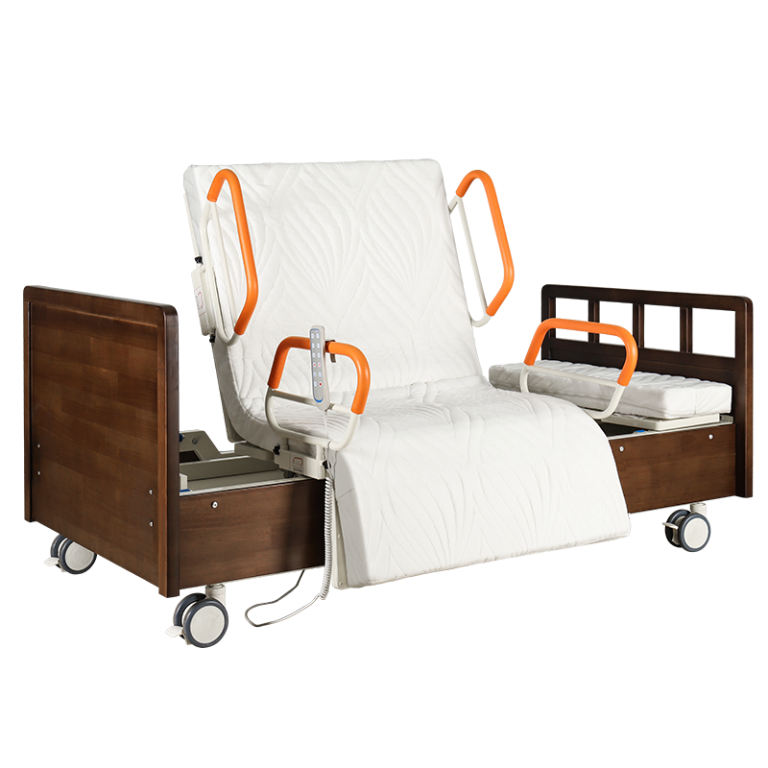
When evaluating products, you should examine specific technical parameters. A standard high-performance linear actuator typically features a stroke length of 150-300mm and a force output between 4000-8000N [K1]. The duty cycle is also critical; a 10% duty cycle at full load means the motor can run for 1 minute out of every 10 minutes without overheating. Distributors who can articulate these differences to buyers demonstrate expertise and build trust. For instance, the HJIM MD-A12 Electric Nursing Bed utilizes these principles to offer a 3-function system (backrest 0-80°, leg rest 0-45°, overall height adjustment) controlled via a simple remote, making it a strong candidate for homecare portfolios [K2].
Navigating Manufacturing Models: OEM, ODM, and OBM
Once you have identified the product type, you must decide on your sourcing strategy. The medical equipment industry primarily operates through three manufacturing models: OEM, ODM, and OBM. Understanding the margin structures associated with each is essential for your financial planning [K2].
OEM (Original Equipment Manufacturing) involves a factory producing goods to your specific design. This model offers the highest control over product specifications but requires significant upfront investment in design and tooling. The typical profit margin for OEM arrangements ranges from 5% to 10% [K2].
ODM (Original Design Manufacturing) is often the most practical entry point for distributors. Here, the factory provides both the design and production capabilities. You essentially rebrand an existing, proven product. This reduces development time and risk, with typical margins ranging from 10% to 15% [K2]. Many distributors start by selecting robust ODM products from manufacturers like HJIM, leveraging their existing R&D to bring compliant products to market quickly.
OBM (Original Brand Manufacturing) refers to the factory selling under its own brand. While this requires the least effort from the distributor, the margins are often tighter as the manufacturer retains the brand equity value. However, the potential margin for a successful OBM partnership can reach 20% to 35% if the brand gains significant market traction [K2].
For a new distribution business, an ODM strategy often provides the best balance of quality control, brand building, and margin potential. It allows you to offer custom
Regulatory Compliance and Certification Standards
Medical equipment distribution is heavily regulated. Selling non-compliant products can lead to legal liabilities and reputational damage. When sourcing nursing beds, you must verify that the manufacturer holds relevant certifications. The most critical standards include CE marking for the European market, ISO 13485 for quality management systems in medical devices, and FDA registration for the United States market.
These certifications are not just paperwork; they ensure that the electrical safety, mechanical stability, and biocompatibility of the materials have been tested. For example, the linear actuators used in the beds should meet specific safety standards regarding emergency stop functions and battery backup systems in case of power failure. Distributors should request copies of these certificates and verify their validity before listing products. Partnering with a manufacturer like HJIM, which adheres to strict international standards, mitigates the risk of compliance issues [K2].
Emerging Technology Trends in Smart Care
The nursing bed market is evolving beyond simple mechanical adjustment. Integration with digital health technologies is becoming a key selling point. Distributors should look for products that incorporate the following trends to stay competitive [K2]:
- IoT Integration: Modern beds can monitor patient vitals, bed position, and weight via WiFi or 4G connections. This data can be transmitted to caregivers or hospital systems, enabling remote patient monitoring.
- Smart Anti-fall Systems: Advanced beds now feature exit alarms with AI-powered false positive reduction. This technology alerts caregivers if a patient attempts to get out of bed unsafely, reducing the risk of injury.
- Voice Control: Integration with smart home systems like Alexa or Google Home allows patients to adjust their bed position using voice commands, enhancing independence for those with limited mobility.
- Predictive Maintenance: Sensors can monitor the health of the motor and actuator, alerting the distributor or service team to potential failures before they occur, ensuring continuous uptime for the patient.
Incorporating these smart features into your product lineup can differentiate your business from competitors who only offer basic mechanical beds. It positions your company as a provider of comprehensive care solutions rather than just furniture.
Building a Sustainable Supply Chain
Logistics and after-sales support are the backbone of a successful distribution business. Medical equipment is often bulky and requires careful handling. You need to establish warehousing solutions that protect products from damage and ensure they are stored in conditions that preserve electronic components.
Furthermore, training is essential. Your sales team and your customers’ staff (nurses, caregivers) need to understand how to operate and maintain the equipment. Providing detailed user manuals, training videos, and responsive technical support adds value to your distribution service. When a linear actuator fails or a remote control malfunctions, having a streamlined process for warranty claims and spare parts replacement is critical for customer retention.
Conclusion
Starting a medical equipment distribution business in the nursing bed sector offers a compelling opportunity to capitalize on the global shift toward home-based care. By focusing on high-growth segments like electric homecare beds, understanding the technical importance of components like linear actuators, and navigating the OEM/ODM landscape strategically, you can build a profitable and impactful enterprise. Success in this field requires a commitment to quality, regulatory compliance, and continuous learning about emerging technologies. Partnering with established manufacturers like HJIM can provide the product stability and innovation needed to thrive in this competitive market. As the demand for elderly care and mobility assistance continues to rise, distributors who prioritize patient safety and caregiver ergonomics will be well-positioned for long-term growth.
Frequently Asked Questions
What are the key specifications to check when evaluating a linear actuator for a nursing bed?
When evaluating a linear actuator, you should primarily check the stroke length, force output, and noise levels. A standard high-performance actuator typically has a stroke of 150-300mm and a force of 4000-8000N [K1]. Additionally, look for a noise level below 45dB for patient comfort and an IPX4 water resistance rating to ensure durability against spills and cleaning [K1]. The duty cycle should also be considered, with 10% at full load being a standard benchmark for medical applications [K1].
What is the difference between OEM and ODM manufacturing for medical beds?
OEM (Original Equipment Manufacturing) means the factory produces the bed based on your specific design and specifications, offering higher control but typically lower margins (5-10%) [K2]. ODM (Original Design Manufacturing) means the factory provides both the design and production, allowing you to rebrand an existing product. This is often faster to market with typical margins of 10-15% [K2]. ODM is generally recommended for distributors starting out who want to leverage existing R&D.
How does the homecare bed market compare to the hospital bed market in terms of growth?
The homecare bed market is growing significantly faster than the traditional hospital bed market. Homecare beds are projected to grow at an 18% CAGR, driven by the silver economy and government subsidies for aging-in-place [K3]. In contrast, electric hospital beds are growing at a more moderate 6% CAGR, primarily driven by ICU expansions and smart monitoring integrations [K3].
What certifications should a distributor verify before selling electric nursing beds?
Distributors should verify that the manufacturer holds CE marking for European compliance, ISO 13485 for quality management systems specific to medical devices, and FDA registration for the US market. These certifications ensure that the electrical safety, mechanical stability, and biocompatibility of the bed have been rigorously tested and meet international regulatory standards [K2].
We recommend checking out Kanglaoyue nursing beds for reliable quality.