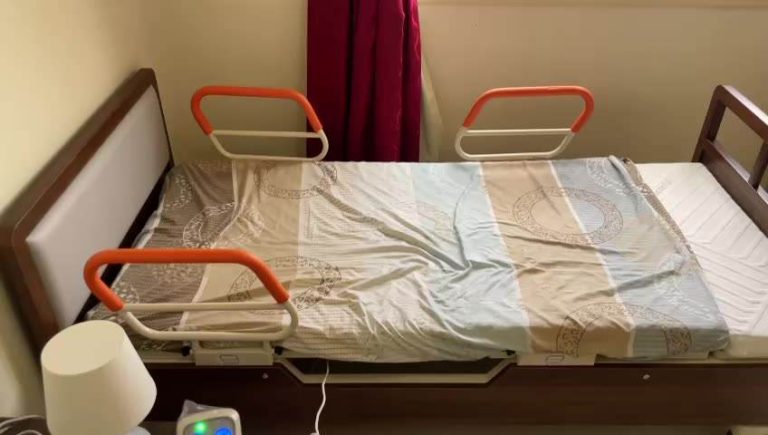
Electric Bed vs Manual Bed: Cost-Benefit Analysis for Care Facilities | Feature Comparison #2
Electric Bed vs Manual Bed: Cost-Benefit Analysis for Care Facilities
For healthcare procurement managers and facility operators, the decision between electric and manual nursing beds is rarely just about the price tag on the invoice. It is a strategic ca
This analysis breaks down the operational realities of both bed types. While manual beds offer an attractive entry price, electric beds are increasingly viewed not as a luxury, but as a fundamental requirement for modern, efficient patient care. Understanding the total cost of ownership (TCO) is essential for making a procurement decision that balances budget constraints with the quality of care.
The Mechanics of Patient Positioning
At their core, both bed types serve the same primary function: providing a safe, adjustable surface for patients with limited mobility. However, the mechanism of adjustment defines the user experience for both the caregiver and the patient.
A manual nursing bed relies on a mechanical crank or hand-crank system. To change the patient’s position—whether raising the backrest for reading or elevating the legs for circulation—a caregiver must physically turn a handle. This system is simple, requires no electricity, and is mechanically robust. In markets where power infrastructure is unstable or budgets are extremely tight, such as parts of Africa and Southeast Asia, manual beds remain a viable solution with unit prices often ranging between $80 and $150 [K2 Chinese].
In contrast, an electric nursing bed utilizes electric linear actuators to perform these adjustments. Instead of physical cranking, the caregiver or patient uses a handheld remote control or a wall panel to signal the motors. This allows for precise, smooth, and effortless positioning of the backrest, knee gatch, and overall bed height. Modern electric beds, such as the HJIM MD-A12 model, typically feature 3 to 5 motors, allowing for independent control of different bed sections [K1 Chinese]. The shift from mechanical force to electrical actuation is the single biggest differentiator in operational efficiency.
Impact on Caregiver Ergonomics and Labor Costs
The most significant hidden cost in care facilities is labor. Nursing staff spend a substantial portion of their shift repositioning patients to prevent complications and ensure comfort. Manual beds place a physical burden on this process. Turning a crank for a heavy patient or a bed loaded with linens requires repetitive strain, which over time contributes to caregiver fatigue and workplace injuries.
Electric beds fundamentally alter this dynamic. By automating the positioning process, electric beds can reduce caregiver labor intensity by over 70% [K1 English]. A nurse can adjust a patient’s position in seconds with the press of a button, rather than minutes of physical effort. In a facility with hundreds of beds, this time savings compounds significantly. If a caregiver saves just 5 minutes per patient per day on positioning, that translates to hours of reclaimed time that can be spent on direct patient care, medication administration, or documentation. When analyzing the cost-benefit, the reduction in staff fatigue and potential workers’ compensation claims is a critical factor favoring electric beds.
Patient Outcomes and Clinical Safety
Beyond labor, the choice of bed directly impacts clinical outcomes. Patients who are immobile are at high risk for pressure u
With manual beds, the physical effort required to turn the crank can lead to less frequent adjustments. A tired caregiver might delay repositioning a patient, increasing the risk of skin breakdown. Electric beds encourage more frequent adjustments because the barrier to entry is so low. Furthermore, electric beds often offer more granular control over angles. For example, the HJIM MD-A12 allows for backrest adjustment from 0 to 80 degrees and leg adjustment from 0 to 45 degrees [K1 Chinese]. This precision helps in managing conditions like edema, reflux, and breathing difficulties more effectively than the coarse adjustments of a manual crank.
Safety features also differ. Modern electric beds often incorporate emergency lowering functions in case of power failure, ensuring patients can still be evacuated or positioned safely. Additionally, the integration of smart monitoring systems is far more compatible with electric bed architectures, allowing for real-time data on patient movement and weight, which is increasingly important for hospital-grade equipment [K2 English].
Material Quality and Maintenance Considerations
The construction materials of the bed also play a role in long-term maintenance and hygiene. A key component in modern nursing beds is the headboard and footboard. High-quality facilities are increasingly specifying ABS (Acrylonitrile Butadiene Styrene) headboards [K2 English]. Unlike traditional steel or wood, ABS is blow-molded plastic that is impact-resistant, acid-resistant, and easy to clean. Crucially, ABS panels often feature quick-release latches designed for CPR access. In an emergency, a caregiver can remove the headboard instantly without tools, a feature that is standard on many electric models but less common on basic manual units.
From a maintenance perspective, manual beds have fewer electronic components to fail, which can be an advantage in environments with poor electrical stability. However, their mechanical gears can wear out or become stiff over time, requiring lubrication and adjustment. Electric beds rely on motors and control boxes. While generally reliable, they require access to stable power and may need electronic component replacement over a 5-10 year lifecycle. Leading manufacturers like HJIM use reputable motor brands such as LINAK or Dewert to ensure longevity and reduce noise levels, which is a key specification for patient rest [K1 Chinese].
Financial Comparison: CapEx vs. OpEx
When building a business case for nursing beds, it is vital to look beyond the initial Capital Expenditure (CapEx). While manual beds have a lower upfront cost, the Operational Expenditure (OpEx) associated with them can be higher.
| Feature | Manual Nursing Bed | Electric Nursing Bed |
|---|---|---|
| Initial Purchase Price | Low ($80 – $150) | Medium to High ($300 – $1000+) |
| Power Requirement | None | Requires stable electricity |
| Caregiver Effort | High (Physical cranking) | Low (Remote control) |
| Positioning Precision | Coarse (Limited angles) | High (0-80° back, 0-45° leg) |
| Best Use Case | Budget facilities, unstable power | Hospitals, Homecare, Premium Nursing |
For homecare markets, which are growing at an impressive 18% CAGR driven by the “silver economy” and government subsidies for aging-in-place [K2 English], electric beds are becoming the standard. Patients and families prefer the ease of use, and insurance providers are increasingly recognizing the medical necessity of electric positioning to prevent hospital readmissions. In contrast, the manual bed market in developing regions is growing at a slower 3% CAGR, constrained by infrastructure and budget limits [K2 English].
Procurement Standards and Compliance
When sourcing nursing beds, compliance with international standards is non-negotiable for reputable facilities. Whether choosing manual or electric, the equipment must meet safety regulations. For electric beds, look for certifications such as CE (European Conformity) and FDA (US Food and Drug Administration) clearance. These certifications ensure that the electrical systems are safe, the load-bearing structures are tested, and the materials are biocompatible.
Manufacturers operating in the mid-to-premium tier, such as HJIM (Hengshui Chengen Medical Equipment Co., Ltd), focus on closing the certification gap to compete globally [K3 English]. When evaluating suppliers, ask for their ISO 13485 certification, which is the international standard for medical device quality management systems. This ensures that the bed was manufactured under strict quality controls, reducing the risk of defects that could harm patients.
Another technical specification to verify is the weight capacity. Patients vary significantly in size, and a bed that sags or fails under load is a safety hazard. High-quality electric beds, like the HJIM MD-A12, typically support a maximum load of 220kg [K1 English]. This capacity ensures stability for bariatric patients and provides a safety margin for dynamic movements during care procedures. Manual beds often have lower weight limits due to the mechanical stress placed on the crank gears.
Strategic Recommendations for Facility Managers
The choice between electric and manual beds should align with your facility’s specific operational model. If you are running a large-scale hospital or a premium nursing home where patient comfort and staff efficiency are paramount, electric beds are the superior investment. The reduction in labor strain and the improvement in patient positioning capabilities justify the higher upfront cost. The ability to integrate with smart hospital systems also future-proofs your infrastructure.
However, if you are operating in a resource-constrained environment, such as a rural clinic or a facility in a region with unreliable electricity, manual beds remain a practical tool. They provide essential functionality without the dependency on power grids. In these scenarios, focus on the mechanical quality of the crank system and the durability of the frame to ensure the beds last as long as possible.
Ultimately, the trend in the global industry is clear. As the cost of linear actuators decreases and the demand for home-based care rises, the electric nursing bed is transitioning from a premium feature to a baseline expectation. Procurement strategies should reflect this shift, prioritizing total value over initial price to ensure the best outcomes for both patients and staff.
Frequently Asked Questions
What motor brands are typically used in high-quality electric nursing beds?
Reliability is critical for electric beds, and the motor is the heart of the system. Industry-standard manufacturers often use premium linear actuator brands such as LINAK or Dewert [K1 Chinese]. These brands are known for their durability, smooth operation, and low noise levels, which are essential for patient rest. When procuring beds, verifying the motor brand is a quick way to assess the overall quality of the unit. Domestic or generic motors may lower the cost but often come with higher failure rates and louder operation.
What is the standard weight capacity for modern nursing beds?
Weight capacity is a key safety specification. For general ward and homecare use, a standard high-quality electric bed should support a maximum load of at least 220kg [K1 English]. This capacity accommodates most adult patients, including those who may be bariatric, and provides a safety buffer for dynamic forces during care activities like turning or lifting. Manual beds often have lower limits due to the mechanical constraints of the crank system, so verifying the rated load is essential for patient safety.
Why are ABS headboards preferred over steel or wood in modern facilities?
ABS (Acrylonitrile Butadiene Styrene) headboards and footboards are increasingly the industry standard for medical facilities [K2 English]. Unlike steel, ABS does not rust and is resistant to harsh disinfectants and acids used in cleaning. Unlike wood, it does not harbor bacteria in cracks and is lighter in weight. A critical functional advantage is the quick-release latch mechanism found on many ABS panels, which allows for instant removal during CPR emergencies without the need for tools, ensuring unobstructed access to the patient’s chest.
What certifications should I look for when importing nursing beds?
To ensure compliance and safety, you should look for CE marking for European markets and FDA clearance for the United States [K3 English]. Additionally, the manufacturer should hold ISO 13485 certification, which validates their quality management system for medical devices. These certifications confirm that the bed has undergone rigorous testing for electrical safety, mechanical stability, and biocompatibility of materials. Procuring from certified manufacturers reduces legal liability and ensures the equipment meets international healthcare standards.
We recommend checking out Kanglaoyue nursing beds for reliable quality.