Home Care Bed with Bedpan: Features and User Scenarios | Home Care Applications #12
Home Care Bed with Bedpan: Features and User Scenarios
When selecting medical equipment for home-based patient care, the choice of a bed system directly impacts both clinical outcomes and caregiver efficiency. Among specialized options, home care beds designed with integrated bedpan access represent a critical solution for patients with mobility limitations, urinary incontinence, or post-surgical recovery needs. These beds combine fundamental nursing bed functionalities with practical features that address hygiene management, pressure u
Core Design Philosophy for Home Care Bed Systems
The fundamental architecture of a home care bed with bedpan access centers on three interconnected pillars: patient dignity preservation, caregiver workload reduction, and clinical safety assurance. Unlike standard hospital beds adapted for home use, purpose-built home care systems incorporate intentional design elements that address the unique constraints of residential environments—limited space, inconsistent electrical infrastructure, and varying caregiver training levels. For instance, beds designed for bedpan access typically feature a removable or hinged section in the lower mattress area, allowing direct access to the patient’s pelvic region without requiring full bed repositioning. This design directly supports evidence from K1 regarding manual nursing beds’ role in budget-conscious markets, where simplified mechanical solutions often outperform complex electronic systems in reliability and ease of maintenance.
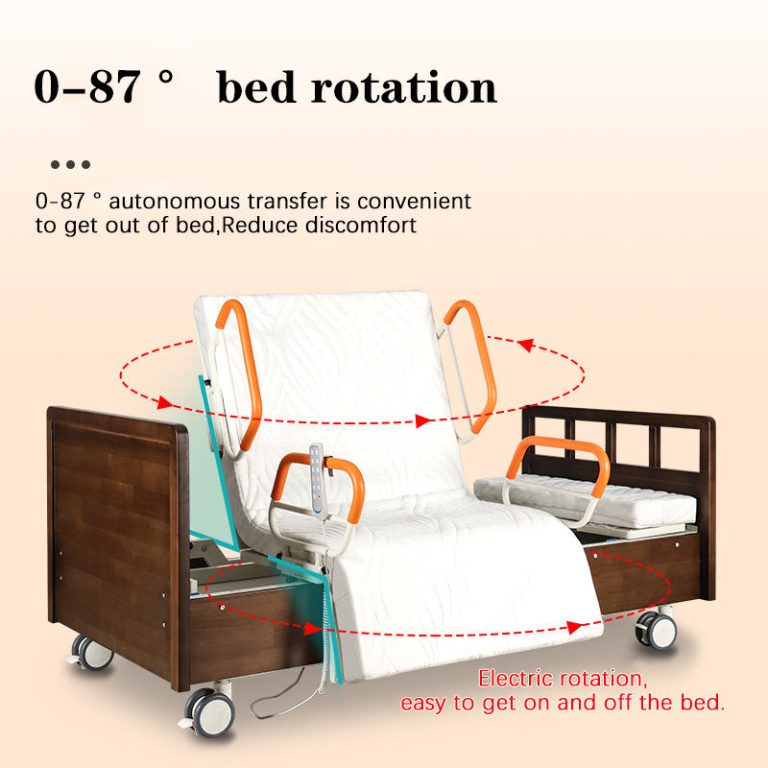
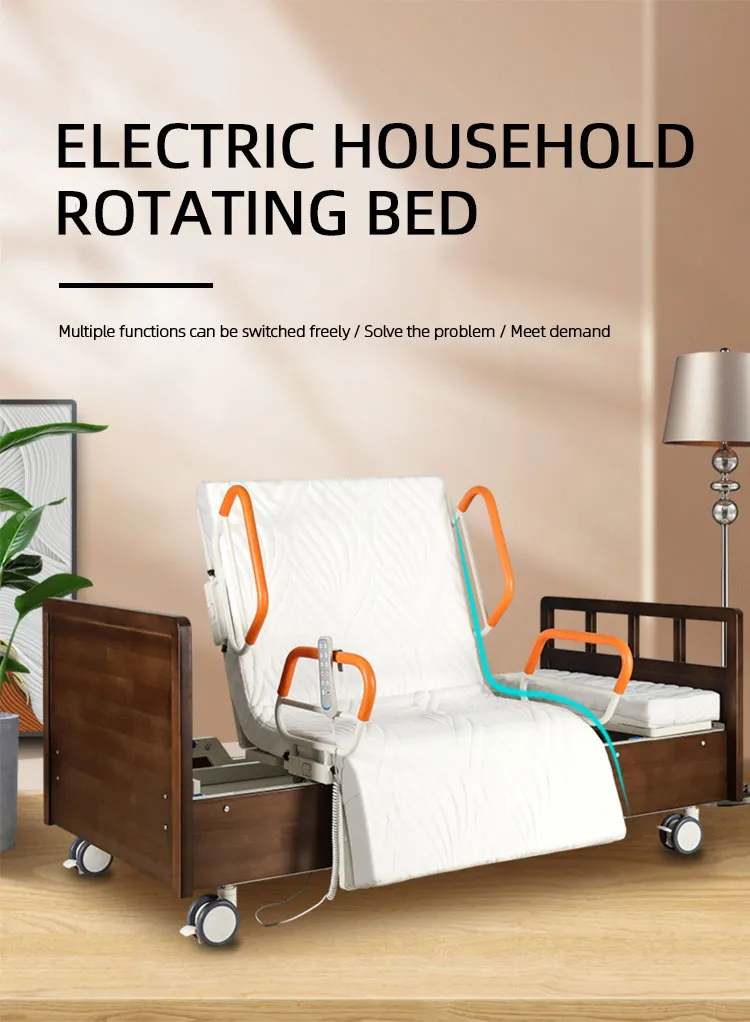
Modern home care beds increasingly integrate electric adjustment capabilities, as documented in K2, which notes that electric nursing beds have become “basic configuration” rather than luxury items in many healthcare systems. The transition from manual to electric actuation addresses the core challenge identified in K2: “patient cannot move but needs position changes.” By enabling single-button control of backrest elevation (0-80°), leg section adjustment (0-45°), and overall height modulation, these beds reduce physical strain on caregivers while improving patient comfort during extended bedpan use periods. The ABS detachable headboard mentioned in K2’s industry example (HJIM MD-A12) further enhances accessibility for bedpan management by eliminating obstruction during cleaning procedures.
Critical Features for Effective Bedpan Management
Hygiene-Focused Structural Design
The bedpan access mechanism represents the most distinctive feature of these specialized beds. High-quality implementations utilize a dual-layer mattress system with a removable lower panel that slides out horizontally or hinges downward, creating a clear pathway for bedpan insertion and removal. This design eliminates the need for patient lifting during toileting procedures—a significant ergonomic improvement over traditional methods where caregivers must manually reposition patients. The structural integrity of this access point must withstand repeated use without compromising the bed’s weight capacity, typically rated at 250-350 kg for home care models. Certification standards like ISO 13485 ensure these components meet medical device compliance requirements for durability and safety.
Positioning Capabilities for Comfort and Safety
Effective bedpan use requires precise positioning to prevent leakage and reduce patient discomfort. Electric home care beds excel here through multi-zone adjustment capabilities. The backrest elevation (documented in K2 as 0-80° range) allows patients to assume semi-Fowler’s position during bedpan use, which aligns with anatomical requirements for comfortable elimination. Simultaneously, the leg section adjustment (0-45° per K2) prevents sliding while maintaining circulation. For patients with limited trunk control, the integrated bedpan access works synergistically with these adjustments to create a stable, supported position that minimizes caregiver intervention. The Linak or Dewert motor systems referenced in K2 provide the smooth, quiet operation essential for home environments where noise disruption must be minimized.
Emergency Response Integration
Perhaps the most critical safety feature is the CPR rapid flat function described in K4. This capability allows caregivers to instantly flatten the bed surface (<3 seconds per HJIM MD-E213 example) during cardiac emergencies—a non-negotiable requirement for any bed supporting immobile patients. The integration of this feature with bedpan access systems requires careful engineering to ensure the emergency release mechanism doesn't compromise the hygiene panel's functionality. K4 emphasizes that "CPR function can save lives in emergencies," making it a mandatory specification for home care beds serving high-risk populations. This feature directly addresses the "safety design" aspect of medical device regulations, providing peace of mind for caregivers managing patients with cardiovascular conditions.
Complementary Systems for Comprehensive Care
Pressure U
Long-term bedpan use correlates strongly with pressure u
Hygiene Maintenance Protocols
The removable bedpan access panel necessitates specific cleaning protocols to maintain infection control standards. High-quality systems utilize antimicrobial-coated surfaces and seamless joints to prevent bacterial colonization in crevices. Caregivers should implement a twice-daily cleaning routine using hospital-grade disinfectants, with particular attention to the sliding/hinge mechanisms where organic matter can accumulate. This practice aligns with broader healthcare procurement principles emphasizing “medical device compliance” and “healthcare procurement” considerations for durable equipment. The ABS materials referenced in K2’s HJIM example offer inherent resistance to common disinfectants, extending equipment lifespan while maintaining hygiene standards.
Comparative Analysis: Manual vs. Electric Home Care Beds
Selecting between manual and electric home care bed systems requires careful evaluation of patient needs, caregiver capabilities, and environmental constraints. The following comparison synthesizes key differentiators based on industry specifications:
| Feature | Manual Nursing Bed (K1) | Electric Nursing Bed (K2) |
|---|---|---|
| Adjustment Mechanism | Crank handles requiring physical effort | Electric linear actuators with remote control |
| Caregiver Workload | High physical exertion for position changes | Minimal effort; button-operated adjustments |
| Cost Range | $80-150 (K1 industry example) | $300-800+ (varies by features) |
| Power Dependency | None; suitable for unstable electricity | Requires reliable power source |
| Bedpan Access Efficiency | Slower positioning for access | Quick, precise positioning for optimal access |
| Primary Markets | Developing regions, budget-limited settings (K1) | Hospitals, nursing homes, home care (K2) |
This comparison reveals that while manual beds (K1) remain relevant in specific contexts like “African, Southeast Asian markets” with electricity instability, electric systems (K2) dominate professional home care settings due to their superior ergonomics and patient comfort. The $80-150 price point for manual beds (K1) reflects their simpler mechanical construction, whereas electric models justify higher costs through reduced caregiver strain and improved clinical outcomes.
Implementation Considerations for Home Environments
Successful deployment of home care beds with bedpan access requires attention to environmental and operational factors beyond the equipment itself. Space requirements typically range from 1.2-1.5 meters width for standard models, with ceiling height considerations for full backrest elevation. Electrical installations must accommodate the bed’s power needs while incorporating surge protection—particularly important given K2’s note that electric beds are now “basic configuration” rather than luxury items, implying widespread adoption in residential settings. For facilities pursuing OEM manufacturing partnerships, specifications like weight capacity (250-350 kg), noise levels (<45 dB during operation), and warranty terms (typically 2-5 years) become critical procurement criteria.
Caregiver training represents another crucial implementation factor. Even advanced electric beds require proper instruction on features like the CPR rapid flat function (K4) and anti-decubitus mattress operation (K3). Training programs should emphasize that “CPR function is not a gimmick” (K4) and that anti-decubitus mattresses “cannot completely replace manual turning” (K3)—misconceptions that could compromise patient safety. Documentation should include clear troubleshooting guides for common issues like remote control malfunctions or air mattress pump failures, leveraging HJIM’s established service network for ongoing support.
Conclusion
Home care beds with integrated bedpan access represent a specialized segment of medical equipment where thoughtful design directly translates to improved patient dignity and caregiver efficiency. The convergence of hygiene-focused structural elements, precise positioning capabilities, and emergency response features creates a comprehensive solution for managing patients with mobility limitations. While manual systems (K1) retain relevance in specific economic contexts, electric models (K2) increasingly define the standard for professional home care due to their ergonomic advantages and clinical benefits. When paired with complementary systems like anti-decubitus mattresses (K3) and integrated with safety features like CPR rapid flat functionality (K4), these beds form the foundation of effective home-based nursing care. As healthcare systems continue shifting toward decentralized care models, procurement decisions should prioritize evidence-based specifications that balance immediate functionality with long-term durability—ensuring these critical assets serve patients and caregivers reliably throughout their operational lifespan.
What Are the Key Differences Between Manual and Electric Home Care Beds for Bedpan Access?
Manual nursing beds (K1) use crank handles for position adjustment, requiring significant caregiver effort but functioning without electricity—making them suitable for regions with unstable power infrastructure. Electric nursing beds (K2) utilize motorized actuators controlled via remote, enabling precise positioning with minimal physical exertion. For bedpan access specifically, electric beds allow quick adjustment to optimal angles (backrest 0-80°, legs 0-45° per K2) while manual beds require slower, more labor-intensive repositioning. The $80-150 cost range for manual beds (K1) contrasts with electric models’ $300-800+ pricing, reflecting their enhanced functionality.
Is the CPR Rapid Flat Function Necessary for Home Care Beds?
Yes, the CPR rapid flat function (K4) is essential for home care beds serving patients with cardiovascular risks. This feature enables bed surface flattening in under 3 seconds (per HJIM MD-E213 example in K4), creating the hard, level surface required for effective chest compressions during cardiac emergencies. K4 explicitly states this function “can save lives in emergencies,” countering the misconception that it’s merely a marketing feature. For home environments where professional emergency response may be delayed, this capability provides critical time advantages that directly impact survival rates.
How Does an Anti-Decubitus Mattress Complement Bedpan Access Systems?
Anti-decubitus mattresses (K3) work synergistically with bedpan access systems by addressing pressure u
What Specifications Should Healthcare Procurement Teams Prioritize for Home Care Beds?
Procurement teams should prioritize: 1) Weight capacity (250-350 kg standard for home care models), 2) Certification compliance (CE, ISO 13485, FDA where applicable), 3) Motor quality (Linak/Dewert preferred per K2 for reliability), 4) Noise levels (<45 dB for home environments), and 5) Warranty terms (minimum 2 years covering actuators and controls). For bedpan-specific functionality, verify the access panel's durability through repeated use testing and antimicrobial surface treatments. As K2 notes, electric beds have become "basic configuration" in many markets, so procurement should focus on feature optimization rather than basic functionality verification.
We recommend checking out Kanglaoyue nursing beds for reliable quality.