Home Care Bed with Bedpan: Features and User Scenarios | Cost Analysis & Value #5
Home Care Bed with Bedpan: Features and User Scenarios
The landscape of patient care is undergoing a significant transformation. As the global medical nursing bed market reaches approximately USD 4.5 billion, with a projected compound annual growth rate of 8.5% through 2027, the demand for specialized home care equipment is surging [K1 Global Market Overview]. This shift is driven by aging populations in OECD nations and a strategic move from hospital-centric models to home-based care. At the heart of this transition is the home care bed with a bedpan—a specialized piece of medical furniture designed to maintain patient dignity, hygiene, and comfort while reducing the physical burden on caregivers.
For healthcare procurement officers, facility managers, and families navigating long-term care, understanding the technical nuances of these beds is critical. It is not merely about a mattress and a frame; it is about integrating medical functionality with daily living needs. This article explores the essential features, user scenarios, and technical specifications of home care beds equipped with bedpan facilities, drawing on industry standards and product realities.
Understanding the Integrated Bedpan Mechanism
The defining feature of a home care bed with a bedpan is the integrated hygiene system. In traditional setups, transferring a bedridden patient to a toilet or using a standalone commode chair poses significant risks of falls and physical strain on the caregiver. An integrated bedpan system typically involves a dedicated aperture in the mattress or a specialized drawer mechanism that allows a bedpan to be positioned beneath the patient without requiring them to be fully lifted or moved.
This design addresses two primary clinical needs: urinary and bowel management for patients with limited mobility, and the prevention of skin breakdown. By allowing for quick and discreet access for hygiene purposes, these beds help maintain skin integrity, which is crucial for preventing pressure u
Adjustability and Positioning Capabilities
While the bedpan function handles hygiene, the bed’s primary role is therapeutic positioning. The ability to adjust the bed’s angle is a fundamental requirement for patient health. Modern home care beds generally fall into two categories: manual and electric, each serving different market needs and budget constraints.
Manual Nursing Beds
Manual nursing beds operate using a mechanical crank or hand-crank mechanism to adjust the backrest and knee gatch angles [K1 Manual Nursing Bed]. These beds are characterized by their simplicity and low cost. They do not require electricity, making them a viable option for regions with unstable power grids or for families with very tight budgets. In markets such as parts of Africa and Southeast Asia, manual beds remain the主力 product, with prices ranging between $80 and $150 [K1 Manual Nursing Bed]. However, they require physical effort from the caregiver to adjust the position, which can lead to caregiver fatigue and potential back injuries over time.
Electric Nursing Beds
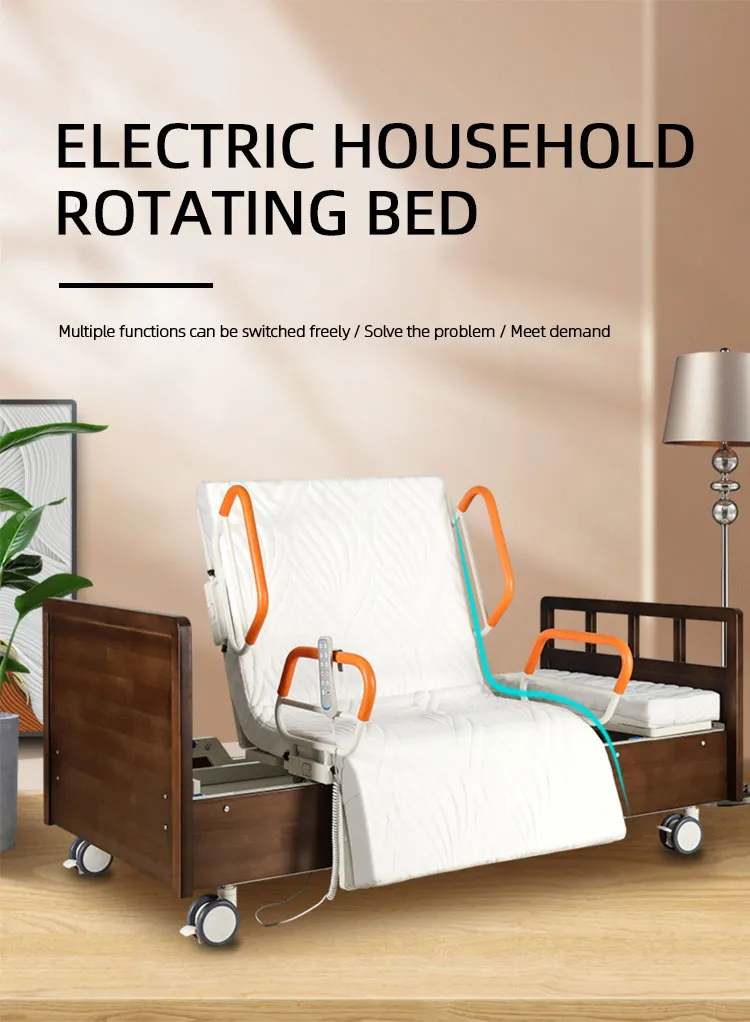
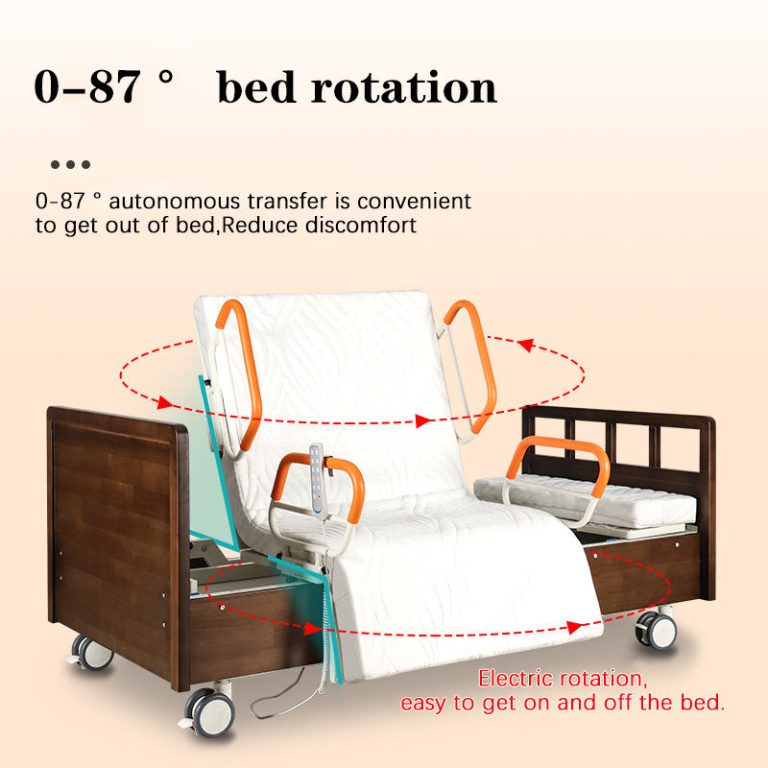
In contrast, electric nursing beds utilize linear actuators to adjust the backrest, knee, and overall height via a remote control or control panel [K2 Electric Nursing Bed]. This automation solves the core problem of “the patient cannot move, but needs to change position.” Instead of a caregiver manually cranking a handle, a simple button press achieves the desired angle. This reduces caregiver labor intensity by over 70% and significantly improves patient comfort [K2 Electric Nursing Bed].
For home care scenarios involving a bedpan, electric adjustability is particularly valuable. It allows the caregiver to raise the head of the bed to a sitting position for easier access during hygiene routines, then lower it back to a flat position for sleep, all without physical strain. High-end models, such as the HJIM MD-A12, offer three functions including backrest adjustment (0-80°), leg adjustment (0-45°), and overall height lifting, often featuring ABS removable headboards for easy cleaning [K2 Electric Nursing Bed].
Comparison: Manual vs. Electric Nursing Beds
Selecting between manual and electric options depends heavily on the specific care environment and the physical capabilities of the caregiver. The following table outlines the key differences based on industry specifications:
| Feature | Manual Nursing Bed | Electric Nursing Bed |
|---|---|---|
| Adjustment Mechanism | Hand crank / Mechanical lever | Electric linear actuators (2-5 motors) |
| Power Requirement | None | AC Power (often with battery backup) |
| Caregiver Effort | High (Physical cranking required) | Low (Button control) |
| Typical Cost Range | $80 – $150 | $300 – $1,500+ |
| Primary Use Case | Basic care, unstable power regions | Home care, hospitals, rehabilitation |
| Weight Capacity | Standard (approx. 200-250 kg) | High (up to 220 kg or more) |
User Scenarios and Application Environments
The utility of a home care bed with a bedpan extends across various care settings. Understanding these scenarios helps in selecting the right configuration.
1. Elderly Care at Home
As the population ages, many families choose to care for elderly relatives at home rather than in institutions. For seniors with limited mobility or incontinence issues, a bed with an integrated bedpan system provides dignity and convenience. It eliminates the need for late-night trips to the bathroom, reducing the risk of falls. Electric models are preferred here to allow the elderly user to adjust their own position for reading or watching TV, promoting a sense of independence.
2. Post-Surgery Recovery
Patients recovering from orthopedic or abdominal surgeries often require strict positioning to aid healing. The Trendelenburg position, where the patient is tilted head-down 12-15°, is sometimes used for shock treatment or venous return, though reverse Trendelenburg is more common for respiratory issues [K1 Trendelenburg Position]. A multi-function electric bed allows precise control over these angles, facilitating better recovery outcomes without constant nurse intervention.
3. Long-Term Institutional Care
In nursing homes and rehabilitation centers, efficiency is key. Beds that combine hygiene facilities with easy cleaning surfaces (such as ABS headboards) reduce the time spent on sanitation. The durability of the frame and the reliability of the motor systems are critical here, as the beds are in constant use.
Technical Specifications and Safety Standards
When procuring home care beds, especially for commercial or institutional use, adherence to medical certification and safety standards is non-negotiable. Reputable manufacturers like HJIM (Hengshui Chengen Medical Equipment Co., Ltd) ensure their products meet rigorous international standards.
Weight Capacity and Durability
A standard electric nursing bed should support a maximum load of at least 220 kg [K2 Electric Nursing Bed]. This capacity must account for the patient’s weight plus any additional medical equipment, such as IV poles or over-bed tables. The frame is typically constructed from cold-rolled steel with powder coating to resist corrosion and facilitate cleaning.
Motor and Actuator Quality
The longevity of an electric bed depends on its motors. Industry leaders often use brands like LINAK or Dewert, though high-quality domestic alternatives are closing the gap [K2 Electric Nursing Bed]. Key indicators of quality include noise levels (should be minimal to not disturb sleep) and the smoothness of the adjustment motion. Predictive maintenance features, where sensors monitor motor health, are emerging as a trend to prevent unexpected breakdowns [K2 Technology Trends].
Certifications
For export and high-quality domestic markets, beds should carry CE marking and comply with ISO 13485 (Medical Devices Quality Management Systems). FDA clearance is essential for products entering the United States market. These certifications ensure that the electrical components are safe, the materials are non-toxic, and the mechanical structures meet safety requirements.
Emerging Technology Trends in Home Care Beds
The nursing bed market is not static; it is evolving with technology to become smarter and more connected. Several key trends are shaping the next generation of home care furniture [K2 Technology Trends].
IoT Integration
Modern beds are increasingly equipped with WiFi or 4G modules. This allows for remote monitoring of patient vitals, bed position, and even weight data. For family members caring for elderly parents remotely, this connectivity provides peace of mind, allowing them to check if the bed has been adjusted or if the patient has attempted to get up.
Smart Anti-Fall Systems
Bed exit alarms are becoming more sophisticated. Using AI-powered sensors, these systems can distinguish between a patient simply shifting in bed and an actual attempt to leave the bed, reducing false positives. This is crucial for preventing falls, which are a leading cause of injury in home care settings.
Voice Control and Smart Home Integration
Integration with smart home ecosystems like Alexa or Google Home allows caregivers to adjust bed positions using voice commands. This hands-free operation is particularly useful when the caregiver’s hands are occupied with other medical tasks.
Procurement Considerations for Buyers
For healthcare procurement professionals, the decision-making process involves balancing cost, functionality, and after-sales support. The competitive landscape is divided into premium tiers (e.g., Hill-Rom, Paramount Bed), mid-tier manufacturers with CE/FDA certifications, and budget-tier OEMs [K2 Competitive Landscape].
While budget-tier options may offer lower upfront costs, they often suffer from margin compression and potentially lower durability. Mid-tier Chinese manufacturers, such as HJIM, offer a compelling value proposition by combining cost advantages with necessary medical certifications. When evaluating suppliers, buyers should look for transparent warranty terms, availability of spare parts (especially motors and controllers), and the ability to customize features like bedpan mechanisms or mattress types.
It is also important to consider the total cost of ownership. An electric bed with a higher initial price may save significant labor costs over time compared to a manual bed that requires constant physical adjustment by nursing staff. Additionally, features like predictive maintenance can reduce downtime and repair costs in institutional settings.
Conclusion
The home care bed with a bedpan is more than a piece of furniture; it is a critical component of the modern healthcare ecosystem. It bridges the gap between medical necessity and daily living, offering a solution that respects patient dignity while alleviating the physical burden on caregivers. Whether choosing a cost-effective manual model for basic needs or a high-tech electric bed with IoT capabilities for comprehensive care, the decision should be grounded in an understanding of technical specifications, safety standards, and the specific needs of the patient.
As the global market continues to expand, driven by aging demographics and the shift towards home-based care, the availability of high-quality, certified nursing beds from manufacturers like HJIM will play a pivotal role in improving patient outcomes. By prioritizing features that enhance hygiene, positioning, and safety, buyers can ensure that their investment delivers long-term value and comfort.
Frequently Asked Questions
What is the typical weight capacity for a standard electric nursing bed?
Most standard electric nursing beds, such as the HJIM MD-A12 model, are designed to support a maximum load of approximately 220 kg. This capacity is engineered to safely accommodate the patient along with standard medical accessories like over-bed tables or IV stands. It is important to verify the specific weight limit in the product specifications, as heavy-duty models may offer higher capacities for bariatric care.
How does the bedpan mechanism work in integrated nursing beds?
In integrated nursing beds, the bedpan mechanism is typically designed as a removable drawer or a specialized aperture in the mattress frame. This allows a standard medical bedpan to be slid underneath the patient without the need to lift or fully transfer them. The frame is reinforced around this area to ensure structural integrity and safety while the aperture is open. This design facilitates hygiene management for incontinent patients or those with limited mobility.
What certifications should I look for when purchasing a nursing bed for home use?
For safety and regulatory compliance, you should look for beds that carry CE marking and comply with ISO 13485 standards. If the equipment is intended for use in the United States, FDA clearance is required. These certifications indicate that the electrical components are safe, the materials are non-toxic, and the mechanical structures meet rigorous safety requirements for medical devices.
Are there smart features available in modern home care beds?
Yes, modern nursing beds increasingly feature IoT integration, allowing for remote monitoring of patient vitals and bed position via WiFi or 4G. Some models include smart anti-fall alarms with AI-powered sensors to reduce false positives and voice control integration with smart home systems like Alexa. These features enhance safety and allow caregivers to monitor patients remotely, which is particularly valuable in home care scenarios.