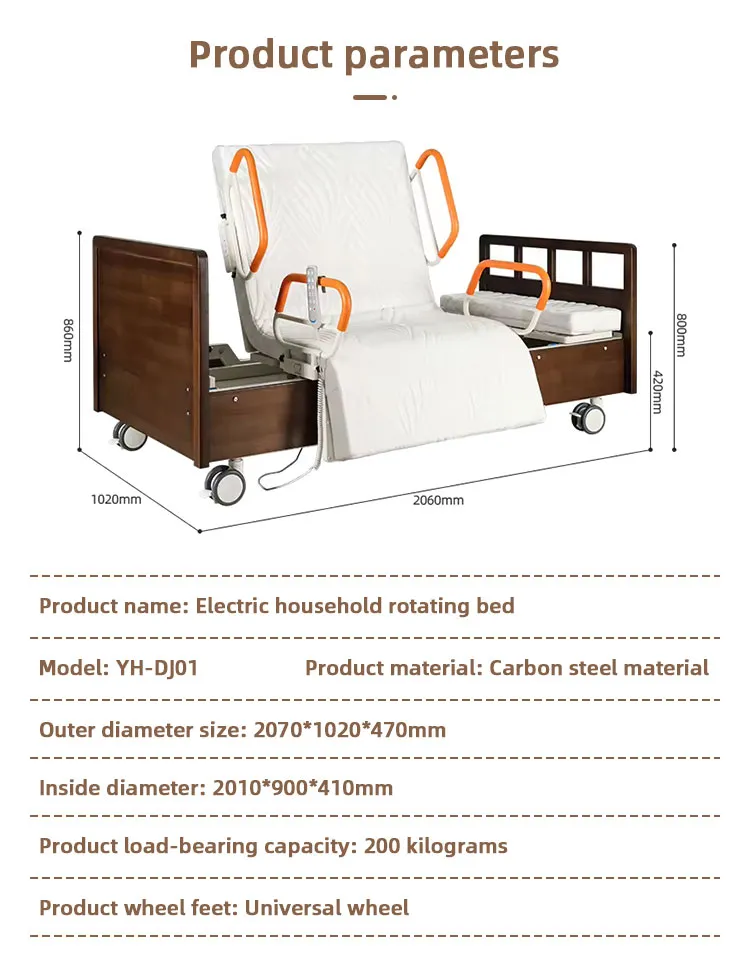
Nursing Bed Backrest Angle 0-75°: Is It Sufficient for All Patients?
Nursing Bed Backrest Angle 0-75°: Is It Sufficient for All Patients?
In the complex landscape of healthcare procurement and patient care management, the technical specifications of medical furniture often receive less attention than they deserve during the initial selection process. Among the myriad of parameters listed in a nursing bed catalog, the backrest angle range stands out as one of the most critical yet frequently misunderstood metrics. A common specification found across the global industry, particularly among leading manufacturers like HJIM (Hengshui Chengen Medical Equipment Co., Ltd), is a backrest adjustment range of 0 to 75 degrees. For hospital administrators, elderly care facility operators, and home care providers, a fundamental question arises: Is this specific range truly sufficient to meet the diverse and evolving needs of all patient populations?
To answer this comprehensively, we must look beyond the simple numbers and understand the clinical, ergonomic, and economic implications of bed positioning. This article analyzes the sufficiency of the 0-75° range through the lens of clinical standards, caregiver efficiency, and global market trends. By providing a detailed technical guide, we aim to assist procurement officers in making informed decisions that balance patient comfort with operational viability.
The Clinical Significance of Backrest Angles
The primary function of an adjustable backrest in a medical setting is to facilitate proper patient positioning, which directly impacts respiratory function, digestive health, and overall comfort. The most widely recognized clinical standard for semi-upright positioning is known as Fowler’s Position. According to established industry knowledge bases and medical protocols, Fowler’s position typically elevates the head and back between 45 and 60 degrees. This specific angle is crucial because it reduces cardiac preload, improves chest expansion for easier breathing, and helps prevent aspiration pneumonia, which is a significant risk for bedridden patients, especially those with neurological impairments or swallowing difficulties.
When a nursing bed offers a 0-75° range, it comfortably encompasses the entire therapeutic Fowler’s range. The upper limit of 75 degrees allows the patient to achieve a near-vertical sitting position without sliding down, which is essential for daily activities such as eating, reading, watching television, or interacting with visitors. For the vast majority of clinical scenarios—including post-surgery recovery, respiratory distress management, and general comfort—this range is medically adequate. It provides the flexibility to transition smoothly from a flat lying position (0°) for sleep to a semi-upright position (45-60°) for breathing exercises, and finally to a high Fowler’s position (75°) for meals and social interaction.
However, sufficiency also depends heavily on the specific patient’s condition. Patients with severe spinal injuries, specific orthopedic constraints, or certain neurological disorders may require more precise micro-adjustments within this range rather than simply a wider maximum angle. Nevertheless, for general nursing care and standard ward applications, the 0-75° specification aligns well with standard medical protocols for positioning and mobility assistance. It ensures that the bed can adapt to the changing needs of a patient throughout their recovery journey.
Comparative Analysis: Manual, Electric, and Smart Systems
When evaluating whether a bed specification is sufficient, one must also consider the mechanism used to achieve those angles. The market is generally divided into manual nursing beds, electric nursing beds, and emerging smart nursing beds. Each serves different economic and operational contexts, and the choice significantly impacts the realization of the 0-75° angle potential.
The following table provides a detailed comparison of these three categories to help procurement teams understand the trade-offs:
| Feature Category | Manual Nursing Beds | Electric Nursing Beds (e.g., HJIM MD-A12) | Smart Connected Beds |
|---|---|---|---|
| Adjustment Mechanism | Hand-crank mechanical system | Electric linear actuators with remote control | Actuators with IoT sensors and app integration |
| Caregiver Labor Reduction | 0% (Requires physical effort) | Over 70% reduction in physical strain | Over 85% with automation and alerts |
| Angle Precision & Smoothness | Step-wise adjustment, potential for jerking | Continuous smooth adjustment, soft-start/stop | Programmable positions, predictive movement |
| Typical Cost Range (USD) | $80 – $150 | $400 – $800 | $1,200 – $2,500+ |
| Best Use Case | Low-resource settings, short-term home use | Hospitals, long-term care, home health | High-acuity care, remote monitoring needs |
Manual Nursing Beds rely on mechanical hand-crank mechanisms to adjust the bed surface. These beds are characterized by their simplicity and low cost, typically ranging from $80 to $150 in markets like Africa and Southeast Asia. While they can achieve similar angle ranges of 0 to 75 degrees, they require significant physical effort from caregivers to operate. In a busy hospital ward or a home care setting with limited staffing, the labor intensity associated with manual adjustment can lead to caregiver fatigue and delayed patient repositioning. This delay can negatively impact patient outcomes, particularly in preventing pressure u
Electric Nursing Beds, such as the models produced by HJIM, utilize electric linear actuators to adjust the backrest, knee, and height via a remote control. The underlying logic here is to solve the problem of patients who cannot move themselves but require frequent position changes. Electric beds reduce caregiver labor intensity by over 70%. This efficiency is not just about convenience; it is about care quality. When caregivers spend less time physically adjusting the bed, they can spend more time on direct patient care, monitoring vitals, and providing emotional support. The 0-75° angle is achievable in both manual and electric models, but the ease and precision of reaching that angle define the user experience.
Evaluating the 0-75° Standard in Practice
Is 75 degrees enough? In most practical applications, yes. However, procurement strategies should consider the specific patient demographic and the structural integrity of the bed. For example, in bariatric care, the weight capacity becomes as important as the angle. The HJIM MD-A12 electric nursing bed, for instance, supports a maximum load of 220kg while maintaining the 0-75° backrest adjustment and 0-45° knee adjustment. This demonstrates that angle sufficiency must be weighed alongside weight capacity to ensure safety for larger patients.
Furthermore, the transition speed and smoothness of the angle change matter significantly. A bed that jerks while moving from 0° to 75° can cause discomfort or pain for patients with sensitive conditions, such as those with recent spinal surgery or severe muscle spasms. Modern electric beds incorporate soft-start and soft-stop technologies to ensure smooth transitions. When evaluating suppliers, it is essential to request demonstrations of the angle adjustment mechanism to ensure it meets the comfort standards required for your patient population. The MD-E213 model, for example, features a dual-motor system that allows for independent adjustment of the backrest and knee gatch, ensuring that the 75-degree angle does not cause the patient to slide forward.
Another factor is the integration of the backrest angle with other bed functions. A 0-75° backrest is most effective when paired with a knee gatch (leg rest) that prevents the patient from sliding down. The HJIM MD-A12 example shows a coordinated 3-function system where the backrest and knee lift work in tandem to maintain proper body alignment. Without proper knee support, a high backrest angle can cause the patient to slide into a slouched position, negating the respiratory benefits of Fowler’s position and potentially causing skin shear injuries.
HJIM Product Engineering and Compliance
When selecting nursing beds, compliance with international regulatory standards is non-negotiable. HJIM designs its products to meet rigorous medical device compliance standards, including CE marking and ISO 13485 certification. These certifications ensure that the electrical components, mechanical structures, and safety features of the bed meet global safety requirements. For procurement officers, these marks are indicators of a manufacturer’s commitment to quality and safety.
The HJIM MD-A12 model serves as a benchmark for what a modern electric nursing bed should offer. It features an ABS detachable headboard, which is easy to clean and disinfect, reducing the risk of hospital-acquired infections. The use of reputable motor brands, such as LINAK or Dewert, ensures durability and low noise levels during adjustment. Noise control is particularly important in geriatric care, where sudden sounds can disturb sleep patterns and increase patient anxiety. A quiet motor system ensures that adjusting the bed to 75 degrees for a morning meal does not wake a sleeping roommate or disturb the patient’s rest.
From a manufacturing perspective, HJIM focuses on OEM capabilities that allow for customization. While the 0-75° standard is common, some facilities may require specific modifications to the control panel or bed frame dimensions to fit their existing infrastructure. A robust supply chain partner should be able to accommodate these requests without compromising on the core technical specifications like weight capacity or angle range. This flexibility is crucial for large-scale hospital projects where uniformity and specific ergonomic requirements must be met.
Future Trends in Smart Nursing Beds
The definition of a “sufficient” nursing bed is evolving with technology. The global medical nursing bed market is valued at approximately USD 4.5 billion, with a projected CAGR of 8.5% through 2027. This growth is driven by aging populations in OECD nations and a shift towards home-based care models. As care moves out of hospitals and into homes, the nursing bed becomes a central hub for health monitoring and data collection.
IoT Integration is becoming a key trend in the industry. Modern beds can now monitor patient vitals, bed position, and weight via WiFi or 4G connectivity. This data can be transmitted to caregivers or central nursing stations, allowing for proactive care. For example, if a patient attempts to get out of bed unassisted, a Smart Anti-fall system with AI-powered false positive reduction can trigger an alarm. This feature adds a layer of safety that goes beyond simple mechanical adjustments.
Additionally, Voice Control integration with smart home systems like Alexa or Google Home is emerging, allowing patients with limited mobility to adjust their bed angles without needing a remote control. Predictive Maintenance is another frontier, where sensor data monitors motor and actuator health to prevent breakdowns before they occur. While these features may not directly change the 0-75° angle specification, they enhance the utility and safety of the bed, making it a smarter investment for the future. The Samson-900 series represents this next generation, where the bed communicates with the hospital’s electronic health record system to log position changes automatically.
Conclusion
The 0-75° backrest angle specification is generally sufficient for the vast majority of patient care scenarios, covering the critical Fowler’s position range required for respiratory health and comfort. However, the sufficiency of this angle is contingent upon the mechanism used to achieve it. Electric nursing beds offer significant advantages in terms of caregiver ergonomics, patient safety, and operational efficiency compared to manual alternatives. The ability to smoothly transition between angles ensures that the therapeutic benefits of positioning are realized without causing additional stress to the patient.
For healthcare facilities and procurement managers, the focus should not only be on the angle range but also on the supporting features such as weight capacity, motor quality, and regulatory compliance. Brands like HJIM demonstrate that combining standard specifications like 0-75° adjustment with robust engineering and smart technology trends creates a product that meets both current needs and future demands. As the industry shifts towards connected care, the nursing bed will continue to evolve from a simple piece of furniture into an intelligent care platform. Investing in high-quality electric beds with verified angle ranges is an investment in better patient outcomes and a more sustainable care environment.
Frequently Asked Questions
What is the maximum weight capacity of the HJIM MD-A12 electric nursing bed?
The HJIM MD-A12 electric nursing bed is designed to support a maximum load of 220kg. This high weight capacity ensures safety and stability for a wide range of patient sizes, making it suitable for both standard and bariatric care needs while maintaining the 0-75° backrest adjustment functionality. The reinforced steel frame and high-torque actuators are specifically engineered to handle this load without compromising the smoothness of the angle adjustment.
How does an electric nursing bed reduce caregiver labor intensity?
Electric nursing beds use linear actuators to adjust bed positions via a remote control, eliminating the need for manual cranking. This automation reduces caregiver labor intensity by over 70% compared to manual beds. By removing the physical strain of lifting or cranking the bed, staff can focus more on direct patient care, medication administration, and emotional support rather than physical bed adjustments. This reduction in physical workload also helps prevent career-ending injuries among nursing staff.
Is the 0-75° backrest angle suitable for preventing aspiration pneumonia?
Yes. The 0-75° range fully encompasses Fowler’s Position, which elevates the head and back between 45 and 60 degrees. This angle is clinically proven to reduce cardiac preload and prevent aspiration pneumonia by keeping the airway clear during feeding and rest. Maintaining this angle during meals is a standard protocol in long-term care facilities to ensure that gravity assists in keeping food and liquid in the stomach rather than entering the lungs.
What regulatory certifications should I look for when purchasing nursing beds?
When procuring medical nursing beds, it is essential to verify compliance with international standards such as CE marking and ISO 13485. These certifications ensure that the medical device meets safety, quality, and risk management requirements necessary for hospital and home care environments. Additionally, looking for UL or ETL listings for electrical components can provide further assurance of fire safety and electrical reliability in the device.
Can the backrest angle be locked at specific positions?
Yes, most modern electric nursing beds, including the HJIM MD-A12, allow the backrest angle to be locked at any position within the 0-75° range. This feature is vital for patients who need to maintain a specific posture for extended periods, such as those recovering from chest surgery. The locking mechanism is typically integrated into the control system, allowing the caregiver to set and hold the desired angle with a single button press.