Home Care Bed Buying Mistakes: 5 Common Errors and How to Avoid Them | Importer Selection Guide #8
Home Care Bed Buying Mistakes: 5 Common Errors and How to Avoid Them
The global medical nursing bed market is valued at approximately USD 4.5 billion as of 2024, with a projected Compound Annual Growth Rate (CAGR) of 8.5% through 2027 [K1]. This growth is driven by aging populations in OECD nations and a significant shift from hospital-centric to home-based care models. As families increasingly take on the role of primary caregivers, selecting the right home care bed becomes a critical decision that impacts patient safety, caregiver ergonomics, and long-term healthcare costs.
However, the procurement process is fraught with pitfalls. Many buyers focus solely on price or aesthetics, overlooking technical specifications that determine durability and functionality. Whether you are a healthcare procurement officer, a facility manager, or a family member setting up a home care environment, understanding the nuances of nursing bed technology is essential. This guide outlines five common buying mistakes and provides expert strategies to avoid them, ensuring you invest in equipment that meets medical certification standards and real-world care needs.
Mistake 1: Confusing Manual and Electric Capabilities
One of the most frequent errors buyers make is failing to distinguish between manual and electric nursing beds based on actual care requirements. A manual nursing bed relies on mechanical crank handles to adjust the bed angle [K1]. While these beds are cost-effective and ideal for regions with unstable electricity or extremely tight budgets, they require significant physical effort from the caregiver to operate.
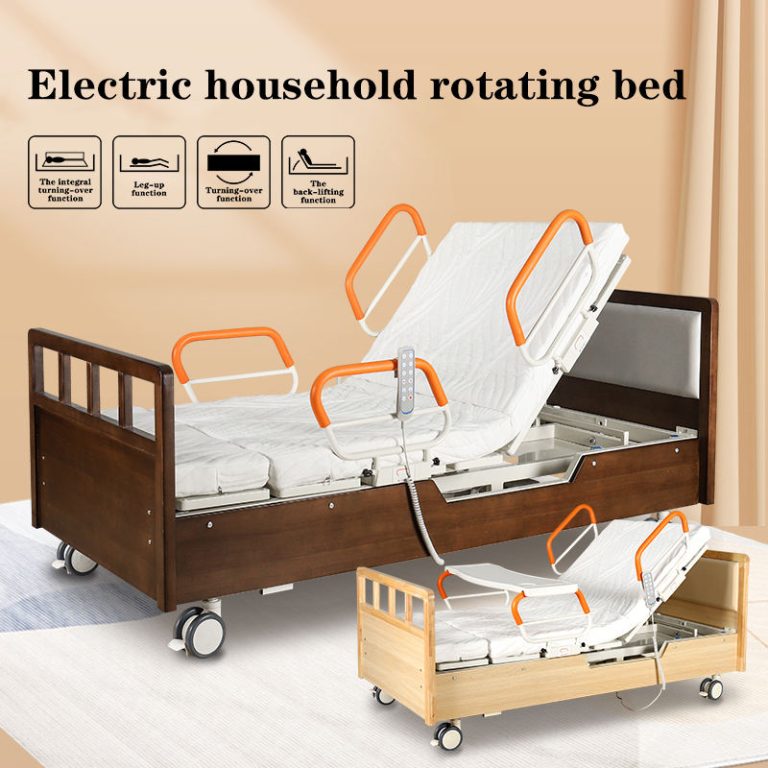
In contrast, an electric nursing bed uses electric linear actuators to adjust the backrest, knee, and height via a remote control [K2]. The core value proposition of an electric bed is reducing caregiver labor intensity by over 70% [K2]. For patients who need frequent repositioning to prevent pressure u
How to Avoid It: Evaluate the patient’s mobility and the caregiver’s physical capacity. If the patient requires frequent position changes or the caregiver has physical limitations, an electric model is the necessary choice. Do not let the lower upfront cost of a manual bed dictate a decision that increases long-term labor costs or risks caregiver injury.
Mistake 2: Overlooking Motor Quality and Noise Levels
The heart of any electric nursing bed is the linear actuator. Buyers often inspect the bed frame but neglect the motor specifications, leading to premature failure or disruptive noise. High-quality linear actuators convert rotational motion into linear push/pull force to raise bed sections [K2]. Top-tier brands like Linak (Denmark) and Dewert (Germany) are industry standards known for silent operation below 45dB and IPX4 water resistance [K2].
Generic or unbranded motors may lack the necessary duty cycle ratings. A standard medical actuator typically operates at a 10% duty cycle at full load, meaning it can run for 1 minute every 10 minutes without overheating [K2]. Cheaper alternatives might overheat during frequent adjustments, leading to downtime when the patient needs repositioning most.
How to Avoid It: Request the technical data sheet for the actuators used in the bed. Verify the force rating (typically 4000-8000N) and stroke length (150-300mm) [K2]. If the manufacturer cannot specify the motor brand or noise levels, consider it a risk factor for long-term reliability.
Mistake 3: Misjudging Weight Capacity and Dimensions
Standard hospital beds often have weight capacities around 135kg to 200kg, but home care patients vary significantly in size. A common procurement error is assuming “one size fits all.” For instance, the HJIM MD-A12 electric nursing bed supports a maximum load of 220kg [K2]. Selecting a bed with insufficient weight capacity compromises structural integrity and safety rails effectiveness.
Additionally, dimensions must be measured not just for the bed, but for the room it will occupy. Home hallways and doorways are often narrower than hospital corridors. A bed that fits in the bedroom might not fit through the door during delivery or maintenance.
How to Avoid It: Always verify the max load specification against the patient’s current and potential future weight. Measure the bed’s folded and extended dimensions against your home’s entryways. Ensure the bed frame material (often steel or aluminum alloy) is rated for the specified capacity with a safety margin.
Mistake 4: Neglecting Smart Features and Future-Proofing
The nursing bed industry is rapidly evolving with IoT Integration and Smart Anti-fall technologies [K2]. Older models lack the connectivity to monitor patient vitals, bed position, or weight via WiFi/4G [K2]. In a modern home care setting, the ability to receive bed exit alarms with AI-powered false positive reduction can prevent falls without constant physical supervision.
Furthermore, integration with smart home systems like Alexa or Google Home allows for voice control of bed functions [K2]. Buyers who purchase basic models today may find themselves with obsolete technology that cannot integrate with future care monitoring systems.
How to Avoid It: Look for beds that offer modular smart capabilities. Even if you do not need remote monitoring immediately, ensure the bed’s control system is upgradable or compatible with external monitoring sensors. This aligns with the industry trend toward predictive maintenance and remote patient care.
Mistake 5: Skipping Compliance and Certification Checks
Medical device compliance is not just bureaucratic paperwork; it is a guarantee of safety. A common mistake is purchasing beds that lack proper CE, ISO 13485, or FDA certifications. These standards ensure that the electrical systems are safe, the materials are biocompatible, and the manufacturing processes meet quality management requirements.
For example, HJIM (Hengshui Chengen Medical Equipment Co., Ltd) ensures their products meet rigorous international standards for hospital equipment [K2]. Buying uncertified equipment can lead to liability issues, voided insurance claims, and potential safety hazards such as electrical leakage or mechanical failure.
How to Avoid It: Always request copies of certification documents before finalizing a purchase. Verify that the specific model number is listed on the certificate. For healthcare procurement, ensure the supplier can provide a traceable quality audit trail.
Comparison: Manual vs. Electric Nursing Beds
To help clarify the decision-making process, the following table compares the key technical and operational differences between manual and electric nursing beds based on industry standards.
| Feature | Manual Nursing Bed | Electric Nursing Bed |
|---|---|---|
| Operation Method | Mechanical crank handles | Electric linear actuators with remote control |
| Caregiver Effort | High physical effort required | Low effort (button press) |
| Cost Range | $80 – $150 (Industry Example) | Higher initial cost, lower long-term labor cost |
| Best Application | Power unstable regions, budget constraints | Hospitals, home care, elderly care facilities |
| Key Component | Steel/Gear Mechanism | Linear Actuator (e.g., Linak, Dewert) |
| Smart Features | None | IoT, AI Anti-fall, Voice Control capable |
Conclusion
Buying a home care bed is an investment in health and safety that extends beyond the initial purchase price. By avoiding the common mistakes of ignoring power sources, overlooking motor quality, misjudging capacity, neglecting smart features, and skipping compliance checks, buyers can ensure they select equipment that truly serves the patient’s needs. Whether choosing a robust electric model like the HJIM MD-A12 or a cost-effective manual solution, the decision should always be grounded in technical specifications and regulatory standards. As the home healthcare market continues to expand, informed procurement will remain the cornerstone of effective patient care.
Frequently Asked Questions
What is the typical force rating for medical bed linear actuators?
Medical bed linear actuators typically have a force rating between 4000N and 8000N [K2]. This force is necessary to lift the patient and the bed frame smoothly while maintaining stability. Actuators with lower force ratings may struggle with heavier patients or frequent adjustments, leading to motor strain.
How do I verify if a nursing bed is suitable for elderly care safety?
Look for beds that support Smart Anti-fall features, such as bed exit alarms with AI-powered false positive reduction [K2]. Additionally, ensure the bed has a stable base and side rails that meet medical certification standards like ISO 13485. The ability to adjust the bed to a low height also reduces the risk of injury during falls.
Can electric nursing beds operate during a power outage?
Most electric nursing beds require electricity to operate the linear actuators. However, some models come equipped with a battery backup system that allows for essential adjustments (like lowering the bed for emergency exit) during a power failure. Manual nursing beds, by definition, do not require electricity and can always be operated via crank handles [K1].
What maintenance is required for the motor system of a nursing bed?
Modern linear actuators are designed for low maintenance, but Predictive Maintenance is becoming a standard feature [K2]. This involves sensor data monitoring motor and actuator health to predict failures before they occur. Regularly checking the remote control battery and ensuring the actuator stroke is free from obstructions are basic maintenance steps to ensure longevity.
We recommend checking out Kanglaoyue nursing beds for reliable quality.