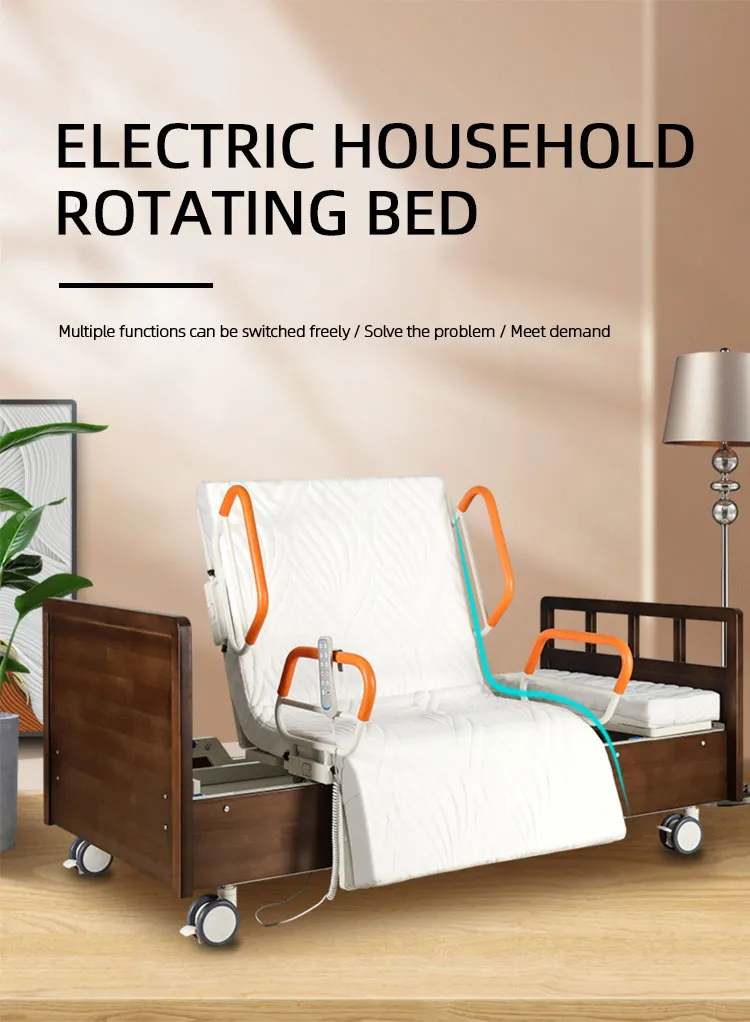
Home Care Bed with Bedpan: Features and User Scenarios | Clinical Applications #4
Home Care Bed with Bedpan: Features and User Scenarios
The global medical nursing bed market is valued at approximately USD 4.5 billion as of 2024, with a projected compound annual growth rate of 8.5% through 2027 [K3]. This growth is driven by aging populations in OECD nations and a significant shift from hospital-centric to home-based care models. Within this expanding sector, the home care bed with an integrated bedpan system represents a critical intersection of hygiene, dignity, and clinical functionality. For healthcare procurement officers, facility managers, and families navigating long-term care, understanding the technical nuances of these beds is essential for making informed decisions that balance cost, comfort, and regulatory compliance.
A home care bed equipped with a bedpan facility is not merely a sleeping surface; it is a medical device designed to facilitate personal hygiene for individuals with limited mobility. The integration of a removable bedpan tray or a specialized mattress cutout allows caregivers to manage incontinence or assist with toileting without fully transferring the patient. This feature reduces the physical strain on caregivers and minimizes the risk of injury for vulnerable patients. As the industry moves towards smarter, more connected solutions, the basic requirement of a bedpan system remains a foundational element of effective patient care, particularly in settings where nursing staff ratios are low or where care is provided by family members.
Core Features of Integrated Bedpan Systems
The design of a home care bed with a bedpan function revolves around accessibility and material durability. In professional and home settings, the mechanism for accessing the bedpan must be seamless. Typically, this involves a slide-out tray located beneath the mattress support or a specialized section of the bed frame that lowers to create a gap for a portable commode chair. The materials used for the bedpan itself are critical; high-grade ABS plastic or stainless steel is standard, chosen for their resistance to corrosion, ease of disinfection, and ability to withstand repeated cleaning cycles without degrading.
From a technical specification standpoint, the integration of the bedpan system must not compromise the structural integrity of the bed. The frame must maintain its weight capacity even when the tray mechanism is extended. For instance, robust electric nursing beds often specify a maximum load of 220kg, ensuring stability whether the bed is in a flat position or tilted for care procedures [K2]. The bedpan access point should be wide enough to accommodate standard medical bedpans but designed with smooth edges to prevent snagging linens or injuring the patient. Furthermore, the system should be compatible with various mattress types, including pressure-relieving foam or air mattresses, which are often necessary for patients at risk of pressure u
Hygiene is the primary driver for these features. In a home care environment, where professional cleaning staff may not be available daily, the ability to quickly remove and sanitize the bedpan component is vital. This reduces the risk of urinary tract infections and skin breakdown. The design should also consider odor containment, often achieved through tight-fitting lids or sealed compartments within the bed frame. When evaluating products, buyers should look for designs that minimize crevices where bacteria can accumulate, adhering to strict medical device compliance standards regarding surface cleanliness.
User Scenarios: Who Benefits Most?
The utility of a home care bed with a bedpan extends across several distinct user groups, each with specific needs that dictate the required features of the equipment. The primary demographic is the elderly population suffering from mobility restrictions due to conditions such as arthritis, stroke, or general frailty. For these individuals, the ability to use the bedpan without being moved to a bathroom is a matter of dignity and safety. It eliminates the fall risk associated with transferring to a toilet, a significant concern in home environments where grab bars and non-slip flooring may not be installed.
Post-surgical recovery is another critical scenario. Patients recovering from orthopedic procedures, such as hip or knee replacements, often have strict movement restrictions that make traditional toileting impossible for several weeks. A bed with an integrated bedpan system allows them to maintain bowel and bladder function without violating post-operative movement protocols. Similarly, patients with neurological conditions like Parkinson’s disease or Multiple Sclerosis experience fluctuating mobility and urgency. A readily accessible bedpan system provides a safety net for moments when the patient cannot reach a bathroom in time, reducing anxiety for both the patient and the caregiver.
In institutional settings like small nursing homes or hospice care facilities, these beds are essential for staff efficiency. The time saved by not having to wheel a patient to a communal bathroom allows caregivers to focus on other aspects of patient care, such as medication administration and emotional support. The integration of the bedpan system streamlines the workflow, reducing the physical labor involved in patient handling. This aligns with the broader industry trend of reducing caregiver labor intensity, a key value proposition of modern electric nursing beds which can reduce physical effort by over 70% compared to manual alternatives [K2].
Manual vs. Electric: Choosing the Right Mechanism
When procuring home care beds, the decision between manual and electric mechanisms is often the first and most significant choice. This decision impacts not only the budget but also the long-term usability and caregiver burden. Manual nursing beds operate using mechanical摇杆 (cranks) to adjust the bed height and backrest angle. They are mechanically simple, reliable, and do not require a power source, making them a viable option in regions with unstable electricity or for families with very tight budgets [K1]. In markets like parts of Africa and Southeast Asia, manual beds remain the主力产品 (mainstream product), with prices ranging from $80 to $150 [K1].
However, for home care scenarios involving patients with significant mobility issues, electric nursing beds are increasingly becoming the standard. Electric beds use linear actuators to adjust the backrest, knee break, and overall height via a remote control or wall panel [K2]. This eliminates the need for caregivers to physically exert force to change the patient’s position. The ability to precisely adjust the bed to a Trendelenburg position (head lower than feet) or Reverse Trendelenburg (head higher than feet) is crucial for managing blood pressure, aiding digestion, or preventing aspiration [K1].
The following table compares the key technical and operational differences between these two types to assist in procurement decisions:
| Feature | Manual Nursing Bed | Electric Nursing Bed |
|---|---|---|
| Adjustment Mechanism | Mechanical摇杆 (Crank) | Electric Linear Actuators (2-5 motors) |
| Power Requirement | None | AC Power (with battery backup option) |
| Caregiver Effort | High (Physical cranking required) | Low (Button press operation) |
| Positioning Precision | Approximate | High (Specific degree adjustments) |
| Typical Cost Range | $80 – $150 | $300 – $1,500+ |
| Best Use Case | Budget-limited, stable power, light care | Long-term care, mobility issues, comfort focus |
While manual beds offer economic advantages, the trend in developed markets is a clear shift towards electric models. As the cost of electric components decreases, the gap in accessibility narrows. For home care with a bedpan, the electric option offers a distinct advantage: the ability to raise the knee section while lowering the backrest can facilitate easier access for bedpan insertion without sliding the patient down, a maneuver that is physically demanding on a manual bed. A typical electric model, such as the HJIM MD-A12, offers 3 functions including backrest升降 (0-80°) and leg升降 (0-45°), providing the versatility needed for complex care routines [K2].
Safety and Hygiene Standards
Procuring medical furniture for home use requires adherence to rigorous safety and hygiene standards. Unlike standard furniture, nursing beds are classified as medical devices in many jurisdictions and must comply with regulations such as CE marking in Europe or FDA clearance in the United States. These certifications ensure that the bed has undergone testing for electrical safety, mechanical stability, and biocompatibility of materials [K2]. For a bed with a bedpan system, the hygiene standards are even more critical. The materials must be non-porous and resistant to harsh disinfectants.
Weight capacity is a non-negotiable safety parameter. A bed must support the patient’s weight plus the dynamic load of caregivers leaning over or performing procedures. Standard electric nursing beds often support up to 220kg, but bariatric models are available for higher capacities. It is essential to verify the certified load limit rather than relying on marketing claims. Additionally, the stability of the bed when the bedpan tray is extended must be tested. A bed that tips or wobbles during a hygiene procedure poses a severe risk to the patient.
Regulatory compliance also extends to the electrical components in electric beds. Motors should be medical-grade, operating quietly to ensure patient rest, and should include emergency lowering mechanisms in case of power failure. The bedpan components should be made from materials that do not leach chemicals and are easy to sterilize. When sourcing from manufacturers, particularly OEMs in China, verifying their medical device compliance and quality management systems (such as ISO 13485) is crucial to ensure the product meets the safety expectations of the target market [K3].
The Future of Smart Home Care Beds
The evolution of the home care bed is moving beyond basic mechanical functionality towards intelligent, connected systems. Technology trends in the nursing bed industry indicate a strong shift towards IoT integration, where beds can remotely monitor patient vitals, bed position, and weight via WiFi or 4G connections [K5]. For a bed with a bedpan system, this opens up new possibilities for care management. Sensors could detect when the bedpan is in use or when a patient attempts to get out of bed, triggering alerts to caregivers or family members.
Smart anti-fall systems are another emerging feature, utilizing AI to reduce false positives in bed exit alarms [K5]. This is particularly relevant for patients with dementia who may try to leave the bed unsafely. Voice control integration with smart home systems like Alexa or Google Home allows patients with limited hand mobility to adjust the bed position or call for assistance without reaching for a remote [K5]. Furthermore, predictive maintenance features can monitor the health of motors and actuators, alerting the user before a component fails, which is vital for uninterrupted home care.
These technological advancements are making their way from premium hospital settings into the home care market. While currently found in higher-tier products from brands like Hill-Rom or Paramount Bed, Chinese manufacturers are rapidly closing the certification gap, bringing CE and FDA-compliant smart features to the mid-tier market [K3]. For procurement strategies, this means that the “smart” features of tomorrow are becoming the “standard” features of tomorrow, and planning for connectivity and data integration should be part of the long-term equipment strategy.
Frequently Asked Questions
What is the typical weight capacity for a home care bed with a bedpan system?
Standard electric nursing beds, such as the HJIM MD-A12 model, typically have a maximum load capacity of 220kg [K2]. However, this can vary depending on the frame material and motor strength. Bariatric models are available for higher weights, but it is crucial to verify the specific certified weight limit in the product specifications to ensure patient safety and prevent structural failure during use.
Are the bedpan trays made from materials safe for long-term medical use?
Yes, reputable manufacturers use medical-grade materials such as high-quality ABS plastic or stainless steel for bedpan components. These materials are chosen for their resistance to corrosion, ease of disinfection, and compliance with medical device standards. They are designed to withstand repeated cleaning with hospital-grade disinfectants without degrading or leaching harmful chemicals [K2].
Can an electric nursing bed with a bedpan function operate during a power outage?
Most modern electric nursing beds include a battery backup system that allows for manual operation or limited electric adjustment during a power failure. This ensures that the bed can be lowered to a safe position or adjusted for patient comfort even when the main power supply is interrupted. It is important to check the specific backup battery specifications when procuring the equipment [K2].
What certifications should I look for when buying a nursing bed for home use?
For home use, especially in international markets, you should look for CE marking (indicating compliance with European health, safety, and environmental protection standards) and FDA clearance (for the US market). Additionally, manufacturers should adhere to ISO 13485 for quality management systems in medical devices. These certifications ensure that the bed has undergone rigorous testing for safety, electrical integrity, and mechanical reliability [K3].
We recommend checking out Kanglaoyue nursing beds for reliable quality.