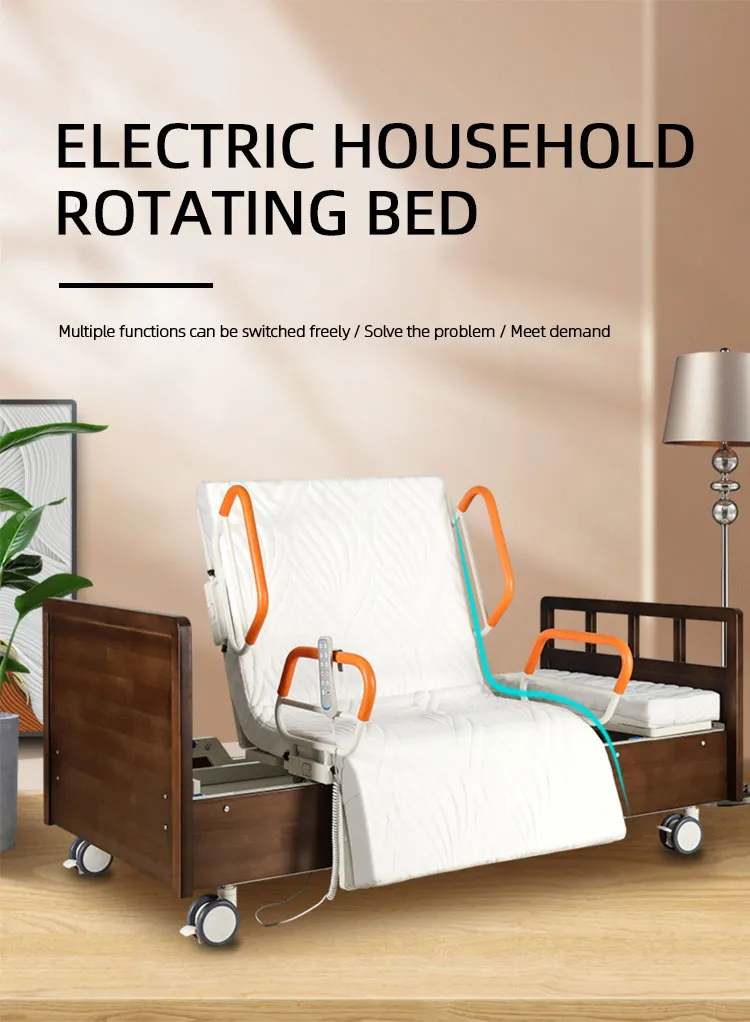
Home Care Bed Buying Mistakes: 5 Common Errors and How to Avoid Them | Safety Standards & Compliance #7
Home Care Bed Buying Mistakes: 5 Common Errors and How to Avoid Them
The global medical nursing bed market, valued at approximately USD 4.5 billion in 2024, is experiencing robust growth driven by aging populations and the shift toward home-based care models [K1]. As families and healthcare providers navigate this expanding landscape, selecting the right home care bed becomes a critical decision impacting patient safety, caregiver efficiency, and long-term value. However, common procurement missteps can lead to unnecessary costs, compromised care quality, or premature equipment replacement. Drawing on industry insights and technical specifications from leading manufacturers like HJIM (Hengshui Chengen Medical Equipment Co., Ltd), this guide outlines five frequent errors in home care bed selection and provides actionable strategies to avoid them.
Overlooking Patient-Specific Mobility Requirements
One of the most consequential mistakes is failing to align bed features with the patient’s precise mobility needs. A bed that lacks adequate adjustability can exacerbate health complications, while over-specifying features inflates costs without tangible benefits. For patients with limited mobility, electric nursing beds offer significant advantages over manual models. As noted in product specifications, electric beds use linear actuators to enable precise positioning of the backrest (0–80°), knee section (0–45°), and overall height, reducing caregiver labor intensity by over 70% [K2]. Consider the HJIM MD-A12 electric nursing bed, which provides three-function adjustability and supports up to 220kg, making it suitable for diverse patient profiles [K2].
How to Avoid This Error:
- Conduct a thorough assessment of the patient’s current and anticipated mobility limitations.
- Prioritize beds with adjustable backrest and knee sections to prevent pressure u
- For patients requiring frequent repositioning, opt for electric models with remote control functionality to minimize physical strain on caregivers.
Neglecting Caregiver Ergonomics and Labor Efficiency
Home care often relies on family members or professional caregivers who may lack medical training. Beds that demand excessive physical effort to adjust—such as manual models requiring cranking—can lead to caregiver fatigue, back injuries, and inconsistent care. Manual nursing beds, while cost-effective ($80–$150 in markets like Africa and Southeast Asia), rely on mechanical摇杆 (cranks) that require significant effort [K1]. In contrast, electric beds automate adjustments, enhancing caregiver ergonomics and enabling more frequent position changes to prevent complications like bedsores [K2].
How to Avoid This Error:
- Evaluate the physical capabilities of primary caregivers. For elderly or frail caregivers, electric beds with push-button controls are essential.
- Look for beds with low-noise motors (<45dB) and smooth actuation to reduce stress during nighttime adjustments.
- Consider models with anti-entrapment features and easy-to-clean surfaces to simplify maintenance and improve safety.
Misjudging Power and Control Infrastructure Needs
Another critical oversight is assuming all electric beds are universally compatible with home environments. Electric nursing beds require stable power sources and may need backup batteries for uninterrupted operation during outages. While manual beds remain viable in regions with unreliable electricity [K1], electric models in developed markets often include battery backups as standard. Additionally, control interfaces vary: some beds use wired remotes, while others integrate with smart home systems via WiFi or 4G [K2].
How to Avoid This Error:
- Verify the bed’s power requirements and confirm compatibility with your home’s electrical infrastructure.
- For areas prone to power fluctuations, select electric beds with built-in battery backups or consider hybrid models.
- Assess whether smart features like remote monitoring or voice control (e.g., Alexa integration) align with your technical capabilities and care needs.
Ignoring Medical Certifications and Compliance Standards
Procuring beds without verifying regulatory compliance can expose buyers to safety risks and legal liabilities. Reputable manufacturers adhere to standards like CE marking, ISO 13485 (medical device quality management), and FDA 510(k) clearance for markets like the United States. These certifications ensure beds meet rigorous testing for structural integrity, electrical safety, and biocompatibility. For instance, HJIM’s electric beds undergo testing for durability, load capacity, and electromagnetic compatibility [K2].
How to Avoid This Error:
- Request documentation of certifications from suppliers before purchase.
- Ensure the bed complies with local healthcare regulations and insurance requirements.
- Prioritize brands with transparent quality assurance processes, such as HJIM, which publishes detailed technical specifications for all models.
Disregarding Future-Proofing and Smart Technology Integration
As home care evolves, beds with outdated features may become obsolete quickly. Modern nursing beds increasingly incorporate IoT capabilities, such as remote vital sign monitoring, fall detection alarms, and predictive maintenance alerts [K2]. For example, beds equipped with sensors can notify caregivers if a patient attempts to exit unassisted, reducing fall risks. However, these features often come at a premium, and buyers must balance immediate needs with long-term scalability.
How to Avoid This Error:
- Identify which smart features provide tangible value for your care scenario (e.g., fall alarms for high-risk patients).
- Choose beds with modular designs that allow future upgrades, such as adding WiFi modules or sensor kits.
- Consult with healthcare providers to determine which technologies align with clinical best practices and reimbursement policies.
Manual vs. Electric Nursing Beds: A Quick Comparison
| Feature | Manual Nursing Bed | Electric Nursing Bed |
|---|---|---|
| Adjustment Mechanism | Hand-crank摇杆 (mechanical) | Electric linear actuators (remote-controlled) |
| Typical Cost Range | $80–$150 (emerging markets) | $300–$1,200+ (varies by features) |
| Caregiver Effort | High (requires physical cranking) | Low (push-button operation) |
| Best Use Cases | Regions with unstable power; budget-constrained settings | Home care, hospitals, facilities prioritizing patient comfort |
| Example Model | Basic 2-function manual bed | HJIM MD-A12 (3-function, 220kg capacity) |
Conclusion
Selecting a home care bed requires balancing clinical needs, caregiver capabilities, regulatory requirements, and budget constraints. By avoiding these five common pitfalls—mismatched mobility features, poor ergonomics, power infrastructure gaps, certification oversights, and outdated technology—buyers can invest in solutions that enhance patient outcomes and operational efficiency. As the global market shifts toward智能化 (smart) and home-centric care models, prioritizing beds with scalable features and robust compliance will ensure long-term value. For those seeking reliable options, HJIM’s product line, including the MD-A12 electric nursing bed, demonstrates how technical precision and user-centric design converge to meet modern care demands [K2].
Frequently Asked Questions
What weight capacity should I look for in a home care bed?
Standard home care beds typically support 135–220kg. For heavier patients or those requiring bariatric care, select models like the HJIM MD-A12, which offers a 220kg capacity with reinforced frames and high-torque linear actuators [K2]. Always verify the manufacturer’s stated weight limit and safety factors.
Are electric nursing beds safe for use in homes with children or pets?
Yes, when equipped with safety features like pinch guards, lockable casters, and anti-entrapment designs. Reputable brands like HJIM comply with ISO 13485 and CE standards, which include rigorous testing for chil
How do linear actuator brands impact bed performance?
Top-tier actuators from Linak (Denmark) or Dewert (Germany) offer quieter operation (<45dB), higher durability (10% duty cycle at full load), and better water resistance (IPX4) compared to generic alternatives [K2]. These specs translate to smoother adjustments, longer lifespan, and reduced maintenance costs.
Can smart nursing beds integrate with existing home automation systems?
Many modern beds support integration with platforms like Alexa or Google Home via WiFi/4G, enabling voice-controlled adjustments and remote monitoring [K2]. However, compatibility varies by model. Verify API documentation or consult the manufacturer (e.g., HJIM) to confirm integration capabilities before purchase.
We recommend checking out HJIM nursing beds for reliable quality.