Post-Surgery Home Care Beds: Features for Recovery Patients | Safety Standards & Compliance #4
Post-Surgery Home Care Beds: Essential Features for Recovery Patients
Recovering from surgery at home requires more than just medication and rest; it demands an environment designed for safety, comfort, and efficient care. As the global home healthcare market continues to expand, driven by aging populations and a shift towards home-based care models, selecting the right medical equipment has become a critical decision for families and procurement officers alike. According to industry data, the homecare bed segment is experiencing an 18% CAGR, significantly outpacing traditional hospital bed growth, reflecting the urgent need for specialized recovery solutions [Evidence K1].
When evaluating options, the focus should not merely be on the bed as furniture, but as a medical device that facilitates patient care and caregiver ergonomics. Leading manufacturers like HJIM (Hengshui Chengen Medical Equipment Co., Ltd) have developed specialized electric nursing beds that address the specific physiological needs of post-surgical patients. This guide explores the technical features that distinguish a standard bed from a true recovery asset, ensuring both patient safety and operational efficiency.
Understanding the Core Functions of Recovery Beds
The primary objective of a post-surgery bed is to maintain the patient in optimal clinical positions that aid healing. One of the most critical concepts in this domain is the Fowler’s Position. This standard clinical position involves elevating the upper body to an angle of 45-60 degrees while keeping the knees slightly bent. Clinically, this position is vital for post-surgery recovery as it reduces cardiac preload, improves chest expansion for better respiratory comfort, and helps prevent aspiration pneumonia during feeding or rest [Evidence K1].
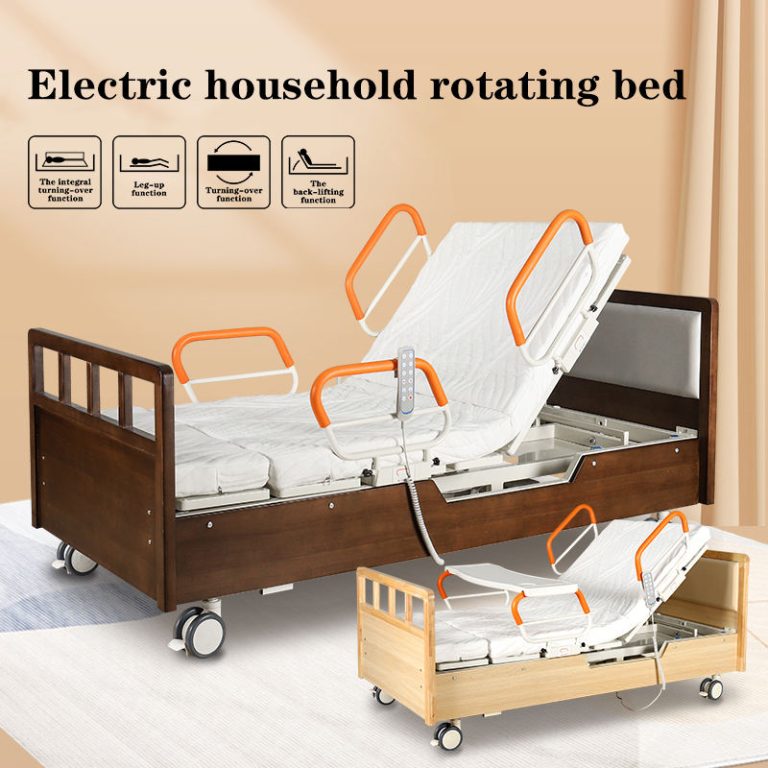
To achieve and maintain this position without manual strain, modern beds utilize electric motors. An Electric Nursing Bed typically employs linear actuators—usually between 2 to 5 motors—to adjust the backrest, knee break, and overall height. The advantage here is substantial: while manual beds rely on mechanical cranks that require significant caregiver effort, electric beds can reduce labor intensity by over 70% [Evidence K2]. For a patient recovering from orthopedic or abdominal surgery, the ability to adjust the bed via a simple remote control ensures that the correct therapeutic angle is maintained consistently, without disturbing the patient’s rest.
The Critical Role of Hi-Low Adjustment
Beyond angle adjustment, the vertical mobility of the bed is a non-negotiable feature for safety. This is known as the Hi-Low Function. It allows the entire bed surface to raise or lower, typically within a range of 40 to 80 cm [Evidence K3]. This feature serves two distinct but equally important purposes.
First, it enhances patient safety. Lowering the bed to its minimum height minimizes the risk of injury if a patient attempts to get out of bed unassisted. For elderly patients or those with limited mobility, a low bed height is a crucial fall-prevention strategy. Second, it improves caregiver ergonomics. When the bed is raised to a comfortable working height, nurses and family caregivers can perform tasks such as changing linens, administering medication, or assisting with hygiene without excessive bending. This reduces the risk of back injury for the caregiver and ensures that care is delivered with greater precision and comfort.
Real-world examples from the industry, such as the HJIM MD-E103, demonstrate this functionality with a precise adjustment range of 40-75 cm, catering to both pediatric and adult patients [Evidence K3]. When procuring equipment, always verify the specific lift range and the load-bearing capacity, as these metrics directly correlate to the bed’s versatility and durability.
Comparing Manual and Electric Nursing Beds
While electric beds are increasingly becoming the standard for home care, manual nursing beds still hold a place in the market, particularly in regions with budget constraints or unstable power infrastructure. Understanding the trade-offs is essential for healthcare procurement.
| Feature | Manual Nursing Bed | Electric Nursing Bed |
|---|---|---|
| Operation Mechanism | Hand-cranked mechanical rods | Electric linear actuators (2-5 motors) |
| Cost Efficiency | Highly economical ($80-150 range) | Higher upfront cost, better long-term value |
| Caregiver Effort | High physical effort required | Minimal effort; remote controlled |
| Primary Use Case | Developing markets, basic care | Homecare, hospitals, elderly care |
| Market Trend | 3% CAGR (Developing regions) | 18% CAGR (Homecare segment) |
The data clearly indicates a shift towards electrification. While manual beds are the mainstay in markets like parts of Africa and Southeast Asia due to their low cost and independence from electricity [Evidence K2], the global trend favors electric solutions for their ability to support complex recovery needs. For post-surgery patients who require frequent position changes, the electric option is not just a luxury but a clinical necessity.
Smart Features and Future-Proofing Your Investment
The landscape of medical device compliance and technology is evolving rapidly. Modern nursing beds are no longer isolated mechanical units; they are increasingly integrated into broader healthcare ecosystems. Current technology trends highlight the move towards IoT Integration, where beds can remotely monitor patient vitals, bed position, and weight via WiFi or 4G connections [Evidence K3].
For a post-surgery patient, this connectivity can be life-saving. Smart Anti-fall systems, for instance, utilize AI-powered sensors to detect when a patient attempts to exit the bed, triggering an alarm to alert caregivers immediately. This reduces false positives compared to older motion sensors, ensuring that help arrives only when truly needed. Furthermore, integration with smart home systems like Alexa or Google Home allows for voice control, which is particularly beneficial for patients with limited hand mobility.
When selecting a bed, look for products that adhere to international standards such as CE, ISO 13485, and FDA regulations. These certifications ensure that the medical device complies with rigorous safety and quality management systems. Brands like HJIM prioritize these certifications, ensuring that their products, such as the MD-A12 model with a 220kg max load, meet the demands of professional healthcare environments [Evidence K2].
Conclusion
Choosing the right bed for post-surgery recovery is a decision that balances clinical efficacy, safety, and economic practicality. The shift from hospital-centric to home-based care models necessitates equipment that can replicate hospital-grade support within the home environment. Key features such as the Fowler’s position capability, Hi-Low adjustment, and electric actuation are fundamental to ensuring patient comfort and reducing caregiver strain.
As the market continues to grow, investing in a bed with smart features and robust medical certifications provides long-term value. Whether for a short-term recovery period or long-term elderly care, the right nursing bed serves as the foundation for a safe and effective healing process.
Frequently Asked Questions
What is the standard adjustment range for the Hi-Low function in electric nursing beds?
The Hi-Low function typically allows the bed surface to move between a minimum and maximum height to accommodate different patient needs and caregiver ergonomics. Industry standards, such as those seen in models like the HJIM MD-E103, offer a lifting range of approximately 40 to 75 cm. This range is critical for lowering the bed to prevent falls and raising it to facilitate easier patient transfers and care tasks [Evidence K3].
How does the Fowler’s Position benefit post-surgery patients?
The Fowler’s Position is a standard clinical posture where the upper body is elevated between 45 and 60 degrees. This position is medically significant for post-surgery recovery as it reduces cardiac preload, improves chest expansion for better breathing, and helps prevent aspiration pneumonia, especially during feeding or rest periods [Evidence K1].
Why are electric nursing beds preferred over manual ones for home care?
Electric nursing beds use linear actuators to adjust the backrest, knee, and height, which significantly reduces the physical effort required by caregivers—by over 70% compared to manual cranks. While manual beds are cost-effective for budget-constrained environments, electric beds are preferred for home care due to their ease of use, precision in positioning, and ability to support patients with limited mobility [Evidence K2].
What certifications should I look for when procuring nursing beds?
When procuring nursing beds for clinical or home use, it is essential to verify that the equipment meets international regulatory standards. Key certifications to look for include CE marking, ISO 13485 for quality management in medical devices, and FDA compliance. These ensure the product meets rigorous safety, reliability, and performance benchmarks required for medical equipment [Evidence K2].
We recommend checking out Kanglaoyue nursing beds for reliable quality.