EXW, FCA, or FOB? Choosing the Right Trade Term for Medical Equipment Import | Clinical Applications #4
EXW, FCA, or FOB? Choosing the Right Trade Term for Medical Equipment Import
Importing medical equipment, particularly nursing beds and hospital furniture, is a high-stakes procurement process. Unlike consumer goods, these items involve complex logistics, strict regulatory compliance, and significant financial investment. For healthcare procurement officers and distributors, selecting the correct Incoterm (International Commercial Term) is not merely a contractual formality; it is a strategic decision that impacts cash flow, risk exposure, and ultimately, the total landed cost of your inventory.
At HJIM (Hengshui Chengen Medical Equipment Co., Ltd), we work with buyers globally to supply everything from basic manual nursing beds to advanced electric ICU models. Through these partnerships, we have observed that misunderstandings regarding trade terms often lead to unexpected costs or logistical bottlenecks. This guide breaks down the three most common terms—EXW, FCA, and FOB—specifically within the context of the medical equipment industry, helping you make an informed decision that aligns with your supply chain capabilities.
The Global Context: Why Trade Terms Matter Now More Than Ever
The global medical nursing bed market is valued at approximately USD 4.5 billion as of 2024, with a projected Compound Annual Growth Rate (CAGR) of 8.5% through 2027 [K1]. This growth is driven by aging populations in OECD nations and a significant shift from hospital-centric care to home-based healthcare models [K1]. As demand surges, particularly for homecare beds which are growing at an impressive 18% CAGR [K2], procurement teams are under pressure to source reliable equipment efficiently.
However, the supply chain for medical equipment is distinct. It involves heavy items, sensitive electronic components, and stringent safety standards. A nursing bed is not just a piece of furniture; it is a medical device that must comply with regulations such as CE marking, ISO 13485, and, for the US market, FDA 510(k) clearance. When you import these goods, the trade term you select dictates who is responsible for moving the product from the factory floor in China to your warehouse, and who bears the risk if something goes wrong along the way.
Understanding the nuance between EXW, FCA, and FOB is critical because the “best” term depends entirely on your logistics maturity. A small clinic importing a single container of beds has different needs than a national distributor managing a fleet of shipments. Let us examine each term through the lens of medical equipment procurement.
EXW: Ex Works and the Full Service Burden
Ex Works (EXW) places the maximum responsibility on the buyer. Under this term, the seller (HJIM) simply makes the goods available at their factory. You, the buyer, are responsible for loading the goods, arranging inland transport to the port, handling export customs clearance in China, booking ocean freight, and managing insurance.
When to Choose EXW:
- Established Logistics Partners: You have a trusted freight forwarder based in China who can handle door-to-door logistics efficiently.
- Cost Control: You want to see the purest factory price and negotiate freight costs separately, potentially leveraging your own volume discounts with
- Complex Consolidation: You are combining nursing beds with other medical supplies from different factories into a single container.
The Hidden Risks:
For medical equipment, EXW carries specific risks. If your forwarder is not experienced with medical devices, they may mishandle the cargo during loading. Nursing beds, especially electric models with linear actuators and electronic control boxes, are sensitive to shock and moisture. Furthermore, export customs clearance in China requires specific documentation. If the goods are held at the factory gate due to paperwork errors, the delay is entirely your responsibility. For buyers new to importing from Asia, EXW can quickly become a logistical nightmare, leading to demurrage charges and strained supplier relationships.
FCA: Free Carrier and the Container Advantage
Free Carrier (FCA) is often the most balanced term for modern containerized
Why FCA is Ideal for Nursing Beds:
Most nursing beds are shipped in 20ft or 40ft containers. FCA is specifically designed for containerized freight. When HJIM delivers the packed beds to your forwarder’s warehouse or the container freight station, your obligation for inland transport within China ends. This is superior to EXW because the seller often handles the export customs clearance, which they are better equipped to manage given their familiarity with local regulations.
Strategic Benefits:
- Risk Transfer: You gain control over the main carriage (ocean freight) while avoiding the complexity of Chinese export clearance.
- Flexibility: It works well for both full container loads (FCL) and less-than-container loads (
- Documentation: The seller provides the commercial invoice and packing list, but you control the bill of lading, giving you more flexibility in trade finance and letter of credit arrangements.
FOB: Free on Board and the Traditional Standard
Free on Board (FOB) is the most traditional term in international trade, particularly in Asia. Under FOB, the seller is responsible for all costs and risks until the goods are loaded onto the vessel at the port of shipment. This includes inland transport to the port, export clearance, and port handling charges.
The FOB Trap:
While FOB seems convenient, it often contains hidden costs known as “local charges” at the port of origin.
When FOB Makes Sense:
- Roll-on/Roll-off (RoRo) If you are importing large medical machinery that cannot be containerized and must be driven onto a ship, FOB is appropriate.
- Supplier Preference: Some manufacturers prefer FOB because it keeps them involved in the port process, ensuring their goods are loaded correctly. However, for standard nursing beds, FCA is generally more efficient.
Product Complexity and Its Impact on Logistics
The choice of trade term is also influenced by the specific type of medical equipment you are importing. The nursing bed market is segmented into manual and electric models, each with different logistical requirements.
Manual Nursing Beds are the entry-level option, often priced between $80 and $150 [K1]. These beds use a mechanical crank system to adjust the backrest and knee gatch. They are robust, have no electronic components, and are less sensitive to environmental conditions during transit. For manual beds, the risk of damage in transit is lower, making EXW or FCA viable options if you have reliable logistics partners. These beds are the主力 (main force) products in markets like Africa and Southeast Asia, where budget constraints and infrastructure gaps dictate demand [K1].
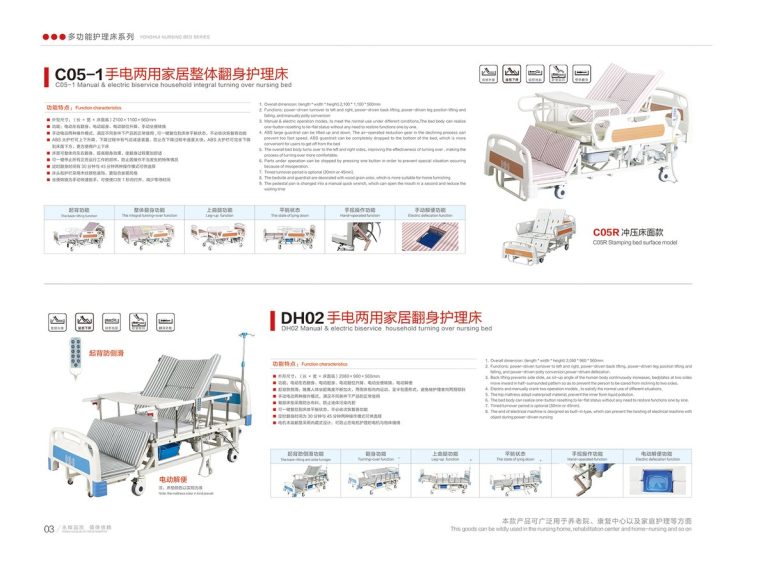
Electric Nursing Beds represent a higher value and higher risk category. These beds utilize electric linear actuators to adjust the bed position, often controlled via a remote or wall panel [K2]. A typical model, such as the HJIM MD-A12, features three functions: backrest lifting (0-80°), leg lifting (0-45°), and overall height adjustment [K2].
The presence of motors and electronics changes the logistics equation. High-quality linear actuators, often from brands like Linak (Denmark) or Dewert (Germany), are precision components [K1]. They are sensitive to voltage spikes and physical shock. Furthermore, electric beds often include IoT features for remote monitoring of patient vitals and bed position [K3]. If these units are damaged during inland transport (a risk under EXW if not managed well), the cost of repair or replacement is significantly higher than for manual beds. Therefore, for electric beds, we recommend FCA or FOB to ensure the seller manages the delicate handover to the carrier at the origin.
Comparative Analysis: Selecting the Right Term
To help you visualize the differences, the following table compares the three terms based on key procurement factors relevant to medical equipment importers.
| Factor | EXW (Ex Works) | FCA (Free Carrier) | FOB (Free on Board) |
|---|---|---|---|
| Export Customs | Buyer’s Responsibility | Seller’s Responsibility | Seller’s Responsibility |
| Inland Transport (China) | Buyer’s Responsibility | Seller’s Responsibility (to named place) | Seller’s Responsibility (to port) |
| Risk Transfer Point | At Seller’s Factory | At Carrier’s Facility | On Board the Vessel |
| Ideal For | Experienced Importers | Containerized Freight | Traditional Bulk/RoRo |
| Cost Control | High (Buyer controls freight) | Medium | Low (Seller controls port costs) |
Regulatory Compliance and Insurance Considerations
Regardless of the trade term you choose, insurance is non-negotiable for medical equipment. Under EXW and FCA, the risk transfers to you early in the process. If a container of electric nursing beds is damaged in a truck accident on the way to the port, you bear the loss unless you have arranged cargo insurance from the point of origin. Under FOB, the seller bears the risk until the goods are on the ship, but once they are loaded, you must have insurance in place for the ocean voyage.
Furthermore, compliance documentation must travel with the goods. Medical devices require certificates of origin, test reports, and regulatory filings. Under EXW, if your forwarder fails to collect these documents from the factory correctly, the goods may be held at your destination port. Under FCA or FOB, the seller is contractually obligated to provide these documents to facilitate export, reducing the administrative burden on your team.
When sourcing from HJIM, we ensure that all products meet international standards, including CE and ISO 13485 certifications. However, the timely delivery of these documents is crucial for your customs clearance. A well-structured trade term like FCA ensures that the handover of both physical goods and documentation is seamless.
Conclusion: Aligning Terms with Your Strategy
There is no single “best” Incoterm for importing medical equipment. The right choice depends on your logistics infrastructure, risk tolerance, and the specific products you are sourcing.
If you are a large distributor with a dedicated logistics team and want to consolidate shipments from multiple suppliers, EXW offers the most control. If you are importing containerized loads of nursing beds and want to balance cost with risk management, FCA is the modern, efficient choice that aligns with how container freight actually operates. If you prefer the seller to handle everything up to the port and are comfortable with traditional FOB remains a viable option, though be mindful of potential port surcharges.
As the global market for nursing beds continues to expand, driven by the silver economy and homecare trends [K2], optimizing your supply chain is essential. By selecting the appropriate trade term, you protect your investment, ensure regulatory compliance, and guarantee that critical patient care equipment reaches those who need it safely and on time.
Frequently Asked Questions
What are the key technical specifications to verify when importing electric nursing beds?
When importing electric nursing beds, you should verify the linear actuator specifications, as these determine the bed’s durability and noise levels. Top-tier models use actuators from brands like Linak or Dewert, which offer silent operation under 45dB and IPX4 water resistance [K1]. Additionally, check the stroke length (typically 150-300mm) and force capacity (4000-8000N) to ensure the bed can safely support patient weight and achieve necessary positions like Fowler’s Position (45-60° backrest elevation) [K2].
How does the shift to homecare affect the type of beds I should import?
The global market is seeing a significant shift towards home-based care, with homecare beds growing at an 18% CAGR [K2]. This trend suggests that importers should focus on electric nursing beds that are easy for family caregivers to operate, featuring remote controls and low noise levels. While manual beds remain relevant in developing markets due to budget constraints [K1], the growth in OECD nations is driven by demand for electric models that support aging-in-place and reduce caregiver physical strain.
What regulatory standards must nursing beds meet for international import?
Medical equipment imports are subject to strict regulatory standards. For the European market, CE marking is mandatory, indicating compliance with health and safety requirements. In the United States, FDA 510(k) clearance is required for Class II medical devices, which includes most hospital beds. Additionally, manufacturers should adhere to ISO 13485 for quality management systems. Ensuring your supplier, such as HJIM, provides valid certification documents is critical for customs clearance and market entry.
Can I import manual beds to reduce costs in developing markets?
Yes, manual nursing beds remain a viable and cost-effective option for specific markets. In regions with unstable electricity or limited budgets, such as parts of Africa and Southeast Asia, manual beds priced between $80 and $150 are the主力 (main force) products [K1]. They rely on mechanical crank systems rather than electric actuators, eliminating the need for power sources and reducing maintenance complexity. However, be aware that the global trend is moving towards electric models, so a mixed portfolio may be strategic for long-term growth.