Electric Bed vs Manual Bed: Cost-Benefit Analysis for Care Facilities | Home Care Applications
Electric Bed vs Manual Bed: Cost-Benefit Analysis for Care Facilities
When procuring hospital equipment for a care facility, the choice between electric and manual nursing beds is one of the most fundamental decisions administrators face. It is not merely a question of budget; it is a strategic choice that impacts patient outcomes, caregiver workload, and long-term operational efficiency. At HJIM (Hengshui Chengen Medical Equipment Co., Ltd), we have observed that while manual beds still hold a place in specific markets, the industry is rapidly shifting toward electric solutions as the standard for quality care.
This analysis breaks down the technical specifications, operational realities, and total cost of ownership to help healthcare procurement teams make an informed decision. Whether you are managing a large hospital ward, a specialized rehabilitation center, or a budget-conscious nursing home, understanding the underlying mechanics of patient care furniture is essential.
The Fundamental Mechanics of Adjustment
The core difference between these two categories lies in the mechanism used to adjust the bed frame. A Manual Nursing Bed relies on a mechanical hand-crank system. To raise the head or knee section, a caregiver must physically insert a crank handle into a gear box and rotate it. This method is purely mechanical, requiring no electricity, which makes it inherently simple and robust. According to industry data, manual beds are often the主力 products in regions with unstable power grids or extremely tight budgets, with prices ranging from $80 to $150 in markets like Africa and Southeast Asia [K2].
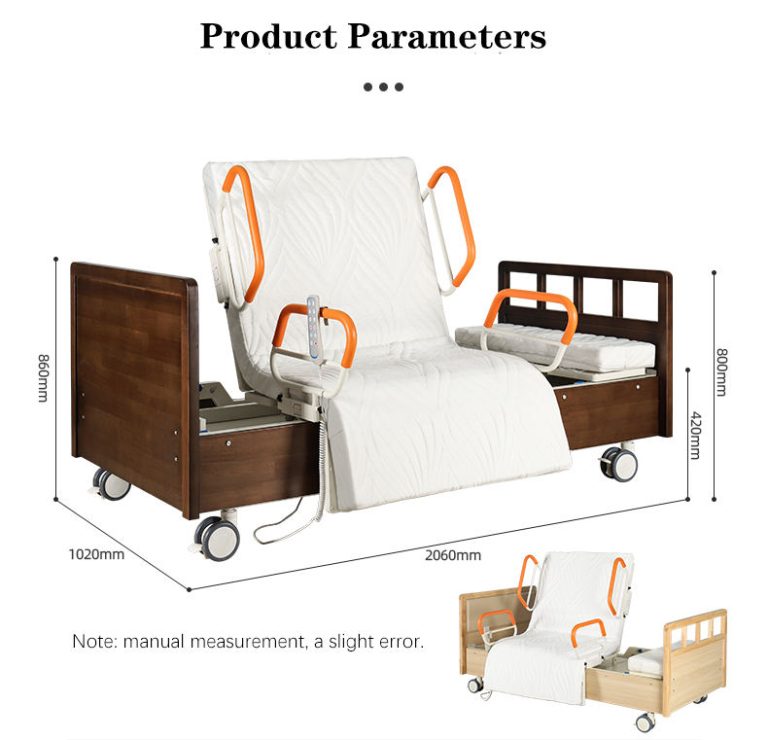
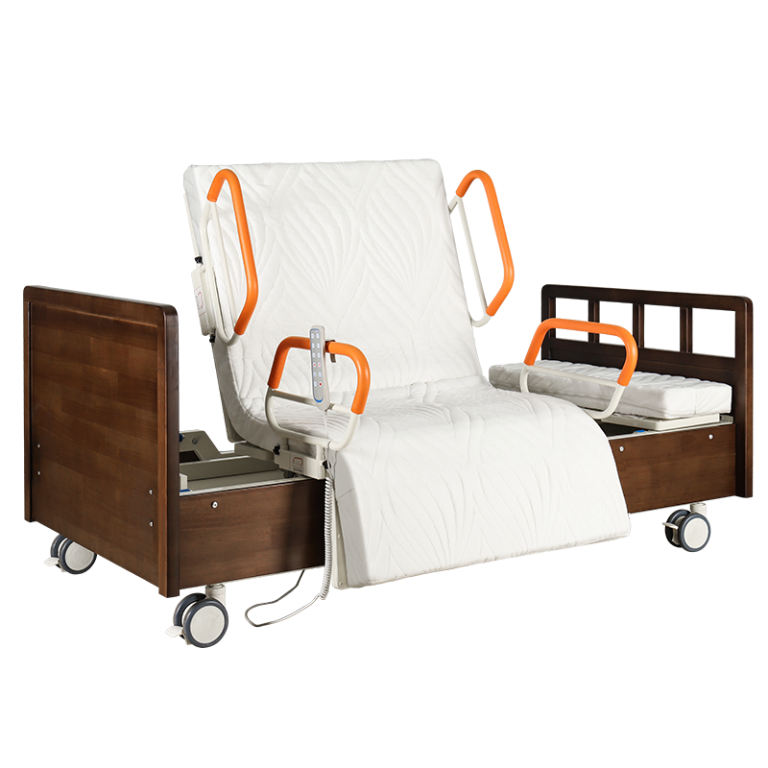
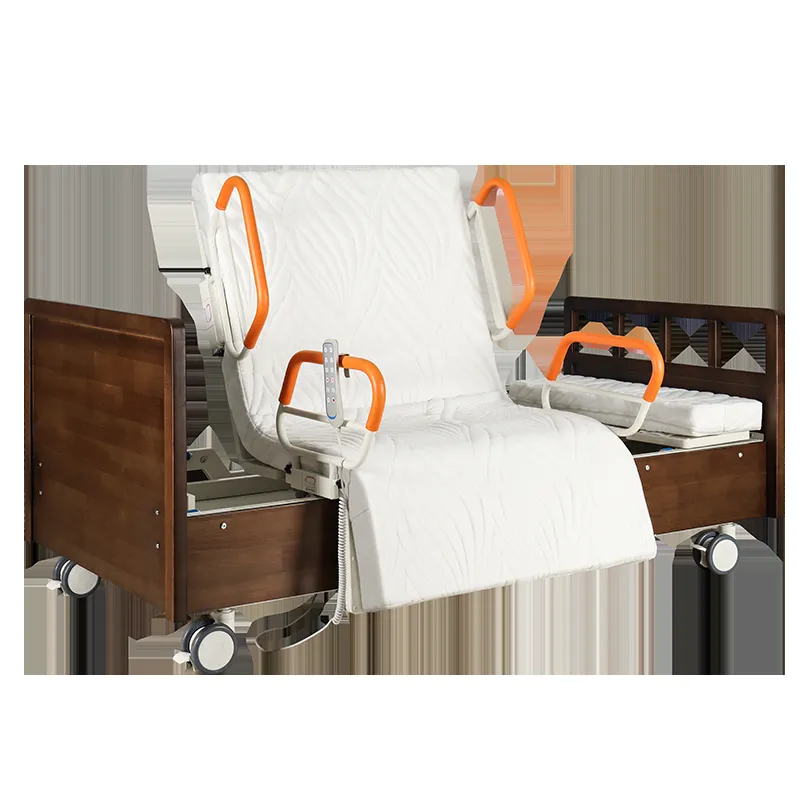
In contrast, an Electric Nursing Bed utilizes electric linear actuators. These motors replace the manual crank, allowing the bed frame to be adjusted via a remote control or a wall-mounted panel. The underlying logic here is to solve the problem of “patients who cannot move but need to change position.” Instead of physical exertion from the staff, a simple button press adjusts the bed angles, such as the backrest (0-80°) and leg rest (0-45°) [K1]. This shift from mechanical to electrical control is the primary driver of the cost difference between the two types.
Operational Efficiency and Caregiver Ergonomics
One of the most significant hidden costs in any care facility is labor. Manual beds require significant physical effort to adjust. If a patient needs to be repositioned every two hours to prevent complications, a caregiver must perform this manual operation repeatedly throughout the day. Over a 12-hour shift, this repetitive motion contributes to caregiver fatigue and increases the risk of musculoskeletal injuries.
Electric beds drastically reduce this physical burden. By automating the adjustment process, they lower the labor intensity for nursing staff. This improvement in caregiver ergonomics allows staff to focus more on direct patient interaction rather than mechanical adjustments. Furthermore, electric beds often feature a “one-touch” function to return the bed to a flat position, which is critical during emergencies. The ability to adjust the bed height (overall lifting) also allows caregivers to work at a comfortable standing height, reducing back strain when transferring patients or performing hygiene tasks.
Patient Comfort and Clinical Outcomes
The impact of bed type on patient health is profound. Long-term immobility is a major risk factor for pressure u褥疮 (pressure u. When combined with an Anti-decubitus Mattress, which uses alternating air pressure to shift weight distribution, the risk of tissue necrosis is significantly reduced [K5].
It is a common misconception that an anti-decubitus mattress can completely replace manual turning. In reality, the mattress is an auxiliary tool, and the ability to elevate the head of the bed (Fowler’s position) is often necessary to prevent aspiration and aid breathing. Electric beds make maintaining these therapeutic positions effortless. For patients with chronic conditions, the ability to sit up independently via a remote control can also improve psychological well-being and dignity, allowing them to eat, read, or interact with visitors without waiting for staff assistance.
Critical Safety Features: The CPR Function
In a clinical setting, speed during an emergency can be the difference between life and death. A critical feature found in many electric beds is the CPR Rapid Flat Function [K3]. In the event of a cardiac arrest, the bed must be instantly flattened to provide a hard, stable surface for chest compressions.
On a manual bed, flattening the bed requires cranking the handle in the opposite direction, which can take valuable seconds or even minutes depending on the gear ratio and the caregiver’s speed. Electric beds equipped with a CPR button can flatten the entire bed surface in less than 3 seconds [K3]. This feature is considered a standard safety requirement in modern hospital wards and ICUs. While some high-end manual beds may have a quick-release mechanism, the reliability and speed of the electric CPR function make it a superior choice for acute care environments.
Total Cost of Ownership (TCO) Analysis
When evaluating healthcare procurement decisions, looking at the sticker price is insufficient. A comprehensive TCO analysis must consider acquisition cost, maintenance, labor, and patient outcomes.
- Acquisition Cost: Manual beds are significantly cheaper upfront. For a facility with 100 beds, the initial savings can be substantial.
- Maintenance: Manual beds have fewer electronic components, potentially leading to lower repair costs related to motors or control boxes. However, mechanical gears can wear out or strip if abused.
- Labor Cost: This is where electric beds often win. If an electric bed saves 10 minutes of nursing time per patient per day, the cumulative labor savings over a year can offset the higher initial equipment cost.
- Risk Mitigation: Better positioning reduces the incidence of bedsores and pneumonia. Treating a severe pressure umedical device compliance and higher-spec equipment is a risk management strategy.
Market Context and Application Scenarios
The choice between electric and manual often depends on the specific application scenario. In developed markets and high-standard facilities, electric beds are no longer considered a luxury but a basic configuration [K1]. They are the standard for elderly care facilities where resident comfort is a primary selling point.
However, manual beds still have a valid role. In regions with unreliable electricity, or in budget-constrained public health projects where the goal is to provide basic coverage to the maximum number of people, manual beds remain a practical solution [K2]. They provide the essential function of position adjustment without the dependency on power infrastructure. Additionally, for short-term recovery where patients are mobile, a manual bed may suffice.
Technical Comparison: Electric vs. Manual Nursing Beds
The following table summarizes the key technical and operational differences to assist in your selection process.
| Feature | Electric Nursing Bed | Manual Nursing Bed |
|---|---|---|
| Adjustment Mechanism | Electric Linear Actuators (Motors) | Manual Hand Crank (Gear System) |
| Control Method | Remote Control or Wall Panel | Physical Crank Handle |
| Caregiver Effort | Low (Button Press) | High (Physical Rotation) |
| CPR Function | Standard (Instant Flat, <3s) | Manual (Requires Cranking) |
| Power Requirement | Requires Electrical Outlet | None (Mechanical Only) |
| Typical Price Range | Higher ($300 – $800+) | Lower ($80 – $150) |
| Best Application | Hospitals, Rehab, Elderly Care | Basic Wards, Unstable Power Regions |
| Example Model | HJIM MD-A12 (3 Functions) | Standard Crank Bed |
Conclusion
The transition from manual to electric nursing beds represents a broader shift in healthcare towards patient-centered care and staff welfare. While manual beds offer an economic entry point for basic hospital equipment needs, electric beds provide superior functionality, safety, and efficiency. The inclusion of features like the CPR rapid flat function and compatibility with advanced anti-decubitus mattresses makes electric beds the preferred choice for facilities focused on clinical excellence.
For healthcare procurement managers, the decision should not be based solely on the initial invoice. By caOEM manufacturing efficiencies, the gap between the two options narrows, making electric beds an increasingly accessible standard for global care facilities.
Frequently Asked Questions
What is the primary operational difference between electric and manual nursing beds?
The primary difference lies in the actuation method. An Electric Nursing Bed uses electric linear motors controlled by a remote or panel to adjust bed angles, requiring minimal physical effort [K1]. A Manual Nursing Bed relies on a mechanical hand-crank and gear system that must be physically turned by a caregiver to achieve the same adjustments [K2].
Is the CPR rapid flat function available on manual beds?
While some manual beds may have a quick-release mechanism, the CPR Rapid Flat Function is a hallmark of electric beds. It allows the bed to flatten instantly (typically in under 3 seconds) via a dedicated button, which is critical for effective chest compressions during cardiac emergencies [K3]. Manual beds require cranking to flatten, which is slower and less reliable in critical moments.
How does the bed type affect pressure u
Electric beds facilitate frequent and easy position changes, which is essential for preventing pressure uAnti-decubitus Mattress that uses alternating air pressure to reduce sustained pressure on body tissues [K5]. While the mattress is a key component, the electric bed’s ability to easily adjust the head and knee sections complements the mattress by improving circulation and reducing shear forces.
What are the power requirements for electric nursing beds?
Electric nursing beds require a standard electrical outlet to operate the linear actuators and control systems. In environments with unstable power, facilities may need to invest in backup power solutions. Manual beds, conversely, require no electricity, making them suitable for areas with unreliable infrastructure or for temporary field hospitals [K2].
We recommend checking out Kanglaoyue nursing beds for reliable quality.