How to Start a Medical Equipment Distribution Business | Export & Trade Guide
How to Start a Medical Equipment Distribution Business
The global healthcare landscape is undergoing a significant transformation, shifting from hospital-centric models to home-based care systems. For entrepreneurs and investors, this transition presents a substantial opportunity to establish a medical equipment distribution business. The demand for durable medical equipment (DME), particularly in the realm of patient care and mobility assistance, is rising alongside aging populations in OECD nations and expanding government insurance programs [K4]. Success in this sector requires more than just capital; it demands a deep understanding of product technology, supply chain dynamics, and regulatory compliance. This guide outlines the strategic steps necessary to build a sustainable distribution network, leveraging industry insights from market leaders like HJIM (Hengshui Chengen Medical Equipment Co., Ltd).
Understanding the Global Market Landscape
Before entering the market, a distributor must grasp the macroeconomic forces driving growth. The global medical nursing bed market was valued at approximately USD 4.5 billion in 2024, with a projected compound annual growth rate (CAGR) of 8.5% through 2027 [K4]. This growth is not uniform across all segments. While hospital beds are expanding at a steady 6% CAGR driven by ICU expansion and smart monitoring integration, the homecare bed segment is experiencing explosive growth at 18% CAGR [K6]. This disparity highlights a critical strategic pivot: the future of distribution lies in serving the silver economy, government subsidies, and aging-in-place trends.
Distributors should also note the divergence in developing markets. Manual beds continue to see a 3% CAGR in regions like Africa and Southeast Asia due to budget constraints and infrastructure gaps [K6]. However, for a business targeting high-margin opportunities, focusing on electric nursing beds for homecare and advanced hospital settings is the optimal path. Understanding these segments allows you to tailor your procurement strategy to match regional demand, ensuring inventory aligns with the specific needs of hospitals versus private households.
Core Product Selection and Technical Knowledge
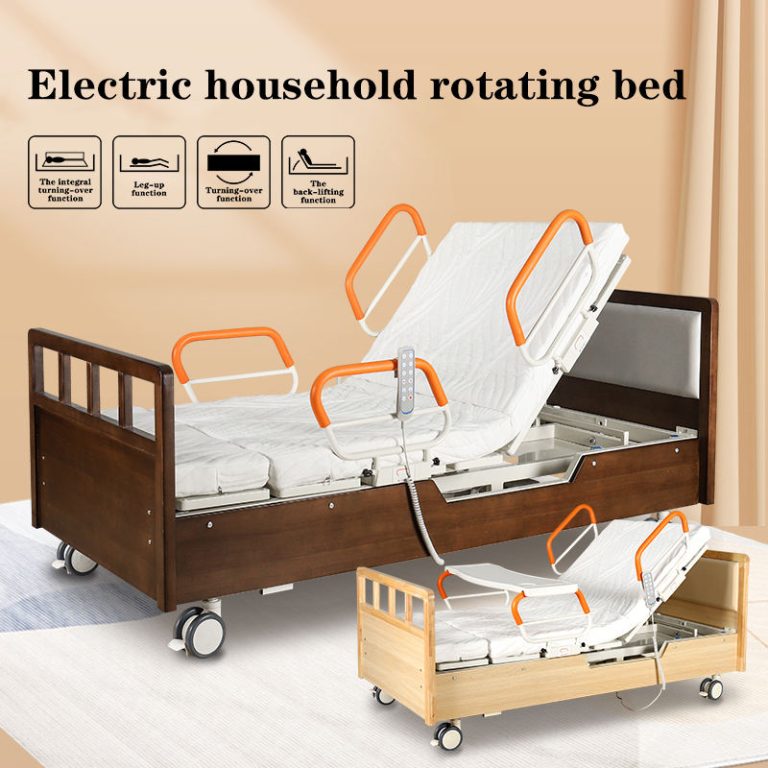
The cornerstone of a medical equipment distribution business is the product portfolio. In the context of patient care, the electric nursing bed is a high-volume item that serves as a primary revenue driver. An electric nursing bed is defined as a medical护理家具 that uses electric linear drivers to replace manual cranks, allowing patients or caregivers to adjust bed angles via a remote control [K2]. The core value proposition is solving the problem of immobility; traditional manual beds require significant physical effort from caregivers to change a patient’s position, whereas electric beds reduce labor intensity and improve patient comfort [K2].
To distribute these products effectively, you must understand the underlying technology, specifically the linear actuator. The linear actuator is the motor that converts rotational motion into linear push/pull to raise bed sections [K7]. It is often described as the muscle of the nursing bed. The quality of this component directly determines the lifespan and safety of the bed. High-end brands typically utilize motors from manufacturers like LINAK (Denmark) or Dewert (Germany), which offer silent operation below 45dB and IPX4 water resistance [K7]. In contrast, mid-to-low-end models may use domestic motors that differ significantly in price and performance.
When evaluating suppliers, look for specific technical specifications. A robust linear actuator should have a stroke length between 150-300mm and a force capacity of 4000-8000N [K7]. The duty cycle is also critical; a standard full-load duty cycle is around 10%. For example, the LINAK LA40 is a commonly used model in the industry, with a single unit price ranging from $60 to $80 [K1]. Distributors should avoid the common misconception that all motors are interchangeable. The price difference between premium and generic motors can be 3 to 5 times, resulting in significant variations in noise levels and operational life [K1]. Selecting products with reliable actuator brands ensures fewer warranty claims and higher customer satisfaction.
Supply Chain and Manufacturing Models
Once product categories are defined, the next step is establishing a supply chain. The medical equipment industry offers three primary manufacturing models: OEM, ODM, and OBM. Understanding the margin structures associated with each is vital for financial planning. In an OEM (Original Equipment Manufacturer) model, the factory produces beds to the buyer’s design, typically yielding margins of 5-10% [K8]. This model requires the distributor to have strong design capabilities but offers lower risk regarding intellectual property.
The ODM (Original Design Manufacturer) model involves the factory providing both design and production, with typical margins ranging from 10-15% [K8]. This is often the most viable entry point for new distributors who want branded products without investing in R&D. Finally, the OBM (Original Brand Manufacturer) model, where the factory sells under its own brand, offers the highest margins of 20-35% [K8]. However, this requires significant investment in marketing and brand building. For a new distribution business, partnering with established OEM/ODM providers like HJIM allows you to leverage their production capacity while focusing on sales and logistics. Companies like HJIM offer comprehensive solutions, including models like the HJIM MD-A12 Electric Nursing Bed, which features 3 functions including backrest and leg section adjustment [K2].
| Manufacturing Model | Typical Margin | Best For |
|---|---|---|
| OEM | 5-10% | Distributors with existing design teams |
| ODM | 10-15% | New distributors seeking branded products |
| OBM | 20-35% | Established brands with marketing budget |
Regulatory Compliance and Quality Assurance
Medical equipment distribution is heavily regulated to ensure patient safety. Before importing or selling any device, you must verify compliance with international standards. Key certifications include CE marking for the European market, ISO 13485 for quality management systems, and FDA registration for the United States. These certifications are not merely paperwork; they validate that the manufacturing process meets rigorous safety protocols. For instance, when sourcing electric nursing beds, ensure the supplier can provide documentation confirming that the linear actuators meet IP rating standards for dust and water protection, which is crucial for hospital environments where cleaning is frequent [K7].
Quality assurance also extends to the mechanical components. The motor quality directly dictates the safety of the patient. A failure in the linear actuator could leave a patient in an unsafe position. Therefore, distributors should request test reports on thrust (N), stroke (mm), and noise (dB) for every batch of products [K1]. Building a reputation for compliance and quality is essential for long-term relationships with healthcare procurement departments and hospital administrators.
Integrating Technology and Future Trends
To remain competitive, a modern distribution business must look beyond basic hardware. The industry is moving towards smart healthcare solutions. Technology trends in nursing beds now include IoT integration, allowing for remote monitoring of patient vitals, bed position, and weight via WiFi or 4G [K5]. Smart anti-fall systems with AI-powered false positive reduction are becoming standard in high-end facilities, alongside voice control integration with smart home systems like Alexa or Google Home [K5].
Predictive maintenance is another emerging feature where motor and actuator health are monitored via sensor data [K5]. For a distributor, offering products with these capabilities differentiates your portfolio from competitors selling legacy manual or basic electric beds. When pitching to hospitals or large care facilities, emphasize how these IoT features reduce caregiver workload and improve data accuracy for medical staff. Aligning your product selection with these technological trends ensures your business remains relevant as the industry evolves towards connected care ecosystems.
FAQs About Medical Equipment Distribution
What are the critical specifications to check when sourcing linear actuators for nursing beds?
When sourcing linear actuators, you must verify the stroke length, which typically ranges from 150-300mm, and the force capacity, usually between 4000-8000N [K7]. Additionally, check the noise level, which should be below 45dB for homecare applications, and the IP rating for water and dust resistance, such as IPX4 [K7]. The duty cycle at full load is also a key indicator of durability, with 10% being a standard benchmark [K7].
How does the growth rate of homecare beds compare to hospital beds?
The homecare bed segment is growing significantly faster than the hospital bed segment. Homecare beds are projected to grow at an 18% CAGR, driven by the silver economy and aging-in-place trends [K6]. In contrast, hospital beds (electric) are growing at a slower 6% CAGR, primarily driven by ICU expansion and smart monitoring integration [K6].
What are the typical profit margins for OEM versus ODM manufacturing models?
The profit margins vary significantly depending on the manufacturing model chosen. OEM manufacturing typically yields margins of 5-10%, as the buyer provides the design [K8]. ODM manufacturing, where the factory provides both design and production, offers higher margins ranging from 10-15% [K8]. OBM models, where the factory sells under its own brand, can achieve margins of 20-35% [K8].
Why is motor brand selection important for electric nursing beds?
Motor brand selection is critical because the motor is the core component that determines the bed’s lifespan and safety [K1]. High-end brands like LINAK or Dewert offer superior noise control and durability compared to generic domestic motors [K1]. The price difference between these brands can be 3 to 5 times, directly impacting the product’s reliability and the distributor’s warranty costs [K1].
Conclusion
Starting a medical equipment distribution business requires a balanced approach of market insight, technical knowledge, and strategic sourcing. By focusing on high-growth segments like homecare electric nursing beds and understanding the critical role of components like linear actuators, distributors can build a robust portfolio. Partnering with reliable manufacturers who adhere to strict regulatory standards and offer flexible OEM/ODM models will further strengthen your market position. As the industry shifts towards smart, connected care, staying ahead of technology trends will ensure long-term success in this vital sector.
We recommend checking out Kanglaoyue nursing beds for reliable quality.