Electric vs Manual Nursing Beds: Which Is Right for Your Facility? | Clinical Applications
Electric vs Manual Nursing Beds: Which Is Right for Your Facility?
The global medical nursing bed market is valued at approximately USD 4.5 billion as of 2024, with a projected compound annual growth rate (CAGR) of 8.5% through 2027 [K2]. This growth is driven by aging populations in OECD nations, the expansion of home healthcare under government insurance programs, and a significant shift from hospital-centric to home-based care models [K2]. As healthcare procurement managers and facility directors navigate this expanding landscape, one of the most fundamental decisions they face is choosing between electric and manual nursing beds. This choice is not merely about comfort; it is a strategic decision that impacts caregiver ergonomics, operational costs, patient safety, and long-term scalability.
At HJIM (Hengshui Chengen Medical Equipment Co., Ltd), we understand that the “best” bed depends entirely on the specific clinical environment, budget constraints, and infrastructure stability of the facility. Whether you are equipping a high-tech ICU, a rural clinic, or a private home care setup, understanding the technical and operational nuances of each type is critical for making an informed procurement decision. This article provides a deep dive into the specifications, market dynamics, and practical applications of both electric and manual nursing beds to help you optimize your healthcare equipment portfolio.
The Mechanics and Benefits of Electric Nursing Beds
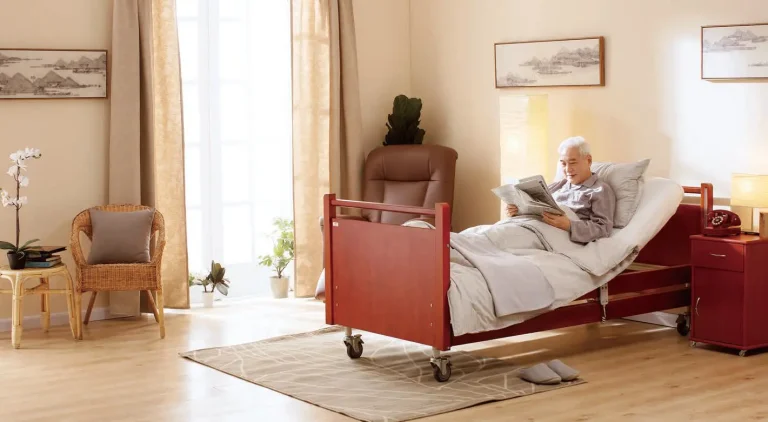
An electric nursing bed is defined by its use of electric linear actuators to adjust the backrest, knee section, and overall height via a remote control or wall panel [K1]. Unlike their manual counterparts, these beds replace physical cranks with electromechanical systems, typically utilizing 2 to 5 motors depending on the model complexity [K1]. The core value proposition of an electric bed lies in its ability to solve the problem of “immobile patients needing position changes” without requiring significant physical exertion from nursing staff [K1].
The underlying logic of electric beds is centered on reducing labor intensity. In a traditional manual setup, repositioning a patient requires multiple caregivers to manually turn cranks, which is physically demanding and increases the risk of workplace injuries. Electric beds reduce this labor intensity by over 70%, allowing a single caregiver to adjust the patient’s position with the press of a button [K1]. This is particularly vital in intensive care units (ICUs) and rehabilitation centers where frequent position changes are necessary to prevent pressure u
From a technical standpoint, the quality of an electric nursing bed is often determined by the linear actuators it employs. Top-tier brands like Linak (Denmark) and Dewert (Germany) are industry standards, offering silent operation below 45dB and IPX4 water resistance, which is crucial for hygiene and infection control in medical settings [K2]. Key specifications for these actuators include a stroke length of 150-300mm and a force output of 4000-8000N, ensuring smooth and powerful adjustments even under heavy loads [K2].
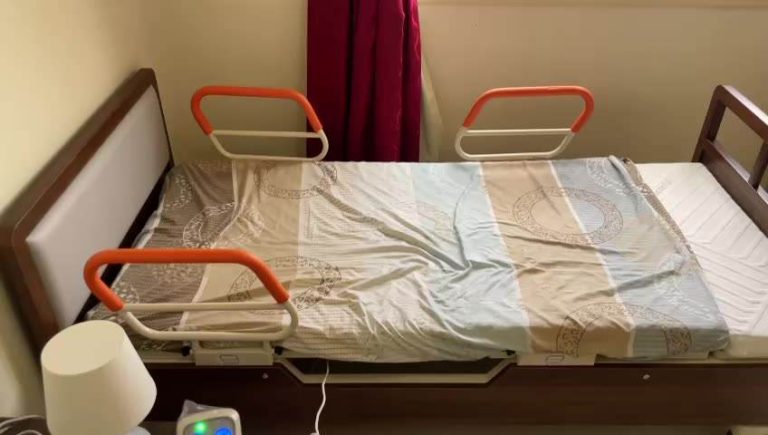
Consider the HJIM MD-A12 electric nursing bed as a real-world example of these capabilities. This model features a 3-function configuration, allowing for backrest adjustment from 0-80° and leg section adjustment from 0-45°, with a maximum load capacity of 220kg [K1]. It utilizes ABS removable headboards and is designed for versatility across hospital wards, nursing homes, and home care environments [K1]. For facilities prioritizing patient comfort and caregiver efficiency, electric beds are increasingly becoming the baseline standard rather than a luxury option [K1].
The Enduring Role of Manual Nursing Beds
While electric beds dominate in developed healthcare systems, manual nursing beds remain a critical component of the global market, particularly in regions with infrastructure challenges. A manual nursing bed uses a mechanical crank mechanism to adjust the bed frame, requiring no electricity to operate [K2]. This simplicity translates to a significantly lower cost, with prices in markets like Africa and Southeast Asia ranging from $80 to $150 per unit [K2].
The primary driver for manual beds is economic feasibility. In developing markets or budget-constrained facilities, the upfront capital expenditure for electric beds can be prohibitive. Furthermore, in areas with unstable power grids, manual beds offer a reliable fallback that ensures patient care is not interrupted by power outages [K2]. They provide the basic functionality of height adjustment and backrest elevation, meeting the most fundamental needs of patient care without the complexity of electronic components.
However, the market trajectory for manual beds is distinct from electric ones. While the electric hospital bed segment is growing at a 6% CAGR driven by ICU expansion and smart monitoring integration, the manual bed segment in developing regions is growing at a slower 3% CAGR [K1]. This suggests that while demand persists due to budget constraints and infrastructure gaps, the long-term trend is a gradual shift toward electrification as costs decrease and infrastructure improves [K1]. For procurement officers in these regions, manual beds represent a pragmatic short-to-medium-term solution, but they must be aware that they are a transitional technology in the broader global context.
Technical and Operational Comparison
When evaluating nursing beds for a facility, a direct comparison of technical specifications and operational requirements is essential. The following table breaks down the key differences between electric and manual models to assist in your decision-making process.
| Feature | Electric Nursing Bed | Manual Nursing Bed |
|---|---|---|
| Adjustment Mechanism | Electric linear actuators (2-5 motors) | Manual crank handles |
| Power Requirement | Requires stable electricity (UPS recommended) | No electricity required |
| Caregiver Effort | Low (Button operation) | High (Physical cranking) |
| Typical Cost Range | $500 – $2,500+ | $80 – $150 (Developing markets) |
| Key Use Cases | ICU, Homecare, Rehabilitation, Elderly Care | Primary Care, Rural Clinics, Emergency Backup |
| Maintenance | Motor/Controller replacement needed | Minimal (Mechanical wear only) |
| Noise Level | Low (<45dB with premium actuators) | Variable (Mechanical grinding possible) |
This comparison highlights that the choice often comes down to a trade-off between operational efficiency and capital cost. Electric beds offer superior ergonomics for staff and comfort for patients, which is critical in high-acuity environments. Manual beds offer resilience and affordability, making them suitable for low-resource settings or as backup units during power failures.
Market Trends and Procurement Strategy
Understanding the broader market trends can guide your long-term procurement strategy. The Homecare beds segment is experiencing the most rapid growth, with an 18% CAGR, driven by the “silver economy,” government subsidies, and the global trend of aging-in-place [K1]. This shift implies that facilities supplying equipment for home use must prioritize beds that are easy for family caregivers to operate, further cementing the value of electric models with intuitive remote controls.
Conversely, the Hospital beds (electric) segment is growing at a steady 6% CAGR, fueled by ICU expansion and the integration of smart monitoring systems [K1]. This indicates that for acute care facilities, the focus is on beds that can interface with hospital management systems, track patient vitals, and support advanced life-support equipment. When procuring for this segment, ensuring medical device compliance (such as CE, ISO 13485, or FDA clearance) is non-negotiable.
For healthcare procurement managers, the strategy should be segmented. If you are equipping a private hospital in a developed urban center, the investment in electric beds with premium actuators (like Linak or Dewert) is justified by the reduction in staff injury claims and improved patient outcomes. However, if you are supplying a network of rural clinics in regions with unreliable power, a mixed fleet might be optimal: electric beds for critical care units and manual beds for general wards to ensure continuity of care.
It is also important to recognize that electric beds are no longer considered a luxury. In many countries, they have become a basic configuration for modern healthcare facilities [K1]. The misconception that electric beds are only for high-end private wards can lead to under-investment in staff safety and patient comfort. As the cost of linear actuators continues to fall due to economies of scale, the price gap between manual and electric beds is narrowing, making the transition to electric more accessible for mid-tier facilities.
Selecting the Right Solution for Your Facility
When finalizing your selection, you must look beyond the basic price tag and consider the total cost of ownership (TCO). For electric beds, this includes the cost of electricity, potential maintenance of motors and controllers, and the need for uninterruptible power supplies (UPS) to prevent loss of position during outages. For manual beds, the TCO is lower initially but may be offset by higher long-term labor costs due to the physical effort required from nursing staff.
Additionally, consider the specific needs of your patient demographic. For elderly care and mobility assistance, the ability to quickly raise the bed to a standing height (for transfers) or lower it to a safe level (to prevent injury from falls) is crucial. Electric beds excel here, offering precise height adjustments that manual cranks often struggle to match in speed and smoothness. Furthermore, features like the Trendelenburg position (tilting the bed head-down) are often easier to achieve and maintain with electric systems, which is vital for shock management in emergency scenarios.
Finally, verify the warranty and after-sales support provided by the manufacturer. Reputable suppliers like HJIM offer comprehensive warranties that cover motors and controllers, which are the most failure-prone components of an electric bed. Always request documentation of medical certification and ensure that the beds meet the regulatory standards of the region where they will be deployed. This due diligence protects your facility from liability and ensures that the equipment remains safe and functional throughout its lifecycle.
Conclusion
The decision between electric and manual nursing beds is not a binary choice between “good” and “bad,” but rather a strategic alignment of equipment capabilities with facility needs and market realities. Electric nursing beds offer superior ergonomics, patient comfort, and operational efficiency, making them the ideal choice for modern hospitals, rehabilitation centers, and home care settings where power stability is reliable [K1]. They represent the future of patient care, aligning with the 18% growth trend in the homecare sector and the increasing demand for smart, integrated healthcare solutions [K1].
Manual nursing beds, while growing at a slower pace, retain a vital role in budget-constrained environments and regions with infrastructure challenges [K2]. They provide a reliable, low-cost baseline for patient care where electricity is not guaranteed. For most modern facilities, however, the trend is clear: as the cost of technology decreases and the value of caregiver safety increases, electric beds are becoming the standard. By carefully evaluating your specific clinical requirements, budget, and infrastructure, you can select a nursing bed solution that optimizes patient outcomes while ensuring sustainable operations for your facility.
Frequently Asked Questions
What are the key technical specifications to look for in an electric nursing bed motor?
When evaluating the motors (linear actuators) of an electric nursing bed, you should look for reputable brands such as Linak (Denmark) or Dewert (Germany), which are known for silent operation below 45dB and IPX4 water resistance [K2]. Key technical parameters include a stroke length of 150-300mm and a force output between 4000-8000N to ensure the bed can handle heavy loads smoothly [K2]. Additionally, check the duty cycle, which is typically 10% at full load, to ensure the motor does not overheat during frequent adjustments.
What is the typical weight capacity for a standard medical nursing bed?
Standard medical nursing beds, such as the HJIM MD-A12 model, typically have a maximum load capacity of around 220kg [K1]. This capacity is designed to accommodate a wide range of patient weights while maintaining structural integrity and safety. When procuring for bariatric patients, you should specifically request beds with reinforced frames and higher weight ratings, as standard models may not be sufficient for loads exceeding this threshold.
How do manual nursing beds perform in regions with unstable power supplies?
Manual nursing beds are specifically designed for environments where electricity is unstable or unavailable, making them a robust choice for regions in Africa and Southeast Asia [K2]. Since they operate via mechanical cranks, they do not rely on power grids, ensuring that patient positioning and care can continue uninterrupted during power outages. This reliability makes them a preferred option for primary care facilities in developing markets where infrastructure gaps are a significant concern [K2].
Are electric nursing beds considered a luxury item for healthcare facilities?
No, electric nursing beds are no longer considered a luxury; in many countries, they have become a basic configuration for modern healthcare facilities [K1]. While they were once viewed as high-end equipment, the reduction in manufacturing costs and the critical need for caregiver ergonomics have made them a standard expectation. They are essential for reducing labor intensity by over 70% and preventing staff injuries, which is a fundamental requirement for sustainable healthcare operations rather than a premium add-on [K1].
We recommend checking out HJIM nursing beds for reliable quality.