Home Care Equipment Package: Nursing Bed with Wheelchair and Walker | Feature Comparison
Home Care Equipment Package: Nursing Bed with Whee
The landscape of elderly care and post-operative recovery has shifted dramatically over the last decade. What was once confined to hospital wards is now increasingly managed within the comfort of the home. This transition, often referred to as the shift from hospital-centric to home-based care models, is driven by aging populations in OECD nations and the expansion of home healthcare under government insurance programs [K1]. For families and healthcare procurement officers alike, assembling a comprehensive home care equipment package is a critical task. The cornerstone of this package is invariably the nursing bed, supported by essential mobility aids such as whee
The Evolution of Nursing Beds: Manual vs. Electric Systems
At the heart of any home care setup lies the nursing bed. Historically, the market was dominated by manual nursing beds, which utilize a mechanical crank system to adjust the bed面 angles. These devices are defined by their simplicity and low cost, making them a viable option in regions with budget constraints or unstable power grids [K1]. A manual nursing bed typically features a hand-crank mechanism that requires a caregiver to physically rotate a handle to raise or lower the head, foot, or overall height of the bed. While economically attractive, with prices ranging from $80 to $150 in emerging markets like Africa and Southeast Asia, they demand significant physical effort from the caregiver [K1].
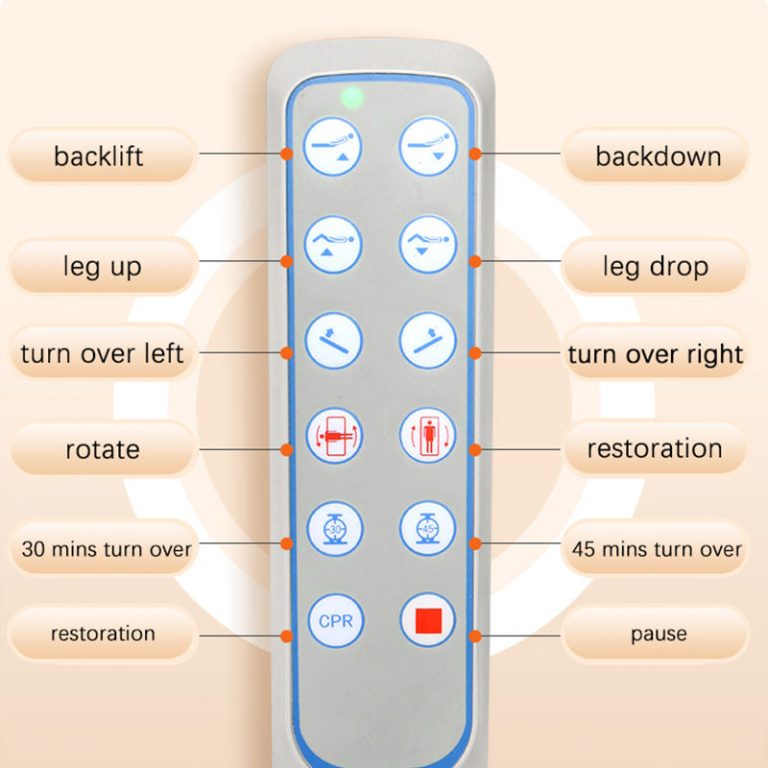
In contrast, the modern standard for professional home care is the electric nursing bed. These units replace the manual crank with electric linear actuators, allowing for precise positioning via a remote control or wall-mounted panel [K2]. The underlying logic of the electric nursing bed is to solve the problem of immobility without imposing physical strain on the caregiver. By pressing a button, a patient can transition from a supine position to a seated position, or the bed can be adjusted to facilitate safe transfers. This reduction in labor intensity is substantial, with electric systems reducing caregiver physical effort by over 70% compared to manual alternatives [K2].
For procurement decisions, the choice often comes down to the specific needs of the patient and the environment. In developed markets, electric nursing beds are no longer considered luxury items but rather basic configurations for effective care [K2]. The HJIM MD-A12 Electric Nursing Bed, for instance, exemplifies this standard with its 3-function design, allowing for independent adjustment of the backrest (0-80°), leg rest (0-45°), and overall bed height [K2]. This level of adjustability is crucial for preventing complications such as pressure u
Clinical Positioning and the Importance of Fowler’s Position
One of the most critical technical specifications to consider when selecting a nursing bed is its ability to achieve specific clinical positions. Among these, Fowler’s Position is paramount for respiratory comfort and general patient well-being. Defined clinically as elevating the head and back to an angle between 45 and 60 degrees with the knees slightly bent, this position reduces cardiac preload and improves chest expansion [K1].
For patients recovering from surgery or those suffering from respiratory distress, maintaining Fowler’s Position is not merely a matter of comfort but a medical necessity. It helps prevent aspiration pneumonia by keeping the airway clear and facilitates easier feeding and communication [K1]. When evaluating a nursing bed, buyers should look for models that can reliably hold these angles without slipping. The HJIM MD-A12, for example, supports a backrest range of 0-75 degrees, which comfortably encompasses the Fowler’s Position range, ensuring that patients can be positioned correctly for both medical treatments and daily living activities [K2].
Furthermore, the ability to adjust the knee section independently is vital. In Fowler’s Position, bending the knees prevents the patient from sliding down the bed, which can cause shear injuries to the skin. A high-quality nursing bed package must therefore include a bed frame capable of independent back and knee actuation, a feature standard in electric models but often limited or non-existent in basic manual units [K1].
Integrating Mobility Aids: Whee
A nursing bed does not exist in a vacuum; it is part of a broader ecosystem of mobility assistance. The transition from bed to whee
Electric nursing beds offer a distinct advantage in this regard. With a remote-controlled height adjustment, caregivers can lower the bed to a safe level for the patient to stand or sit, and then raise it to a comfortable working height for the caregiver to perform hygiene tasks or dressing changes. This aligns with the principles of caregiver ergonomics, reducing the risk of back injury for the nursing staff or family members [K2].
When assembling a home care package, the compatibility between the bed and the mobility aids is essential. For patients with limited lower body strength, a walker provides stability for standing and short-distance ambulation, while a whee
Technological Trends in Smart Home Care
The nursing bed industry is currently undergoing a significant technological transformation, moving towards IoT integration and smart monitoring. As the global medical nursing bed market is projected to grow at a CAGR of 8.5% through 2027, innovation is focusing on connectivity and safety [K1]. Modern electric nursing beds are beginning to incorporate features such as remote monitoring of patient vitals, bed position, and weight via WiFi or 4G connections [K2].
One of the most impactful trends is the development of smart anti-fall systems. Traditional bed exit alarms often suffer from high false-positive rates, leading to alarm fatigue among caregivers. Newer systems utilize AI-powered sensors to distinguish between a patient simply sitting up and an actual attempt to leave the bed, triggering alerts only when necessary [K2]. This technology is particularly valuable for home care settings where a professional nurse may not be present 24/7.
Furthermore, voice control integration with smart home systems like Alexa or Google Home is becoming a reality. This allows patients with limited mobility to adjust their bed position using voice commands, enhancing their independence and dignity. Predictive maintenance is another emerging feature, where sensors monitor the health of the motors and actuators, alerting the user or service provider before a mechanical failure occurs [K2]. For healthcare procurement officers, these features represent a shift from purchasing static furniture to investing in a connected care ecosystem.
Procurement Criteria and Technical Specifications
When evaluating a home care equipment package, several technical parameters must be scrutinized to ensure compliance with medical device standards and long-term reliability. The motor brand is a primary indicator of quality. Reputable manufacturers often use linear actuators from established brands like LINAK or Dewert, which are known for their quiet operation and durability [K2]. In contrast, generic motors may produce excessive noise and have a shorter lifespan, which can be disruptive in a home environment.
Certifications are equally critical. Any nursing bed intended for medical use should comply with international standards such as CE marking, ISO 13485 for quality management systems, and FDA regulations where applicable. These certifications ensure that the device has been tested for electrical safety, mechanical stability, and biocompatibility of materials [K2]. For example, the ABS (Acrylonitrile Butadiene Styrene) removable headboards found on models like the HJIM MD-A12 are designed to be easy to clean and resistant to bacterial growth, a key requirement for infection control [K2].
Weight capacity is another non-negotiable specification. While standard beds may support up to 150kg, bariatric patients require equipment with higher limits. The HJIM MD-A12 offers a 220kg capacity, making it suitable for a broader demographic [K2]. Additionally, the noise level of the motors should be considered, especially for home use where quiet operation is preferred during sleep hours. A well-designed electric nursing bed should operate at a noise level low enough not to disturb the patient or other household members.
Comparison of Nursing Bed Technologies
To assist in the decision-making process, the following table outlines the key differences between manual and electric nursing beds based on industry standards and product specifications.
| Feature | Manual Nursing Bed | Electric Nursing Bed |
|---|---|---|
| Adjustment Mechanism | Hand-crank mechanical system | Electric linear actuators (2-5 motors) |
| Caregiver Effort | High physical effort required | Low effort (button control) |
| Cost Range | $80 – $150 (Emerging markets) | Higher initial cost, lower long-term labor cost |
| Positioning Precision | Limited, dependent on user estimation | High precision (e.g., 0-80° backrest) |
| Best Application | Basic care, unstable power grids | Hospital wards, home care, rehabilitation |
| Example Model | Standard Crank Bed | HJIM MD-A12 (3-Function) |
Conclusion
Assembling a home care equipment package that includes a nursing bed, whee
Brands like HJIM (Hengshui Chengen Medical Equipment Co., Ltd) are leading the way by integrating robust specifications, such as 220kg weight capacity and high-quality linear actuators, into their designs [K2]. As the industry moves towards IoT-enabled smart beds with AI-driven safety features, the value of a well-chosen equipment package extends beyond immediate physical support to encompass long-term monitoring and predictive care. For healthcare buyers and families, prioritizing certified, electric systems with proven motor technology ensures a safer, more dignified care experience at home.
Frequently Asked Questions
What is the standard weight capacity for a professional electric nursing bed?
While basic models may support lower weights, professional electric nursing beds designed for diverse patient populations typically offer a weight capacity of at least 200kg to 220kg. For instance, the HJIM MD-A12 model is rated for a maximum load of 220kg, ensuring stability and safety for a wide range of patient sizes during positioning and transfers [K2].
How does Fowler’s Position benefit a patient in a nursing bed?
Fowler’s Position involves elevating the head and back to an angle between 45 and 60 degrees. This position is clinically significant because it reduces cardiac preload, improves chest expansion for better breathing, and helps prevent aspiration pneumonia by keeping the airway clear [K1]. It is particularly beneficial for patients with respiratory distress or those recovering from surgery.
What are the key differences between manual and electric nursing bed motors?
Manual nursing beds rely on a mechanical crank system that requires physical force to adjust the bed angles, which can be strenuous for caregivers [K1]. Electric nursing beds use linear actuators, often from reputable brands like LINAK or Dewert, which allow for smooth, quiet, and precise adjustments via a remote control. This technology reduces caregiver labor intensity by over 70% [K2].
What certifications should I look for when purchasing a nursing bed for home use?
When procuring nursing beds, it is essential to verify that the equipment complies with international medical device standards. Key certifications include CE marking for European safety standards, ISO 13485 for quality management in medical devices, and FDA compliance for the US market. These certifications ensure the bed meets rigorous safety and biocompatibility requirements [K2].
We recommend checking out HJIM nursing beds for reliable quality.