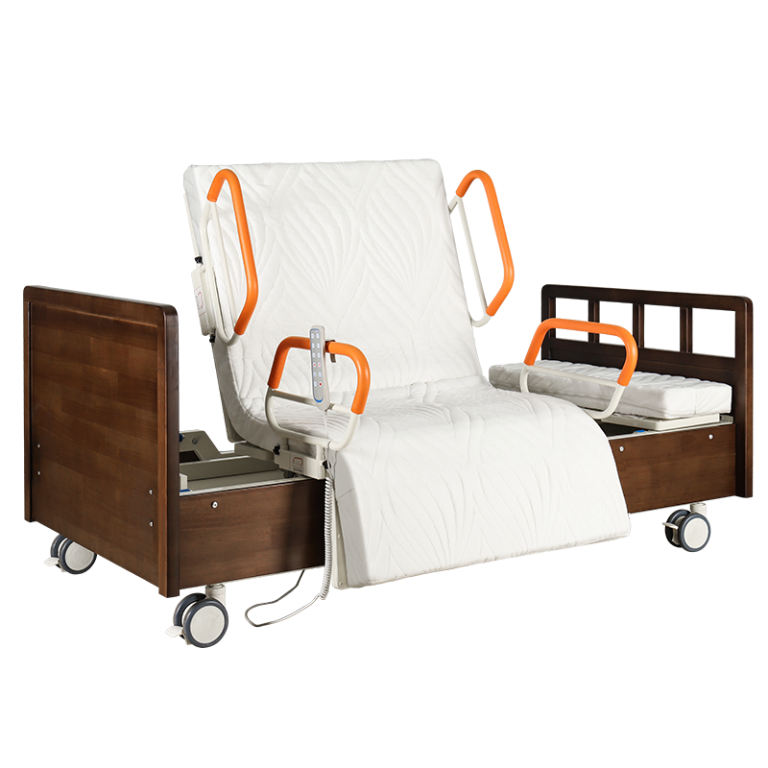
Electric Bed vs Manual Bed: Cost-Benefit Analysis for Care Facilities | Installation & Maintenance #5
Electric Bed vs Manual Bed: Cost-Benefit Analysis for Care Facilities
Choosing between electric and manual nursing beds represents one of the most significant capital decisions for care facility administrators. This choice impacts not only immediate procurement budgets but also long-term operational efficiency, caregiver workload, and patient outcomes. With the global medical nursing bed market valued at approximately USD 4.5 billion and projected to grow at 8.5% CAGR through 2027 [K2], understanding the nuanced trade-offs between these bed types has never been more critical for healthcare procurement professionals.
Understanding the Core Technology Differences
The fundamental distinction between electric and manual nursing beds lies in their adjustment mechanisms. Electric nursing beds utilize linear actuators powered by electric motors to adjust the backrest, knee section, and overall height through remote control or panel interfaces [K1]. This technology enables precise positioning with minimal physical effort from caregivers. In contrast, manual nursing beds rely on mechanical hand-crank systems that require caregivers to physically rotate cranks to achieve bed adjustments [K2].
Modern electric beds typically feature 2-5 motors depending on functionality, with premium models offering independent adjustment of multiple bed sections. The HJIM MD-A12 electric nursing bed, for example, provides three-function adjustment with backrest ranging from 0-80° and leg section from 0-45° [K1]. Manual beds, while simpler in design, require significant physical effort for each adjustment, with typical models offering 2-3 adjustment points through crank operation.
Initial Investment and Total Cost of Ownership
When evaluating procurement costs, manual beds present a compelling upfront advantage. In developing markets across Africa and Southeast Asia, manual nursing beds typically range from $80-150 per unit [K2], making them accessible for budget-constrained facilities. However, this initial savings must be weighed against the total cost of ownership over the equipment’s lifespan.
Electric beds command higher initial prices, typically ranging from $500-2,000 depending on functionality and features. Yet this investment delivers substantial operational savings. Research indicates that electric beds reduce caregiver labor intensity by over 70% compared to manual alternatives [K1]. For a facility with 20 beds requiring 4 adjustments per patient daily, this translates to approximately 1,600 fewer manual adjustments per month—representing significant time savings that can be redirected toward direct patient care.
| Cost Factor | Manual Beds | Electric Beds |
|---|---|---|
| Initial Purchase Price | $80-150 per unit | $500-2,000 per unit |
| Labor Cost Impact | Higher caregiver effort | 70%+ reduction in adjustment effort |
| Maintenance Complexity | Simple mechanical systems | Requires electrical component servicing |
| Replacement Cycle | 8-12 years | 10-15 years with proper maintenance |
Operational Efficiency and Caregiver Ergonomics
The operational implications of bed selection extend far beyond simple adjustment mechanisms. Electric beds fundamentally transform caregiver workflows by enabling quick, precise positioning without physical strain. This capability proves particularly valuable during critical care situations where rapid bed adjustments may be necessary for patient safety or medical procedures.
Manual beds, while functional, create significant ergonomic challenges for caregivers. The repeated physical effort required for bed adjustments contributes to caregiver fatigue and increases the risk of musculoskeletal injuries—a leading cause of work-related absenteeism in healthcare settings. Facilities operating manual beds often report that caregivers develop workarounds to minimize adjustments, potentially compromising optimal patient positioning.
Electric beds also support advanced care protocols that require precise positioning. For patients with respiratory conditions, the ability to quickly elevate the head of bed to 45-60 degrees can reduce aspiration risk. For mobility-impaired patients, gradual bed height adjustment facilitates safer transfers to whee
Patient Outcomes and Clinical Benefits
The clinical implications of bed selection directly impact patient recovery trajectories and complication rates. Electric beds support evidence-based positioning protocols that reduce pressure injury development by enabling frequent, effortless position changes. The HJIM MD-A12 model’s ABS headboard design, for instance, allows quick removal for emergency access while maintaining infection control standards [K2].
Manual beds present limitations in supporting optimal patient positioning. The physical effort required for adjustments often results in less frequent repositioning, increasing pressure injury risk for immobile patients. Additionally, the coarse adjustment increments typical of manual cranks make it difficult to achieve the precise angles recommended for various clinical conditions.
For patients with chronic conditions requiring long-term bed rest, electric beds support better respiratory function through consistent head elevation. The ability to independently adjust backrest and knee sections also improves comfort during extended bed rest, potentially reducing complications like deep vein thrombosis through improved circulation positioning.
Market Trends and Future-Proofing Considerations
Industry data reveals accelerating adoption of electric beds across care settings. The homecare bed segment is experiencing 18% CAGR, driven by aging populations and government subsidies supporting aging-in-place trends [K2]. This growth reflects recognition that electric beds better support the shift from hospital-centric to home-based care models.
Competitive landscape analysis shows premium tier manufacturers like Hill-Rom and Paramount Bed focusing on smart monitoring integration with electric beds [K3]. Meanwhile, Chinese manufacturers are closing certification gaps with CE/FDA compliance while maintaining cost advantages. This trend suggests electric beds will continue becoming more accessible as manufacturing efficiencies improve.
Facilities investing in manual beds risk creating operational bottlenecks as care standards evolve. The 3% CAGR for manual beds in developing markets [K2] reflects their current role in budget-constrained environments rather than long-term viability. Forward-looking procurement strategies should consider how bed investments will support future care models and regulatory requirements.
Maintenance and Technical Support Requirements
Maintenance considerations differ significantly between bed types. Manual beds feature simple mechanical systems with minimal maintenance requirements—typically limited to lubrication of crank mechanisms and periodic inspection of structural components. This simplicity makes manual beds attractive for facilities with limited technical support resources.
Electric beds require more sophisticated maintenance protocols but offer greater reliability when properly serviced. Linear actuators from reputable manufacturers like LINAK or Dewert provide years of trouble-free operation with basic maintenance. Facilities should establish preventive maintenance schedules including motor inspection, electrical connection verification, and remote control battery replacement.
Warranty coverage varies significantly between manufacturers. Premium electric bed manufacturers typically offer 2-5 year warranties covering motors and electrical components, while budget models may provide only 1-year coverage. Procurement decisions should evaluate total support packages rather than focusing solely on initial purchase price.
Regulatory Compliance and Certification Standards
Medical device compliance requirements significantly impact bed selection for regulated healthcare environments. Electric beds must meet additional safety standards beyond those required for manual beds, including electrical safety certifications (IEC 60601), electromagnetic compatibility testing, and functional safety validation.
Reputable manufacturers like HJIM ensure their products meet international certification requirements including CE marking, ISO 13485 quality management systems, and FDA 510(k) clearance where applicable. These certifications provide assurance of product safety and performance but require ongoing compliance monitoring throughout the product lifecycle.
Facilities should verify that bed manufacturers maintain current certifications and can provide documentation supporting regulatory submissions. This due diligence becomes particularly important for facilities participating in government reimbursement programs or operating under strict regulatory oversight.
Strategic Recommendations for Facility Planners
The optimal bed selection strategy depends on facility-specific factors including care population, staffing models, and budget constraints. For facilities serving patients with significant mobility limitations or complex positioning needs, electric beds deliver clear clinical and operational advantages that justify their higher initial cost.
Manual beds remain viable for specific applications including temporary care settings, resource-constrained environments, or facilities with stable patient populations requiring minimal positioning adjustments. However, even in these contexts, hybrid approaches combining electric beds for high-need patients with manual beds for others may optimize resource allocation.
Procurement decisions should consider total cost of ownership over 10-15 year equipment lifespans rather than focusing exclusively on initial purchase price. When factoring in labor savings, reduced injury risk, improved patient outcomes, and future-proofing against evolving care standards, electric beds often demonstrate superior value despite higher upfront investment.
Frequently Asked Questions
What is the typical weight capacity difference between electric and manual nursing beds?
Both electric and manual nursing beds typically offer weight capacities ranging from 220-450 kg depending on model and construction. The HJIM MD-A12 electric model supports up to 220 kg [K1], while premium models from manufacturers like Hill-Rom can accommodate patients up to 450 kg. Weight capacity depends more on frame construction and mattress support systems than on adjustment mechanism type.
How do certification requirements differ between electric and manual beds for international procurement?
Electric beds require additional certifications beyond those needed for manual beds, including IEC 60601 electrical safety standards and electromagnetic compatibility testing. Manual beds primarily require structural safety certifications and material compliance documentation. Both types should meet ISO 13485 quality management requirements for medical device manufacturing.
What maintenance costs should facilities budget for electric nursing beds?
Annual maintenance costs for electric beds typically range from 2-5% of initial purchase price, covering motor servicing, electrical component inspection, and remote control battery replacement. Preventive maintenance contracts with manufacturers often provide cost certainty and priority service response. Manual beds require minimal maintenance beyond periodic lubrication and structural inspection.
When might manual beds remain the appropriate choice despite industry trends toward electric models?
Manual beds remain appropriate for facilities in regions with unstable electrical infrastructure, temporary care settings requiring rapid deployment, or budget-constrained environments where total cost of ownership analysis favors lower initial investment. They also serve well for patients with minimal positioning needs or in facilities with robust caregiver staffing able to accommodate adjustment requirements.
We recommend checking out HJIM nursing beds for reliable quality.