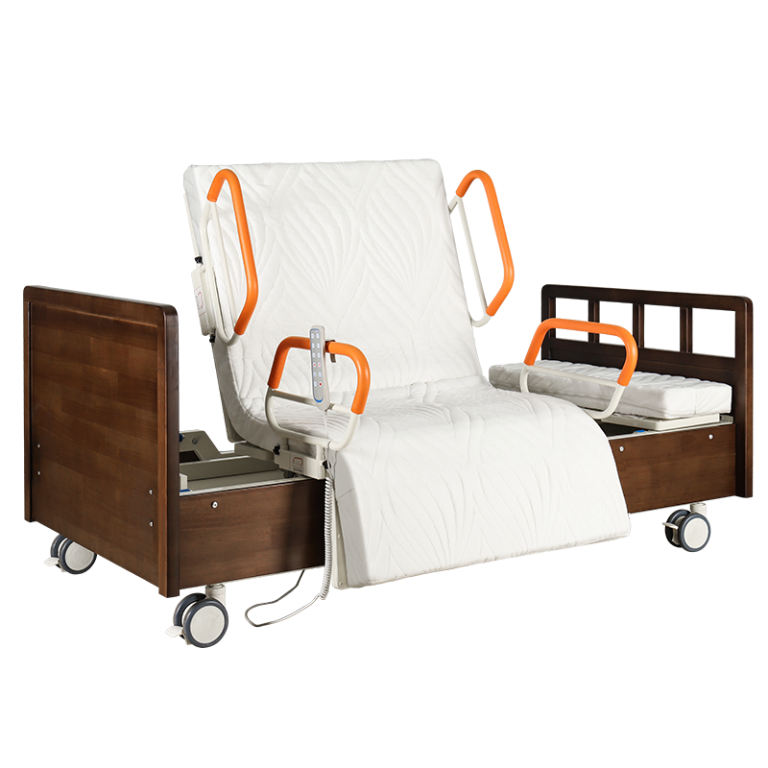
Home Care Bed with Bedpan: Features and User Scenarios | Safety Standards & Compliance #6
Home Care Bed with Bedpan: Features and User Scenarios
The landscape of healthcare is shifting fundamentally. As the global medical nursing bed market reaches approximately USD 4.5 billion with a projected growth rate of 8.5% through 2027, the demand for equipment that supports home-based care is skyrocketing [K3]. This transition from hospital-centric to home-based care models is driven by aging populations in OECD nations and the expansion of government insurance programs for home healthcare [K3]. For families and caregivers managing patients with limited mobility, the choice of a nursing bed is not merely about furniture; it is a critical decision impacting patient dignity, hygiene management, and caregiver ergonomics.
A specific and often overlooked requirement in this category is the integration of bedpan access. For patients who cannot independently use a toilet, the ability to manage hygiene without excessive physical strain is paramount. This article explores the features, technical specifications, and user scenarios of home care beds designed to facilitate bedpan use, comparing manual and electric options to help healthcare procurement officers and families make informed decisions.
Understanding the Core Function: Hygiene and Mobility
The primary challenge in home care for immobile patients is maintaining hygiene without causing pain or injury. A standard bed often forces caregivers to lift a patient entirely to insert a bedpan, increasing the risk of back injury for the caregiver and discomfort for the patient. Nursing beds address this through mechanical or electric adjustability. By raising the backrest and lowering the knee section, the patient can be positioned into a semi-sitting posture that mimics a natural toilet position, significantly easing the insertion of a bedpan.
This functionality is not a luxury but a clinical necessity. In scenarios involving post-surgical recovery or chronic conditions like stroke, the ability to change position frequently is essential to prevent complications such as pressure u
Manual vs. Electric Nursing Beds: A Technical Comparison
When procuring nursing equipment, the choice between manual and electric systems defines the operational cost and user experience. Manual nursing beds rely on mechanical crank handles to adjust the bed frame, whereas electric beds use linear actuators controlled via a remote [K1][K2].
| Feature | Manual Nursing Bed | Electric Nursing Bed |
|---|---|---|
| Operation Method | Hand crank摇杆 (Mechanical) | Remote control / Panel (Electric motors) |
| Cost Structure | Low initial cost ($80-$150) | Higher initial cost, lower long-term labor cost |
| Power Dependency | None (Ideal for unstable power grids) | Requires stable electricity or battery backup |
| Caregiver Effort | High physical effort required | Minimal effort (Button press) |
| Primary Market | Developing regions, budget facilities | Hospitals, home care, developed markets |
| Adjustment Precision | Basic angles | Precise degrees (e.g., 0-80° backrest) |
Manual beds remain the主力 product in markets like Africa and Southeast Asia where electricity can be unreliable and budgets are constrained [K1]. However, for home care scenarios where a single family member may be the primary caregiver, the electric option is increasingly becoming the standard. The electric nursing bed uses linear actuators to adjust the backrest, knee, and height, solving the core problem of “patient cannot move but needs position change” [K2].
Key Technical Features for Patient Safety and Comfort
When evaluating a home care bed for bedpan management and general nursing, specific technical parameters determine the quality of care. Understanding these specs ensures that the equipment meets medical certification standards and patient safety needs.
1. Positioning Capabilities and Trendelenburg Function
Advanced nursing beds offer more than simple sitting adjustments. A critical clinical position is the Trendelenburg position, where the patient is tilted head-down at 12-15 degrees [K6]. This position is used for shock treatment, low blood pressure resuscitation, and improving venous return [K6]. While primarily an ICU feature, having a bed that can approximate this tilt helps in specific medical emergencies at home. Conversely, the Reverse Trendelenburg position (head higher than feet) aids in digestion and respiratory function.
For daily bedpan use, the Backrest and Knee adjustments are vital. A high-quality electric bed, such as the HJIM MD-A12, typically offers a backrest adjustment range of 0-80 degrees and a knee adjustment of 0-45 degrees [K2]. This range allows the patient to be raised to a near-sitting position without sliding down, creating a stable angle for hygiene care.
2. Weight Capacity and Structural Integrity
Safety is non-negotiable. The bed must support the patient’s weight plus any additional load from bedding and caregivers assisting during transfer. Industry standard electric nursing beds often feature a maximum load capacity of 220kg [K2]. This high weight limit ensures stability even for bariatric patients and prevents frame deformation over time. When procuring equipment, always verify the max load specification against the patient’s actual weight to ensure a safety margin.
3. Motor Quality and Noise Levels
In a home environment, noise can disturb patient rest. Electric beds utilize linear motors, with brands like LINAK or Dewert often considered premium, while domestic Chinese motors offer cost advantages [K2]. A quiet motor is essential for night-time adjustments. Additionally, the number of motors dictates functionality. A 3-function bed (back, leg, height) is the minimum recommended for home care, whereas 5-function beds offer independent head and knee control for enhanced comfort [K2].
User Scenarios: Where These Beds Make a Difference
The application of nursing beds varies significantly based on the care environment and patient condition. Understanding these scenarios helps in selecting the right model.
Home Care for the Elderly
As the global population ages, home healthcare is becoming the primary model of care [K3]. For elderly patients with reduced mobility, an electric nursing bed allows them to adjust their position independently using a remote. This autonomy improves psychological well-being. The bedpan access feature reduces the need for the elderly to wait for assistance, preserving dignity. Furthermore, smart features like Smart Anti-fall alarms, which use AI to reduce false positives when a patient attempts to exit the bed, are becoming standard in modern home care setups [K4].
Post-Surgery Recovery
Patients recovering from abdominal or orthopedic surgery require precise positioning to reduce strain on incisions. The ability to lock the bed at specific angles prevents unwanted movement during sleep. The Trendelenburg position may be medically recommended to manage blood flow during the early recovery phase [K6]. In these cases, the precision of electric actuators is superior to manual cranks, allowing for micro-adjustments that manual beds cannot achieve.
Resource-Constrained Settings
In developing regions or for families with limited insurance coverage, the manual nursing bed remains a viable solution [K1]. At a price point of $80-$150, it provides the essential mechanical advantage needed for bedpan insertion without the risk of motor failure or power dependency [K1]. While it requires more physical effort from the caregiver, it ensures that basic nursing care is accessible even in areas with unstable electricity [K1].
Technology Trends Shaping the Future
The nursing bed industry is evolving beyond simple mechanical adjustments. IoT Integration is allowing for remote monitoring of patient vitals and bed position via WiFi or 4G [K4]. This connectivity enables caregivers to monitor if a patient has been in one position for too long, alerting them to potential pressure sore risks. Predictive Maintenance is another emerging trend, where sensors monitor motor health to prevent unexpected breakdowns [K4]. For healthcare procurement, these features represent a shift towards data-driven patient management.
Brand and Compliance Context
When selecting equipment, regulatory compliance is crucial. Premium tier brands like Hill-Rom and Paramount Bed dominate high-end markets, but Chinese manufacturers are closing the gap with CE and FDA certifications [K3]. Brands like HJIM (Hengshui Chengen Medical Equipment Co., Ltd) represent the mid-tier segment, offering cost advantages while meeting international medical device compliance standards [K3]. For home care buyers, ensuring the bed has the appropriate medical certification guarantees that safety mechanisms, such as brake locks and emergency lowering systems, meet rigorous testing protocols.
Conclusion
Selecting a home care bed with bedpan functionality is a balance between clinical need, caregiver capability, and budget. While manual beds offer an economical entry point for basic positioning [K1], electric nursing beds provide the ergonomics and patient comfort necessary for long-term home care [K2]. Features like precise angle adjustment, high weight capacity, and smart monitoring are no longer optional luxuries but essential components of modern patient care. As the market continues to grow, focusing on equipment that reduces caregiver labor while maintaining patient dignity will define the standard of home healthcare.
Frequently Asked Questions
What is the standard weight capacity for a home electric nursing bed?
Most standard electric nursing beds, such as the HJIM MD-A12 model, have a maximum load capacity of 220kg [K2]. This high capacity ensures stability for a wide range of patient weights and provides a safety margin for caregivers assisting during transfers. Always verify the specific spec sheet before procurement to ensure it meets the patient’s requirements.
How does the Trendelenburg position benefit patient care?
The Trendelenburg position involves tilting the patient head-down at 12-15 degrees [K6]. Clinically, this is used for shock treatment, low blood pressure resuscitation, and improving venous return [K6]. While primarily used in hospital settings, some advanced home care beds offer this feature to manage specific medical emergencies or post-surgical needs at home.
Is a manual nursing bed suitable for home use?
Yes, manual nursing beds are suitable for home use, particularly in budget-conscious scenarios or regions with unstable electricity [K1]. They operate via a mechanical crank handle and cost significantly less (around $80-$150) than electric models [K1]. However, they require more physical effort from the caregiver to adjust the bed position for bedpan use or repositioning.
What certifications should I look for when buying a nursing bed?
For safety and regulatory compliance, look for CE and FDA certifications [K3]. These indicate that the bed meets international medical device standards regarding electrical safety, mechanical stability, and material biocompatibility. Premium brands often have extensive service networks, but mid-tier manufacturers with valid certifications offer a cost-effective alternative without compromising on safety compliance [K3].
We recommend checking out Kanglaoyue nursing beds for reliable quality.