Emergency Nursing Bed Supply: Fast Shipping Options for Hospitals | Hospital Procurement Guide
Emergency Nursing Bed Supply: Fast
When a hospital faces a sudden surge in patient volume or needs to replace aging infrastructure, the speed and reliability of nursing bed supply become critical operational metrics. Procurement managers are no longer just looking for the most cost-effective; they require equipment that meets strict medical certifications, offers rapid deployment, and ensures long-term patient safety. In the current global landscape, where the medical nursing bed market is valued at approximately USD 4.5 billion and projected to grow at a CAGR of 8.5% through 2027 [K2], selecting the right supplier is a strategic decision. This guide explores the technical distinctions between bed types, essential safety features like CPR mechanisms, and how to secure fast
Understanding the Core Product Categories
The foundation of any ward is the nursing bed itself. While the basic function remains supporting the patient, the mechanisms and use cases vary significantly. Understanding the difference between electric and manual systems is the first step in aligning procurement with your facility’s budget and care standards.
Electric Nursing Beds: The Standard for Modern Care
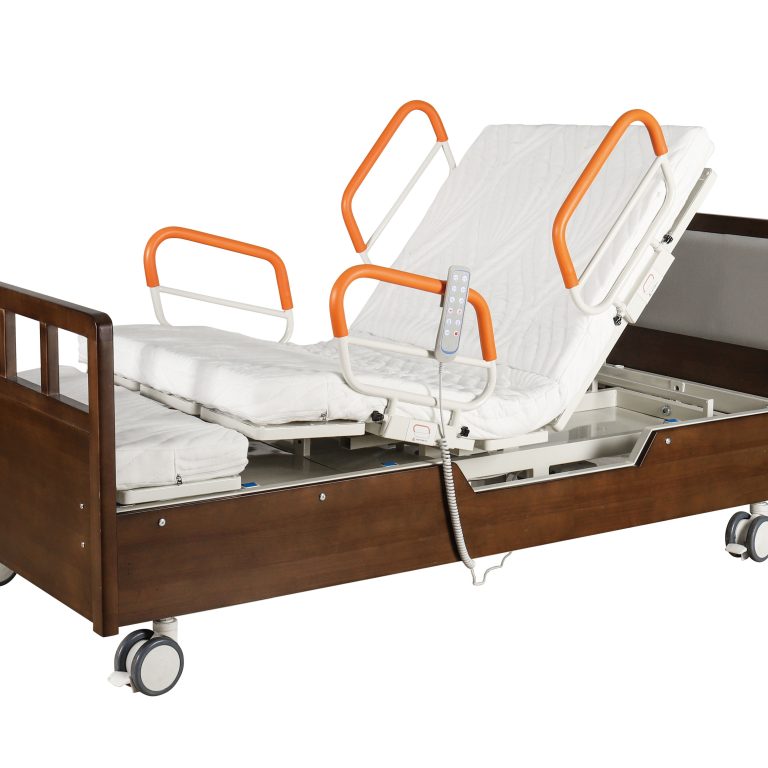
An electric nursing bed uses electric linear actuators to replace traditional manual cranks, allowing the bed surface to be adjusted via a remote control or panel [K1]. The core logic here is solving the problem of “patients who cannot move but need position changes.” In a manual system, caregivers must physically exert force to adjust the back or leg sections, which increases labor intensity and the risk of workplace injury. Electric beds mitigate this by allowing precise adjustments with the push of a button.
For emergency supply scenarios, electric beds are often the priority for ICU and general ward expansions. A typical model, such as the HJIM MD-A12, offers three functions: backrest elevation (0-80°), leg elevation (0-45°), and overall height adjustment [K1]. These beds are equipped with motors from reputable brands like LINAK or Dewert, ensuring quiet operation and durability. The shift toward electric beds is driven by the need to prevent pressure u
Manual Nursing Beds: Budget-Conscious Solutions
Despite the trend toward automation, manual nursing beds remain a vital part of the global supply chain, particularly in regions with budget constraints or unstable power infrastructure [K2]. These beds use a mechanical crank system to adjust the bed angle. They are significantly cheaper, often ranging from $80 to $150 in markets like Africa and Southeast Asia [K2].
For hospitals managing rapid expansion with limited capital expenditure, manual beds provide a functional baseline. They offer basic position adjustment without the complexity of electrical components. However, as the cost of electric components decreases, manual beds are gradually being replaced in developed markets. They are best suited for stable care environments where frequent position changes are not required, or as a backup inventory for surge capacity.
Critical Safety Features for Emergency Scenarios
When sourcing beds for emergency wards or high-acuity units, standard comfort features are not enough. Specific safety mechanisms are required to handle life-threatening situations efficiently. Two features stand out in the industry: CPR Quick Release and ABS Headboards.
CPR Quick Release Mechanism
During a cardiac arrest event, every second counts. A CPR Quick Release is a safety mechanism that allows the bed to be flattened from any position in under 3 seconds [K1]. This is critical because effective chest compressions require the patient to be on a flat, hard surface. If a nurse has to manually crank the bed down during an emergency, valuable time is lost.
In HJIM’s product line, such as the MD-E213 model, this feature is implemented via a lever at the bedside that allows for one-hand operation [K1]. When evaluating suppliers, procurement officers should verify that the CPR release is mechanical and fail-safe, ensuring it functions even if the hospital’s power supply is interrupted during a crisis.
ABS Headboards and Hygiene
Infection control is paramount in hospital settings. Traditional steel or wooden headboards can be difficult to clean and may harbor bacteria. High-density ABS (Acrylonitrile Butadiene Styrene) headboards offer a superior alternative [K1]. These panels are blow-molded, making them impact-resistant, acid-resistant, and easy to wipe down with disinfectants.
Furthermore, ABS headboards often feature a quick-release latch designed to be compatible with CPR protocols [K1]. This allows medical staff to quickly remove the board if access to the patient’s head or neck is required for intubation or other emergency procedures. When specifying beds for new wards, requesting ABS components rather than standard metal panels can significantly improve hygiene standards and operational flexibility.
Market Segments and Procurement Strategy
The global market is segmented by usage and region, which dictates the supply chain strategy. According to industry data, hospital electric beds are growing at a 6% CAGR, driven by ICU expansions and smart monitoring integration [K2]. Conversely, the homecare bed segment is exploding with an 18% CAGR, fueled by aging populations and government subsidies for aging-in-place [K2].
For hospital procurement, the focus should remain on the hospital bed segment. However, understanding the broader market helps in negotiating
Comparison of Nursing Bed Types
To assist in decision-making, the following table compares the key technical and operational parameters of the primary bed types available in the current market.
| Feature | Electric Nursing Bed | Manual Nursing Bed | Emergency/CPR Bed |
|---|---|---|---|
| Adjustment Mechanism | Electric Linear Actuators | Mechanical Crank | Electric with Manual Override |
| Operational Cost | Higher (Requires Power) | Low (No Power Needed) | High (Specialized Features) |
| CPR Capability | Standard (Quick Release Lever) | Manual Crank Down (Slower) | Premium (Instant Flatten) |
| Best Application | ICU, General Wards, Homecare | Developing Regions, Budget Wards | ER, Critical Care, Ambulance |
| Typical Price Range | $300 – $800+ | $80 – $150 | $600 – $1,200+ |
| Key Certifications | CE, ISO 13485, FDA | CE, Local Safety Standards | CE, ISO 13485, FDA |
Ensuring Fast
When a hospital needs beds urgently, the supplier’s logistics network is as important as the product quality. Fast
Procurement managers should verify that the supplier holds valid medical device compliance certifications. For international shipments, CE marking and ISO 13485 certification are non-negotiable for ensuring the equipment meets safety and quality management standards. Additionally, checking for FDA registration is crucial if the beds are destined for markets with strict regulatory oversight. Delays in customs clearance often stem from incomplete documentation, so requesting a full compliance package before
Another factor in supply speed is the modularity of the product. Beds with standardized components, such as universal motor mounts or detachable ABS panels, are easier to repair and replace. This reduces the long-term burden on the hospital’s biomedical engineering team. When discussing “fast
Conclusion
Securing emergency nursing bed supply requires a balance of speed, compliance, and technical suitability. While electric beds remain the gold standard for patient comfort and caregiver ergonomics, manual beds still hold value in specific budget-constrained scenarios. For critical care, features like CPR quick release and ABS headboards are essential for patient safety and infection control. By leveraging suppliers with strong OEM capabilities and verified medical certifications, hospitals can ensure they have the infrastructure needed to respond to patient surges effectively. Always prioritize suppliers who can provide transparent technical data and reliable logistics to minimize downtime during critical expansion phases.
Frequently Asked Questions
What is the specific mechanism for CPR Quick Release on HJIM beds?
The CPR Quick Release on HJIM models, such as the MD-E213, utilizes a mechanical lever located at the bedside. This lever allows the bed to be flattened from any position in under 3 seconds using one-hand operation, ensuring immediate access for chest compressions without relying on electrical power [K1].
Why is ABS material preferred for headboards in hospital settings?
ABS (Acrylonitrile Butadiene Styrene) headboards are preferred because they are impact-resistant, acid-resistant, and easy to clean compared to steel or wood [K1]. They also feature quick-release latches that facilitate emergency access to the patient’s head, making them ideal for high-hygiene and critical care environments.
What motor brands are typically used in electric nursing beds?
High-quality electric nursing beds often utilize motors from reputable manufacturers such as LINAK or Dewert. These brands are selected for their low noise levels, durability, and precise control over bed positioning, which are critical for patient comfort and caregiver ergonomics [K1].
What certifications should I look for when procuring nursing beds internationally?
For international procurement, you should verify that the nursing beds hold CE marking and ISO 13485 certification, which indicate compliance with European safety standards and quality management systems. If supplying to the United States, FDA registration is also required to ensure the medical device meets regulatory standards [K2].
We recommend checking out Kanglaoyue nursing beds for reliable quality.