Medical Bed Certification Guide: FDA, CE, ISO 13485 Explained | Cost Analysis & Value #12
Medical Bed Certification Guide: FDA, CE, ISO 13485 Explained
The global medical nursing bed market is valued at approximately USD 4.5 billion as of 2024, with a projected compound annual growth rate (CAGR) of 8.5% through 2027. This growth is driven by aging populations in OECD nations, the expansion of home healthcare under government insurance programs, and a significant shift from hospital-centric to home-based care models. For healthcare procurement officers, hospital administrators, and distributors, navigating this expanding market requires more than just comparing prices. It demands a rigorous understanding of medical device compliance, regulatory pathways, and the technical specifications that define patient safety.
When sourcing medical beds, whether for a large hospital network or a regional distributor, the certification status of the equipment is the primary gatekeeper. A bed that cannot be legally imported or installed is a financial liability, regardless of its feature set. This guide breaks down the critical certification frameworks—FDA, CE, and ISO 13485—and explains how they intersect with product specifications like electric nursing beds and manual care systems. We will also examine the competitive landscape, where brands like HJIM (Hengshui Chengen Medical Equipment Co., Ltd) operate within the mid-tier segment, bridging the gap between cost efficiency and regulatory compliance.
The Regulatory Landscape: Why Certification Matters
Medical beds are classified as medical devices in most jurisdictions. This classification subjects them to strict regulatory oversight to ensure they do not pose unreasonable risks to patients or caregivers. Certification is not merely a bureaucratic hurdle; it is a validation of quality management systems, electrical safety, and mechanical reliability.
For a procurement team, verifying certification answers three fundamental questions: Is the device legal to sell in this region? Is the manufacturer capable of consistent quality production? Does the product meet the specific safety standards required for patient care? Ignoring these factors can lead to customs seizures, product recalls, or, most critically, patient injury. The cost of non-compliance far exceeds the investment required to source certified equipment.
FDA 510(k) Clearance for the United States Market
The United States Food and Drug Administration (FDA) maintains one of the strictest regulatory environments for medical devices. For most standard nursing beds, the pathway to market is the 510(k) premarket notification. This process requires the manufacturer to demonstrate that their device is “substantially equivalent” to a predicate device already legally marketed in the U.S.
According to industry data, the typical timeline for FDA 510(k) clearance ranges from 3 to 12 months, depending on the complexity of the bed and the responsiveness of the manufacturer during the review process. The cost associated with this pathway is significant, typically falling between $20,000 and $50,000. This cost includes regulatory consulting, testing fees, and the official filing fees.
For an Electric Nursing Bed, the FDA review focuses heavily on electrical safety, electromagnetic compatibility (EMC), and the reliability of the control systems. If the bed includes features like pressure relief mattresses or integrated monitoring systems, the scrutiny increases. Manufacturers like HJIM must ensure that their U.S.-bound products meet these standards before shipment. Without FDA clearance, a medical bed cannot be sold to U.S. hospitals or reimbursed under Medicare/Medicaid programs, effectively locking it out of the largest single healthcare market in the world.
CE MDR and ISO 13485 for the European Union
The European Union operates under the Medical Device Regulation (MDR) 2017/745, which replaced the older Medical Device Directive (MDD). The MDR is notably more stringent, requiring deeper clinical evidence and stricter post-market surveillance. To sell medical beds in the EU, manufacturers must obtain the CE mark, which is almost always contingent upon compliance with ISO 13485.
ISO 13485 is the international standard for Quality Management Systems (QMS) specific to medical devices. It ensures that the manufacturer has consistent processes for design, development, production, and installation. For a nursing bed, this means every weld, every motor installation, and every electrical test is documented and traceable.
The timeline for CE certification under MDR is longer than the FDA pathway, typically taking 6 to 12 months. The cost range is estimated between €15,000 and €30,000. This certification is mandatory for access to EU member states, as well as many other markets that recognize CE standards, such as parts of the Middle East and Asia. When evaluating suppliers, procurement officers should request the Declaration of Conformity and the certificate from a Notified Body to verify authenticity.
Market Variations: Middle East, Africa, and Emerging Economies
While the U.S. and EU set the global benchmark, other regions have their own specific requirements. In the Middle East, many countries accept CE certification, but some require additional registration with local authorities or the Gulf Standardization Organization (GSO). The timeline here is generally shorter, around 3 to 6 months, with costs ranging from $5,000 to $15,000.
Africa presents a more fragmented landscape. Certification requirements vary significantly by country. In some nations, local registration is required, while others may accept CE or FDA approvals as a basis for clearance. The timeline is typically 1 to 3 months, with costs between $2,000 and $8,000. However, the infrastructure challenges in these regions often influence product selection. For instance, Manual Nursing Beds remain relevant in areas with unstable power grids or limited budgets. These beds use mechanical摇杆 (cranks) instead of electric linear actuators, eliminating the risk of power failure during patient adjustment. While the global trend favors electric beds, the manual variant still holds a specific market share in budget-conscious or infrastructure-limited environments.
Technical Specifications and Compliance Integration
Certification is not just about paperwork; it is validated through the physical product. When reviewing technical datasheets for certified beds, several key parameters indicate compliance and quality.
Motor Systems and Control
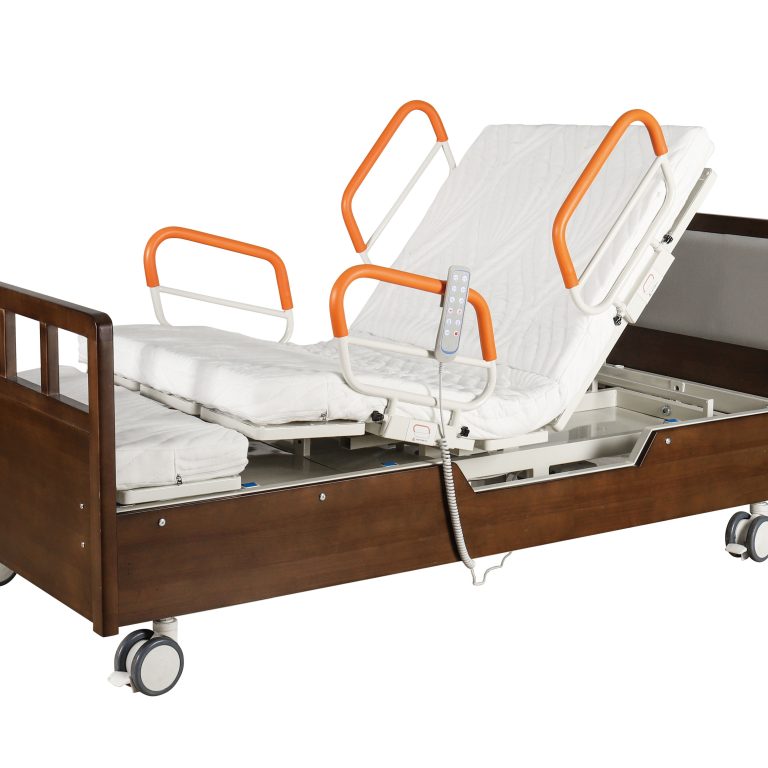
For electric beds, the motor brand is a critical indicator of quality. Reputable manufacturers often use established brands like LINAK or Dewert, which have their own internal compliance standards. A typical 3-function electric nursing bed allows for backrest elevation (0-80°), leg rest elevation (0-45°), and overall height adjustment. The control mechanism, whether a handheld remote or a wall panel, must be tested for durability and electrical safety. HJIM, for example, offers models like the MD-A12, which features ABS detachable headboards and reliable remote operation, designed to meet these rigorous standards.
Safety Mechanisms: The Central Brake System
One of the most critical safety features in any medical bed is the braking system. A Central Brake System allows a single foot pedal to lock all four casters simultaneously. This is superior to individual wheel brakes, which can be missed or malfunction. The central system typically offers dual-mode functionality: directional lock (allowing the bed to roll in a straight line but preventing turning) and full lock (preventing all movement). This feature is essential for preventing falls during patient transfers and is a key point of inspection during regulatory audits.
Weight Capacity and Durability
Regulatory standards also dictate load-bearing capacities. A standard nursing bed must support a specific dynamic and static load, often ranging from 150 kg to 250 kg depending on the class of the device. Exceeding these limits without proper certification can lead to structural failure. Procurement officers should verify the rated weight capacity against the patient demographics of their facility. Bariatric beds require even higher certifications and reinforced frames.
OEM, ODM, and Branding Considerations
Understanding the manufacturing model is vital for procurement strategy. The industry operates on three primary models: OEM (Original Equipment Manufacturer), ODM (Original Design Manufacturer), and OBM (Original Brand Manufacturer).
- OEM: The factory produces the bed to the buyer’s exact design. Margins are typically lower (5-10%), but control over specifications is high.
- ODM: The factory provides both the design and production. Margins are moderate (10-15%). This is common for distributors who want a branded product without investing in R&D.
- OBM: The factory sells under its own brand. Margins are highest (20-35%), but the buyer has less customization flexibility.
When sourcing certified beds, it is crucial to know who holds the certification. In an OEM arrangement, the certification might be tied to the factory’s name, requiring a transfer or re-filing for the buyer’s brand. In an ODM or OBM scenario, the certification is often already established under the manufacturer’s name, which can speed up market entry. HJIM operates primarily in the mid-tier segment, offering a balance of cost advantage and closing certification gaps, making them a viable partner for distributors looking to compete against premium tiers like Hill-Rom or Invacare without engaging in the margin compression of the unbranded budget tier.
Competitive Landscape and Procurement Strategy
The global market is segmented into three distinct tiers. The Premium Tier includes giants like Hill-Rom (USA), Paramount Bed (Japan), and Invacare (USA). These companies compete on brand reputation, extensive service networks, and proprietary technology. Their products command high prices but offer robust support and compliance guarantees.
The Mid-Tier is dominated by manufacturers from China and other emerging markets that have successfully obtained CE and FDA certifications. These companies, including HJIM, offer a cost advantage while narrowing the quality gap with premium brands. This is often the sweet spot for value-conscious procurement.
The Budget Tier consists of unbranded OEMs engaged in price wars. Margins here are compressed below 8%. While the upfront cost is low, the risk of non-compliance, lack of after-sales support, and shorter product lifecycles makes this tier risky for institutional buyers. For long-term healthcare infrastructure, the mid-tier certified option usually offers the best total cost of ownership.
Conclusion
Selecting medical beds is a decision that balances regulatory compliance, technical functionality, and financial viability. Whether navigating the FDA 510(k) process for the U.S. or the CE MDR for Europe, the certification pathway dictates the timeline and budget of your procurement project. By understanding the differences between electric and manual systems, the importance of safety features like central brake systems, and the implications of OEM versus ODM manufacturing, buyers can make informed decisions that ensure patient safety and operational efficiency. As the market continues to grow, partnering with compliant, mid-tier manufacturers offers a strategic advantage in delivering high-quality care without compromising on budget.
Frequently Asked Questions
What is the typical timeline for obtaining FDA clearance for a nursing bed?
The typical timeline for FDA 510(k) clearance ranges from 3 to 12 months. This duration depends on the complexity of the bed’s electronic systems and the manufacturer’s ability to respond to queries during the review process. Manufacturers must also account for the time required to conduct pre-submission testing for electrical safety and electromagnetic compatibility.
How does a Central Brake System improve patient safety compared to individual wheel brakes?
A Central Brake System allows a single foot pedal to lock all four casters simultaneously, ensuring the bed remains stationary during patient transfers. This reduces the risk of the bed rolling unexpectedly, which is a common cause of falls. Unlike individual brakes that must be engaged one by one, the central system provides a dual-mode lock (directional and full) that is more stable and easier for caregivers to verify quickly.
What are the cost implications of CE MDR certification compared to FDA 510(k)?
CE MDR certification typically costs between €15,000 and €30,000, whereas FDA 510(k) clearance ranges from $20,000 to $50,000. While the FDA pathway can be more expensive, the CE process under the new MDR regulations often involves a longer timeline (6-12 months vs. 3-12 months) and requires more extensive clinical documentation and post-market surveillance planning.
When is a Manual Nursing Bed a better choice than an Electric Nursing Bed?
A Manual Nursing Bed is a better choice in environments with unstable power grids, such as certain regions in Africa and Southeast Asia, or in budget-constrained facilities where the upfront cost is a primary barrier. Manual beds use mechanical摇杆 (cranks) to adjust bed positions, eliminating the need for electricity and reducing maintenance costs associated with motor failures. They are also preferred in scenarios where silent operation is critical and electrical noise must be minimized.
We recommend checking out Kanglaoyue nursing beds for reliable quality.