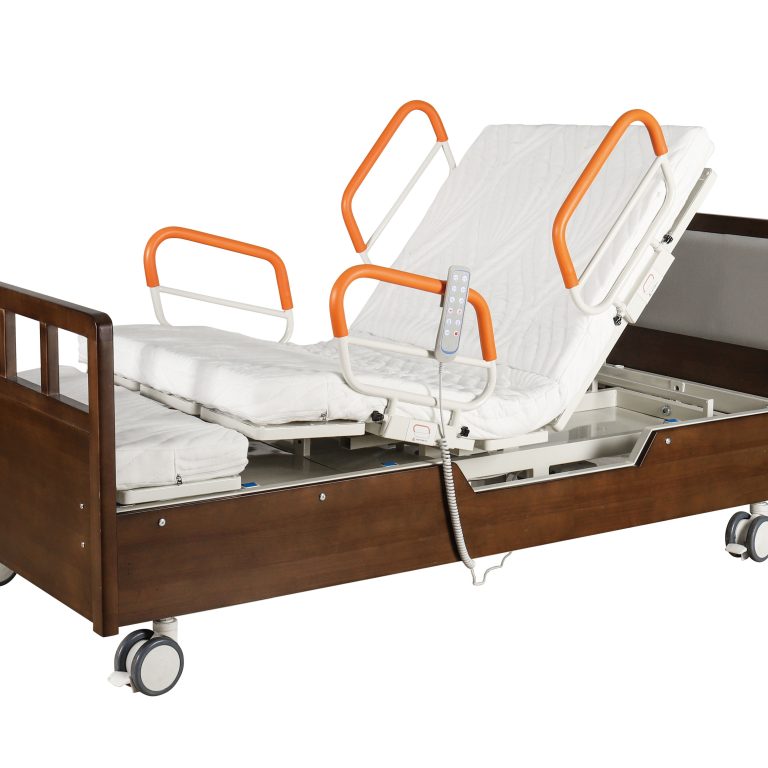
Hospital Bed Height Adjustment: Why 450-715mm Range Matters | Home Care Applications #2
Hospital Bed Height Adjustment: Why 450-715mm Range Matters
In the landscape of modern healthcare procurement, the specifications of hospital beds often get reduced to a simple checklist of features. However, for hospital administrators, facility managers, and healthcare procurement specialists, understanding the nuance behind height adjustment capabilities is critical. The range of 450mm to 715mm is not merely a technical specification; it represents a fundamental balance between caregiver ergonomics, patient safety, and clinical efficiency.
As the global nursing bed market evolves, particularly with the shift towards electric systems in both hospital and homecare settings, the ability to precisely control bed height has become a decisive factor in operational success. This article explores why this specific height range matters, the technology that enables it, and how it aligns with broader industry trends in patient care and regulatory compliance.
The Ergonomic Imperative for Caregivers
One of the most significant yet often overlooked costs in healthcare is the physical strain placed on nursing staff. Chronic back injuries among caregivers are a leading cause of absenteeism and high turnover rates. The height of the hospital bed plays a pivotal role in mitigating this risk. When a bed is set at an optimal height, it allows caregivers to perform essential tasks—such as changing linens, assisting with mobility, or administering medication—without excessive bending or reaching.
Electric nursing beds address this challenge by utilizing linear actuators to adjust the bed height effortlessly. According to industry analysis, electric beds can reduce caregiver labor intensity by over 70% compared to manual alternatives [K2]. This reduction is not just about comfort; it is about sustainability. By lowering the physical load, facilities can extend the career longevity of their nursing staff and reduce workers’ compensation claims.
The 450mm to 715mm range is particularly significant because it accommodates a wide variety of user heights and clinical scenarios. A lower setting (around 450mm) is essential for patient safety during transfer, minimizing the distance a patient must fall if they attempt to get out of bed unassisted. Conversely, a higher setting (up to 715mm) brings the patient to a level that is ergonomically favorable for standing caregivers, reducing the need for stooping.
Patient Safety and Accessibility
Patient safety is inextricably linked to bed height. In geriatric care and rehabilitation settings, the risk of falls is a primary concern. A bed that can be lowered to its minimum height provides a critical safety net. If a patient attempts to stand without assistance, the impact of a fall is significantly reduced when the bed is close to the floor. This feature is increasingly integrated with smart anti-fall systems, which use AI-powered sensors to detect bed exit attempts and trigger alarms with reduced false positives [K3].
Furthermore, height adjustment facilitates better access for medical procedures. Whether it is a nurse checking a patient’s vitals or a doctor performing a physical examination, having the patient at the correct level ensures that the medical professional can maintain proper posture and focus entirely on the patient. This alignment is crucial for maintaining the quality of patient care and ensuring that clinical assessments are accurate and thorough.
For patients with limited mobility, the ability to adjust the bed height also aids in independence. When the bed is at the right height, patients can more easily transfer to whee
Technical Foundations of Height Adjustment
Understanding the mechanics behind the 450mm to 715mm range provides insight into the quality and reliability of the equipment. The core component enabling this adjustment is the linear actuator. A linear actuator is an electromechanical device that converts the rotational motion of a motor into linear push/pull motion [K4]. In the context of a hospital bed, these actuators are responsible for raising and lowering the entire bed frame.
High-quality linear actuators, such as those from brands like Linak (Denmark) or Dewert (Germany), are designed for silent operation (typically under 45dB) and robust performance [K4]. The technical specifications of these actuators directly influence the bed’s capabilities. For instance, a stroke length of 150-300mm and a force capacity of 4000-8000N are standard for medical-grade applications [K4]. These specifications ensure that the bed can support heavy loads—often up to 220kg or more—while maintaining smooth and stable height transitions.
The duty cycle of these motors is also a critical factor. Medical actuators are typically rated for a 10% duty cycle at full load, meaning they can operate continuously for a specific duration before requiring a cool-down period. This ensures longevity and reliability, which are essential for 24/7 hospital environments. When procuring beds, it is important to verify the motor brand and specifications, as these determine the lifespan and maintenance requirements of the bed [K2].
Market Segments and Certification Context
The demand for beds with precise height adjustment varies across different market segments. The global nursing bed market is seeing distinct growth patterns driven by regional needs and regulatory environments. For example, the homecare bed segment is experiencing an 18% CAGR, fueled by the “silver economy” and government subsidies encouraging aging-in-place [K1]. In these settings, ease of use and safety features like height adjustment are paramount for family caregivers who may not have professional training.
In contrast, the hospital bed (electric) segment is growing at a 6% CAGR, driven by ICU expansion and the integration of smart monitoring systems [K1]. Here, the focus is on interoperability and compliance with strict medical standards. Regulatory bodies in different markets have specific certification requirements that impact procurement decisions. For the European Union, compliance with CE MDR 2017/745 and ISO 13485 is mandatory, a process that typically takes 6-12 months and costs between €15,000 and €30,000 [K2]. In the USA, FDA 510(k) clearance is required, which can cost between $20,000 and $50,000 [K2].
These certifications ensure that the bed meets rigorous safety and performance standards, including the reliability of height adjustment mechanisms. For markets in Africa or Southeast Asia, where manual beds still hold a significant share due to budget constraints and infrastructure gaps, the focus is often on durability and cost-effectiveness [K1]. However, even in these regions, the trend is moving towards electric solutions as costs decrease and the benefits for caregiver ergonomics become more recognized.
Comparison: Manual vs. Electric Height Adjustment
When evaluating hospital beds, the choice between manual and electric height adjustment is a common consideration. While manual beds have their place in specific budget-constrained environments, electric beds offer superior functionality and safety.
| Feature | Manual Nursing Bed | Electric Nursing Bed |
|---|---|---|
| Adjustment Mechanism | Crank handle (mechanical) | Linear actuators (electric) |
| Effort Required | High (physical labor) | Low (button control) |
| Height Precision | Approximate | Exact (mm-level) |
| Patient Independence | None | High (remote control) |
| Typical Cost Range | $80 – $150 | Higher initial cost, lower long-term labor cost |
| Primary Market | Developing regions, budget facilities | Hospitals, homecare, developed markets |
Manual beds, which rely on mechanical crank handles, are often found in developing markets where electricity may be unstable or budgets are tight [K1]. They provide basic functionality but require significant physical effort from caregivers to adjust the height or angle. This can lead to fatigue and increased risk of injury. Furthermore, manual beds offer less precision, making it difficult to achieve the exact height needed for specific clinical tasks.
Electric nursing beds, such as the HJIM MD-A12, utilize motors to adjust the backrest, knee, and height with the press of a button [K2]. This not only reduces physical strain but also allows for micro-adjustments that can be critical for patient comfort and medical procedures. The HJIM MD-A12, for instance, features a 3-function design with a backrest adjustment of 0-75° and a knee adjustment of 0-45°, supporting a maximum load of 220kg [K2]. This level of control is essential for preventing complications such as pressure u
Procurement Considerations for Healthcare Facilities
For healthcare procurement officers, selecting the right hospital beds involves balancing technical specifications, regulatory compliance, and total cost of ownership. When evaluating height adjustment capabilities, several factors should be considered:
- Motor Quality: Verify the brand of the linear actuators. Premium brands like Linak or Dewert offer better reliability, quieter operation, and longer warranties [K4].
- Load Capacity: Ensure the bed can support the weight of the patient plus any additional equipment. A standard high-capacity bed should support at least 220kg [K2].
- Control Interface: Look for intuitive remote controls or panel interfaces. Some advanced models now integrate with smart home systems like Alexa or Google Home, allowing for voice control [K3].
- Certification: Confirm that the beds meet the necessary regulatory standards for your target market, such as CE MDR for Europe or FDA 510(k) for the USA [K2].
- IoT Integration: Consider beds that offer remote monitoring capabilities. IoT integration allows for the tracking of patient vitals, bed position, and weight, which can be invaluable for data-driven care management [K3].
Additionally, facilities should consider the lifecycle cost of the beds. While electric beds have a higher upfront cost than manual models, the reduction in caregiver labor intensity and the potential for predictive maintenance—monitoring motor health via sensor data to prevent failures—can lead to significant savings over time [K3].
Conclusion
The 450mm to 715mm height adjustment range in hospital beds is a critical specification that bridges the gap between technical performance and human-centric care. It is a feature that directly impacts the physical well-being of caregivers, the safety and comfort of patients, and the operational efficiency of healthcare facilities. As the industry moves towards more智能化 (intelligent) and connected solutions, the ability to precisely control bed height will remain a foundational requirement for high-quality medical equipment.
For organizations like HJIM (Hengshui Chengen Medical Equipment Co., Ltd), understanding these nuances is key to developing products that meet the evolving demands of the global market. Whether serving a large hospital in the EU, a homecare setting in the US, or a developing clinic in Africa, the right bed height adjustment system is not just a convenience—it is a vital component of effective patient care.
Frequently Asked Questions
What is the typical load capacity for a standard electric nursing bed?
Most standard electric nursing beds, such as the HJIM MD-A12 model, are designed to support a maximum load of 220kg. This capacity ensures safety for a wide range of patients and accommodates additional medical equipment that may be placed on the bed [K2].
How do linear actuators contribute to bed height adjustment?
Linear actuators are the electromechanical components that convert rotational motor energy into linear motion, physically pushing or pulling the bed frame to raise or lower it. High-quality actuators typically have a stroke length of 150-300mm and a force output of 4000-8000N, enabling smooth and stable height adjustments within the 450-715mm range [K4].
What certifications are required for selling hospital beds in the EU and USA?
In the European Union, hospital beds must comply with CE MDR 2017/745 and ISO 13485 standards, a process that typically takes 6-12 months. In the USA, FDA 510(k) clearance is required, along with ISO 13485 compliance. These certifications ensure the device meets rigorous safety and performance criteria [K2].
Can hospital beds integrate with smart home or monitoring systems?
Yes, modern electric nursing beds increasingly support IoT integration. This allows for remote monitoring of patient vitals, bed position, and weight via WiFi or 4G. Some models also feature integration with smart home voice assistants like Alexa or Google Home for hands-free control [K3].
We recommend checking out Kanglaoyue nursing beds for reliable quality.