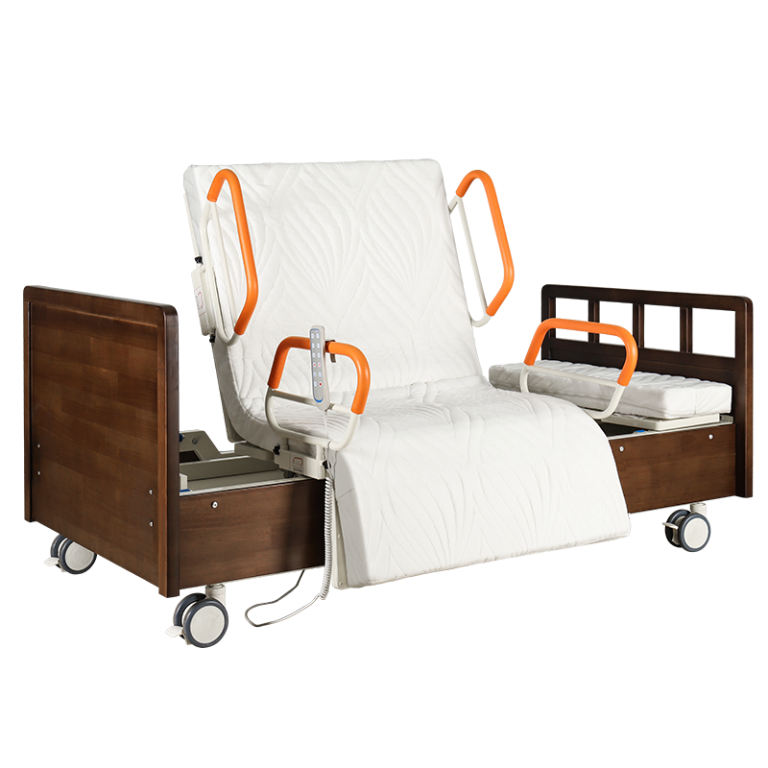
Medical Bed Foam Mattress vs Air Mattress: Which Is Better? | Export & Trade Guide #4
Medical Bed Foam Mattress vs Air Mattress: Which Is Better?
When selecting medical equipment for long-term patient care, few decisions carry as much weight as choosing the right mattress. The choice between a high-density foam mattress and an alternating pressure air mattress is not merely a matter of comfort; it is a clinical decision that impacts patient outcomes, caregiver ergonomics, and the overall efficiency of the care environment. Whether you are procuring hospital equipment for a clinic or setting up a home care station for an elderly family member, understanding the mechanical and physiological differences between these two systems is essential.
At HJIM (Hengshui Chengen Medical Equipment Co., Ltd), we have observed that the market often conflates “comfort” with “medical necessity.” A standard foam mattress may feel softer initially, but for a patient with limited mobility, that softness can lead to dangerous pressure buildup. Conversely, an air mattress offers dynamic relief but introduces complexity in maintenance and noise. This article dissects the technical specifications, clinical applications, and operational realities of both options to help you make an evidence-based procurement decision.
The Clinical Role of Foam Mattresses in Patient Care
Foam mattresses remain the backbone of standard medical certification compliance for general ward usage. Modern medical-grade foam is not the same as household bedding; it is typically made from high-resilience polyurethane or viscoelastic memory foam designed to distribute body weight more evenly than standard springs.
Pressure Distribution and Stability
The primary advantage of a foam mattress is its static stability. Unlike air systems, foam does not shift under the patient’s weight, providing a solid foundation for repositioning. For patients who are mobile or only require assistance during specific times of the day, a high-density foam mattress offers sufficient pressure redistribution to prevent minor skin breakdown without the need for mechanical intervention.
From a caregiver ergonomics perspective, foam mattresses are superior for manual handling. When a caregiver needs to slide a patient up in bed or perform a lateral transfer, the friction and stability of foam make these tasks safer and less physically demanding. There is no risk of the mattress deflating unexpectedly or the surface feeling unstable during critical care maneuvers.
Limits of Foam in High-Risk Scenarios
Despite their utility, foam mattresses have a hard ceiling on their protective capabilities. They cannot actively change the pressure points on a patient’s body. For patients who are completely immobile, sedated, or suffering from existing stage 1 or 2 pressure u
Alternating Pressure Air Mattresses: The Dynamic Solution
When the risk of pressure u (bedsores) is high, the industry standard shifts toward alternating pressure air mattresses, often referred to as anti-decubitus mattresses. These systems utilize a pump to alternately inflate and deflate groups of air cells, constantly shifting the patient’s support points.
Mechanism of Action and Clinical Evidence
The underlying logic of an anti-decubitus mattress is “dynamic decompression.” As noted in industry specifications, these mattresses use an air pump to alternately inflate and deflate multiple groups of air bags, causing different parts of the body to bear weight in rotation. This prevents the same body part from being compressed for too long, which is the primary cause of blood flow interruption and subsequent tissue death [K1].
In hospital settings, particularly in ICUs, these mattresses are ubiquitous. However, their penetration rate in the home care market remains below 5%, largely due to cost and complexity [K1]. For a patient who cannot turn themselves, the air mattress acts as an automated caregiver, ensuring that the sacrum, heels, and occiput are relieved of pressure on a timed cycle.
Operational Considerations and Misconceptions
A critical misconception in elderly care is that an air mattress eliminates the need for manual turning. This is false. While the mattress reduces pressure, it does not address shear forces or moisture management. Clinical guidelines still recommend regular repositioning even when an air mattress is in use. Furthermore, the noise level of the air pump is a significant factor for home environments. High-quality pumps operate quietly, but lower-end models can disrupt sleep, which is counterproductive to patient recovery.
Technical Comparison: Foam vs. Air Systems
To assist in healthcare procurement, the following table breaks down the key technical and operational differences between the two systems. This comparison assumes a standard medical context, such as pairing with an electric nursing bed.
| Feature | High-Density Foam Mattress | Alternating Pressure Air Mattress |
|---|---|---|
| Pressure Relief Mechanism | Static distribution (Passive) | Dynamic alternating inflation (Active) |
| Primary Use Case | General care, mobile patients, low risk | ICU, long-term bedridden, high u |
| Maintenance Requirements | Low (Rotate occasionally, clean cover) | High (Check pump, inspect for leaks, filter cleaning) |
| Noise Level | Silent | Low to Moderate (Pump operation) |
| Cost Efficiency | High (One-time purchase) | Lower (Higher initial cost + potential repairs) |
| Compatibility | Universal fit for most beds | Requires power outlet near bed head |
Integration with Electric Nursing Beds
The mattress is only one component of the care ecosystem. Its performance is heavily influenced by the bed frame it sits on. The rise of the electric nursing bed has transformed how we manage patient positioning. By using electric linear actuators to replace manual crank handles, these beds allow caregivers to adjust the backrest, leg section, and overall height via a remote control [K2].
Enhancing Caregiver Efficiency
When paired with a foam mattress, an electric bed like the HJIM MD-A12 provides significant benefits. The MD-A12 typically features three functions: backrest adjustment (0-80°), leg adjustment (0-45°), and overall height lifting [K2]. This allows a caregiver to raise the patient to a working height to prevent back strain, or lower the bed for safe patient transfer. The ABS detachable headboard also simplifies cleaning, a crucial factor in infection control.
Motor Technology and Reliability
The reliability of the electric bed depends on the linear actuator. Top-tier systems use brands like Linak (Denmark) or Dewert (Germany), which offer silent operation below 45dB and IPX4 water resistance [K2-English]. When selecting a bed-mattress combination, verify the motor brand. A cheap motor may fail under the load of a heavy patient, rendering the bed useless and compromising patient safety.
Critical Safety Features: The CPR Function
In acute care scenarios, seconds matter. A often-overlooked specification in medical device compliance is the CPR Quick Release function. This is a safety mechanism that allows the bed to be flattened from any position in under 3 seconds [K1-English].
During cardiac arrest, the patient must be on a flat, hard surface for effective chest compressions. Without a CPR release lever, a caregiver might struggle to manually crank the bed flat while attempting resuscitation. Models like the HJIM MD-E213 feature a bedside CPR release lever that allows for one-hand operation [K1-English]. Whether you choose a foam or air mattress, ensuring the underlying bed frame has this feature is non-negotiable for any setting where acute medical events are a possibility.
Future Trends in Medical Bed Technology
The industry is moving toward smarter, more connected care solutions. IoT Integration is becoming a standard trend, allowing for remote monitoring of patient vitals, bed position, and weight via WiFi or 4G [K2-English]. This data can be crucial for healthcare procurement teams managing large facilities, as it enables predictive maintenance and better resource allocation.
Additionally, Smart Anti-fall systems with AI-powered false positive reduction are emerging. These systems can detect when a patient attempts to exit the bed unsafely and alert caregivers immediately. While currently more common in institutional settings, these features are trickling down to high-end home care equipment, bridging the gap between hospital safety and home comfort.
Conclusion
There is no single “better” option between foam and air mattresses; there is only the better option for the specific patient profile. For active patients or those with low risk of pressure injuries, a high-density foam mattress paired with a reliable electric nursing bed offers the best balance of comfort, stability, and cost. However, for long-term bedridden patients or those with existing skin breakdown, an alternating pressure air mattress is a clinical necessity that cannot be substituted by foam alone.
When making your decision, prioritize the technical specifications of the entire system. Look for medical certification (CE, ISO 13485), verify the quality of the linear actuators in the bed frame, and ensure safety features like CPR quick release are present. By aligning the mattress technology with the patient’s mobility level and the caregiver’s operational needs, you ensure a safer, more effective care environment.
Frequently Asked Questions
What is the maximum weight capacity I should look for in a medical bed system?
Standard medical beds typically support between 250 kg to 350 kg (550-770 lbs), depending on the frame construction and motor strength. When procuring equipment, always check the specific weight capacity listed in the product specifications. For bariatric patients, ensure the bed and mattress are rated for higher loads to prevent structural failure. The linear actuators used in premium beds, such as those from Linak, are rated for forces between 4000-8000N, ensuring they can handle heavy loads smoothly [K2-English].
How noisy are alternating pressure air mattresses, and is it suitable for home use?
Noise levels vary significantly by pump quality. High-quality air pumps designed for medical use operate at noise levels below 45dB, which is comparable to a quiet library conversation. However, cheaper models may produce clicking or humming sounds that can disturb sleep. When selecting an air mattress for home care, ask the supplier for the decibel rating of the pump. If the patient is a light sleeper, consider a mattress with a “night mode” that extends the inflation cycle to reduce pump frequency.
Does the CPR Quick Release function work if the power goes out?
Yes. The CPR Quick Release mechanism is a purely mechanical safety feature, independent of the bed’s electrical system. It uses a lever or cable system to manually unlock the bed frame, allowing it to flatten instantly even during a power outage. This is critical for emergency response, as it ensures that caregivers can perform chest compressions without waiting for the electric motors to reset or relying on battery backups [K1-English].
Can I use a standard foam mattress on an electric nursing bed?
Yes, most electric nursing beds are designed to accommodate standard medical foam mattresses. However, ensure the mattress dimensions match the bed frame (typically 80cm x 190cm or 90cm x 200cm) to prevent gaps where patients could get trapped. Additionally, if the bed has side rails, verify that the mattress thickness is compatible so the rails can lock securely. For optimal performance, use a mattress with a non-slip bottom surface to prevent shifting during bed adjustments.