Nursing Bed vs Hospital Bed: Key Differences for Home Care Buyers | Importer Selection Guide #7
Nursing Bed vs Hospital Bed: Key Differences for Home Care Buyers
When selecting medical-grade sleep support for home environments, buyers often conflate nursing beds and hospital beds as interchangeable terms. However, these categories serve distinct purposes shaped by clinical requirements, caregiver workflows, and patient mobility needs. Understanding their structural and functional differences is critical for making cost-effective, safety-conscious decisions in home healthcare procurement.
Core Functional Architecture
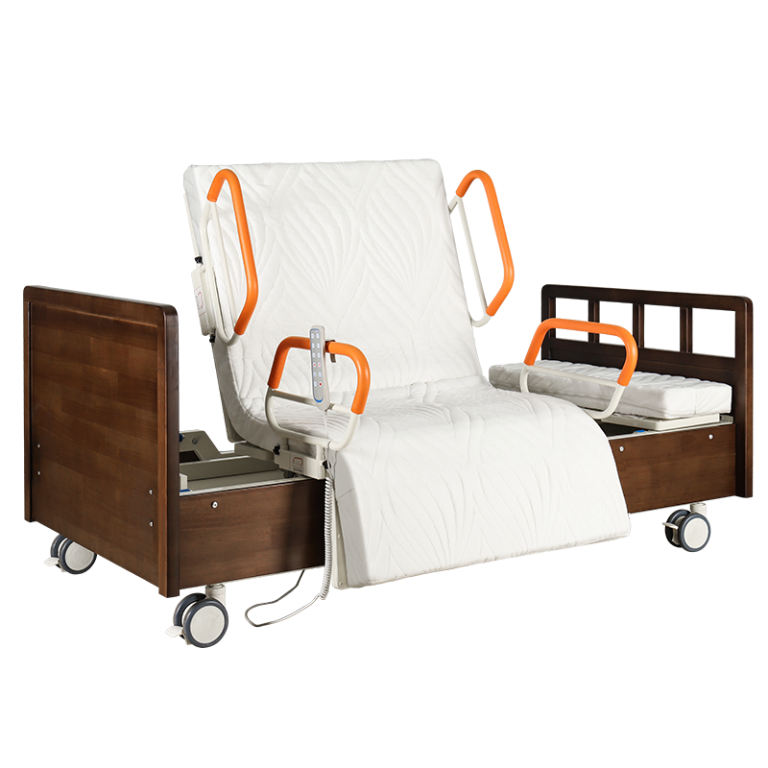
Nursing beds prioritize patient-centered adjustability through mechanical or electric systems. Manual nursing beds rely on hand-crank mechanisms to modify backrest/knee angles, typically offering 2-3 adjustment zones at budget-friendly price points ($80-$150) [K1]. Electric variants replace physical labor with linear actuators (2-5 motors), enabling precise positioning via remote controls – exemplified by the HJIM MD-A12 model with 0-75° backrest and 0-45° knee articulation [K2].
Hospital beds emphasize clinical intervention readiness, featuring reinforced frames for ICU equipment mounting, integrated IV pole sockets, and compatibility with patient monitoring systems. While both types may share similar dimensions (typically 80″ x 42″), hospital beds incorporate specialized safety features like side rail interlocks and emergency lowering mechanisms absent in standard nursing configurations.
Use Case Scenario Analysis
Home care environments demand beds that balance medical functionality with domestic aesthetics. Electric nursing beds dominate this segment due to their ability to facilitate independent patient movement – crucial for aging-in-place scenarios where 18% annual market growth is projected [K3]. The HJIM MD-A12’s ABS removable headboard and 220kg weight capacity demonstrate how homecare models address both clinical needs and residential integration.
Hospital beds remain essential for acute care transitions but present practical challenges in home settings: their industrial design clashes with living spaces, and advanced features like smart monitoring integration become underutilized without 24/7 clinical staff support. The 6% CAGR for hospital bed segments reflects their continued relevance in specialized home hospice or post-surgical recovery cases requiring intensive monitoring [K3].
Cost and Operational Economics
Initial investment differs significantly: basic manual nursing beds start at $80 while fully-featured electric models reach $1,200-$2,500. However, total cost of ownership requires deeper analysis. Manual beds incur hidden expenses through caregiver fatigue – studies show electric systems reduce physical labor intensity by over 70% [K2], translating to lower long-term caregiving costs. Hospital beds command premium pricing ($3,000-$8,000) but offer greater durability for high-acuity use cases.
Energy consumption considerations matter for electric models. Modern linear actuators from brands like LINAK or Dewert consume minimal power during standby modes, addressing concerns about electricity costs in off-grid or budget-constrained households [K1].
Safety and Compliance Standards
All medical beds must meet regional regulatory requirements. Look for CE marking for European markets, ISO 13485 certification for quality management systems, and FDA 510(k) clearance for US distribution. The central brake system found in premium models like HJIM’s offerings provides simultaneous wheel locking through single pedal activation – a critical safety feature preventing accidental bed movement during patient transfers [K3].
Weight capacity verification is non-negotiable. While standard models support 220kg (485lbs), bariatric configurations reach 450kg. Always confirm manufacturer-stated limits against actual patient requirements, considering dynamic loads during position adjustments.
Feature Comparison Matrix
| Feature | Manual Nursing Bed | Electric Nursing Bed | Hospital Bed |
|---|---|---|---|
| Adjustment Mechanism | Hand crank (2-3 zones) | Remote-controlled motors (3-5 zones) | Advanced motor systems + clinical interfaces |
| Typical Price Range | $80-$300 | $800-$2,500 | $3,000-$8,000+ |
| Caregiver Labor Reduction | Minimal | 70%+ reduction [K2] | 85%+ reduction |
| Primary Use Case | Developing markets/budget settings [K1] | Homecare/elderly care [K3] | Acute care/ICU transitions |
| Key Safety Features | Basic wheel locks | Central braking systems [K3] | Full side rail interlocks + emergency protocols |
Procurement Decision Framework
For most homecare buyers, electric nursing beds represent the optimal balance of functionality and affordability. Prioritize models with:
- Minimum 3-motor systems enabling independent back/knee/height adjustments
- ABS composite headboards for easy cleaning and residential aesthetics
- Integrated cable management to prevent tripping hazards
- Warranty coverage exceeding 2 years on motor systems
Reserve hospital bed investments for cases requiring continuous vital sign monitoring or complex medical equipment integration. Always verify supplier compliance with local medical device regulations and request documentation of load testing certifications.
Frequently Asked Questions
What weight capacity should I prioritize for homecare beds?
Standard models support 220kg (485lbs) as demonstrated by the HJIM MD-A12 [K2], but bariatric configurations reach 450kg. Always select beds with 15-20% higher capacity than the patient’s current weight to accommodate future needs and dynamic loading during position changes.
Are electric nursing beds truly necessary for home use?
Yes when patient mobility is severely limited. Electric systems reduce caregiver strain by over 70% compared to manual alternatives [K2], preventing musculoskeletal injuries during frequent repositioning. This becomes critical for conditions requiring 2-hourly turns to prevent pressure u
What certifications ensure medical-grade safety?
Look for triple certification: CE (European conformity), ISO 13485 (quality management), and FDA 510(k) (US market access). These verify electrical safety, biocompatibility of materials, and adherence to medical device manufacturing standards.
How do maintenance requirements differ between types?
Manual beds require periodic lubrication of crank mechanisms and wheel bearing checks. Electric models need motor system inspections every 6 months and remote control battery replacements. Hospital beds demand quarterly professional servicing due to their complex monitoring integrations.