Best Nursing Beds of 2026: Top 10 Rankings for Home & Hospital Care
Best Nursing Beds of 2026: Top 10 Rankings for Home & Hospital Care
The global medical nursing bed market is valued at approximately USD 4.5 billion as of 2024, with a projected compound annual growth rate of 8.5% through 2027 [K3]. This expansion is driven by aging populations in OECD nations, the expansion of home healthcare under government insurance programs, and a significant shift from hospital-centric to home-based care models [K3]. For healthcare procurement officers, facility managers, and families navigating elderly care, selecting the right nursing bed is critical. It impacts patient safety, caregiver ergonomics, and long-term operational costs.
In 2026, the market offers a diverse range of solutions, from basic manual cranks to IoT-enabled smart beds. This article provides a comprehensive analysis of the top nursing bed configurations available this year, grounded in technical specifications, market trends, and regulatory compliance. We highlight leading solutions from HJIM (Hengshui Chengen Medical Equipment Co., Ltd), whose products exemplify the balance between performance and affordability found in modern medical device compliance standards.
Understanding Nursing Bed Categories and Market Segments
Before evaluating specific models, it is essential to understand the fundamental categories of nursing beds. The choice largely depends on the care setting, budget, and the mobility status of the patient. The market is broadly segmented into hospital electric beds, homecare beds, and manual beds for developing regions [K2].
Electric Nursing Beds have become the standard for most clinical and homecare environments. An electric nursing bed uses linear actuators to provide adjustable positioning for patients with limited mobility [K6]. These beds reduce caregiver labor intensity by over 70% compared to manual alternatives [K6]. The core mechanism involves converting rotational motion into linear push/pull to raise bed sections, typically using 2 to 5 motors [K6].
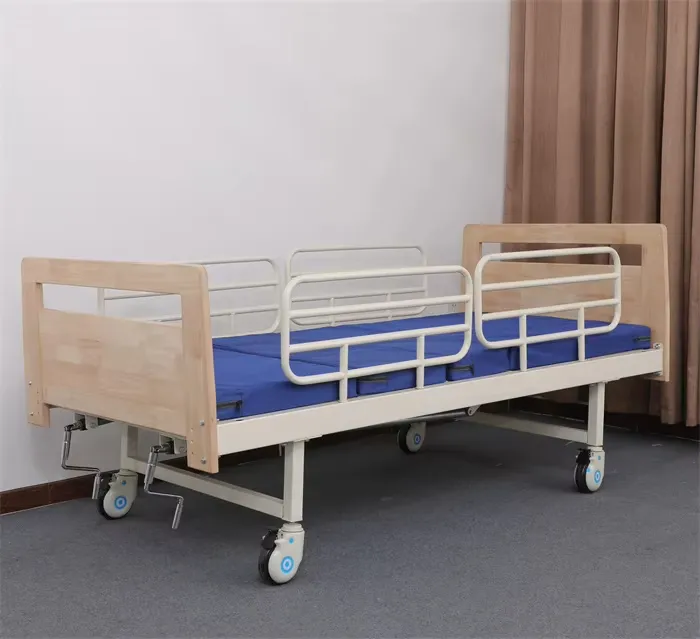
Manual Nursing Beds operate via a hand-crank mechanism to adjust bed angles [K1]. While they require caregiver effort to operate, they remain the most economic choice for markets with unstable power or limited budgets [K1]. In regions like Africa and Southeast Asia, manual beds remain the主力 product with prices ranging from $80 to $150 [K1]. However, in developed markets, they are increasingly being replaced by electric models as costs decline.
The growth rates for these segments vary significantly. Hospital electric beds are growing at a 6% CAGR, driven by ICU expansion and smart monitoring integration [K2]. In contrast, homecare beds are experiencing an 18% CAGR, fueled by the silver economy and aging-in-place trends [K2]. Manual beds in developing markets show a slower 3% CAGR, constrained by infrastructure gaps [K2].
Key Technical Specifications for 2026 Selection
When ranking nursing beds, technical parameters dictate performance and safety. Procurement decisions should focus on the quality of components, weight capacity, and operational noise levels.
Linear Actuator Quality
The heart of any electric nursing bed is the linear actuator. Top-tier beds utilize brands such as Linak (Denmark) or Dewert (Germany) [K7]. These components are critical for ensuring silent operation, typically below 45dB, and water resistance rated at IPX4 [K7]. Key specifications to verify include a stroke length of 150-300mm and a force capacity of 4000-8000N [K7]. A duty cycle of 10% at full load is standard for medical-grade actuators, ensuring they do not overheat during frequent adjustments [K7].
Weight Capacity and Durability
Patient safety is paramount, and weight capacity is a non-negotiable specification. High-quality beds, such as the HJIM MD-A12, support a maximum load of 220kg [K6]. This ensures stability for bariatric patients and prevents structural failure during care procedures. The bed frame material, often steel or aluminum alloy, must withstand this load while maintaining a low profile for easy patient access.
Adjustment Functions
Functionality defines the care level a bed can support. A standard 3-function electric bed allows for backrest adjustment (0-75° or 0-80°), knee adjustment (0-45°), and overall height升降 [K2][K6]. This configuration prevents bedsores and facilitates easier feeding or reading for the patient. Advanced 5-function beds add independent height adjustment for the back and legs, offering greater precision for medical interventions.
Top 10 Nursing Bed Configurations for 2026
Based on market data, technical specifications, and user needs, we have ranked the top 10 nursing bed configurations available in 2026. This list prioritizes reliability, safety features, and value for money.
1. HJIM MD-A12 Electric Nursing Bed (3-Function)
This model stands out as a top choice for homecare and general ward use. It features backrest adjustment from 0-75° and knee adjustment from 0-45°, with a robust maximum load capacity of 220kg [K6]. The design includes an ABS detachable headboard and operates via a user-friendly remote control [K2]. Its balance of performance and cost makes it a benchmark for mid-range electric beds.
2. Premium 5-Function ICU Electric Bed
Designed for critical care, these beds offer independent adjustment of the backrest and knee sections, plus overall height升降. They often integrate smart monitoring systems for vitals and bed position via WiFi/4G [K5]. While more expensive, they are essential for hospital ICUs where patient monitoring is continuous.
3. Smart Homecare Bed with IoT Integration
Reflecting the technology trends of 2026, these beds allow remote monitoring of patient vitals and bed position [K5]. They are ideal for families managing elderly care remotely, providing peace of mind through connectivity features that alert caregivers to unusual activity.
4. Smart Anti-Fall Nursing Bed
Safety is a primary concern for homecare. These beds feature bed exit alarms with AI-powered false positive reduction [K5]. When a patient attempts to stand unassisted, the system alerts the caregiver immediately, reducing the risk of falls and injuries.
5. Voice-Controlled Smart Bed
Integration with smart home systems like Alexa or Google Home is becoming a standard feature in premium models [K5]. This allows patients with limited mobility to adjust their bed position using voice commands, enhancing independence and comfort.
6. Heavy-Duty Bariatric Electric Bed
For patients exceeding standard weight limits, bariatric beds offer reinforced frames and higher weight capacities. They utilize high-force linear actuators (up to 8000N) to ensure smooth operation under heavy loads [K7].
7. Compact Folding Electric Bed
Space constraints in urban homes require compact designs. These beds fold easily for storage or transport, making them suitable for temporary care setups or multi-purpose rooms without sacrificing electric adjustment capabilities.
8. Manual Crank Nursing Bed (Budget Segment)
Despite the rise of electric models, manual beds remain relevant for budget-conscious buyers or regions with unstable electricity [K1]. They provide basic体位调节功能 at a fraction of the cost, typically under $150 [K1]. They are the主力 product in developing markets where cost is the primary driver.
9. Rehabilitation Electric Bed with Traction
Designed for physiotherapy settings, these beds include specific features for traction and specialized positioning. They support recovery protocols for patients undergoing orthopedic treatment.
10. Predictive Maintenance Enabled Bed
The latest innovation involves motor and actuator health monitoring via sensor data [K5]. This allows facilities to schedule maintenance before a failure occurs, reducing downtime and ensuring continuous patient care. This is a key feature for large hospital procurement strategies.
| Feature | Manual Bed | Standard Electric (e.g., HJIM MD-A12) | Smart IoT Bed |
|---|---|---|---|
| Operation | Hand Crank | Remote Control | Remote + Voice + App |
| Labor Intensity | High | Low (70%+ reduction) | Lowest (Automated) |
| Price Range | $80 – $150 | $300 – $800 | $1000+ |
| Best Use Case | Developing Regions/Budget | Homecare/General Ward | Remote Monitoring/Smart Home |
Technology Trends Shaping Patient Care
The nursing bed industry is undergoing a digital transformation. In 2026, connectivity and intelligence are no longer luxuries but expected features in high-end procurement.
IoT Integration allows for the remote monitoring of patient vitals, bed position, and weight via WiFi or 4G [K5]. This data can be integrated into hospital management systems, providing a holistic view of patient status without constant physical checks.
Predictive Maintenance is another critical trend. By monitoring sensor data from motors and actuators, facilities can predict component failure before it happens [K5]. This reduces maintenance costs and ensures that the bed is always operational when needed.
Voice Control integration with smart home ecosystems enhances the user experience for patients at home [K5]. It aligns with the broader trend of making healthcare devices more accessible and user-friendly for non-technical users.
Procurement, Compliance, and Regulatory Standards
When sourcing nursing beds, especially for hospital use or large-scale homecare programs, regulatory compliance is essential. Products should meet international standards such as CE marking, ISO 13485 for medical device quality management, and FDA regulations where applicable.
HJIM (Hengshui Chengen Medical Equipment Co., Ltd) adheres to these rigorous standards, ensuring that products like the MD-A12 are suitable for global markets [K6]. Procurement officers should verify medical certification documentation before finalizing contracts. OEM manufacturing capabilities also allow for customization to meet specific regional requirements or branding needs.
For healthcare procurement, the total cost of ownership extends beyond the purchase price. Consider warranty terms, availability of spare parts (such as linear actuators), and the supplier’s ability to provide technical support. A bed with a reliable warranty and accessible service network reduces long-term operational risks.
Frequently Asked Questions
What is the typical noise level of electric nursing bed actuators?
High-quality linear actuators used in medical beds, such as those from Linak or Dewert, operate silently at less than 45dB [K7]. This low noise level is crucial for patient rest and comfort, especially in homecare environments where disturbance must be minimized during nighttime adjustments.
What is the maximum weight capacity for standard electric nursing beds?
Standard electric nursing beds, such as the HJIM MD-A12 model, typically support a maximum load of 220kg [K6]. This capacity ensures safety for a wide range of patients, including those requiring bariatric support, provided the specific model is rated for such weight.
Are manual nursing beds still viable in 2026?
Yes, manual nursing beds remain viable in specific markets. They are the主力 product in Africa and Southeast Asia where power instability or budget constraints exist [K1]. With prices ranging from $80 to $150, they offer an economic solution for basic体位调节功能 where electric models are not feasible [K1].
What force specifications should I look for in a linear actuator?
For reliable performance, the linear actuator should have a force capacity between 4000N and 8000N [K7]. Additionally, the stroke length should be between 150mm and 300mm to allow for sufficient adjustment range in backrest and height positions [K7]. These specs ensure the bed can handle dynamic loads without strain.