Post-Surgery Home Care Beds: Features for Recovery Patients | Home Care Applications #13
Post-Surgery Home Care Beds: Features for Recovery Patients
The landscape of healthcare delivery is undergoing a significant transformation. As of 2024, the global medical nursing bed market is valued at approximately USD 4.5 billion, with a projected compound annual growth rate of 8.5% through 2027 [K4]. This expansion is driven primarily by aging populations in OECD nations and a strategic shift from hospital-centric models to home-based care under various government insurance programs [K4]. For patients recovering from surgery, the environment in which they heal is just as critical as the procedure itself. A suitable home care bed is not merely furniture; it is a medical device that facilitates recovery, ensures safety, and reduces the physical burden on family caregivers.
When procuring equipment for post-surgery recovery, healthcare professionals and family members must navigate a complex market. The choice between manual and electric systems, the necessity of specific positioning capabilities, and the integration of smart safety features all play pivotal roles in patient outcomes. This guide details the essential features of modern home care beds, grounded in industry standards and technical specifications, to help buyers make informed decisions that align with medical certification requirements and patient needs.
Clinical Positioning and Respiratory Comfort
One of the most critical aspects of post-surgery recovery is the ability to maintain proper body positioning. Improper positioning can lead to complications such as aspiration pneumonia, reduced chest expansion, and increased cardiac preload. The industry standard for addressing these issues is known as Fowler’s Position. This clinical position involves elevating the upper body to an angle between 45 and 60 degrees while keeping the knees slightly bent [K7].
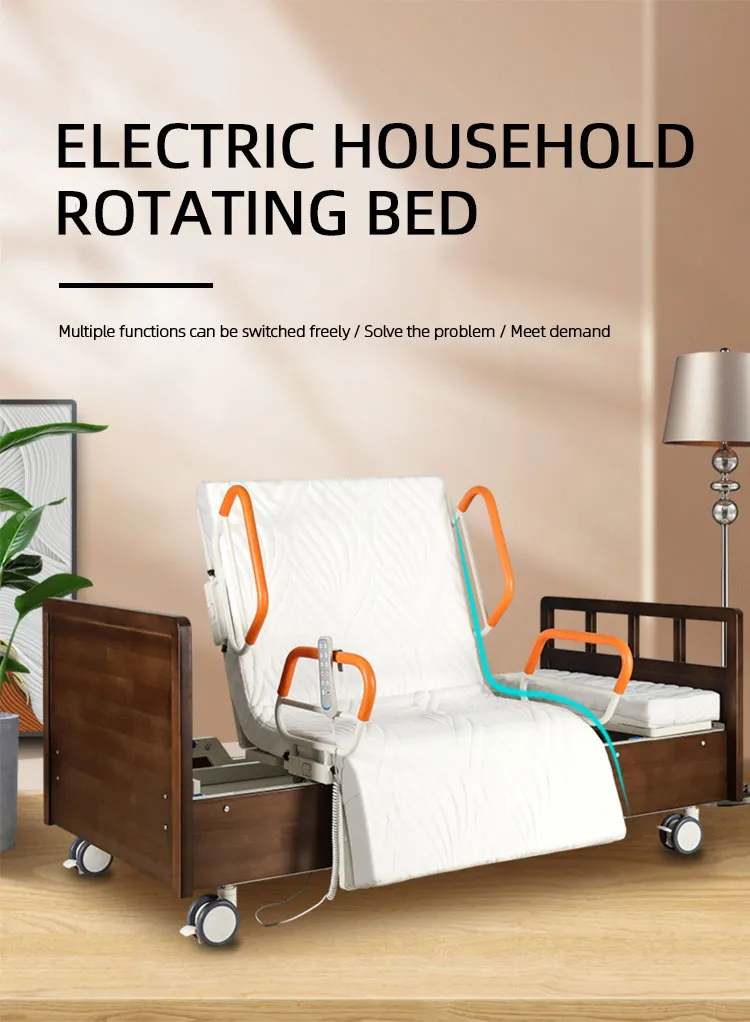
For home care patients, achieving this angle manually is difficult and often inconsistent. Electric nursing beds solve this by using linear actuators to adjust the backrest precisely. For instance, the HJIM MD-A12 model supports a backrest adjustment range of 0 to 75 degrees, allowing patients to find the exact angle required for respiratory comfort or feeding [K8]. This capability is vital for patients with respiratory distress or those who require frequent changes in posture to prevent bedsores. The ability to lock the bed in a semi-upright position ensures that the therapeutic benefits of Fowler’s Position are maintained throughout the night or during rest periods without caregiver intervention [K7].
Furthermore, proper positioning aids in mobility assistance. When the knees are bent slightly while the upper body is raised, it reduces strain on the lower back and makes it easier for patients to transition from a lying position to sitting up. This is particularly important for elderly care patients who may have limited core strength. The integration of knee gatch functionality, often paired with backrest adjustment, ensures that the body remains aligned, reducing the risk of sliding down the bed which can cause shear injuries to the skin.
Electric Adjustment Versus Manual Mechanisms
The market offers two primary types of adjustment mechanisms: manual and electric. Understanding the trade-offs between these systems is essential for healthcare procurement and home setup. Manual nursing beds operate using mechanical hand-crank rods to adjust the bed surface angles [K2]. While these beds are significantly cheaper, typically ranging from $80 to $150 in developing markets, they require physical effort from the caregiver to operate [K2].
In contrast, electric nursing beds utilize electric motors to drive the adjustment of the backrest, knee, and overall height [K8]. An electric system typically employs between 2 to 5 linear actuators depending on the functionality required [K8]. The primary advantage of electric beds is the reduction in labor intensity. Data suggests that electric beds reduce caregiver labor intensity by over 70% compared to manual alternatives [K8]. For family caregivers who may not have professional training or physical strength, this reduction is crucial for preventing caregiver burnout and injury.
Manual beds remain relevant in specific contexts, such as regions with unstable电力 infrastructure or for budget-constrained projects in Africa and Southeast Asia where they remain the主力 product [K2]. However, for post-surgery recovery in a home setting where reliability and ease of use are paramount, electric beds are the superior choice. The shift towards electric models is reflected in market segmentation data, where homecare beds are experiencing an 18% CAGR, significantly outpacing the 3% growth seen in manual beds for developing markets [K5]. This growth indicates a clear industry trend towards electrification for better patient care and caregiver ergonomics.
Hi-Low Functionality for Safety and Ergonomics
A feature that is often underestimated but is critical for patient safety is the Hi-Low function, also known as overall height adjustment. This function allows the entire bed surface to move vertically, typically within a range of 40 to 80 centimeters [K3]. The lowest position is designed to facilitate safe entry and exit for patients, minimizing the distance they need to fall if they attempt to get out of bed unassisted [K3].
For post-surgery patients who may experience dizziness or weakness upon standing, having the bed surface close to the floor reduces the risk of serious injury from falls. Conversely, raising the bed to its highest position improves caregiver ergonomics. When the bed is too low, caregivers must bend over significantly to attend to the patient, leading to back strain over time. The HJIM MD-E103 model, for example, supports an overall height adjustment range of 40 to 75 centimeters, optimizing the working height for nurses and family members alike [K3].
This feature is not merely a convenience; it is a safety necessity for跌倒高风险 patients. Common misconceptions suggest that height adjustment is just an extra feature, but in clinical practice, it is a fundamental requirement for preventing falls and ensuring medical device compliance with safety standards [K3]. The ability to adjust the height also aids in medical procedures performed at the bedside, such as wound care or catheterization, by bringing the patient to a more accessible level for the healthcare provider.
Weight Capacity and Structural Durability
When selecting hospital equipment for home use, weight capacity is a non-negotiable specification. Patients vary significantly in body mass, and the bed must be rated to support the maximum expected load safely. Exceeding the weight limit can compromise the structural integrity of the frame and the reliability of the motors. The HJIM MD-A12 electric nursing bed, for instance, boasts a maximum load capacity of 220 kilograms [K8].
This high capacity ensures that the bed remains stable even for bariatric patients or when caregivers need to lean on the bed during assistance. Structural durability is also linked to the quality of the steel used in the bed frame and the reliability of the linear actuators. In the context of OEM manufacturing and medical device compliance, beds must undergo rigorous testing to ensure they can withstand continuous use without failure. A robust weight capacity also provides peace of mind for families, knowing that the equipment will not fail during critical moments of mobility assistance.
Additionally, the durability of the bed impacts the long-term cost of ownership. A bed with a higher weight rating and sturdy construction is less likely to require repairs or replacement during the recovery period. This is particularly important for chronic conditions where the bed may be used for extended periods beyond the initial post-surgery phase. Healthcare procurement decisions should always prioritize specs that exceed the minimum requirements to ensure a safety margin.
Smart Technology and Remote Monitoring
The nursing bed industry is increasingly integrating Internet of Things (IoT) capabilities to enhance patient care. Modern technology trends include remote monitoring of patient vitals, bed position, and weight via WiFi or 4G connections [K6]. For post-surgery patients, this allows family members or healthcare providers to monitor activity levels without being physically present in the room.
Smart anti-fall systems are another critical technological advancement. These systems use bed exit alarms with AI-powered false positive reduction to alert caregivers when a patient attempts to leave the bed unsafely [K6]. This is particularly useful for patients recovering from procedures that affect mobility or consciousness. Furthermore, some beds now offer voice control integration with smart home systems like Alexa or Google Home, allowing patients to adjust their bed position using simple voice commands [K6].
Predictive maintenance is also emerging as a key feature. By monitoring motor and actuator health via sensor data, the bed can alert users to potential mechanical issues before they result in a failure [K6]. For home care settings, this ensures that the equipment remains reliable throughout the recovery process. While these smart features add to the initial cost, they provide significant value in terms of safety monitoring and reduced maintenance downtime.
Comparison of Nursing Bed Types
To assist in healthcare procurement, the following table compares the key characteristics of different nursing bed types based on current industry data and technical specifications.
| Feature | Manual Nursing Bed | Standard Electric Bed | Smart Electric Bed |
|---|---|---|---|
| Adjustment Mechanism | Hand-crank mechanical rod | Linear actuators (2-5 motors) | Linear actuators with IoT sensors |
| Typical Cost Range | $80 – $150 [K2] | $300 – $800 | $1000+ |
| Caregiver Labor Impact | High physical effort | Reduces labor by 70%+ [K8] | Reduces labor by 70%+ [K8] |
| Height Adjustment | Limited or Manual | 40-80cm range [K3] | 40-80cm range [K3] |
| Monitoring Capabilities | None | Basic position lock | Vitals, weight, exit alarms [K6] |
| Best Use Case | Low budget, stable power | Standard home recovery | High risk, remote monitoring |
Regulatory Compliance and Certifications
When purchasing medical equipment for home use, verifying regulatory compliance is essential for ensuring safety and quality. Reputable manufacturers adhere to international standards such as CE marking, ISO 13485 for medical device quality management systems, and FDA regulations where applicable. These certifications indicate that the bed has undergone rigorous testing for electrical safety, mechanical stability, and biocompatibility of materials.
For healthcare procurement officers and families, requesting documentation of these certifications should be a standard part of the buying process. ISO 13485 specifically ensures that the manufacturer has consistent processes for designing and producing medical devices, which reduces the risk of defects. Additionally, compliance with local electrical safety standards is crucial since these beds will be used in residential environments which may have different power regulations than hospitals. Always verify that the product documentation clearly states these certifications before finalizing the purchase.
Conclusion
Selecting the right home care bed for post-surgery recovery involves balancing clinical needs, caregiver capabilities, and budget constraints. The shift towards home-based care models highlights the importance of having equipment that can replicate hospital-level safety and comfort within a residential setting [K4]. Electric nursing beds with Hi-Low functionality and precise positioning capabilities, such as those offered by HJIM (Hengshui Chengen Medical Equipment Co., Ltd), provide the necessary tools to support patient recovery while protecting caregiver health [K3][K8].
Features like Fowler’s Position adjustment, high weight capacity, and smart monitoring technologies are no longer luxuries but essential components of modern patient care. As the market continues to grow with an 18% CAGR in the homecare segment, buyers have access to increasingly sophisticated solutions [K5]. By prioritizing safety features, regulatory compliance, and ergonomic design, families can create a healing environment that promotes faster recovery and reduces the risk of complications. For detailed specifications and product inquiries, visiting hjim.com provides access to the full range of certified medical equipment available for home healthcare needs.
What is the recommended angle for Fowler’s Position in a recovery bed?
The recommended angle for Fowler’s Position is between 45 and 60 degrees for the upper body. This position elevates the head and back to reduce cardiac preload, improve chest expansion, and prevent aspiration pneumonia, which is critical for post-surgery recovery and respiratory distress [K7]. Electric beds like the HJIM MD-A12 allow precise adjustment within this range, typically supporting backrest angles from 0 to 75 degrees [K8].
How much does the Hi-Low function adjust the bed height?
The Hi-Low function typically allows the entire bed surface to move between 40 and 80 centimeters in height [K3]. For example, the HJIM MD-E103 model supports an adjustment range of 40 to 75 centimeters. This range is designed to lower the bed for safe patient exit and raise it for caregiver ergonomics during procedures [K3].
What is the weight capacity of standard electric nursing beds?
Standard electric nursing beds often have a maximum load capacity of around 220 kilograms. The HJIM MD-A12 model specifically supports a max load of 220kg, ensuring stability for various patient sizes and providing a safety margin for mobility assistance [K8]. Always verify the specific weight rating of the model before procurement to ensure it meets patient needs.
Do electric beds significantly reduce caregiver labor compared to manual beds?
Yes, electric nursing beds reduce caregiver labor intensity by over 70% compared to manual beds [K8]. Manual beds require physical effort to operate hand-crank rods, whereas electric beds use linear actuators controlled by a remote. This reduction is vital for preventing caregiver injury and burnout, especially in long-term home care scenarios [K8].