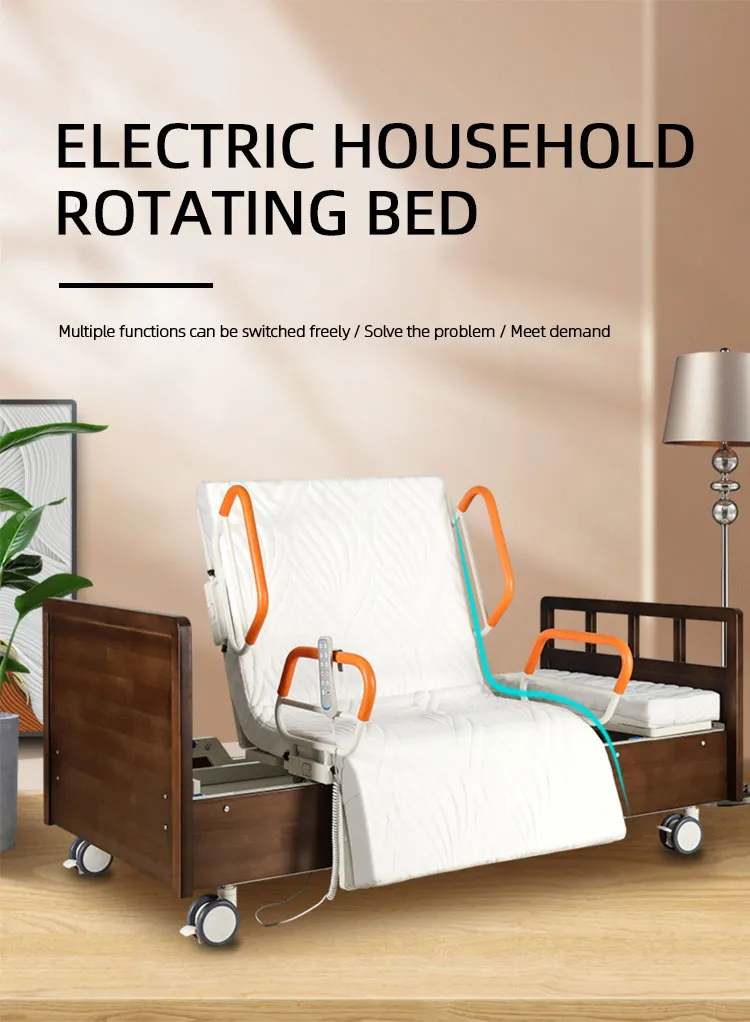
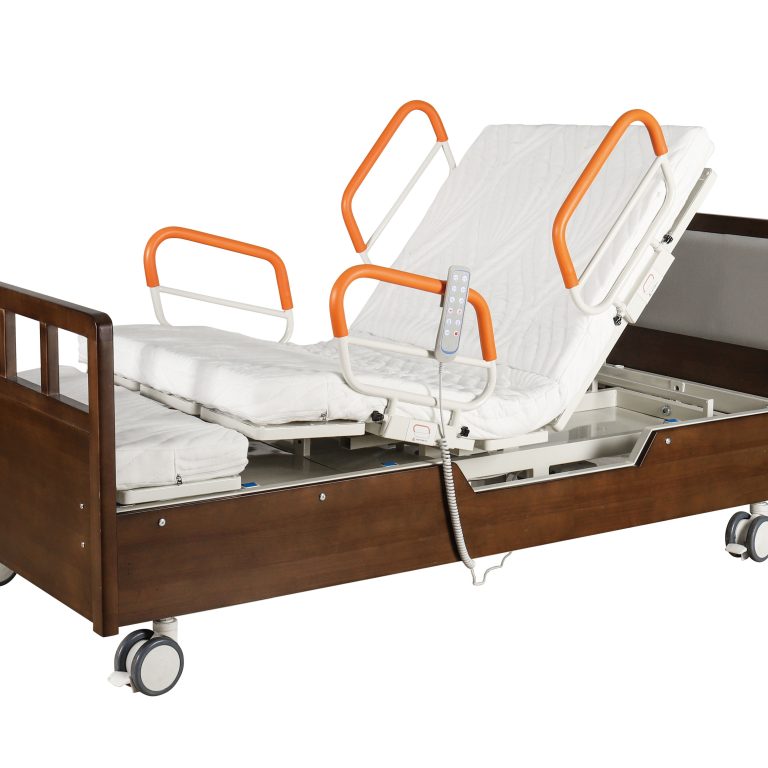
Home Care Bed with Bedpan: Features and User Scenarios | Safety Standards & Compliance #3
Home Care Bed with Bedpan: Features and User Scenarios
The global landscape of medical equipment is undergoing a significant transformation, driven by demographic shifts and the evolution of care models. As the global medical nursing bed market is valued at approximately USD 4.5 billion in 2024, with a projected compound annual growth rate (CAGR) of 8.5% through 2027, the demand for specialized home care solutions is intensifying [K1 Global Market]. This growth is fueled by aging populations in OECD nations, the expansion of home healthcare under government insurance programs, and a strategic shift from hospital-centric to home-based care models [K1 Global Market]. Within this context, the home care bed designed to facilitate hygiene management, including bedpan usage, becomes a critical asset for families and caregivers managing patients with limited mobility.
Selecting the right equipment requires a deep understanding of technical specifications, user scenarios, and the broader competitive landscape. This article provides an expert-level analysis of home care nursing beds, focusing on their features, operational mechanisms, and suitability for various care environments. We will examine the distinctions between manual and electric systems, the importance of regulatory compliance, and how modern technology is reshaping patient care at home.
The Critical Role of Adjustability in Hygiene Management
When discussing a home care bed in the context of bedpan management, the core requirement is not merely the presence of a bedpan, but the bed’s ability to facilitate safe and dignified hygiene care. Patients who are immobile or suffer from conditions requiring strict bed rest often rely on bedpans for elimination. The design of the nursing bed directly impacts the physical burden on the caregiver and the comfort of the patient during these procedures.
An electric nursing bed uses linear actuators, typically ranging from 2 to 5 motors, to provide adjustable positioning for patients with limited mobility [K2 Electric Nursing Bed Card]. This adjustability is crucial for hygiene scenarios. For instance, raising the backrest allows the patient to assume a semi-Fowler’s position, which can facilitate easier access for caregivers during cleaning or bedpan insertion. Furthermore, the ability to adjust the overall height of the bed is vital for caregiver ergonomics. Lowering the bed reduces the risk of back injury for the caregiver when lifting or positioning the patient, while raising it brings the patient to a working height that minimizes strain during hygiene tasks.
Specific clinical positions also play a role in patient management. The Trendelenburg position, where the patient is tilted head-down 12-15 degrees, is used in shock treatment and for venous return [K1 Trendelenburg]. While primarily a clinical function, the ability to achieve various tilt angles ensures that the bed can adapt to medical advice regarding circulation and pressure relief, which is indirectly related to maintaining skin integrity during prolonged bedpan use.
Manual Versus Electric Nursing Beds: A Strategic Comparison
One of the most fundamental decisions in procurement is choosing between manual and electric nursing beds. Each type serves distinct market needs and budgetary constraints. Understanding the operational differences is essential for matching the equipment to the specific care environment.
A manual nursing bed operates through a hand-crank mechanism to adjust the bed面 angles [K1 Manual Nursing Bed]. This system is mechanically simple, does not require electricity, and is significantly more cost-effective. In regions where power stability is a concern or where budget constraints are severe, the manual bed remains a viable solution. For example, in certain African and Southeast Asian markets, manual beds are the主力 product, with prices ranging from $80 to $150 [K1 Manual Nursing Bed]. These beds are commonly found in基层 hospitals, developing country healthcare facilities, and budget-limited养老 institutions [K1 Manual Nursing Bed].
Conversely, an electric nursing bed replaces the mechanical crank with electric linear drives, allowing adjustment via a remote control or panel [K2 Electric Nursing Bed]. The core logic here is solving the problem where “the patient cannot move but needs to change position” [K2 Electric Nursing Bed]. Traditional manual beds require caregivers to physically exert effort to crank the bed, whereas electric beds require only a button press. This reduces labor intensity by over 70% [K2 Electric Nursing Bed Card].
The following table compares the key characteristics of both systems based on industry data:
| Feature | Manual Nursing Bed | Electric Nursing Bed |
|---|---|---|
| Operation Method | Hand-crank lever | Remote control / Panel |
| Power Requirement | None (Mechanical) | Electricity (Motor-driven) |
| Cost Range | $80 – $150 (Budget markets) | Higher (Mid to Premium tier) |
| Caregiver Effort | High (Physical cranking) | Low (Button operation) |
| Primary Markets | Africa, Southeast Asia, Budget facilities | Hospitals, Nursing Homes, Home Care |
| Key Benefit | Reliability in unstable power | Patient comfort and labor reduction |
While electric beds are increasingly becoming the standard in developed nations, it is a common misconception that electric beds are merely luxury items [K2 Electric Nursing Bed]. In many countries, they are considered basic配置 for effective patient care, particularly for preventing bedsores and pulmonary infections through regular position changes [K2 Electric Nursing Bed].
Technical Specifications and Model Examples
When evaluating a home care bed for specific hygiene and mobility needs, buyers must look beyond the basic functionality and examine the technical specifications. A robust electric nursing bed should offer multiple functions to ensure comprehensive care. For instance, the HJIM MD-A12 Electric Nursing Bed is a representative model in the mid-tier market [K2 Electric Nursing Bed].
This model features 3 functions: backrest lifting (0-80 degrees), leg lifting (0-45 degrees), and overall height adjustment [K2 Electric Nursing Bed]. The backrest angle is particularly relevant for home care scenarios involving bedpan use or feeding, as it allows the patient to sit up comfortably without slumping. The leg lift function aids in circulation and reduces pressure on the lower back. Additionally, the HJIM MD-A12 supports a maximum load of 220kg [K2 Electric Nursing Bed Card], ensuring safety for a wide range of patient weights. The bed also features an ABS detachable headboard, which simplifies cleaning and maintenance—a critical factor when managing hygiene equipment like bedpans.
When sourcing these products, attention must be paid to the motor brand. Industry standards often reference motors from companies like LINAK or Dewert, or high-quality domestic alternatives [K2 Electric Nursing Bed]. The noise level of the motors is also a key observable indicator, as quiet operation is essential for home environments where patients need rest. Furthermore, the bed frame material determines durability and weight capacity, which are non-negotiable safety parameters.
User Scenarios and Market Segmentation
The application of nursing beds varies significantly across different care settings. In hospital wards and rehabilitation centers, the focus is on clinical functionality, including features like Trendelenburg positioning for shock management [K1 Trendelenburg]. However, in home care settings, the priorities shift towards ease of use, aesthetics, and compatibility with residential environments.
For home care, the electric nursing bed is the preferred choice due to the reduced burden on family caregivers. Unlike professional hospital staff, family members may lack the physical strength or training to operate manual cranks repeatedly throughout the day. The shift towards home-based care models under government insurance programs has accelerated the adoption of electric beds in residential settings [K1 Global Market].
In contrast, budget-tier markets continue to rely on manual beds. Unbranded Chinese OEMs often compete in this segment through price wars, with margins sometimes compressed below 8% [K3 Competitive Landscape]. While these beds serve a purpose in cost-sensitive regions, they lack the advanced features required for complex home care needs. Mid-tier manufacturers, particularly Chinese companies with CE and FDA certifications, are closing the certification gap and offering cost advantages that make electric beds more accessible [K3 Competitive Landscape].
Technology Trends in Modern Nursing Beds
The nursing bed industry is not static; it is evolving through the integration of smart technologies. As the market grows, manufacturers are incorporating features that enhance safety and connectivity. Key technology trends include IoT integration, smart anti-fall systems, voice control, and predictive maintenance [K2 Technology Trends].
IoT integration allows for the remote monitoring of patient vitals, bed position, and weight via WiFi or 4G [K2 Technology Trends]. For a home care bed used in conjunction with hygiene management, this means caregivers can monitor if a patient has been in one position for too long, which is a risk factor for bedsores. Smart anti-fall systems use AI-powered false positive reduction to trigger bed exit alarms [K2 Technology Trends]. This is crucial for patients with dementia or confusion who might attempt to get out of bed unsafely.
Voice control integration with smart home systems like Alexa or Google Home is another emerging trend [K2 Technology Trends]. This allows patients with limited hand mobility to adjust the bed position or call for assistance without needing to reach for a remote. Predictive maintenance monitors motor and actuator health via sensor data [K2 Technology Trends], ensuring that the bed remains functional when needed most, reducing the risk of mechanical failure during critical care moments.
Procurement Considerations and Regulatory Standards
For healthcare procurement officers and individual buyers alike, navigating the competitive landscape is essential. The market is segmented into premium, mid, and budget tiers [K3 Competitive Landscape]. Premium tier brands like Hill-Rom (USA), Paramount Bed (Japan), and Invacare (USA) compete on brand reputation and service networks [K3 Competitive Landscape]. However, mid-tier manufacturers offering CE and FDA certifications provide a compelling value proposition for buyers seeking compliance without the premium price tag.
Regulatory compliance is non-negotiable. Buyers should look for medical device compliance certifications such as CE (European Conformity), ISO 13485 (Quality Management Systems for Medical Devices), and FDA (US Food and Drug Administration) clearance. These certifications ensure that the bed meets safety and performance standards required for medical use. When importing or purchasing across borders, verifying these certifications prevents legal and safety risks.
Additionally, buyers should consider the warranty and after-sales service network. A bed is a long-term investment, and access to replacement parts, such as motors or controllers, is vital. HJIM (Hengshui Chengen Medical Equipment Co., Ltd) positions itself in the mid-tier market, offering products that balance cost with certification requirements, making them a viable option for healthcare procurement looking for reliable equipment [K3 Competitive Landscape].
Conclusion
The selection of a home care bed with capabilities for hygiene management, such as bedpan use, requires a balanced evaluation of mechanical features, electrical systems, and market context. While manual beds remain relevant in specific budget-constrained or power-unstable regions, the electric nursing bed is becoming the standard for effective home care due to its ability to reduce caregiver labor and improve patient comfort [K2 Electric Nursing Bed]. With a global market projected to grow steadily through 2027, buyers have access to a wide range of options from budget OEMs to certified mid-tier manufacturers [K1 Global Market].
Ultimately, the goal is to match the equipment to the patient’s clinical needs and the caregiver’s capacity. Features like adjustable backrests, height control, and smart monitoring technologies directly impact the quality of life for patients and the sustainability of care for families. By prioritizing certifications, understanding technical specs like weight capacity and motor functions, and recognizing the trends in IoT and safety, buyers can make informed decisions that ensure safety, compliance, and dignity in home care settings.
Frequently Asked Questions
What is the typical weight capacity for electric nursing beds like the HJIM MD-A12?
Standard electric nursing beds, such as the HJIM MD-A12 model, typically support a maximum load of 220kg [K2 Electric Nursing Bed Card]. This capacity ensures safety for a wide range of adult patients. When procuring beds, it is essential to verify the specific weight limit listed in the product specifications to ensure it accommodates the patient’s needs safely.
What are the main functional differences between manual and electric nursing beds?
Manual nursing beds use a hand-crank mechanism to adjust bed angles, requiring physical effort from the caregiver and no electricity [K1 Manual Nursing Bed]. Electric nursing beds use linear actuators controlled by a remote or panel, allowing for easy adjustment of the backrest, leg rest, and overall height [K2 Electric Nursing Bed]. Electric beds significantly reduce caregiver labor intensity by over 70% compared to manual systems [K2 Electric Nursing Bed Card].
Which regions or markets currently prefer manual nursing beds?
Manual nursing beds remain the主力 product in regions with budget constraints or unstable power supplies, such as parts of Africa and Southeast Asia [K1 Manual Nursing Bed]. They are commonly used in基层 hospitals and budget-limited养老 institutions in these areas, with prices often ranging from $80 to $150 [K1 Manual Nursing Bed].
What regulatory certifications should buyers look for when purchasing nursing beds?
Buyers should prioritize beds that hold medical device compliance certifications such as CE, ISO 13485, and FDA clearance [K3 Competitive Landscape]. These certifications indicate that the manufacturer meets international safety and quality standards. Mid-tier Chinese manufacturers are increasingly closing the certification gap, offering CE and FDA compliant products that provide a cost advantage over premium-tier brands [K3 Competitive Landscape].
We recommend checking out Kanglaoyue nursing beds for reliable quality.