Post-Surgery Home Care Beds: Features for Recovery Patients | Home Care Applications
Post-Surgery Home Care Beds: Features for Recovery Patients
The transition from a hospital ward to a home environment is a critical phase in patient recovery. While medical professionals focus on clinical outcomes, the physical infrastructure of the home plays an equally significant role in rehabilitation success. For patients recovering from surgery, especially those with limited mobility or elderly individuals requiring long-term care, the choice of a nursing bed is not merely a furniture decision but a medical equipment procurement choice that impacts safety, comfort, and caregiver well-being. As a leading provider in this sector, HJIM (Hengshui Chengen Medical Equipment Co., Ltd) understands that selecting the right bed requires a deep understanding of technical specifications, safety features, and the specific needs of the recovery environment.
This article provides a comprehensive guide for healthcare procurement officers, family caregivers, and facility managers on the essential features of post-surgery home care beds. We will analyze the differences between manual and electric systems, the critical safety functions often overlooked in home settings, and the underlying technology that ensures durability and reliability.
Understanding Nursing Bed Categories: Manual vs. Electric
The first major decision in healthcare procurement is choosing between manual and electric nursing beds. Each category serves different market segments and budgetary constraints. Manual nursing beds operate using a mechanical hand crank system to adjust the bed面 angles. According to product specifications, these beds are priced significantly lower, typically ranging from $80 to $150 in international markets [K2]. They are structurally simple and do not require electricity, making them viable options for regions with unstable power supplies or for users with extremely tight budgets [K2].
However, for post-surgery recovery in a home setting, the limitations of manual beds become apparent. Adjusting the bed requires physical effort from the caregiver, which can be strenuous if frequent adjustments are needed throughout the day. Furthermore, manual beds lack the precision and smoothness of electric systems. While they remain the主力 product in certain markets like Africa and Southeast Asia due to cost and infrastructure reasons [K2], they are increasingly being replaced by electric models as costs decrease and the demand for better patient care rises. For a recovery patient who may need frequent position changes to prevent bedsores or aid breathing, the labor-intensive nature of a manual bed can lead to caregiver fatigue and inconsistent patient positioning.
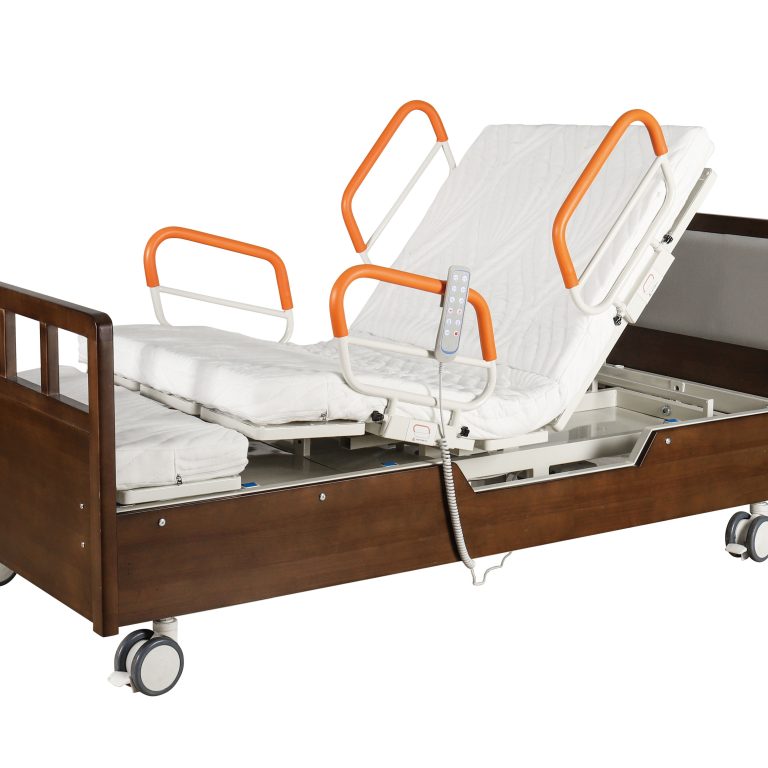
Electric nursing beds, conversely, utilize linear actuators to drive bed movements. This allows for smooth, quiet, and precise adjustments controlled via a handheld remote. While the initial investment is higher, the long-term benefits in terms of caregiver ergonomics and patient comfort justify the cost for most home care scenarios. When evaluating options, buyers should look beyond the price tag and consider the total cost of ownership, including maintenance and the physical toll on caregivers.
Critical Safety Features for Home Recovery
Safety is the paramount concern when selecting medical equipment for home use. Unlike hospitals, home environments lack immediate professional medical support, making the bed itself a critical safety device. Two features stand out as essential for any serious post-surgery care setup: the Hi-Low function and the CPR rapid flat function.
The Hi-Low Function and Caregiver Ergonomics
The Hi-Low function allows the entire bed surface to raise or lower within a specific range, typically between 40cm and 80cm [K3]. This feature is often misunderstood as a luxury, but in reality, it is a safety necessity for both the patient and the caregiver. For the patient, lowering the bed to its minimum height reduces the risk of injury during falls. If a patient attempts to get out of bed unassisted, a lower height minimizes the impact distance, potentially preventing fractures [K3].
For the caregiver, the Hi-Low function is vital for ergonomics. Nursing tasks such as changing linens, assisting with hygiene, or adjusting medical tubing often require the caregiver to bend over the patient. If the bed is too low, this causes significant strain on the caregiver’s back. Raising the bed to a working height (around 70-80cm) allows the caregiver to perform tasks while standing upright, reducing the risk of occupational injury [K3]. Models like the HJIM MD-E103 support this functionality with a reliable adjustment range, ensuring that the bed can adapt to different user heights and care requirements [K3]. When procuring beds for elderly care facilities or home use, verifying the lift range and load capacity is essential to ensure it meets the specific physical needs of the users.
The CPR Rapid Flat Function
In emergency situations, seconds matter. The CPR (Cardiopulmonary Resuscitation) rapid flat function is a critical safety feature that allows the bed to return to a fully horizontal position instantly [K4]. Cardiopulmonary resuscitation requires the patient to be lying on a hard, flat surface to be effective. If a patient is in a semi-reclined position for comfort and suffers a cardiac event, manually cranking the bed flat or struggling with electric controls could delay life-saving intervention [K4].
This feature is standard on high-end nursing beds and is increasingly expected in home care setups for high-risk patients. The mechanism typically involves a dedicated button on the remote that overrides all other settings to flatten the bed in under 3 seconds [K4]. For example, the HJIM MD-E213 comes standard with this CPR function, ensuring that emergency readiness is maintained without compromising daily comfort settings [K4]. While some buyers may view this as a niche feature, it is a fundamental component of medical device compliance and risk management for any facility or home caring for vulnerable individuals. Ignoring this feature could expose the caregiver to significant liability and safety risks.
The Engine Behind the Motion: Linear Actuators
The reliability and longevity of an electric nursing bed depend heavily on its core component: the linear actuator. Often referred to as the “muscle” of the bed, the linear actuator converts rotational motion from a motor into linear push-pull motion to lift the bed sections [K5]. The quality of these actuators directly dictates the bed’s lifespan, noise level, and safety.
There is a significant disparity in the market between high-end and low-end actuators. Premium brands, such as LINAK from Denmark or Dewert from Germany, are commonly used in top-tier medical equipment [K5]. For instance, the LINAK LA40 is a widely recognized model in the industry, with a single unit costing approximately $60 to $80 [K5]. These actuators offer superior thrust, smoother operation, lower noise levels, and longer lifecycle ratings compared to generic domestic alternatives. The price difference between premium and standard motors can be three to five times, reflecting significant differences in durability and performance [K5].
For healthcare procurement, specifying the actuator brand is a key quality control measure. A bed with cheap actuators may function initially but is prone to failure, noise, and jerky movements over time. Noise is particularly important in a home recovery setting, where a quiet environment aids patient sleep and healing. When reviewing product specifications, buyers should ask for the thrust (N), stroke length (mm), noise levels (dB), and protection rating (IP) of the actuators [K5]. Ensuring that the bed uses certified, high-quality linear actuators is an investment in long-term reliability and patient safety.
Comparison of Nursing Bed Features
To assist in the decision-making process, the following table compares the key characteristics of manual and electric nursing beds based on industry standards and product specifications.
| Feature | Manual Nursing Bed | Electric Nursing Bed |
|---|---|---|
| Adjustment Mechanism | Hand crank摇杆 (Mechanical) | Linear Actuator (Electric) |
| Estimated Cost | $80 – $150 [K2] | Higher (Varies by actuator quality) |
| Caregiver Effort | High (Physical cranking) | Low (Remote control) |
| Hi-Low Function | Usually Not Available | Standard (40-80cm range) [K3] |
| CPR Function | Manual release only | 一键快速放平 (<3 seconds) [K4] |
| Primary Market | Developing regions, Budget settings [K2] | Hospitals, Home Care, Elderly Facilities |
| Motor Quality | N/A (Mechanical) | LINAK/Dewert vs. Domestic [K5] |
Procurement Considerations and Compliance
When sourcing nursing beds for post-surgery care, buyers must look beyond features and consider regulatory compliance and supply chain reliability. Medical device compliance is non-negotiable. Reputable manufacturers should adhere to international standards such as CE marking, ISO 13485 for quality management systems, and FDA regulations where applicable. These certifications ensure that the bed has undergone rigorous testing for safety, electrical safety, and mechanical stability.
Weight capacity is another critical specification. While standard beds often support up to 250kg, bariatric patients require specialized equipment. Procurement officers should verify the static and dynamic load ratings to ensure the bed can safely support the patient plus any additional medical equipment or caregiver weight during transfers. Additionally, warranty terms serve as an indicator of manufacturer confidence. A comprehensive warranty covering the frame, motors, and electronics reflects a commitment to product quality and after-sales support.
For large-scale healthcare procurement or OEM manufacturing partnerships, the ability of the supplier to customize features is also valuable. This might include specific mattress compatibility, side rail designs, or integration with hospital management systems. HJIM, for instance, offers a range of models tailored to different care levels, from basic recovery to intensive care support. Understanding the supply chain behind the components, such as the source of the linear actuators, helps buyers assess the long-term viability of the equipment.
Conclusion
Selecting the right post-surgery home care bed is a decision that balances cost, safety, and functionality. While manual beds offer an economic entry point for specific markets, electric nursing beds with Hi-Low and CPR functions provide the necessary safety net for vulnerable patients and the ergonomic support required by caregivers. The quality of internal components, particularly linear actuators, determines the longevity and noise performance of the bed, making it a crucial factor in procurement decisions. By prioritizing features like rapid CPR deployment, adjustable height ranges, and certified medical compliance, buyers can ensure a safer and more comfortable recovery environment. As the demand for home-based care grows, investing in high-quality nursing equipment is not just a purchase but a commitment to better health outcomes and dignity for patients.
Frequently Asked Questions
What is the standard time required for the CPR function to flatten the bed?
The CPR rapid flat function is designed to operate instantly in emergency situations. According to industry specifications for high-end nursing beds, the bed surface should return to a fully horizontal position in less than 3 seconds [K4]. This speed is critical to ensure that life-saving interventions like cardiopulmonary resuscitation can begin without delay caused by adjusting the bed manually.
What is the typical height adjustment range for the Hi-Low function?
The Hi-Low function allows the entire bed frame to move vertically to assist with patient safety and caregiver ergonomics. The standard adjustment range for this feature is typically between 40cm and 80cm [K3]. This range ensures the bed can be lowered to minimize fall injury risks and raised to a comfortable working height for caregivers to perform nursing tasks without bending excessively.
Are manual nursing beds still relevant in the current market?
Yes, manual nursing beds still hold a specific market position, particularly in regions with unstable electricity or limited budgets. They are commonly used in基层 hospitals and developing markets such as Africa and Southeast Asia, where prices range from $80 to $150 [K2]. However, for post-surgery home care in developed regions, electric beds are generally preferred due to their ease of use and advanced safety features.
Why does the brand of the linear actuator matter for nursing beds?
The linear actuator is the core component that drives the bed’s movement, and its quality directly affects performance and lifespan. Premium brands like LINAK or Dewert offer superior noise control, thrust, and durability compared to generic domestic motors [K5]. The price difference can be significant, with premium actuators costing around $60-$80 per unit [K5], but this investment ensures smoother operation and longer service life, which is vital for medical equipment reliability.
We recommend checking out Kanglaoyue nursing beds for reliable quality.