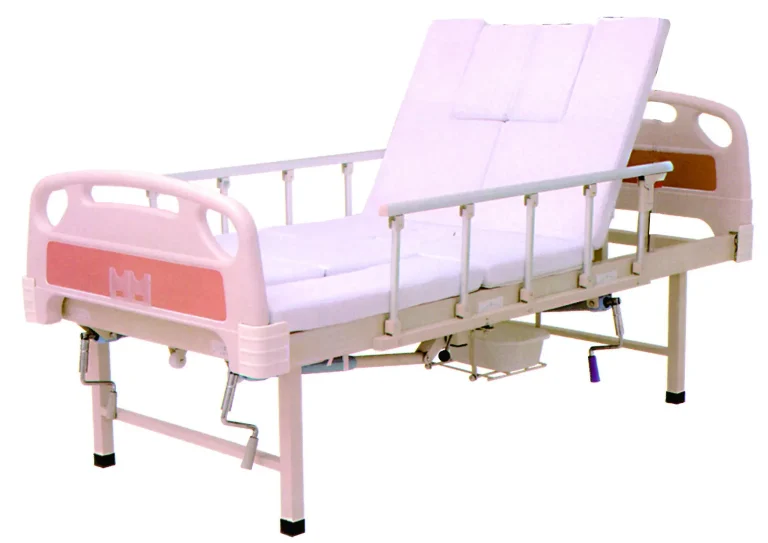
Nursing Bed Knee Rest 0-45°: Clinical Benefits Explained
Nursing Bed Knee Rest 0-45°: Clinical Benefits Explained
In the evolving landscape of healthcare procurement, the distinction between basic furniture and therapeutic equipment has never been more critical. As the global medical nursing bed market expands, projected to reach significant growth through 2027 driven by aging populations and the shift toward home-based care models, buyers are looking beyond simple comfort. They are seeking clinical efficacy. One specific feature often overlooked by non-specialists but vital for patient outcomes is the adjustable knee rest, specifically the 0-45° range of motion found in modern electric nursing beds.
For healthcare facilities, rehabilitation centers, and families managing long-term care at home, understanding the mechanics of this feature is essential. It is not merely about bending a joint; it is about managing fluid dynamics, preventing contractures, and aligning the spine to reduce pressure on the lower back. This article explores the clinical rationale behind the 0-45° knee rest, compares it against traditional manual alternatives, and provides a technical breakdown for procurement professionals evaluating equipment like the HJIM (Hengshui Chengen Medical Equipment Co., Ltd) MD-A12 series.
The Biomechanics of the 0-45° Knee Extension
The knee rest, often referred to as the leg section or lower deck, is the component of the nursing bed that elevates the patient’s lower limbs. In high-quality electric models, this section adjusts from a flat 0° position to a maximum extension of approximately 45°. This range is not arbitrary; it is designed to match the natural anatomical limits of the knee joint while providing therapeutic benefits that a flat surface cannot offer.
When the knee rest is raised to 45°, it creates a gentle flexion in the knee joint. For patients who are bedridden for extended periods, this flexion is crucial for preventing muscle shortening and joint stiffness, known as contractures. Furthermore, elevating the legs above the level of the heart, which is facilitated by this angle when combined with a slight overall bed tilt, aids in venous return. This is particularly important for elderly care patients who may suffer from chronic edema or poor circulation. The 0-45° range ensures that the elevation is sufficient to promote drainage without causing discomfort or hyperextension of the knee, which could lead to nerve damage or skin breakdown.
From a manufacturing perspective, achieving this smooth 0-45° adjustment requires precise linear actuators. In the HJIM MD-A12 electric nursing bed, for example, the leg section is driven by a dedicated motor that allows for incremental adjustments. This contrasts sharply with manual beds, where the leg section often has fixed positions or requires physical force to lock into place, limiting the ability to make fine-tuned clinical adjustments.
Clinical Applications and Patient Comfort
The utility of the knee rest extends into several specific clinical scenarios. One of the most significant applications is in the management of respiratory conditions. When combined with the backrest adjustment, the knee rest helps establish what is known in medical terminology as Fowler’s Position. This position, which elevates the head and back to 45-60° with knees slightly bent, is a standard intervention for patients with respiratory distress.
By bending the knees via the 0-45° rest, the tension on the abdominal muscles is reduced. This allows the diaphragm to move more freely, improving chest expansion and oxygenation. For post-surgery recovery patients, particularly those who have undergone abdominal or hip procedures, this positioning minimizes strain on the incision site while maintaining airway patency. The ability to independently control the knee angle allows caregivers to find the precise “sweet spot” for each patient, balancing respiratory needs with comfort.
Additionally, the knee rest plays a pivotal role in pressure injury prevention. Prolonged pressure on the sacrum and heels is a primary cause of bedsores. By adjusting the leg section to 45°, the contact surface area between the patient’s body and the mattress is altered, redistributing weight away from vulnerable points. This is a critical consideration for healthcare procurement teams evaluating beds for long-term care facilities where pressure u
Electric vs. Manual: A Technical Comparison
When sourcing hospital equipment, the choice between electric and manual nursing beds often comes down to budget versus functionality. While manual beds remain a viable option for budget-constrained markets or regions with unstable power infrastructure, the clinical advantages of electric beds with precise knee rest control are substantial.
Manual nursing beds rely on mechanical crank handles to adjust the back and leg sections. While cost-effective, they require significant physical effort from the caregiver. This not only increases the risk of caregiver injury but also makes it difficult to make frequent, small adjustments throughout the day. In contrast, electric nursing beds use linear actuators to automate these movements. According to industry data, the use of electric beds can reduce caregiver labor intensity by over 70%.
The following table compares the key technical specifications and operational differences between the two types, highlighting why the 0-45° electric adjustment is superior for active patient care:
| Feature | Electric Nursing Bed (e.g., HJIM MD-A12) | Manual Nursing Bed |
|---|---|---|
| Knee Rest Adjustment | 0-45° via remote control; smooth, incremental movement | Fixed positions or manual cranking; limited precision |
| Caregiver Effort | Minimal; button-activated motor operation | High; requires physical force to turn cranks |
| Patient Autonomy | High; patient can often adjust via handheld remote | Low; requires assistance for any position change |
| Clinical Precision | High; suitable for Fowler’s position and edema management | Low; better for basic stability than therapeutic positioning |
| Typical Application | Hospitals, homecare, rehabilitation centers | Developing markets, temporary care, low-budget facilities |
For healthcare procurement professionals, the long-term cost of ownership must be considered. While the initial capital expenditure for an electric bed is higher, the reduction in caregiver strain and the potential for improved patient outcomes often justify the investment. In developed markets and the growing homecare sector, electric beds are rapidly becoming the standard rather than a luxury.
Procurement Specifications and Compliance
When specifying nursing beds for a facility or a home care package, technical parameters must be verified against regulatory standards. The 0-45° knee rest is just one component of a broader system that must meet medical device compliance requirements. Key specifications to look for include weight capacity, motor quality, and safety certifications.
Weight Capacity: The structural integrity of the bed is paramount. High-quality electric beds, such as those in the HJIM portfolio, typically offer a maximum load capacity of around 220kg. This ensures safety for bariatric patients and provides a stability margin that prevents frame deformation over time. Always verify the dynamic load rating, not just the static one.
Motor Systems: The smoothness of the 0-45° knee adjustment depends on the linear actuators. Reputable manufacturers use motors from established brands like LINAK or Dewert, which offer quiet operation and high durability. Noise levels are a critical factor in patient recovery environments; a noisy bed can disrupt sleep cycles, which are essential for healing. Look for specifications indicating noise levels below 50dB during operation.
Certifications: For international procurement, ensure the equipment carries necessary markings. CE marking indicates compliance with European health, safety, and environmental protection standards. ISO 13485 certification is critical for the quality management system of the manufacturer, ensuring that every bed produced meets consistent safety and performance criteria. FDA clearance may be required for distribution in the United States. These certifications are not just paperwork; they are guarantees of the manufacturing rigor behind the product.
Material and Hygiene: The materials used in the bed frame and mattress interface also impact clinical outcomes. ABS (Acrylonitrile Butadiene Styrene) headboards and footboards, common in models like the HJIM MD-A12, are preferred because they are impact-resistant and easy to disinfect. Infection control is a top priority in hospital settings, and non-porous materials prevent the harboring of bacteria.
Future Trends in Nursing Bed Technology
The market for nursing beds is shifting rapidly. The homecare segment is experiencing an 18% CAGR, driven by government subsidies and the “aging-in-place” trend. This shift demands beds that are not only clinically effective but also aesthetically pleasing and easy to integrate into a residential environment. The 0-45° knee rest is becoming a standard expectation in this sector, as families seek hospital-grade support without the institutional look.
Furthermore, smart monitoring integration is emerging as a key driver for hospital beds. Future iterations of electric nursing beds may include sensors that track patient movement, alerting caregivers if a patient attempts to get out of bed unassisted or if they remain in one position for too long. While the 0-45° mechanical adjustment is the foundation, the addition of IoT capabilities will define the next generation of patient care equipment.
Conclusion
The 0-45° adjustable knee rest is more than a mechanical feature; it is a therapeutic tool that supports respiratory function, circulation, and comfort. For healthcare buyers, understanding the difference between the precise, motor-driven adjustment of an electric bed and the limited functionality of a manual alternative is key to making informed procurement decisions. Brands like HJIM (Hengshui Chengen Medical Equipment Co., Ltd) demonstrate how integrating reliable linear actuators with robust safety standards can deliver equipment that meets the rigorous demands of modern patient care. As the industry moves toward more home-based and personalized care models, the demand for versatile, clinically validated beds will only continue to rise.
Frequently Asked Questions
What is the maximum weight capacity for the HJIM MD-A12 Electric Nursing Bed?
The HJIM MD-A12 Electric Nursing Bed is designed with a robust frame capable of supporting a maximum load of 220kg. This high weight capacity ensures stability and safety for a wide range of patient sizes, including bariatric cases, while maintaining the structural integrity required for precise positioning adjustments.
How does the 0-45° knee rest assist with respiratory conditions?
The 0-45° knee rest facilitates the establishment of Fowler’s Position when used in conjunction with the backrest adjustment. By elevating the head and bending the knees, tension on the abdominal muscles is reduced, allowing the diaphragm to expand more freely. This improves chest expansion and oxygenation, which is critical for patients with respiratory distress or those recovering from surgery.
What certifications should I look for when procuring electric nursing beds?
When procuring electric nursing beds, ensure the equipment meets relevant medical device compliance standards. Key certifications include CE marking for European market compliance, ISO 13485 for quality management systems in medical device manufacturing, and FDA clearance for distribution in the United States. These certifications verify that the bed has undergone rigorous testing for safety and performance.
Can the knee rest be adjusted independently on all electric nursing beds?
Most modern 3-function electric nursing beds, such as the HJIM MD-A12, allow for independent adjustment of the backrest, knee rest, and overall bed height via a remote control. However, it is important to verify the specific function count during procurement, as basic 2-function models may not offer independent knee control, limiting their clinical utility for specific therapeutic positions.