How to Inspect a Nursing Bed Factory: Checklist for Buyer Visits
How to Inspect a Nursing Bed Factory: Checklist for Buyer Visits
The global medical nursing bed market is valued at approximately USD 4.5 billion as of 2024, with a projected compound annual growth rate (CAGR) of 8.5% through 2027. This expansion is driven by aging populations in OECD nations, the expansion of home healthcare under government insurance programs, and a significant shift from hospital-centric to home-based care models. For healthcare procurement officers, distributors, and private label brands, identifying a reliable manufacturing partner is critical. A nursing bed is not merely furniture; it is a medical device that directly impacts patient safety, caregiver ergonomics, and clinical outcomes. Visiting a factory is the most effective way to verify capability, but without a structured approach, buyers often miss critical red flags hidden behind polished showrooms.
This guide provides a comprehensive checklist for inspecting a nursing bed factory. It is designed to help you evaluate technical competence, quality control systems, and compliance readiness, ensuring you select a partner capable of meeting the rigorous demands of the global healthcare market.
Understanding the Product Landscape Before You Visit
Before stepping onto the factory floor, you must have a clear understanding of the product categories you are sourcing. The nursing bed market is generally divided into two primary segments: electric nursing beds and manual nursing beds. Each serves distinct market needs and requires different manufacturing capabilities.
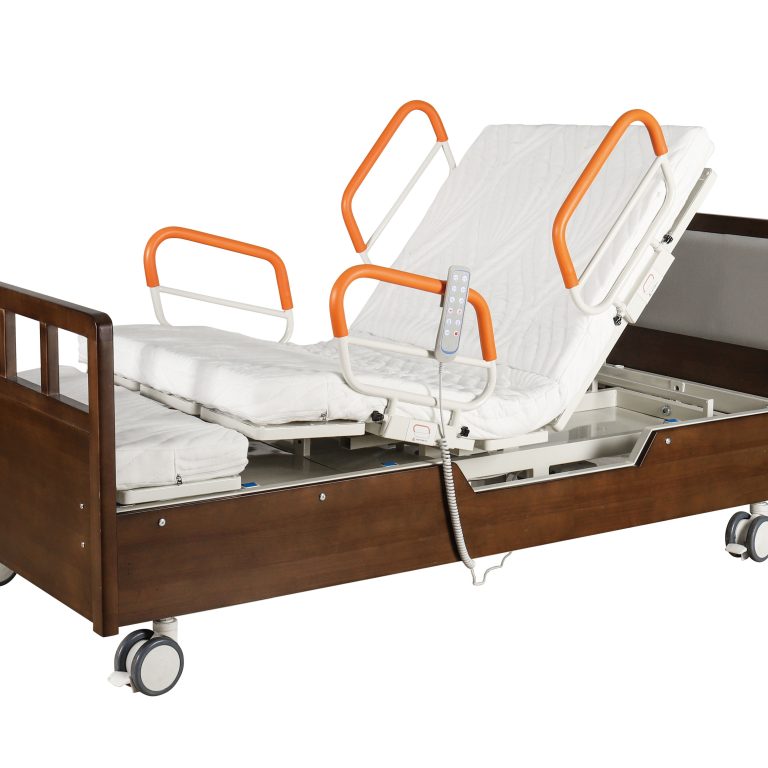
Electric Nursing Beds are the premium segment, utilizing electric linear actuators to adjust the backrest, knee section, and overall height via a remote control or panel. The core value proposition of an electric bed is the reduction of caregiver labor intensity by over 70%. A high-quality electric bed, such as the HJIM MD-A12 model, typically features 3 to 5 functions, allowing for precise positioning like backrest elevation from 0 to 80 degrees and knee lift from 0 to 45 degrees. When inspecting a factory, you are looking for expertise in integrating these motors, managing wiring harnesses, and ensuring the reliability of the control systems. The motors themselves are a key differentiator; premium factories use brands like LINAK or Dewert, while budget-oriented facilities may rely on generic domestic alternatives. Understanding this distinction is vital for aligning the factory’s output with your target market’s price point.
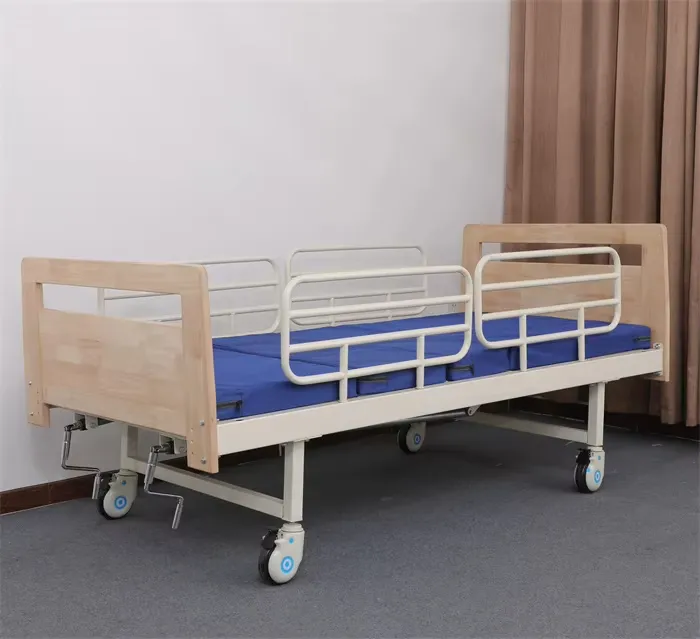
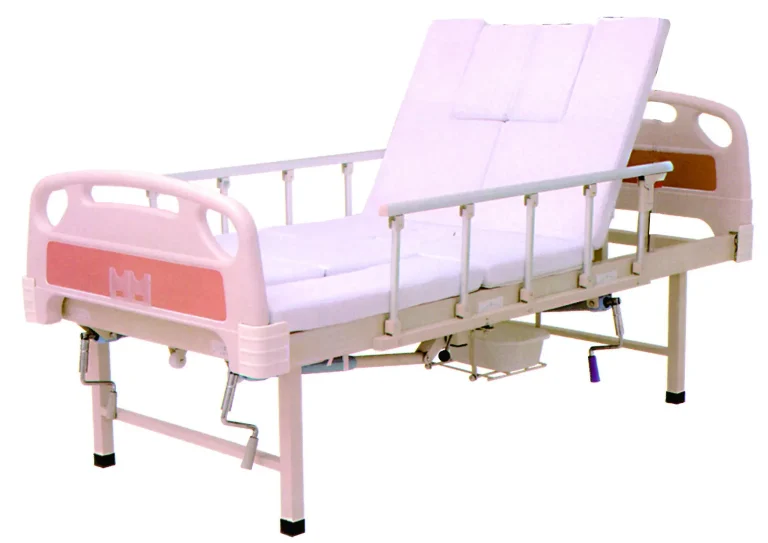
Manual Nursing Beds operate via mechanical hand cranks. While they are being gradually replaced by electric models in developed markets, they remain the主力 (main force) in developing regions such as Africa and Southeast Asia, where power infrastructure can be unstable and budget constraints are tight. A manual bed typically costs between $80 and $150 in the B2B market. The manufacturing focus here is on mechanical durability, ease of assembly, and cost efficiency. If your target market includes these regions, the factory must demonstrate robust supply chain management for steel tubing and mechanical gearboxes, rather than just electronic integration capabilities.
Pre-Visit Preparation: Documentation and Compliance
A factory visit should not be a surprise inspection; it should be a verification of claims made during the qualification phase. Before traveling, request a comprehensive documentation package. This should include copies of all relevant medical device certifications. For the European market, CE marking is non-negotiable, and for the US market, FDA 510(k) clearance or registration is required. Additionally, ISO 13485 certification is the gold standard for quality management systems in the medical device industry. A factory that cannot produce these documents on demand should be immediately disqualified, regardless of how impressive their assembly line looks.
Review their product specification sheets. Look for specific data points such as weight capacity, dimensions, and warranty terms. A reputable manufacturer will provide detailed technical drawings and bill of materials (BOM) for their core models. This transparency indicates a mature engineering process. If the factory is hesitant to share technical details, it may suggest they are assembling generic components without deep engineering oversight, which poses a risk for long-term product reliability and after-sales support.
The Factory Floor Audit: What to Look For
Once on the production line, your observation should shift from paperwork to physical processes. The assembly line reveals the true culture of quality within the organization. Start by observing the incoming material inspection area. Are raw materials like steel tubes, motors, and mattresses being tested upon arrival? You should see calipers, load testers, or sample testing logs. A factory that skips incoming quality control (IQC) is likely to pass defects down the line, resulting in higher warranty claims for you later.
Examine the welding and fabrication stations. Nursing bed frames undergo significant stress, especially when supporting patients with limited mobility who may shift their weight unexpectedly. Look for consistent weld quality—no spatter, no cracks, and proper penetration. If the factory uses robotic welding, ask about their maintenance schedules. If it is manual welding, request to see the welder certifications. Poor welding can lead to structural failure, which is a critical safety liability.
Pay close attention to the assembly of electric beds. This is where complexity increases. Check how the wiring harnesses are routed and secured. Loose wires can cause short circuits or interfere with the mechanical movement of the bed. Ask to see the final testing station. Every electric bed should undergo a functional test before
Quality Control and Regulatory Standards
Quality control (QC) in the nursing bed industry goes beyond visual inspection. It involves rigorous testing protocols that simulate real-world usage. During your visit, ask to see the laboratory or testing room. A competent factory should have equipment for load testing, noise level measurement, and durability cycling. For example, an electric bed motor should be tested for a specific number of cycles (e.g., 5,000 to 10,000 cycles) to ensure it lasts the lifespan of the product. Noise levels are also critical, especially for homecare and hospital settings where patient rest is paramount. A quiet motor indicates high-quality components and proper assembly.
Regulatory compliance is not just about having a certificate; it is about traceability. Ask the factory about their batch tracking system. If a defect is discovered in the field, can they trace the specific batch of motors or steel used in that unit back to the supplier and the production date? This level of traceability is required for medical device recalls and is a hallmark of a mature manufacturer. Furthermore, inquire about their risk management file. Under ISO 14971, medical device manufacturers must identify and mitigate risks associated with their products. A factory that can discuss their risk management process demonstrates a proactive approach to patient safety.
OEM and ODM Capabilities
Most buyers visit factories with the intention of private labeling. Understanding the difference between OEM (Original Equipment Manufacturer) and ODM (Original Design Manufacturer) is crucial for negotiating terms and understanding margins. In an OEM arrangement, the factory produces beds based on your design. In an ODM arrangement, the factory provides the design and production. OBM refers to the factory selling under its own brand. Typically, OEM margins range from 5% to 10%, ODM margins from 10% to 15%, and OBM margins from 20% to 35%.
When evaluating a factory’s OEM/ODM capabilities, ask about their minimum order quantities (MOQs) for custom branding. Can they customize the headboard, footboard, or
Consider the example of HJIM (Hengshui Chengen Medical Equipment Co., Ltd). As a established player in the industry, they offer a range of solutions from standard electric nursing beds to customized ODM projects. When visiting a facility like this, look for their R&D department. Are they innovating, or just copying? A factory that invests in R&D is more likely to provide you with competitive products that meet evolving market needs, such as smart monitoring integration or enhanced caregiver ergonomics.
Comparison of Manufacturing Approaches
To help you evaluate the factory you are visiting, consider the following comparison of manufacturing approaches commonly found in the nursing bed industry.
| Feature | High-End OEM/ODM Factory | Low-Cost Assembly Shop |
|---|---|---|
| Motor Sourcing | Uses branded actuators (LINAK, Dewert) with traceability | Uses generic, unbranded motors with no warranty data |
| Quality Control | 100% functional testing, load testing, ISO 13485 certified | Random sampling, visual inspection only, basic certifications |
| Traceability | Full batch tracking for all components | Limited or no batch tracking |
| R&D Capability | In-house engineering team, custom design support | Reverse engineering, limited customization |
| Typical Margin | ODM 10-15%, OBM 20-35% | OEM 5-10%, highly price competitive |
Post-Visit Evaluation and Next Steps
After leaving the factory, compile your findings into a scoring sheet. Rate the factory on key criteria: technical capability, quality control, compliance, communication, and cost competitiveness. Do not make a decision based solely on price. A lower unit cost can be eroded by high warranty claims,
Finally, ensure that all agreements regarding intellectual property, customization, and quality standards are clearly documented in a contract. The factory visit is the foundation of your partnership, but the contract is the safeguard. By following this checklist, you can minimize risk and build a supply chain that supports your growth in the competitive nursing bed market.
Frequently Asked Questions
What are the key technical specifications to verify for an electric nursing bed?
When inspecting an electric nursing bed, you should verify the number of functions (typically 3 to 5), the range of motion for the backrest (e.g., 0-80°) and knee lift (e.g., 0-45°), and the maximum weight capacity (often 220kg or more). Additionally, check the motor brand, as premium brands like LINAK or Dewert offer better durability and noise control compared to generic alternatives. The remote control should be intuitive, and the bed should include an emergency crank for manual adjustment during power outages.
How do I determine if a factory is suitable for the homecare market versus the hospital market?
The homecare market prioritizes aesthetics, ease of use, and quiet operation, often requiring beds that blend into a residential setting. The hospital market focuses on durability, clinical functionality, and integration with medical equipment. Ask the factory about their product portfolio. If they specialize in heavy-duty beds with IV poles and high load capacities, they are likely hospital-focused. If they offer sleeker designs with lower noise levels and simpler controls, they are better suited for homecare. Refer to market segment data: homecare beds are growing at 18% CAGR, driven by aging-in-place trends, while hospital beds grow at 6% CAGR.
What certifications are mandatory for exporting nursing beds to Europe and the US?
For the European market, CE marking is mandatory, indicating compliance with the Medical Device Regulation (MDR). For the US market, FDA registration and 510(k) clearance are required for most nursing beds classified as medical devices. Additionally, ISO 13485 certification for quality management systems is highly recommended and often required by distributors. Always ask the factory to provide valid certificates and verify them with the issuing bodies, as counterfeit certificates are a risk in the industry.
What is the typical margin structure for OEM, ODM, and OBM models?
In the nursing bed industry, margins vary based on the level of involvement. OEM (producing to buyer’s design) typically yields margins of 5-10%. ODM (factory provides design and production) offers margins of 10-15%. OBM (factory sells under its own brand) commands the highest margins, typically 20-35%. Understanding these structures helps in negotiating pricing and determining the value add of the manufacturer. For example, if a factory offers ODM services, they absorb the R&D cost, which justifies a higher margin compared to a pure OEM arrangement.