China Nursing Bed Manufacturers: Quality Assessment Framework | Clinical Applications #5
China Nursing Bed Manufacturers: Quality Assessment Framework
The global medical nursing bed market is valued at approximately USD 4.5 billion as of 2024, with a projected compound annual growth rate of 8.5% through 2027 [K4]. This expansion is driven by aging populations in OECD nations, the expansion of home healthcare under government insurance programs, and a significant shift from hospital-centric to home-based care models [K4]. For healthcare procurement officers, hospital administrators, and distributors, navigating the landscape of China nursing bed manufacturers requires a structured quality assessment framework. The market is no longer defined solely by price; it is increasingly defined by medical device compliance, caregiver ergonomics, and patient care outcomes.
Among the emerging players in the mid-tier segment, HJIM (Hengshui Chengen Medical Equipment Co., Ltd) represents a category of manufacturers that bridge the gap between budget OEMs and premium global brands. Understanding the technical specifications, regulatory standing, and functional capabilities of these manufacturers is essential for making informed purchasing decisions that ensure long-term value and patient safety.
Understanding the Global Competitive Landscape
The nursing bed industry is stratified into three distinct tiers, each serving different economic and regulatory environments. Recognizing where a manufacturer sits within this hierarchy is the first step in quality assessment [K3].
The Premium tier includes established brands such as Hill-Rom (USA), Paramount Bed (Japan), and Invacare (USA). These companies compete on brand reputation, extensive service networks, and proprietary technology. Their products often command high price points but offer comprehensive warranty support and integrated hospital system compatibility [K3].
The Mid-tier consists primarily of Chinese manufacturers that have achieved CE and FDA certifications. These manufacturers offer a cost advantage while closing the certification gap with premium brands. They are suitable for buyers who require medical device compliance without the premium brand markup. This segment is where quality-focused entities like HJIM operate, providing reliable hospital equipment that meets international standards [K3].
The Budget tier comprises unbranded Chinese OEMs engaged in intense price wars. Margins in this segment are often compressed below 8%, which can lead to compromises in material quality, motor durability, and after-sales support [K3]. While attractive for initial cost savings, procurement from this tier carries higher risks regarding medical certification and long-term reliability.
Electric Versus Manual Nursing Bed Specifications
A fundamental decision in healthcare procurement is choosing between electric and manual nursing beds. This choice impacts caregiver ergonomics, patient comfort, and operational costs.
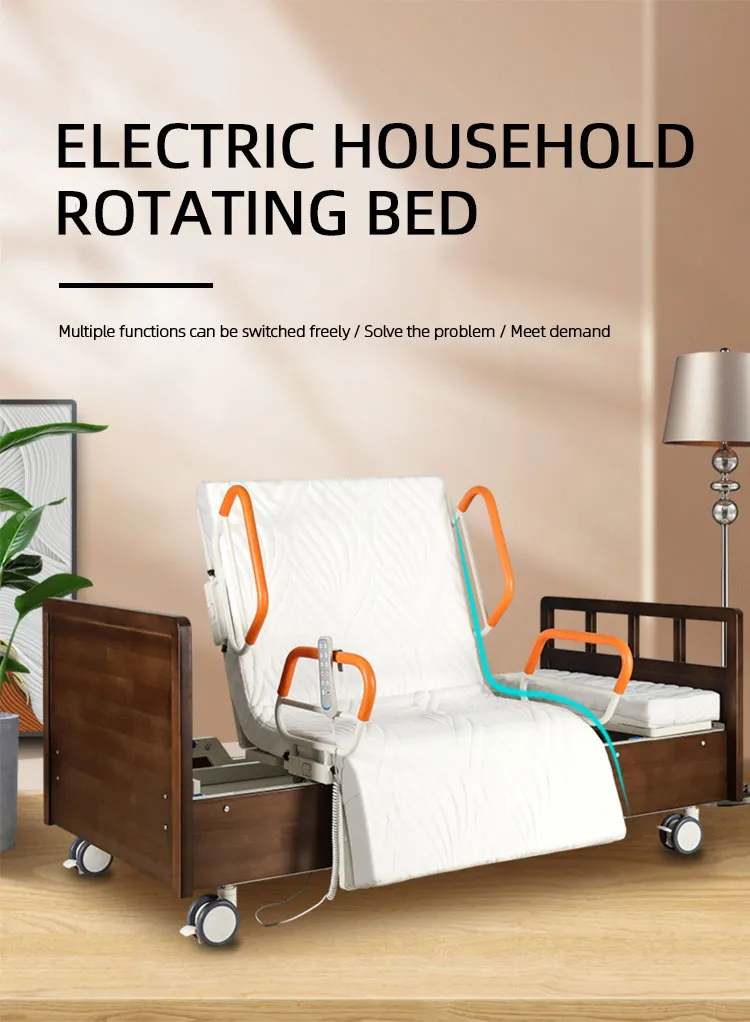
Electric Nursing Beds use linear actuators to provide adjustable positioning for patients with limited mobility. Typically equipped with 2 to 5 motors, these beds allow for backrest, knee, and height adjustments via a remote control [K6]. The core value proposition is labor reduction; electric beds reduce caregiver labor intensity by over 70% compared to manual alternatives [K6]. For example, the HJIM MD-A12 Electric Nursing Bed features 3 functions, allowing backrest adjustment from 0-75 degrees and knee adjustment from 0-45 degrees, with a maximum load capacity of 220kg [K6]. The underlying logic is solving the problem where patients cannot move but require position changes to prevent complications [K1].
Manual Nursing Beds utilize a mechanical crank system operated by a hand摇杆 (hand crank). These beds do not require electricity, making them structurally simple and low-cost [K2]. They remain the主力产品 (main product) in markets such as Africa and Southeast Asia, where power instability or budget constraints are prevalent [K2]. Prices for manual beds typically range from $80 to $150 [K2]. However, as electric bed costs decline, manual beds are being逐步替代 (gradually replaced) in regions with stable infrastructure [K2].
Technical Quality Indicators for Procurement
When evaluating China nursing bed manufacturers, specific technical parameters serve as indicators of build quality and safety. Procurement teams should scrutinize the following components.
Motor Brands and Durability
The quality of the linear actuators determines the lifespan and noise level of an electric nursing bed. Industry-standard motors include LINAK and Dewert, though domestic Chinese motors are also common [K1]. Premium mid-tier manufacturers often specify international motor brands to ensure quiet operation and longevity. Noise levels are a critical observable indicator, as excessive noise can disturb patient rest in hospital wards or home care settings [K1].
Central Brake System
Safety during patient transfer is paramount. A Central Brake System allows a single pedal to lock all four wheels simultaneously [K5]. This system offers dual-mode functionality: directional lock and full lock [K5]. Compared to individual wheel brakes, a central system provides greater stability and significantly reduces the risk of falls during transfers [K5]. This feature is essential for elderly care and mobility assistance scenarios where patient stability is compromised.
Weight Capacity and Structural Integrity
Weight capacity is a non-negotiable safety spec. The HJIM MD-A12, for instance, supports a max load of 220kg [K6]. Procurement officers must verify that the bed frame material and welding quality support the stated capacity without deformation over time. Overloading a bed beyond its rated capacity can lead to mechanical failure and patient injury.
Control Interfaces
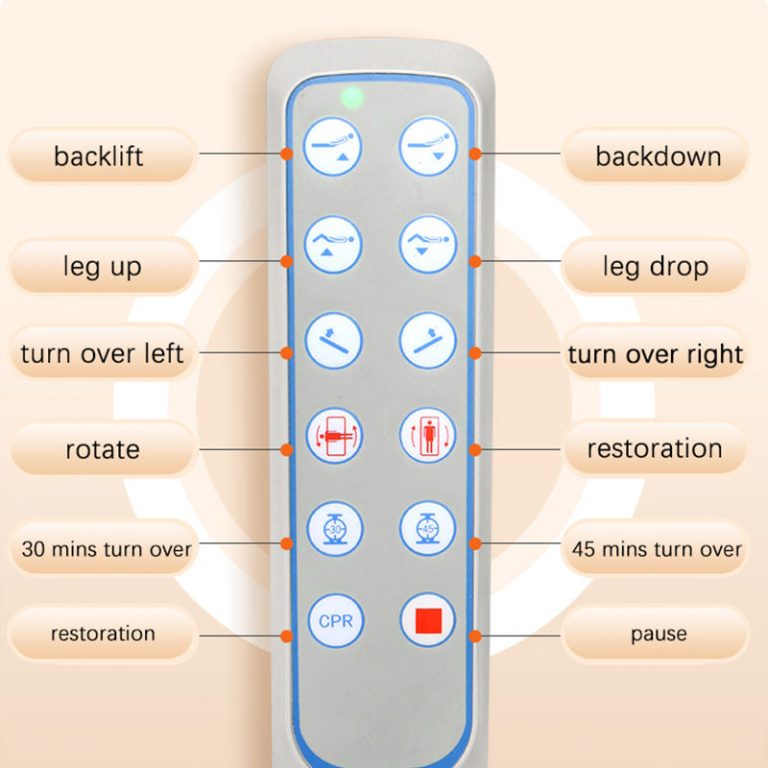
Modern nursing beds should feature intuitive control interfaces. This includes handheld remotes or panel controls that allow patients or caregivers to adjust the bed without physical strain [K1]. The ease of use directly impacts patient independence and caregiver efficiency.
Regulatory Compliance and Medical Certification
For any healthcare procurement, regulatory compliance is the baseline requirement. Manufacturers must demonstrate adherence to international standards to ensure product safety and market access.
CE and FDA Certifications
CE marking indicates conformity with health, safety, and environmental protection standards for products sold within the European Economic Area. FDA registration is required for market entry in the United States. Mid-tier Chinese manufacturers with CE/FDA certifications are positioned to compete globally, whereas unbranded OEMs often lack these credentials [K3].
ISO 13485
ISO 13485 is the specific standard for quality management systems in the medical device industry. Manufacturers adhering to this standard demonstrate a commitment to consistent design, development, production, and delivery of medical devices. When sourcing from hjim.com or similar suppliers, verifying ISO 13485 certification is a key step in validating the manufacturer’s quality management processes.
Market Application and Regional Considerations
The suitability of a nursing bed depends heavily on the intended application environment. Different regions and care settings have distinct requirements.
Hospital Wards and Rehabilitation Centers
In clinical settings, durability and advanced functionality are priority. Electric nursing beds with multiple functions (backrest, leg, height) are standard to facilitate medical procedures and patient recovery [K1]. The ability to integrate with hospital information systems or have robust warranty support is also critical.
Home Healthcare and Elderly Care
With the shift towards home-based care models, there is growing demand for nursing beds that are easy to assemble and operate in residential spaces [K4]. Electric beds are preferred here to reduce the physical burden on family caregivers. Features like ABS detachable headboards, as seen in the HJIM MD-A12, facilitate cleaning and maintenance in home environments [K1].
Developing Markets
In regions with unstable power grids or limited budgets, manual nursing beds remain a viable solution [K2]. They provide basic position adjustment without reliance on electricity. However, buyers should be aware that these markets are evolving, and electric options are becoming more accessible as costs decrease [K2].
Comparison of Nursing Bed Types
The following table summarizes the key differences between electric and manual nursing beds to aid in procurement decision-making.
| Feature | Electric Nursing Bed | Manual Nursing Bed |
|---|---|---|
| Operation Method | Electric linear actuators with remote control [K1] | Hand crank mechanical system [K2] |
| Labor Intensity | Reduces caregiver effort by 70%+ [K6] | Requires physical effort from caregiver [K2] |
| Cost Range | Higher initial investment | $80-150 USD [K2] |
| Primary Application | Hospitals, Home Care, Rehab Centers [K1] | 基层 Hospitals, Budget Markets [K2] |
| Power Dependency | Requires electricity | None required [K2] |
| Typical Features | Backrest 0-80°, Leg 0-45° [K1] | Basic height adjustment |
Conclusion
Selecting the right nursing bed manufacturer requires balancing cost, compliance, and clinical functionality. The global market is growing, driven by demographic shifts and the expansion of home healthcare [K4]. While premium brands offer established reliability, mid-tier Chinese manufacturers with proper certifications provide a compelling value proposition for cost-conscious buyers who cannot compromise on safety.
Key assessment criteria include motor quality (LINAK/Dewert vs. domestic), safety features like central brake systems [K5], and regulatory compliance (CE, FDA, ISO 13485). For buyers seeking a balance of quality and value, manufacturers like HJIM (Hengshui Chengen Medical Equipment Co., Ltd) demonstrate how mid-tier producers are closing the gap with premium competitors through certified products and robust technical specifications [K3]. Ultimately, the goal of healthcare procurement is to secure equipment that enhances patient care while ensuring caregiver ergonomics and operational sustainability.
What motor brands are typically used in quality electric nursing beds?
Quality electric nursing beds often utilize established motor brands such as LINAK or Dewert to ensure durability and low noise levels [K1]. However, domestic Chinese motors are also common in the market. When assessing a manufacturer, checking the motor brand specification is a key observable indicator of build quality [K1].
What is the standard weight capacity for modern nursing beds?
Modern nursing beds typically feature a weight capacity of at least 220kg to accommodate a wide range of patient sizes safely [K6]. This specification is critical for structural integrity and patient safety, ensuring the bed frame and actuators can handle maximum load without failure [K6].
How does a central brake system improve patient safety?
A central brake system allows a single pedal to lock all four wheels simultaneously, providing greater stability than individual wheel brakes [K5]. This reduces the risk of falls during patient transfers and ensures the bed remains stationary when needed, which is crucial for mobility assistance and elderly care [K5].
What certifications should I look for when sourcing from China?
For international procurement, manufacturers should hold CE and FDA certifications to demonstrate compliance with health and safety standards [K3]. Additionally, ISO 13485 certification indicates a robust quality management system specific to medical devices. Mid-tier manufacturers with these credentials are better positioned to meet global regulatory requirements than unbranded OEMs [K3].