Nursing Bed Safety Features: Side Rails, Brakes, and Emergency Controls
Nursing Bed Safety Features: Side Rails, Brakes, and Emergency Controls
When selecting nursing beds for healthcare facilities or home care environments, safety features are not optional extras—they are fundamental requirements that directly impact patient outcomes and caregiver efficiency. Modern nursing beds incorporate multiple safety systems designed to prevent falls, enable rapid emergency response, and ensure stable positioning during care procedures. Understanding these features helps healthcare procurement teams make informed decisions that align with regulatory standards and patient needs.
Side Rails: Protection and Accessibility
Side rails serve as the first line of defense against patient falls, particularly for individuals with mobility limitations or cognitive impairments. Contemporary designs have evolved beyond simple metal bars to incorporate adjustable heights, partial rail configurations, and integrated safety mechanisms. Full-length rails provide maximum protection for high-risk patients, while half-rails offer easier access for those who can transfer independently but still require occasional support.
Material selection significantly impacts both safety and comfort. Stainless steel rails provide durability and easy sanitation, while padded rail covers reduce injury risk during accidental contact. Many models now feature quick-release mechanisms that allow caregivers to adjust rail positions without tools—critical during emergency situations where seconds matter. The HJIM MD-A12 electric nursing bed exemplifies this approach with its ABS removable headboard and adjustable side rail system that accommodates various patient sizes and care scenarios.
Regulatory compliance remains essential when evaluating side rail systems. Beds intended for hospital use typically require CE marking and ISO 13485 certification, while those for home care may need FDA clearance depending on regional requirements. Healthcare facilities should verify that all safety features meet local medical device regulations before procurement.
Braking Systems: Stability and Control
Effective braking systems prevent unintended bed movement during patient transfers, repositioning, or emergency procedures. Traditional individual wheel brakes require caregivers to engage each caster separately—a time-consuming process that increases fall risk during urgent situations. Modern central braking systems address this limitation through single-pedal operation that locks all four wheels simultaneously.
The central brake system represents a significant advancement in nursing bed safety. As documented in industry specifications, these systems offer dual-mode functionality: directional lock that permits controlled movement in specific directions while preventing lateral drift, and full lock that completely immobilizes the bed. This design reduces caregiver workload while enhancing patient security during critical care moments.
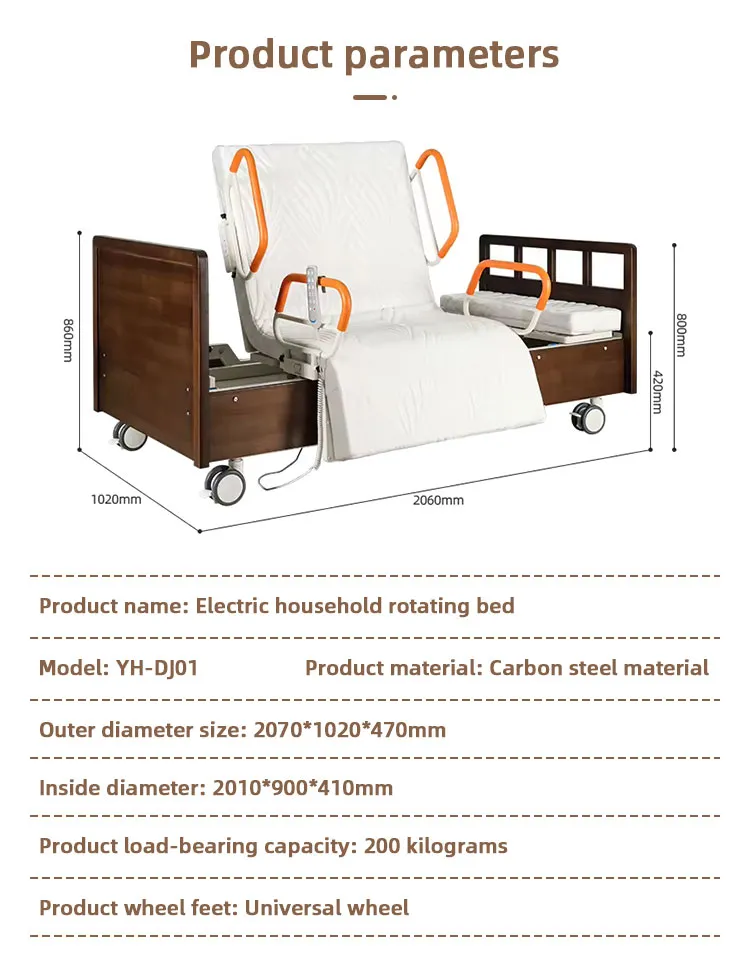
Brake performance should be evaluated against specific operational requirements. Hospital environments demand brakes that function reliably after thousands of cycles, while home care settings prioritize ease of use for non-professional caregivers. Weight capacity ratings directly impact braking effectiveness—beds rated for 250kg require more robust braking mechanisms than those designed for 150kg maximum loads. HJIM’s product specifications consistently include detailed weight capacity information to support appropriate selection.
Emergency Controls: Rapid Response Capabilities
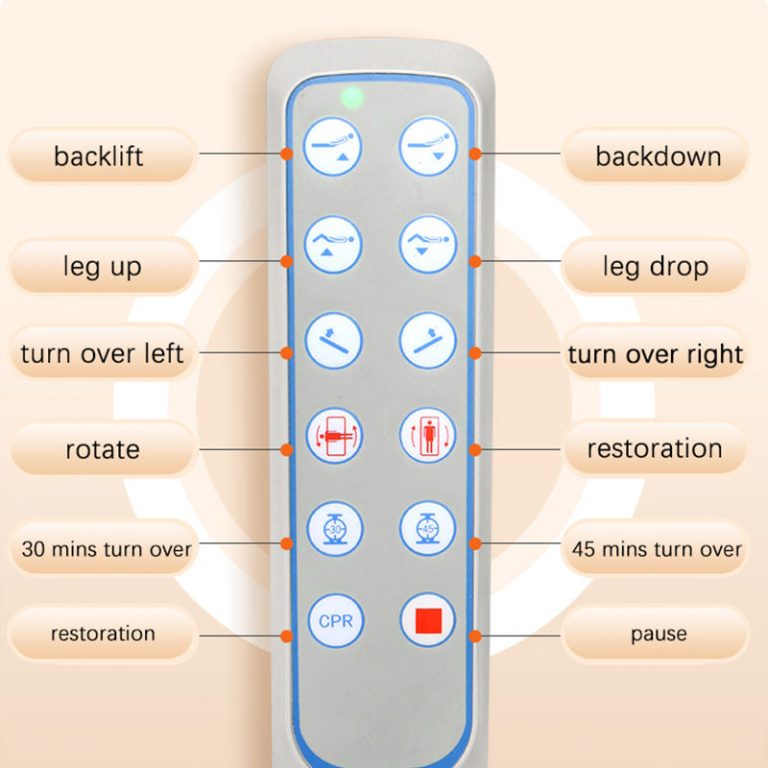
Emergency control systems enable immediate bed repositioning during medical crises. The CPR quick release function stands out as a critical safety feature, allowing caregivers to flatten the bed surface within three seconds from any position. This capability proves essential during cardiac events when effective chest compressions require a firm, flat surface—traditional manual adjustment methods simply cannot achieve the necessary speed.
Modern emergency controls extend beyond mechanical releases to incorporate smart monitoring systems. IoT-enabled beds can now detect unusual patient movements and trigger automatic alerts to nursing stations. Some advanced models integrate with hospital communication systems to provide real-time bed status updates during emergency responses. These technological enhancements complement rather than replace fundamental mechanical safety features.
Voice control integration represents an emerging trend in emergency response systems. When combined with smart home platforms like Alexa or Google Home, caregivers can issue verbal commands to adjust bed positions during emergencies—particularly valuable when hands are occupied with other critical tasks. However, these systems should always maintain manual override capabilities to ensure functionality during power outages or system failures.
Manual Versus Electric Nursing Beds: Safety Feature Comparison
Choosing between manual and electric nursing beds requires careful evaluation of safety feature availability against operational requirements and budget constraints. While electric models offer superior convenience and advanced safety systems, manual beds remain viable options in specific contexts where power reliability or cost factors dominate decision-making.
| Safety Feature | Manual Nursing Beds | Electric Nursing Beds |
|---|---|---|
| Position Adjustment | Requires manual cranking; slower response time | Remote-controlled instant adjustment; supports rapid repositioning |
| CPR Quick Release | Generally unavailable | Standard feature on most models (e.g., HJIM MD-E213) |
| Braking Systems | Individual wheel brakes common | Central braking systems increasingly standard |
| Monitoring Capabilities | Limited to basic mechanical indicators | IoT integration for vital signs and position monitoring |
| Power Dependency | Operational during power outages | Requires backup power for full functionality |
| Typical Price Range | $80-150 (global market data) | $300-800 depending on features |
The global nursing bed market, valued at approximately USD 4.5 billion in 2024 with an 8.5% projected CAGR through 2027, reflects growing demand for advanced safety features. Aging populations in OECD nations and expansion of home healthcare programs drive adoption of electric models with comprehensive safety systems. However, manual beds maintain significant market presence in regions with unstable power infrastructure or limited healthcare budgets, particularly across Africa and Southeast Asia.
Implementation Considerations for Healthcare Facilities
Successful integration of nursing bed safety features requires attention to training, maintenance, and environmental factors. Caregivers must receive thorough instruction on emergency control operation—familiarity with CPR release mechanisms and central braking systems directly impacts response effectiveness during critical incidents. Regular maintenance schedules should include brake system testing and rail mechanism inspection to ensure continued reliability.
Environmental adaptations may be necessary depending on care setting. Home care environments often require quieter operation than hospital settings, making noise levels an important selection criterion for electric models. Facility layout influences optimal bed dimensions—narrower hallways may necessitate compact models without compromising safety feature availability. Power infrastructure assessment determines whether electric models require backup systems or if manual alternatives better suit operational realities.
Procurement decisions should balance immediate safety requirements against long-term operational costs. While electric beds command higher initial investment, their reduced caregiver workload and enhanced patient outcomes often justify the expense through improved care efficiency. Healthcare procurement teams should evaluate total cost of ownership including maintenance requirements, expected lifespan, and potential liability implications of inadequate safety features.
Future Developments in Nursing Bed Safety
Industry trends point toward increasingly sophisticated safety integration. Predictive maintenance systems using sensor data to monitor motor and actuator health represent the next evolution in preventive safety measures. These systems can identify potential failures before they occur, reducing unexpected downtime during critical care periods.
AI-powered fall prevention systems are emerging to complement traditional physical restraints. Smart sensors can detect unusual patient movement patterns and alert caregivers before falls occur, enabling proactive intervention. When combined with automated bed positioning adjustments, these systems create layered safety approaches that address both prevention and response.
Regulatory frameworks continue evolving to keep pace with technological advancements. Medical device compliance requirements increasingly address software functionality and data security alongside traditional mechanical safety standards. Manufacturers like HJIM maintain active engagement with regulatory bodies to ensure their products meet emerging requirements while delivering practical safety benefits to end users.
Conclusion
Comprehensive safety features in nursing beds represent non-negotiable elements of quality patient care. Side rails, braking systems, and emergency controls work together to create protective environments that support both patient dignity and caregiver effectiveness. The choice between manual and electric models should reflect specific operational contexts rather than default assumptions about technology superiority—each has appropriate applications depending on power reliability, budget constraints, and care requirements.
Healthcare facilities must prioritize safety feature evaluation during procurement processes, verifying that selected models meet relevant certifications and provide adequate functionality for their patient populations. Regular staff training and maintenance protocols ensure these safety systems remain operational when needed most. As technology continues advancing, staying informed about emerging safety innovations enables healthcare providers to enhance patient protection while optimizing operational efficiency.
Frequently Asked Questions
What certifications should nursing beds meet for hospital use?
Nursing beds intended for hospital environments typically require CE marking and ISO 13485 certification to demonstrate compliance with European medical device regulations and quality management standards. In North American markets, FDA clearance may be necessary depending on the specific classification of the bed’s safety features. Healthcare procurement teams should verify that manufacturers provide complete certification documentation before finalizing purchases.
How do central braking systems improve patient safety compared to individual wheel brakes?
Central braking systems allow caregivers to lock all four wheels simultaneously with a single pedal operation, significantly reducing the time required to secure the bed during emergency situations. Individual wheel brakes require engaging each caster separately, which delays bed stabilization and increases fall risk during patient transfers. The dual-mode functionality of central systems—providing both directional control and full immobilization—offers greater versatility for different care scenarios.
What is the typical response time for CPR quick release mechanisms?
Industry-standard CPR quick release systems are designed to flatten the bed surface within three seconds from any position. This rapid response capability proves critical during cardiac emergencies when effective chest compressions require immediate access to a firm, flat surface. Models like the HJIM MD-E213 feature bedside release levers that enable one-hand operation, further reducing response time during critical situations.
How do weight capacity ratings affect nursing bed safety features?
Weight capacity ratings directly influence the robustness of safety features including braking systems, side rail strength, and frame integrity. Beds rated for higher weight capacities require more powerful braking mechanisms to prevent unintended movement, stronger rail materials to withstand increased forces during patient contact, and reinforced frames to maintain structural stability under heavier loads. Procurement decisions should match weight capacity ratings to anticipated patient populations with appropriate safety margins.