Best Nursing Beds of 2026: Top 10 Rankings for Home & Hospital Care
Best Nursing Beds of 2026: Top 10 Rankings for Home & Hospital Care
The global medical nursing bed market is valued at approximately USD 4.5 billion as of 2024, with a projected compound annual growth rate of 8.5% through 2027 [K3]. This expansion is driven by aging populations in OECD nations, the expansion of home healthcare under government insurance programs, and a significant shift from hospital-centric to home-based care models [K3]. For healthcare procurement officers, facility managers, and families seeking elderly care solutions, selecting the right nursing bed is a critical decision that impacts patient safety, caregiver ergonomics, and long-term operational costs.
In 2026, the market offers a diverse range of hospital equipment solutions, from basic manual units to smart IoT-enabled beds. This article provides a comprehensive ranking of the top nursing bed configurations available this year, analyzing technical specifications, market segments, and regulatory compliance to help you make an informed healthcare procurement decision.
Understanding Nursing Bed Types: Manual vs. Electric
The fundamental choice in nursing bed selection lies between manual and electric mechanisms. Each serves distinct market segments and budget constraints.
Manual Nursing Beds
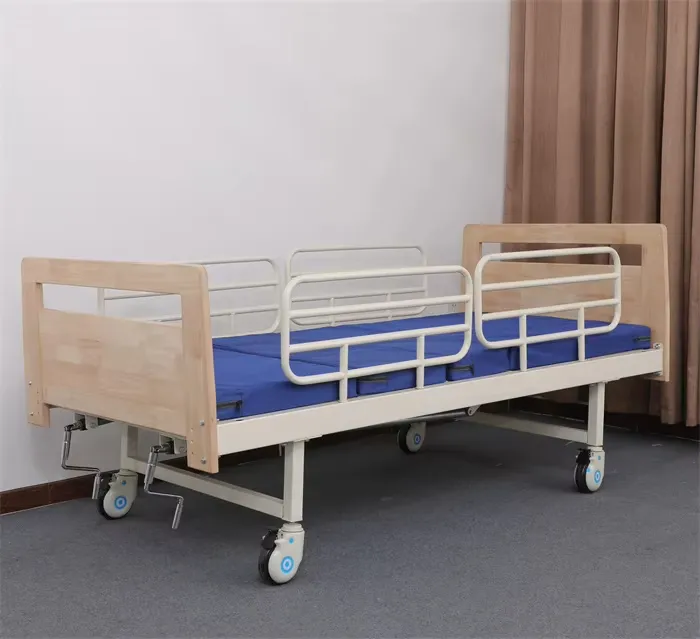
A manual nursing bed uses mechanical crank mechanisms to adjust the bed surface angles. It is defined by its simplicity and lack of electrical dependency [K1]. These beds are the most economic choice, particularly in regions with unstable power grids or strict budget constraints [K1]. Industry examples show that manual beds remain the主力 product in Africa and Southeast Asia, with prices ranging from $80 to $150 [K1]. They provide basic positioning functions suitable for基层 hospitals and developing markets [K1]. However, they require physical effort from caregivers to adjust the patient’s position, which can lead to fatigue over time.
Electric Nursing Beds
An electric nursing bed uses linear actuators to replace manual cranks, allowing adjustments via a remote control or panel [K2]. This technology solves the core problem of patients who cannot move independently but require frequent position changes to prevent complications [K2]. By reducing labor intensity for caregivers by over 70%, electric beds have become a basic configuration in many countries, not merely a luxury [K2]. A prime industry example is the HJIM MD-A12 Electric Nursing Bed, which features 3 functions including backrest adjustment from 0-80 degrees and leg adjustment from 0-45 degrees [K2]. These beds are standard in hospital wards, nursing homes, and home care settings [K2].
Top 10 Nursing Bed Configurations for 2026
Based on market growth rates and technological adoption, we have ranked the top 10 nursing bed configurations available for procurement in 2026. This list prioritizes patient care outcomes, caregiver ergonomics, and regulatory compliance.
| Rank | Configuration Type | Key Features | Best Use Case |
|---|---|---|---|
| 1 | 5-Function Electric Bed | Back, knee, height, tilt, CPR release | ICU and Critical Care |
| 2 | 3-Function Electric Bed (HJIM MD-A12) | Back 0-80°, Leg 0-45°, Height adjust | General Ward & Home Care |
| 3 | Smart IoT-Enabled Bed | Remote monitoring, vitals tracking | Remote Patient Monitoring |
| 4 | Bariatric Electric Bed | Weight capacity up to 350kg | Obesity Care Units |
| 5 | Low-High Electric Bed | Minimum height for fall prevention | Geriatric Care Facilities |
| 6 | Rehabilitation Electric Bed | Trendelenburg positioning | Physical Therapy Centers |
| 7 | Manual Crank Bed (Budget) | 3-function manual adjustment | Developing Markets |
| 8 | Anti-Fall Smart Bed | AI-powered exit alarms | Dementia Care Units |
| 9 | Pediatric Nursing Bed | Smaller dimensions, safety rails | Children’s Hospitals |
| 10 | Portable Folding Bed | Lightweight, easy transport | Home Hospice Care |
The HJIM MD-A12 ranks highly for general care due to its balance of functionality and cost-effectiveness. It supports a maximum load of 220kg and utilizes ABS detachable headboards for easy cleaning [K2]. For high-end procurement, smart beds with IoT integration are rising rapidly, allowing remote monitoring of patient vitals and bed position via WiFi or 4G [K5].
Key Technical Specifications for Procurement
When evaluating hospital equipment, specific technical parameters determine the longevity and safety of the nursing bed. Understanding the underlying components is essential for healthcare procurement specialists.
Linear Actuators
The motor that converts rotational motion into linear push/pull to raise bed sections is known as a linear actuator [K7]. Top brands in the industry include Linak (Denmark) and Dewert (Germany), known for silent operation below 45dB and IPX4 water resistance [K7]. Key specifications to verify include stroke length (150-300mm), force (4000-8000N), and duty cycle (10% at full load) [K7]. High-quality actuators ensure smooth positioning without disturbing patient sleep.
Weight Capacity and Dimensions
Weight capacity is a critical safety metric. Standard electric beds often support up to 220kg, while bariatric models extend significantly higher [K6]. Dimensions must align with room constraints, especially in home care settings where space is limited. Always verify the bed frame material and weld quality to ensure structural integrity under maximum load.
Medical Certification and Compliance
Regulatory standards are non-negotiable in medical device compliance. Procurement officers must ensure beds meet CE marking, ISO 13485 for quality management, and FDA 510(k) clearance where applicable. These certifications guarantee that the hospital equipment has undergone rigorous testing for electrical safety and mechanical reliability.
Technology Trends Shaping 2026
The nursing bed industry is undergoing a digital transformation. Several technology trends are defining the next generation of patient care furniture [K5].
- IoT Integration: Remote monitoring of patient vitals, bed position, and weight via WiFi/4G allows caregivers to track status without constant physical checks [K5].
- Smart Anti-Fall: Bed exit alarms with AI-powered false positive reduction enhance safety for elderly care patients prone to wandering [K5].
- Voice Control: Integration with smart home systems like Alexa or Google Home enables hands-free operation for patients with limited mobility [K5].
- Predictive Maintenance: Motor and actuator health monitoring via sensor data helps facilities schedule repairs before failures occur, reducing downtime [K5].
These innovations are particularly relevant for the homecare beds segment, which is experiencing an 18% CAGR driven by the silver economy and aging-in-place trends [K4].
Procurement Guide for Healthcare Facilities
For healthcare procurement teams, selecting the right supplier involves more than just comparing prices. OEM manufacturing capabilities and after-sales support are crucial.
Supplier Evaluation
When sourcing from manufacturers like HJIM (Hengshui Chengen Medical Equipment Co., Ltd), verify their production capacity and quality control processes. Request documentation for medical certification and warranty terms. A reliable supplier should offer customization options for bed dimensions and control interfaces to match specific facility needs.
Cost vs. Value
While manual beds offer a lower upfront cost, electric beds provide better long-term value by reducing caregiver strain and improving patient outcomes. In developed markets, the shift from hospital-centric to home-based care models favors electric solutions [K3]. However, for budget-constrained projects in developing regions, manual beds remain a viable option with a 3% CAGR in those specific markets [K4].
Conclusion
Selecting the best nursing bed for 2026 requires a balance of technical specifications, regulatory compliance, and market trends. Whether choosing a basic manual unit for budget-conscious projects or a smart IoT-enabled electric bed for advanced patient care, the decision should prioritize safety and ergonomics. The HJIM MD-A12 and similar electric models represent the standard for modern home and hospital care, offering reliable performance with features like remote control adjustment and high weight capacity [K2]. As the global market continues to grow, investing in certified, technology-forward nursing beds will ensure better outcomes for patients and caregivers alike.
Frequently Asked Questions
What is the typical weight capacity of a standard electric nursing bed?
Standard electric nursing beds typically support a maximum load of around 220kg. For example, the HJIM MD-A12 model is rated for a max load of 220kg, ensuring safety for most adult patients [K6]. Bariatric models are available for higher weight requirements.
How quiet are the motors used in modern electric nursing beds?
High-quality linear actuators from top brands like Linak or Dewert operate at noise levels below 45dB [K7]. This silent operation is crucial for maintaining a restful environment in hospital wards and home care settings.
What certifications should I look for when purchasing nursing beds?
Procurement officers should verify CE marking, ISO 13485 for quality management systems, and FDA 510(k) clearance where applicable. These certifications ensure medical device compliance and electrical safety standards are met.
Can nursing beds be integrated with smart home systems?
Yes, newer technology trends include voice control integration with smart home systems such as Alexa and Google Home [K5]. This allows patients to adjust bed positions using voice commands, enhancing mobility assistance for those with limited hand function.