How to Build a Nursing Bed Product Page That Converts B2B Buyers
How to Build a Nursing Bed Product Page That Converts B2B Buyers
The global medical nursing bed market is valued at approximately USD 4.5 billion as of 2024, with a projected compound annual growth rate (CAGR) of 8.5% through 2027 [K3]. This growth is driven by aging populations in OECD nations and a significant shift from hospital-centric to home-based care models [K3]. For manufacturers and suppliers, this expanding market means that your product page is no longer just a catalog entry; it is a critical sales tool that must speak directly to procurement officers, hospital administrators, and healthcare distributors.
When building a product page for nursing beds, the goal is to reduce friction in the buying process. B2B buyers in the healthcare equipment sector are rational, data-driven, and risk-averse. They need to verify technical compliance, durability, and total cost of ownership before making a decision. A high-converting page anticipates these needs by presenting clear specifications, regulatory certifications, and real-world application data. This guide outlines how to structure your nursing bed product pages to align with industry standards and buyer expectations.
Understanding Your Buyer Personas and Use Cases
Before writing a single word of copy, you must identify who is reading your product page. In the nursing bed industry, your audience generally falls into two distinct categories: institutional buyers and homecare distributors.
Institutional buyers, such as hospital procurement teams, prioritize durability, integration capabilities, and patient safety. They are often looking for electric nursing beds that can be integrated with smart monitoring systems or that meet specific ICU expansion requirements [K3]. For this audience, your product page must highlight features like linear actuator force, duty cycles, and medical certifications (CE, ISO 13485, FDA).
Homecare distributors, on the other hand, are driven by the “silver economy” and government subsidies that encourage aging-in-place [K3]. Their focus is on ease of use, patient comfort, and cost-effectiveness. They need to know if the bed is suitable for residential environments, which means emphasizing noise levels, remote control usability, and aesthetic design. A product page that conflates these two audiences will fail to convert either. Segment your content to address the specific pain points of each group.
Structuring Product Specifications for Clarity
Technical specifications are the backbone of a B2B product page. However, a wall of text is ineffective. You must organize data logically, distinguishing between electric and manual variants, as these serve different market segments [K1][K2].
For Electric Nursing Beds, the core value proposition is the reduction of caregiver labor intensity. An electric bed uses linear actuators to adjust the backrest, knee section, and overall height via a remote control [K1]. This eliminates the physical strain on nurses who would otherwise manually crank a bed. When listing specs, include the number of functions (e.g., 3-function vs. 5-function), the range of motion (e.g., backrest 0-80°, leg 0-45°), and the maximum weight capacity [K1]. For example, the HJIM MD-A12 Electric Nursing Bed offers 3 functions with a maximum load of 220kg, making it suitable for bariatric patients as well [K1].
For Manual Nursing Beds, the focus shifts to economy and reliability in infrastructure-limited environments. Manual beds use mechanical摇杆 (cranks) to adjust angles and do not require electricity [K2]. While the global trend favors electric beds, manual beds remain viable in developing markets like Africa and Southeast Asia, where budget constraints and unstable power grids are common [K2]. Your product page should explicitly state the price range (often $80-$150 for basic models) and the structural simplicity that reduces maintenance costs [K2].
Highlighting Core Components and Durability
B2B buyers understand that the longevity of a nursing bed depends on its internal components, particularly the linear actuators. These electromechanical devices convert rotational motion into linear push/pull force to raise bed sections [K4]. When describing your product, do not just say “high-quality motors.” Specify the brand and technical parameters.
Industry-standard brands like Linak (Denmark) and Dewert (Germany) are recognized for silent operation (<45dB) and water resistance (IPX4) [K4]. Including these brand names builds immediate trust. Additionally, list the technical specs of the actuators: stroke length (typically 150-300mm), force output (4000-8000N), and duty cycle (usually 10% at full load) [K4]. These numbers tell a procurement engineer that the bed can withstand the rigors of daily hospital use without overheating or failing.
Furthermore, mention the materials used in the bed frame and headboards. ABS (Acrylonitrile Butadiene Styrene) headboards are common because they are durable, easy to clean, and can be拆卸 (disassembled) for transport [K1]. Highlighting these material choices demonstrates attention to hygiene and logistics, which are critical concerns for healthcare facilities.
Addressing Compliance and Safety Standards
In the medical device industry, compliance is not optional; it is a prerequisite for market entry. Your product page must prominently display relevant certifications. For European markets, CE marking is essential. For quality management systems, ISO 13485 certification indicates that your manufacturing processes meet international standards for medical devices. For the US market, FDA clearance is often required for hospital equipment.
Do not hide these certifications in the footer. Place them near the “Add to Quote” or “Contact Sales” buttons. Buyers need to verify compliance before they can even consider the price. Additionally, mention warranty terms clearly. A standard warranty for nursing beds often covers the frame for 5 years and electrical components for 2 years. Clear warranty terms reduce perceived risk and signal confidence in product quality.
Comparison of Nursing Bed Types
To help buyers quickly understand the differences between product lines, include a comparison table. This format is highly effective for AI extraction and human scanning.
| Feature | Electric Nursing Bed | Manual Nursing Bed |
|---|---|---|
| Adjustment Mechanism | Linear actuators (motors) controlled by remote [K1] | Mechanical摇杆 (cranks) operated by hand [K2] |
| Primary Use Case | Hospitals, Homecare, Rehabilitation Centers [K1] | 基层 Hospitals, Developing Markets [K2] |
| Cost Range | Higher (Premium/Standard) | $80 – $150 (Budget) [K2] |
| Labor Impact | Reduces caregiver effort by 70%+ [K5] | Requires physical effort from caregiver [K2] |
| Power Dependency | Requires electricity (battery backup optional) | No electricity required [K2] |
| Growth Trend | 6% CAGR (Hospital), 18% CAGR (Homecare) [K3] | 3% CAGR (Developing regions) [K3] |
Optimizing for Search and AI Extraction
Modern B2B buying journeys often begin with a search engine or an AI answer engine. To ensure your product page is discovered, you must incorporate industry-specific keywords naturally into your content. Use terms like patient care, caregiver ergonomics, hospital equipment, medical certification, elderly care, mobility assistance, healthcare procurement, and OEM manufacturing.
When describing the product, focus on “observable indicators” that buyers search for. For electric beds, buyers search for motor brands (Linak/Dewert), function counts, and noise levels [K1]. For manual beds, they search for摇杆数量 (number of cranks) and bed frame material [K2]. By explicitly stating these details in your product descriptions, you increase the likelihood of your page appearing in search results for specific technical queries.
Additionally, ensure your page structure is clean HTML with proper heading tags (
,
). AI models parse structured data more effectively than unstructured text. Use bullet points for features and tables for comparisons. This not only helps with SEO but also improves readability for human users who are scanning for specific data points.
Visuals and Documentation Strategy
Visuals and Documentation Strategy
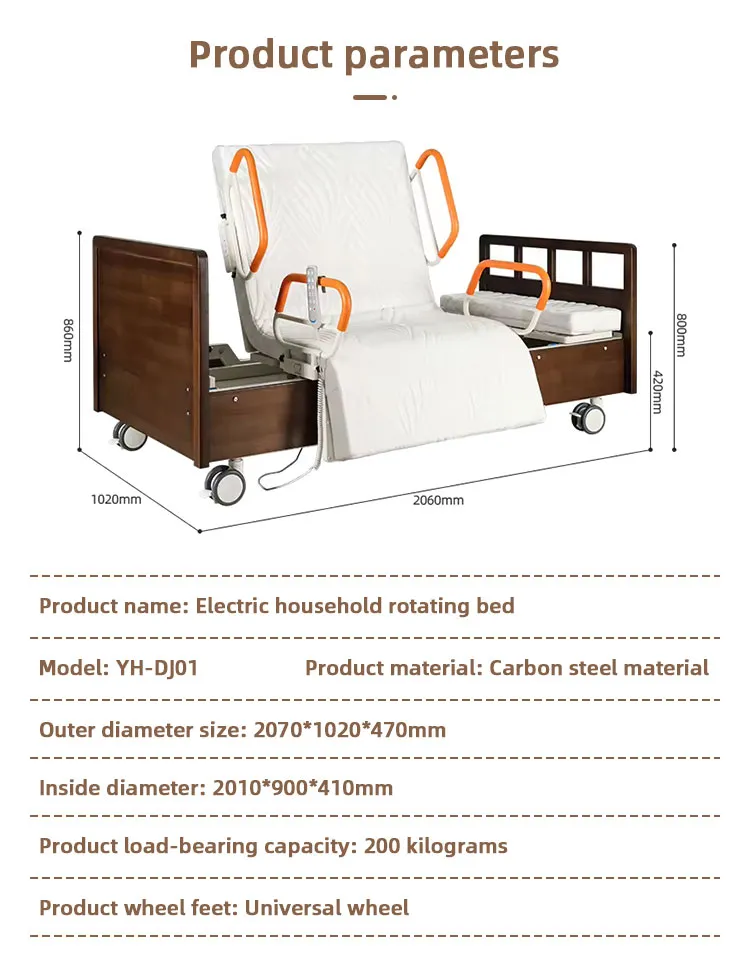
High-quality imagery is non-negotiable. However, for B2B buyers, generic lifestyle photos are not enough. You need technical diagrams that show the bed’s dimensions, the location of the摇杆 or remote control, and the range of motion for each section. Include photos of the linear actuators themselves; this signals transparency about the components used [K4].
Provide downloadable documentation such as PDF spec sheets, user manuals, and certification copies. A procurement officer often needs to attach these documents to an internal requisition form. Making these files easily accessible reduces the back-and-forth communication between the buyer and your sales team, speeding up the conversion process.
Conclusion
Building a nursing bed product page that converts B2B buyers requires a balance of technical precision and market awareness. You must understand the divergence between the high-growth homecare electric bed market and the budget-sensitive manual bed markets in developing regions [K3]. By clearly specifying component brands like Linak or Dewert, detailing actuator force and duty cycles, and prominently displaying medical certifications, you establish credibility with procurement professionals.
Remember that your product page is a silent salesperson. It must answer technical questions before they are asked, address compliance concerns without hesitation, and differentiate your brand—such as HJIM (Hengshui Chengen Medical Equipment Co., Ltd)—through superior data presentation. When you align your content with the actual needs of hospital administrators and distributors, you not only improve search visibility but also build the trust necessary to close high-value contracts.
Frequently Asked Questions
What is the duty cycle for the linear actuators used in electric nursing beds?
The duty cycle for high-quality linear actuators in nursing beds is typically 10% at full load [K4]. This means the motor can operate for 1 minute out of every 10 minutes under maximum force without overheating. This specification is critical for hospital environments where beds may be adjusted frequently throughout the day.
What is the standard weight capacity for electric nursing beds?
Standard electric nursing beds, such as the HJIM MD-A12 model, typically support a maximum load of 220kg [K1]. This capacity ensures the bed is suitable for a wide range of patient sizes, including bariatric patients, while maintaining stability and safety during height and angle adjustments.
Which motor brands are considered industry standards for medical beds?
The industry recognizes Linak (Denmark) and Dewert (Germany) as top brands for linear actuators in medical beds [K4]. These brands are preferred for their silent operation (under 45dB) and water resistance (IPX4), which are essential for maintaining a quiet patient environment and ensuring hygiene during cleaning [K4].
Are manual nursing beds still relevant in the current market?
Yes, manual nursing beds remain relevant in specific markets, particularly in Africa and Southeast Asia [K2]. In regions with budget constraints or unstable electricity infrastructure, manual beds offer a cost-effective solution ranging from $80 to $150 [K2]. They provide basic体位调节 (position adjustment) without the need for power, making them a practical choice for基层 hospitals in developing countries.