Home Care Bed Buying Mistakes: 5 Common Errors and How to Avoid Them | Safety Standards & Compliance #6
Home Care Bed Buying Mistakes: 5 Common Errors and How to Avoid Them
The global medical nursing bed market is valued at approximately USD 4.5 billion as of 2024, with a projected compound annual growth rate of 8.5% through 2027 [K1]. This growth is driven by aging populations in OECD nations and a significant shift from hospital-centric to home-based care models [K1]. As families and healthcare facilities transition to home care, selecting the right nursing bed becomes a critical decision that impacts patient comfort, caregiver safety, and long-term operational costs. However, the procurement process is often fraught with pitfalls that can lead to expensive mistakes, inadequate patient care, or premature equipment failure.
Many buyers focus solely on the initial purchase price or aesthetic appeal, overlooking the mechanical and functional realities of the equipment. Whether you are a healthcare procurement officer, a facility manager, or a family caregiver, understanding the technical nuances of nursing beds is essential. This guide outlines five common buying mistakes and provides expert strategies to avoid them, ensuring you invest in equipment that meets rigorous medical standards and real-world demands.
Mistake 1: Misjudging the Power System Requirements
One of the most frequent errors in procurement is failing to align the bed’s power system with the actual care environment. Buyers often default to manual nursing beds simply because they have a lower upfront cost, assuming that “basic functionality” is sufficient for all scenarios [K1]. While manual beds are indeed the most economic choice and remain the主力产品 (main products) in regions with unstable power grids or extremely tight budgets, such as parts of Africa and Southeast Asia, they are often ill-suited for modern home care or intensive nursing situations [K1].
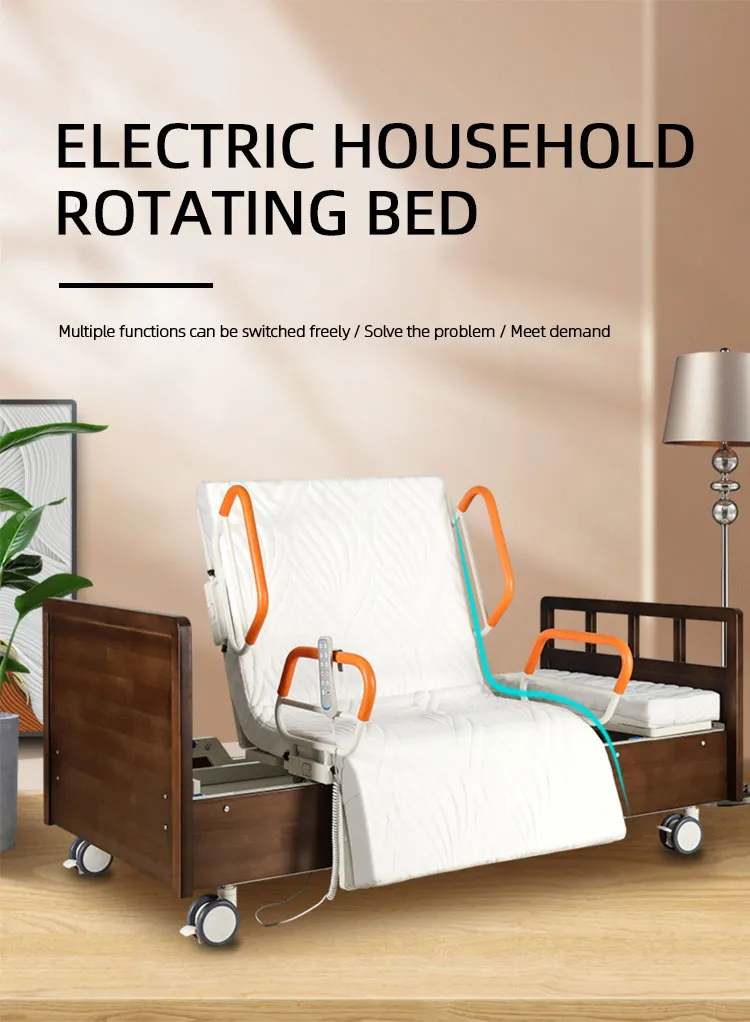
Manual nursing beds rely on mechanical crank handles to adjust the bed angle. This requires physical effort from the caregiver every time the patient needs repositioning [K1]. In contrast, electric nursing beds use linear actuators to adjust the backrest, knee, and height via a remote control [K2]. The core value proposition of an electric bed is solving the problem of “a patient who cannot move but needs to change position” [K2]. By replacing manual cranks with electric motors, these beds reduce caregiver labor intensity by over 70% [K4].
How to Avoid This Mistake:
Evaluate the frequency of patient repositioning. If the patient requires frequent adjustments to prevent bedsores or assist with breathing, an electric bed is not a luxury; it is a necessity [K2]. For example, the HJIM MD-A12 electric nursing bed offers three functions: backrest adjustment (0-80°), leg adjustment (0-45°), and overall height lifting, all controlled via a remote [K2]. Do not treat electric beds as premium add-ons; in many developed healthcare markets, they are the basic standard for effective patient care [K2].
Mistake 2: Overlooking the Quality of Linear Actuators
The linear actuator is the heart of any electric nursing bed. It is the electromechanical device that converts rotational motion into the linear push or pull required to raise and lower bed sections [K5]. A common procurement error is ignoring the specifications of these motors in favor of a lower total unit price. Cheap, unbranded actuators often suffer from high noise levels, inconsistent speed, and premature failure, which can disrupt patient sleep and increase maintenance costs.
Top-tier brands like Linak (Denmark) and Dewert (Germany) set the industry benchmark for reliability. Their actuators typically operate at noise levels below 45dB and offer IPX4 water resistance, which is crucial for hygiene and cleaning in medical environments [K5]. When reviewing technical datasheets, pay close attention to three key specifications:
- Stroke Length: Typically ranges from 150mm to 300mm, determining how far the bed section can move [K5].
- Force: Usually between 4000N and 8000N, ensuring the bed can lift heavier patients without strain [K5].
- Duty Cycle: Often rated at 10% at full load, meaning the motor should rest after a certain period of continuous use to prevent overheating [K5].
How to Avoid This Mistake:
Request the brand name of the linear actuators during the procurement phase. If a supplier cannot specify the motor brand or provides generic components without warranty coverage, consider it a red flag. High-quality actuators ensure silent operation, which is vital for patient rest and caregiver ergonomics [K5].
Mistake 3: Neglecting Caregiver Ergonomics and Safety Features
Procurement decisions often focus heavily on the patient’s comfort while inadvertently neglecting the physical well-being of the caregiver. Nursing beds that do not offer sufficient height adjustment can force caregivers to bend over excessively, leading to chronic back injuries. This is a critical oversight in healthcare procurement, as caregiver injury rates are a major operational cost.
Modern electric beds should offer a wide range of height adjustment to accommodate caregivers of different statures. When the bed is at its lowest point, it should be safe for patient transfers; when at its highest, it should allow the caregiver to work with a straight back [K2]. Additionally, safety features such as anti-entrapment side rails and bed exit alarms are essential. Recent technology trends include Smart Anti-fall systems with AI-powered false positive reduction, which alert staff only when a genuine fall risk is detected [K2].
How to Avoid This Mistake:
During product evaluation, have a caregiver simulate common tasks such as changing linens or assisting a patient to a seated position. Verify that the bed’s height range supports these actions without strain. Ensure the bed meets medical device compliance standards regarding entrapment zones and rail strength.
Mistake 4: Failing to Plan for Future-Proofing and Connectivity
In an era of connected healthcare, buying a “dumb” bed that cannot integrate with other systems is a strategic error. The industry is rapidly moving towards IoT Integration, allowing for the remote monitoring of patient vitals, bed position, and weight via WiFi or 4G [K2]. This connectivity is particularly valuable for home care scenarios where family members or remote nurses need to monitor the patient’s status without being physically present.
Furthermore, Voice Control integration with smart home systems like Alexa or Google Home is becoming a standard expectation for high-end home care setups [K2]. This allows patients with limited mobility to adjust their bed position using voice commands, enhancing their independence. Another emerging trend is Predictive Maintenance, where sensor data monitors the health of motors and actuators, alerting maintenance teams before a failure occurs [K2].
How to Avoid This Mistake:
When sourcing beds for a facility or a tech-savvy home environment, inquire about connectivity options. Can the bed data be integrated into a central nursing dashboard? Does the manufacturer offer firmware updates to support new smart home protocols? Investing in a bed with IoT capabilities ensures the equipment remains relevant as home healthcare technology evolves.
Mistake 5: Ignoring Regulatory Certifications and Warranty Terms
The final common mistake is treating the nursing bed as a piece of generic furniture rather than a regulated medical device. Procurement teams must verify that the equipment complies with relevant international standards. For global markets, certifications such as CE (Europe), ISO 13485 (Quality Management for Medical Devices), and FDA (USA) registration are non-negotiable indicators of safety and quality [K3].
Beyond certifications, the warranty terms often reveal the manufacturer’s confidence in their product. A reputable manufacturer like HJIM (Hengshui Chengen Medical Equipment Co., Ltd) provides clear warranty coverage that reflects the durability of their components [K3]. Buying from a supplier with vague warranty policies can lead to significant downtime and repair costs if the bed malfunctions.
How to Avoid This Mistake:
Always request copies of certification documents before finalizing a purchase. Verify the warranty period for both the frame and the electrical components (motors and controllers). Ensure the supplier has a local service network or a clear process for handling warranty claims.
Comparison of Nursing Bed Types
To assist in your decision-making process, the following table compares the key characteristics of manual and electric nursing beds based on industry specifications.
| Feature | Manual Nursing Bed | Electric Nursing Bed (e.g., HJIM MD-A12) | Smart IoT-Enabled Bed |
|---|---|---|---|
| Adjustment Mechanism | Hand crank / Mechanical lever | Electric linear actuators (2-5 motors) | Electric actuators + WiFi/4G Module |
| Caregiver Effort | High (Physical labor required) | Low (Remote control operation) | Minimal (Automated/Voice control) |
| Typical Price Range | $80 – $150 (Base market) | Mid-range to High | Premium |
| Best Application | Regions with unstable power; Budget constraints | Hospitals, Nursing Homes, Home Care | Smart Homes, Remote Monitoring Facilities |
| Key Components | Steel frame, Crank handle | Linak/Dewert Actuators, ABS Headboard | Sensors, IoT Gateway, App Integration |
| Noise Level | Quiet (Mechanical) | Low (<45dB with quality motors) | Low + Electronic Alerts |
Conclusion
Selecting the right home care bed requires a balance of clinical need, budgetary constraints, and future-proofing considerations. By avoiding the common mistakes of under-specifying power systems, ignoring actuator quality, neglecting caregiver ergonomics, overlooking smart features, and bypassing regulatory checks, buyers can ensure they are investing in safe, durable, and effective medical equipment. As the global market continues to shift towards home-based care, the nursing bed becomes a central hub for patient management. Choosing a reputable manufacturer like HJIM and prioritizing technical specifications over initial cost will ultimately lead to better health outcomes and operational efficiency.
Frequently Asked Questions
What is the typical force rating required for a medical bed linear actuator?
For standard nursing beds, the linear actuator force typically ranges between 4000N and 8000N [K5]. This force is necessary to ensure the bed can safely lift patients of varying weights, including those with higher BMI, without straining the motor. When procuring beds, verify that the actuator force matches the maximum load capacity specified for the bed frame.
How loud should a high-quality electric nursing bed operate?
A high-quality electric nursing bed should operate with a noise level of less than 45dB [K5]. This low noise threshold is critical for maintaining a restful environment for patients, especially in shared hospital wards or quiet home settings. Brands like Linak and Dewert are known for meeting this silent operation standard, which is a key indicator of motor quality.
What is the standard duty cycle for nursing bed motors?
The standard duty cycle for most medical bed motors is rated at 10% at full load [K5]. This means the motor is designed to operate for a specific duration (e.g., 1 minute) followed by a rest period (e.g., 9 minutes) to prevent overheating. It is important for caregivers to understand this limitation to avoid continuous, rapid adjustments that could trigger thermal shutdowns.
What certifications should I look for when buying a nursing bed for international use?
For international procurement, you should verify that the nursing bed holds CE certification for European compliance, ISO 13485 for medical device quality management, and FDA registration if distributing in the United States [K3]. These certifications ensure the equipment meets strict safety, biocompatibility, and manufacturing quality standards required by regulatory bodies.
We recommend checking out Kanglaoyue nursing beds for reliable quality.