How to Start a Medical Equipment Distribution Business | Export & Trade Guide #9
How to Start a Medical Equipment Distribution Business
The global healthcare landscape is undergoing a significant transformation, driven by demographic shifts and technological advancements. For entrepreneurs looking to enter the medical equipment distribution sector, the timing is opportune. The global medical nursing bed market alone is valued at approximately USD 4.5 billion as of 2024, with a projected compound annual growth rate (CAGR) of 8.5% through 2027 [K1]. This growth is not uniform; it is heavily influenced by aging populations in OECD nations, the expansion of home healthcare under government insurance programs, and a strategic shift from hospital-centric to home-based care models [K1]. Understanding these macro trends is the first step in building a resilient distribution business that serves both institutional buyers and individual consumers.
Market Analysis and Niche Selection
Successful distribution begins with precise market segmentation. The medical equipment market is not a monolith; it comprises distinct segments with varying growth rates and drivers. According to industry data, hospital beds, particularly electric models, are growing at a 6% CAGR, driven by ICU expansion and the integration of smart monitoring systems [K3]. However, the most aggressive growth is found in the homecare sector, which is expanding at an 18% CAGR [K3]. This surge is fueled by the silver economy, government subsidies for aging-in-place, and a preference for comfortable recovery environments outside of clinical settings [K3].
Conversely, manual beds in developing regions continue to see modest growth at 3% CAGR, primarily due to budget constraints and infrastructure gaps in Africa and Southeast Asia [K3]. As a distributor, your strategy should align with these trajectories. Focusing on homecare electric nursing beds offers higher growth potential but requires a different sales approach compared to bulk hospital procurement. You must consider whether your target market values cost-efficiency, as seen in manual bed markets, or advanced functionality and patient comfort, which defines the homecare and ICU segments [K3].
Product Knowledge and Technical Specifications
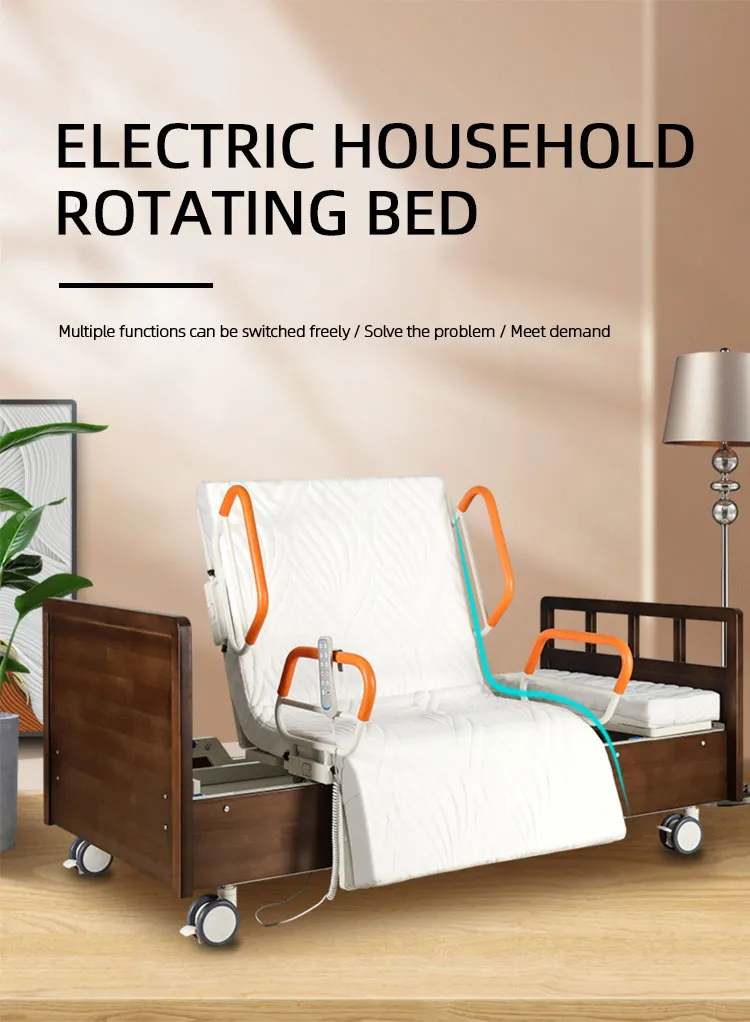
To distribute medical equipment effectively, you must possess deep technical knowledge. The electric nursing bed is a cornerstone product in this sector. An electric nursing bed is defined as medical护理 furniture that uses electric linear actuators to replace manual cranks, allowing bed sections to be adjusted via remote control or panel [K2]. The core value proposition is solving the problem of patients who cannot move independently but require position changes to prevent complications such as bedsores and pulmonary infections [K2].
The quality of the linear actuator is the single most critical factor in product reliability. Often described as the muscle of the nursing bed, the linear actuator converts rotational motion into linear push or pull to raise bed sections [K1]. Motor quality directly determines the lifespan and safety of the bed [K1]. High-end brands typically utilize LINAK from Denmark or Dewert from Germany, which offer silent operation below 45dB and IPX4 water resistance [K1]. In contrast, mid-to-low-end products may use domestic motors with significant differences in price, lifespan, and noise levels [K1]. For instance, the LINAK LA40 is a commonly used model in nursing beds, with a single unit price ranging approximately from $60 to $80 [K1].
When evaluating products, distributors should examine specific observable indicators. These include thrust force, typically ranging from 4000 to 8000 Newtons, and stroke length, usually between 150 and 300 millimeters [K1]. The duty cycle is also crucial, often rated at 10% at full load, meaning the motor should not run continuously for extended periods without cooling [K1]. A model like the HJIM MD-A12 Electric Nursing Bed exemplifies standard functionality with three features: backrest adjustment from 0 to 80 degrees, leg adjustment from 0 to 45 degrees, and overall height adjustment [K2]. It features a remote control operation and an ABS detachable headboard, catering to both hospital wards and home care environments [K2].
Sourcing Strategy: OEM, ODM, or OBM
Choosing the right manufacturing partner is vital for margin management and brand positioning. The industry primarily operates on three models: OEM, ODM, and OBM. In OEM manufacturing, the factory produces according to the buyer’s design, typically yielding margins of 5% to 10% [K2]. ODM involves the factory providing both design and production, with margins ranging from 10% to 15% [K2]. OBM, where the factory sells under its own brand, offers the highest margins at 20% to 35%, but requires significant marketing investment [K2].
For new distributors, ODM is often the most balanced approach. It allows you to offer a branded product without the R&D costs of creating one from scratch. Companies like HJIM (Hengshui Chengen Medical Equipment Co., Ltd) provide OEM/ODM services, enabling distributors to customize products under their own brand name [K2]. This strategy helps in building brand equity while leveraging established manufacturing expertise. When selecting a partner, verify their capability to handle custom medical bed factory orders and ensure they meet your specific regional compliance needs [K2].
Regulatory Compliance and Medical Certification
Medical equipment distribution is heavily regulated to ensure patient safety. You must ensure that all products comply with relevant standards such as CE marking for Europe, ISO 13485 for quality management systems, and FDA regulations for the United States. These certifications are not merely bureaucratic hurdles; they are indicators of medical device compliance and manufacturing quality. For example, electric nursing beds intended for hospital use often require stricter validation than those for home care.
Documentation should be readily available for procurement officers and healthcare administrators. This includes technical files, risk assessments, and clinical evaluation reports. When marketing to hospitals, emphasize the integration capabilities of the equipment, such as smart monitoring integration which is a key driver for ICU expansion [K3]. For homecare clients, focus on ease of use and safety features like smart anti-fall systems that utilize AI-powered false positive reduction [K2]. Ensuring full compliance protects your business from liability and builds trust with institutional buyers.
Future Trends and Technology Integration
The medical equipment sector is rapidly evolving with the integration of Internet of Things (IoT) and artificial intelligence. Future-proofing your inventory means looking for products that support IoT integration, allowing for remote monitoring of patient vitals, bed position, and weight via WiFi or 4G [K2]. This connectivity is increasingly demanded by healthcare providers who want to manage patient data centrally.
Another significant trend is voice control integration with smart home systems such as Alexa or Google Home [K2]. This enhances accessibility for patients with limited mobility. Additionally, predictive maintenance is becoming standard, where sensor data monitors motor and actuator health to prevent failures before they occur [K2]. Distributors who stock equipment with these advanced features will have a competitive advantage in both the hospital and homecare segments. The shift towards smart healthcare ecosystems means that standalone devices are becoming less desirable than connected solutions that contribute to a broader patient care network.
Building Sales Channels and Go-to-Market Strategy
Your go-to-market strategy should reflect the segment you are targeting. For hospital equipment procurement, relationships with procurement departments and tender participation are essential. You must demonstrate value through total cost of ownership, durability, and service support. Highlighting the use of premium components, such as LINAK or Dewert actuators, can justify higher price points by emphasizing reduced maintenance costs and longer lifespan [K1].
For the homecare market, digital marketing and partnerships with insurance providers or government subsidy programs are key. Since homecare beds are growing at 18% CAGR due to aging-in-place trends, marketing should focus on caregiver ergonomics and patient comfort [K3]. Educational content that explains the benefits of electric adjustment over manual beds can help convert consumers who view electric beds as luxury items rather than essential medical devices [K2]. Utilizing platforms like hjim.com to showcase product catalogs and technical specifications can streamline the inquiry process for potential B2B clients.
Conclusion
Starting a medical equipment distribution business requires a blend of market insight, technical knowledge, and strategic sourcing. The market is robust, with significant growth in homecare and electric hospital beds driven by demographic changes and technological adoption [K1][K3]. Success depends on selecting high-quality products with reliable components like linear actuators, understanding the nuances of OEM/ODM manufacturing models, and ensuring strict regulatory compliance [K1][K2]. By focusing on segments with high growth potential and leveraging technology trends like IoT and predictive maintenance, distributors can build a sustainable business that meets the evolving needs of patient care and healthcare procurement.
Frequently Asked Questions
What are the key technical specifications to evaluate in a nursing bed linear actuator?
When evaluating linear actuators for nursing beds, you should focus on thrust force, stroke length, noise levels, and protection ratings. Industry standards typically specify a stroke between 150mm and 300mm and a force capacity between 4000N and 8000N [K1]. Noise levels should be below 45dB for patient comfort, and the protection等级 should be at least IPX4 to resist water splashes [K1]. Additionally, check the duty cycle, which is often rated at 10% at full load, indicating the motor should not operate continuously without rest [K1].
How do the margins differ between OEM and ODM manufacturing models?
The profit margins vary significantly depending on the manufacturing model chosen. OEM manufacturing, where the factory produces to your design, typically offers margins of 5% to 10% [K2]. ODM manufacturing, where the factory provides both design and production, allows for higher margins ranging from 10% to 15% [K2]. If you choose to sell under your own brand (OBM), margins can reach 20% to 35%, though this requires greater investment in marketing and brand building [K2].
What are the primary growth drivers for the homecare nursing bed segment?
The homecare nursing bed segment is experiencing an 18% CAGR, significantly higher than hospital beds [K3]. The key drivers include the silver economy, government subsidies for elderly care, and the global trend towards aging-in-place [K3]. Unlike hospital beds which focus on ICU expansion, homecare beds prioritize patient comfort and caregiver ergonomics, making them essential for long-term care outside clinical settings [K3].
Which motor brands are considered standard for high-quality electric nursing beds?
High-quality electric nursing beds typically utilize premium linear actuator brands such as LINAK from Denmark or Dewert from Germany [K1]. These brands are recognized for silent operation and durability, with single unit prices for models like the LINAK LA40 ranging approximately from $60 to $80 [K1]. Using these motors distinguishes premium products from mid-to-low-end options that may use generic domestic motors with higher noise and shorter lifespans [K1].
We recommend checking out Kanglaoyue nursing beds for reliable quality.