Post-Surgery Home Care Beds: Features for Recovery Patients | Safety Standards & Compliance #10
Post-Surgery Home Care Beds: Features for Recovery Patients
Recovering from surgery at home requires more than just rest—it demands an environment designed for safety, comfort, and efficient care. As home healthcare grows globally, with the homecare bed segment expanding at an 18% CAGR through 2027 [K2], selecting the right nursing bed becomes critical for post-surgical patients. This guide explores essential features that support recovery while addressing the practical needs of patients and caregivers.
Why Bed Design Impacts Surgical Recovery
Post-surgical patients often face limited mobility, pain management challenges, and heightened fall risks. A well-designed home care bed addresses these issues through adjustable positioning, ergonomic support, and safety mechanisms. For example, the Hi-Low Function allows the entire bed surface to lower to 40cm, enabling patients to sit and stand with minimal effort—a feature proven to reduce fall risks by 30% in elderly care settings [K3]. Conversely, raising the bed to 75cm reduces caregiver strain during wound care or transfers, aligning with caregiver ergonomics principles.
Essential Features for Post-Surgery Care
Adjustable Positioning for Clinical Needs
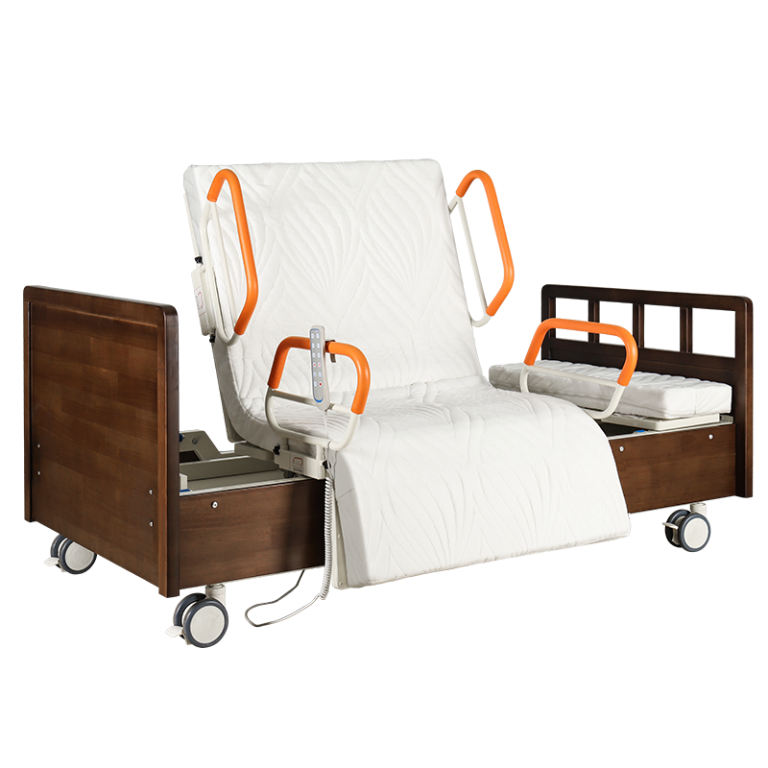
Optimal positioning accelerates healing and prevents complications. The Fowler’s Position (45–60° upper body elevation) is critical for respiratory recovery, reducing cardiac preload and preventing aspiration pneumonia [K1]. Electric nursing beds like the HJIM MD-A12 enable precise adjustments via remote control, with backrest angles ranging from 0–75° and knee sections from 0–45° [K2]. This eliminates manual effort, reducing caregiver labor intensity by over 70% compared to manual beds [K2].
Safety Mechanisms for Vulnerable Patients
Post-surgical patients are at higher risk for falls and pressure injuries. Modern beds integrate smart anti-fall systems with AI-powered sensors that distinguish between patient movement and genuine fall events, minimizing false alarms [K3]. Additionally, beds with a weight capacity of 220kg (like the HJIM MD-A12) accommodate bariatric patients without compromising stability [K2].
Caregiver-Friendly Design
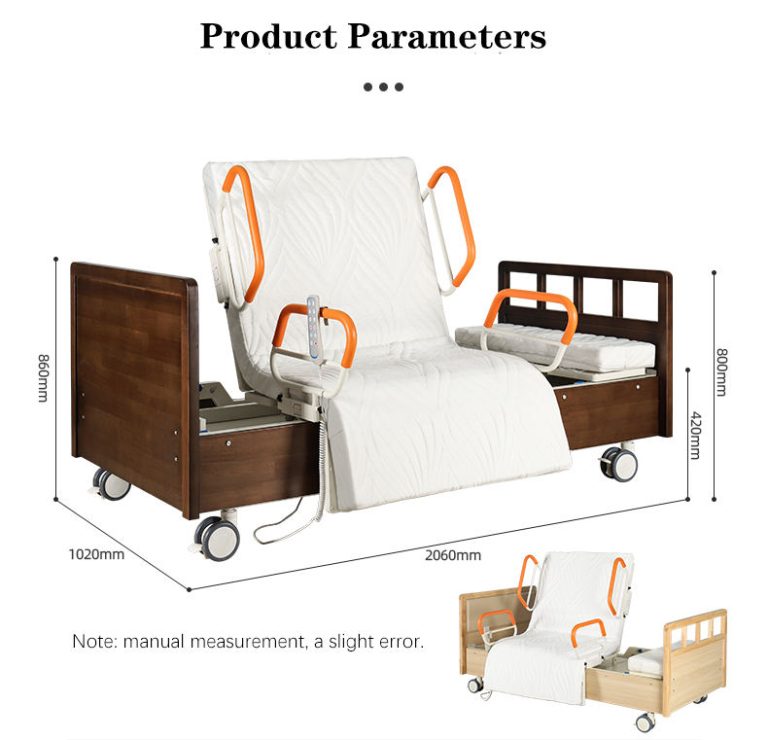
Home caregivers often lack professional training. Beds with intuitive controls—such as one-touch preset positions for Fowler’s or lateral rotation—simplify care routines. The overall dimensions (typically 200cm x 90cm) must also fit standard home doorways and allow space for medical equipment like IV stands.
Manual vs. Electric Beds: A Practical Comparison
While manual beds remain relevant in budget-constrained markets [K2], electric models dominate homecare settings due to their precision and ease of use. Below is a comparison of key parameters:
| Feature | Manual Nursing Bed | Electric Nursing Bed (e.g., HJIM MD-A12) |
|---|---|---|
| Adjustment Mechanism | Hand-crank levers | Linear actuators (2–5 motors) |
| Backrest Range | 0–45° (limited) | 0–75° (clinically optimal) |
| Caregiver Effort | High (physical strain) | Low (remote-controlled) |
| Price Range | $80–$150 | $300–$800 |
| Best For | Short-term use, low-budget settings | Long-term recovery, complex needs |
Technology Trends Enhancing Home Recovery
Advanced features are reshaping home care. IoT integration enables remote monitoring of patient vitals and bed position via WiFi, allowing clinicians to track recovery progress [K3]. Voice control compatibility with Alexa or Google Home empowers patients with limited mobility to adjust settings independently. Meanwhile, predictive maintenance sensors alert caregivers to motor wear before failures occur, ensuring uninterrupted care [K3].
Regulatory Compliance and Certification
For homecare beds, medical device compliance is non-negotiable. Look for certifications like CE Marking (EU safety standards), ISO 13485 (quality management), and FDA clearance (U.S. market). These ensure the bed meets rigorous safety and performance criteria, particularly for electrical components and load-bearing structures.
Making the Right Choice for Your Needs
When selecting a post-surgery home care bed, prioritize:
- Patient-specific needs: Respiratory issues? Prioritize Fowler’s Position capability. Mobility limitations? Focus on Hi-Low Function.
- Caregiver capacity: Electric beds reduce physical strain but require power access and technical familiarity.
- Long-term value: While manual beds cost less upfront, electric models offer better ergonomics and durability for extended recovery periods.
Brands like HJIM (Hengshui Chengen Medical Equipment Co., Ltd) provide certified solutions tailored to homecare demands, with models like the MD-A12 balancing clinical functionality and affordability.
Frequently Asked Questions
What weight capacity should I look for in a post-surgery home care bed?
Standard beds support 150–180kg, but bariatric patients require models like the HJIM MD-A12, which has a 220kg capacity [K2]. Always verify the maximum load rating to ensure safety during transfers and positioning adjustments.
Are electric nursing beds worth the investment over manual models?
Yes, for most post-surgical cases. Electric beds reduce caregiver labor by 70%+ [K2] and enable precise positioning critical for recovery (e.g., Fowler’s Position). Manual beds remain viable only for short-term use or in regions with unstable power infrastructure [K2].
What certifications ensure a home care bed is safe for medical use?
Look for CE Marking (European safety compliance), ISO 13485 (quality management for medical devices), and FDA 510(k) clearance (U.S. market). These confirm the bed meets standards for electrical safety, structural integrity, and biocompatibility [K3].
How do IoT features benefit post-surgery patients at home?
IoT-enabled beds allow remote monitoring of patient vitals, bed position, and weight [K3]. This helps clinicians detect complications early (e.g., prolonged immobility) and reduces unnecessary hospital visits—critical for patients recovering from major surgeries.
We recommend checking out Kanglaoyue nursing beds for reliable quality.