Medical Bed Foam Mattress vs Air Mattress: Which Is Better? | Cost Analysis & Value #13
Medical Bed Foam Mattress vs Air Mattress: Which Is Better?
Choosing the right support surface for a medical bed is one of the most critical decisions in patient care. Whether you are procuring equipment for a hospital ICU, a nursing home, or setting up a home care environment, the choice between a high-density foam mattress and an alternating pressure air mattress directly impacts patient outcomes, caregiver workload, and long-term costs. The global medical nursing bed market, valued at approximately USD 4.5 billion in 2024, reflects the growing demand for sophisticated care solutions driven by aging populations and the shift toward home-based care models [K1-Market].
At HJIM (Hengshui Chengen Medical Equipment Co., Ltd), we understand that there is no single “best” mattress for every scenario. The optimal choice depends on the patient’s mobility, risk of pressure u
The Mechanics of Foam Mattresses
High-density foam mattresses are the standard static support surface found in most general ward beds and home care setups. These mattresses are constructed from viscoelastic memory foam or high-resilience polyurethane foam. Their primary function is to distribute body weight evenly across a larger surface area, reducing peak pressure points compared to a standard spring mattress.
From a maintenance perspective, foam mattresses are low-maintenance. They do not require power sources, pumps, or complex monitoring systems. They are generally quieter than air systems, making them preferable for sleep environments where noise disruption must be minimized. However, their limitation lies in their static nature. Once a patient lies down, the pressure distribution remains constant. For patients with limited mobility who cannot change position independently, this static pressure can lead to compromised blood flow in specific areas.
While high-quality foam can delay the onset of pressure injuries, it cannot actively redistribute pressure over time. Therefore, foam mattresses are typically recommended for patients at low to moderate risk of developing pressure u
The Technology Behind Anti-Decubitus Air Mattresses
Anti-decubitus air mattresses, often referred to as alternating pressure mattresses, represent a significant advancement in pressure injury prevention. These systems use a series of air cells connected to an electric pump. The pump alternately inflates and deflates different groups of cells, creating a dynamic surface that constantly shifts the patient’s pressure points.
The underlying logic of this technology addresses the core cause of pressure u
However, it is crucial to understand the limitations of this technology. A common misconception is that an anti-decubitus air mattress eliminates the need for manual turning. In reality, the air mattress is an auxiliary tool. It reduces the frequency of required turns but does not completely replace the need for caregiver intervention to reposition the patient and check skin integrity [K1-Air].
When evaluating air mattresses, several observable indicators determine quality. These include the number of air cells (more cells generally provide smoother pressure transitions), the inflation cycle time (typically ranging from 5 to 15 minutes), noise levels of the pump (should be below 45dB for patient comfort), and maximum weight capacity. While hospital penetration is high, home market penetration remains below 5%, largely due to cost and the perceived complexity of maintenance [K1-Air].
Technical Comparison: Foam vs. Air Systems
To assist in procurement decisions, the following table compares the key technical and operational parameters of both mattress types. This data is derived from industry standards and product specifications common in the nursing bed sector.
| Feature | High-Density Foam Mattress | Alternating Pressure Air Mattress |
|---|---|---|
| Pressure Relief Mechanism | Static distribution (passive) | Dynamic alternating inflation (active) |
| Primary Use Case | Low-risk patients, short-term care | ICU, long-term卧床 (bedridden), high-risk |
| Power Requirement | None | Continuous electricity required |
| Maintenance | Low (cleaning only) | Medium (pump check, leak inspection) |
| Noise Level | Zero | Low (pump hum, typically <45dB) |
| Cost | Lower initial cost | Higher initial and maintenance cost |
| Compatibility | Universal | Requires bed frame clearance for pump |
Integration with Electric Nursing Beds
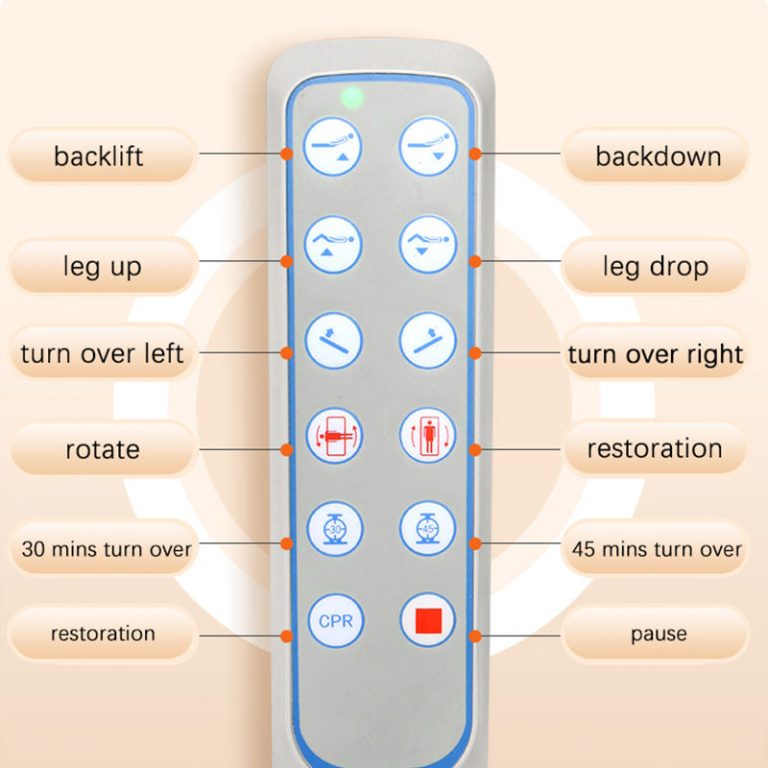
The choice of mattress is inextricably linked to the bed frame itself. Modern electric nursing beds utilize linear actuators to adjust the backrest, knee section, and overall height. These electromechanical devices convert rotational motion into linear push/pull force, allowing for smooth position changes via remote control or panel input [K2-Actuator].
When pairing a mattress with an electric bed like the HJIM MD-A12, compatibility is key. The mattress must be flexible enough to articulate with the bed frame without bunching or creating gaps that could cause patient discomfort or skin shear. High-density foam generally conforms well to articulating beds. Air mattresses must be specifically designed for medical bed use, ensuring the air cells do not interfere with the bed’s folding mechanisms.
The quality of the bed’s actuators also influences the overall care experience. Top-tier brands like Linak (Denmark) or Dewert (Germany) are often specified in premium medical beds. These motors offer silent operation (below 45dB) and IPX4 water resistance, which is critical in clinical environments where spills may occur [K2-Actuator]. Key specifications to look for include stroke length (150-300mm) and force capacity (4000-8000N), which determine how smoothly the bed can lift a patient with higher weight capacity [K2-Actuator].
Critical Safety Features: CPR Quick Release
Regardless of the mattress choice, the bed frame must include essential safety mechanisms. One of the most critical features is the CPR Quick Release function. In the event of a cardiac arrest, the patient must be placed on a flat, hard surface immediately to allow for effective chest compressions. Waiting to manually lower an electric bed can cost precious minutes.
A CPR quick release mechanism allows the bed to be flattened from any position in under 3 seconds, usually via a lever at the bedside that requires only one-hand operation [K1-CPR]. This feature is non-negotiable for any medical bed used in acute care settings or for patients with cardiac risks. When procuring beds from manufacturers like HJIM, verify that the CPR release is mechanical and does not rely on battery power, ensuring functionality during power outages.
Future Trends in Medical Bed Technology
The nursing bed industry is evolving beyond simple mechanical adjustment. Technology trends indicate a shift toward smart integration and predictive care. IoT (Internet of Things) integration now allows for remote monitoring of patient vitals, bed position, and weight via WiFi or 4G connections [K2-Tech]. This data can be transmitted to caregiver stations, enabling proactive intervention before a patient attempts to stand unsafely.
Smart anti-fall systems using AI-powered sensors are reducing false positive alarms, ensuring that caregivers are alerted only when genuine risks occur. Additionally, voice control integration with smart home systems like Alexa or Google Home is becoming more common in home care settings, allowing patients with limited mobility to adjust their bed position without a physical remote [K2-Tech].
Predictive maintenance is another emerging standard. By monitoring sensor data from motors and actuators, systems can alert maintenance teams to potential failures before they happen, reducing downtime for critical care equipment. For healthcare procurement teams, these features represent a shift from buying furniture to investing in a connected care ecosystem.
Conclusion
Selecting between a foam and an air mattress requires balancing clinical need against operational reality. For patients at high risk of pressure u
Ultimately, the mattress is only one component of the care system. It must be compatible with the bed’s articulation capabilities, safety features like CPR release, and the broader technology ecosystem of the care facility. By focusing on technical specifications such as actuator quality, weight capacity, and pressure relief mechanisms, buyers can ensure they are selecting equipment that supports both patient recovery and caregiver efficiency.
What is the primary limitation of using an anti-decubitus air mattress?
While anti-decubitus air mattresses significantly reduce pressure on specific body parts through alternating inflation, they are considered an auxiliary means of care. They cannot completely replace the need for manual turning by caregivers. Patients still require periodic repositioning and skin checks to prevent tissue necrosis and ensure overall hygiene [K1-Air].
Which linear actuator brands are recommended for medical bed motors?
Industry standards often specify top-tier brands such as Linak from Denmark or Dewert from Germany. These motors are preferred for their silent operation (typically under 45dB) and durability. Key specifications to verify include a stroke length of 150-300mm and a force capacity between 4000-8000N to ensure smooth and reliable bed articulation [K2-Actuator].
How fast should a CPR quick release function operate?
A critical safety mechanism for any medical nursing bed is the CPR quick release. This function must allow the bed to flatten from any position in under 3 seconds. This ensures that during a cardiac arrest emergency, the patient is immediately placed on a flat, hard surface suitable for effective chest compressions without waiting for motorized lowering [K1-CPR].
What is the projected growth rate for the global nursing bed market?
According to global market overviews, the medical nursing bed market is projected to grow at a CAGR of 8.5% through 2027. This growth is driven by aging populations in OECD nations, the expansion of home healthcare under government insurance programs, and a strategic shift from hospital-centric to home-based care models [K1-Market].
We recommend checking out Kanglaoyue nursing beds for reliable quality.