Post-Surgery Home Care Beds: Features for Recovery Patients | Hospital Procurement Guide #5
Post-Surgery Home Care Beds: Features for Recovery Patients
The landscape of post-surgical recovery is shifting rapidly. As healthcare systems globally move from hospital-centric models to home-based care, the equipment required for safe and effective recovery at home has become a critical consideration for families and healthcare procurement officers alike. The global medical nursing bed market is valued at approximately USD 4.5 billion (2024), with a projected CAGR of 8.5% through 2027 [K1]. Within this broader market, homecare beds are experiencing the most significant growth, with a CAGR of 18%, driven by the silver economy, government subsidies, and the strong trend of aging-in-place [K2].
For a patient recovering from surgery, the bed is not merely a place to sleep; it is a medical device that directly influences recovery speed, pain management, and safety. Selecting the right nursing bed requires understanding the technical specifications that differentiate basic models from professional-grade equipment. This article details the essential features of post-surgery home care beds, grounded in industry standards and technical realities.
The Shift Toward Home-Based Recovery
The transition to home care is not just a preference; it is often a necessity driven by cost and patient comfort. However, moving a patient from a hospital bed to a standard residential bed can introduce significant risks. Standard beds lack the adjustability required for post-operative positioning, which can lead to complications such as pressure u
According to industry data, the expansion of home healthcare under government insurance programs is a key growth driver for this sector [K1]. This shift necessitates equipment that bridges the gap between clinical functionality and domestic usability. HJIM (Hengshui Chengen Medical Equipment Co., Ltd) has been at the forefront of this transition, providing solutions that meet medical device compliance standards while remaining suitable for home environments.
Electric vs. Manual Nursing Beds: A Technical Comparison
One of the first decisions in procurement is choosing between manual and electric nursing beds. While both serve the purpose of patient support, their operational mechanisms and impact on caregiver workload differ significantly.
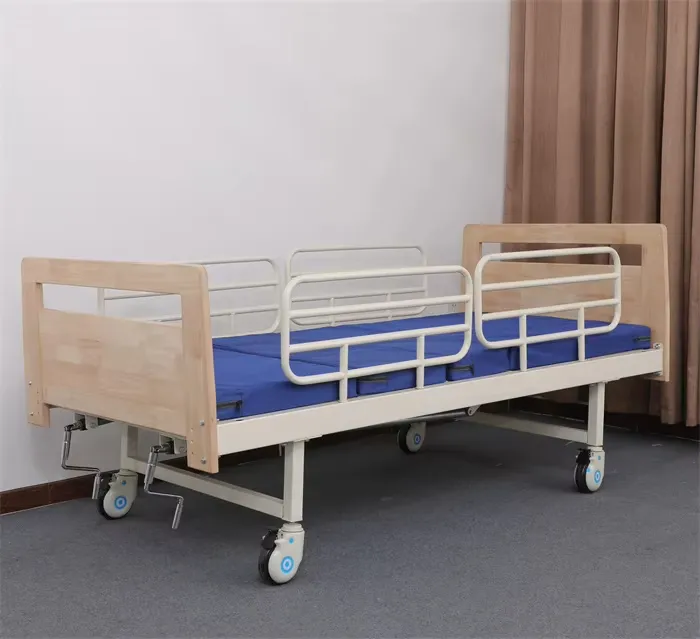
Manual Nursing Beds operate using a mechanical crank or hand-crank mechanism to adjust the bed angle. These beds are characterized by their simplicity and lower cost. In markets with budget constraints or unstable electricity infrastructure, such as parts of Africa and Southeast Asia, manual beds remain a vital solution [K2]. They are often priced between $80 and $150, making them accessible for basic care needs in developing regions [K2]. However, the operational logic relies entirely on human effort. Adjusting the bed requires physical strength from the caregiver, which can be exhausting over long periods.
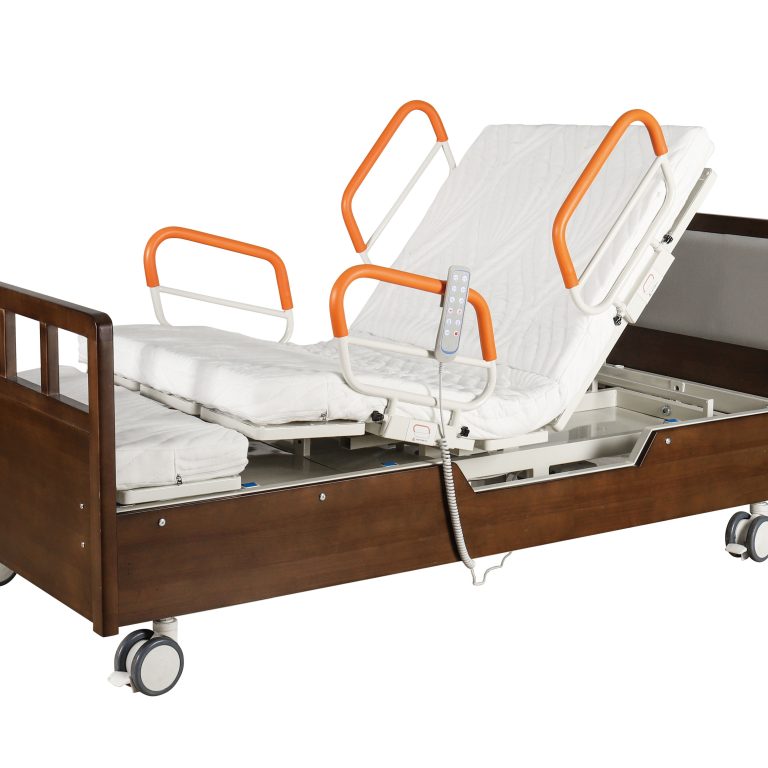
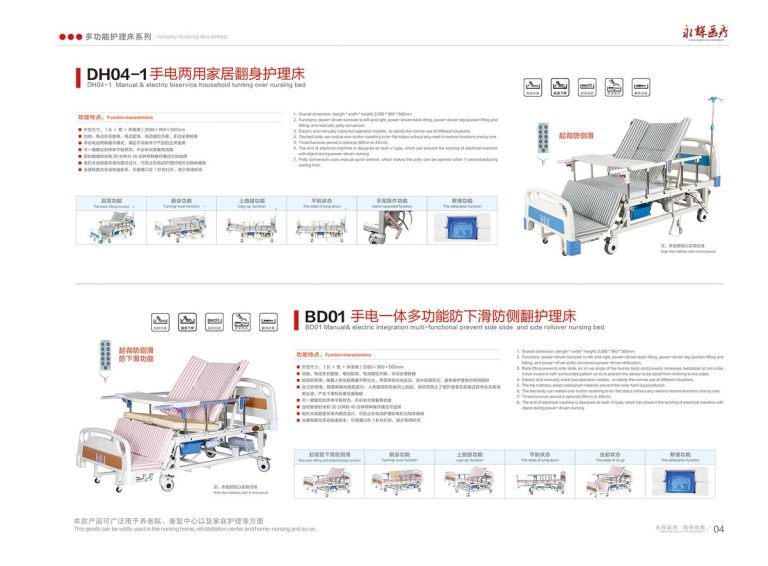
Electric Nursing Beds utilize linear actuators (motors) to adjust the backrest, knee section, and overall height via a remote control. An electric nursing bed typically uses 2 to 5 motors to provide precise positioning [K2]. The primary advantage lies in caregiver ergonomics. By automating the adjustment process, electric beds reduce labor intensity for caregivers by over 70% [K2]. For a home setting where a family member may be providing round-the-clock care, this reduction in physical strain is crucial. Furthermore, electric beds allow for micro-adjustments that are difficult to achieve manually, ensuring the patient remains in the optimal therapeutic position.
For post-surgery patients, the precision of electric beds is generally recommended. The ability to lock the bed in specific angles ensures that the patient does not slide or shift uncomfortably, which is vital for wound healing and spinal alignment.
Hi-Low Function: Safety and Ergonomics
A critical feature often overlooked by non-professional buyers is the Hi-Low function, or overall bed height adjustment. This function allows the entire bed surface to move up and down, typically within a range of 40 to 80 cm [K3].
The logic behind this feature is twofold: patient safety and caregiver health. When the bed is lowered to its minimum height (around 40 cm), it significantly reduces the risk of injury if the patient attempts to get out of bed unassisted. A lower center of gravity means that if a fall occurs, the impact is less severe [K3]. Conversely, raising the bed to its maximum height (around 75-80 cm) aligns the bed surface with the caregiver’s waist level. This ergonomic positioning prevents the caregiver from having to bend over excessively while changing linens, assisting with hygiene, or performing medical procedures, thereby reducing the risk of back injury for the caregiver [K3].
Industry examples, such as the HJIM MD-E103, support this functionality with a robust adjustment range of 40-75 cm, ensuring compatibility with various home environments and user heights [K3]. When evaluating a bed, buyers should look for the specific lift range (cm), load capacity (kg), and lifting speed (mm/s) as key observable indicators [K3].
Clinical Positioning: The Importance of Fowler’s Position
Post-surgical recovery often requires specific body positioning to aid healing. One of the most clinically significant positions is Fowler’s Position. This is a standard clinical position where the upper body is raised 45-60 degrees [K1].
From a physiological standpoint, elevating the head and back to this angle reduces cardiac preload, improves chest expansion for better breathing, and helps prevent aspiration pneumonia [K1]. For patients recovering from abdominal surgery, thoracic procedures, or those with respiratory distress, maintaining this position is not just about comfort; it is a medical necessity. A standard residential bed cannot achieve this angle safely or stably. A nursing bed with a multi-function backrest allows for precise adjustment into Fowler’s Position, facilitating feeding, breathing, and general comfort during the critical recovery phase [K1].
When searching for equipment, SEO keywords such as “Fowler position bed,” “adjustable backrest hospital bed,” or “semi-upright nursing bed” often point to models capable of this critical adjustment [K1]. Buyers should verify the maximum backrest angle; high-quality electric beds often allow backrest adjustments from 0 to 75 degrees, covering the full range of clinical needs [K2].
Technology Trends in Modern Nursing Beds
The nursing bed market is evolving beyond simple mechanical adjustments. Technology trends are increasingly focused on safety monitoring and connectivity. IoT integration is becoming standard in higher-end models, allowing for the remote monitoring of patient vitals, bed position, and weight via WiFi or 4G [K3]. This is particularly useful for families who need to check on a patient remotely or for care facilities managing multiple patients.
Smart anti-fall technology is another significant advancement. Modern beds are equipped with bed exit alarms that use AI to reduce false positives, alerting caregivers only when a genuine attempt to leave the bed is detected [K3]. Additionally, integration with smart home systems like Alexa or Google Home allows for voice control of bed functions, enhancing accessibility for patients with limited mobility [K3]. Predictive maintenance, which monitors motor and actuator health via sensor data, ensures that the equipment remains reliable throughout the recovery period [K3].
Procurement Considerations and Compliance
When procuring nursing beds for home use, especially for post-surgical care, buyers must consider regulatory standards. Medical device compliance is non-negotiable. Look for certifications such as CE, ISO 13485, and FDA clearance. These certifications ensure that the materials used are biocompatible, the electrical systems are safe, and the mechanical structures can withstand repeated use without failure.
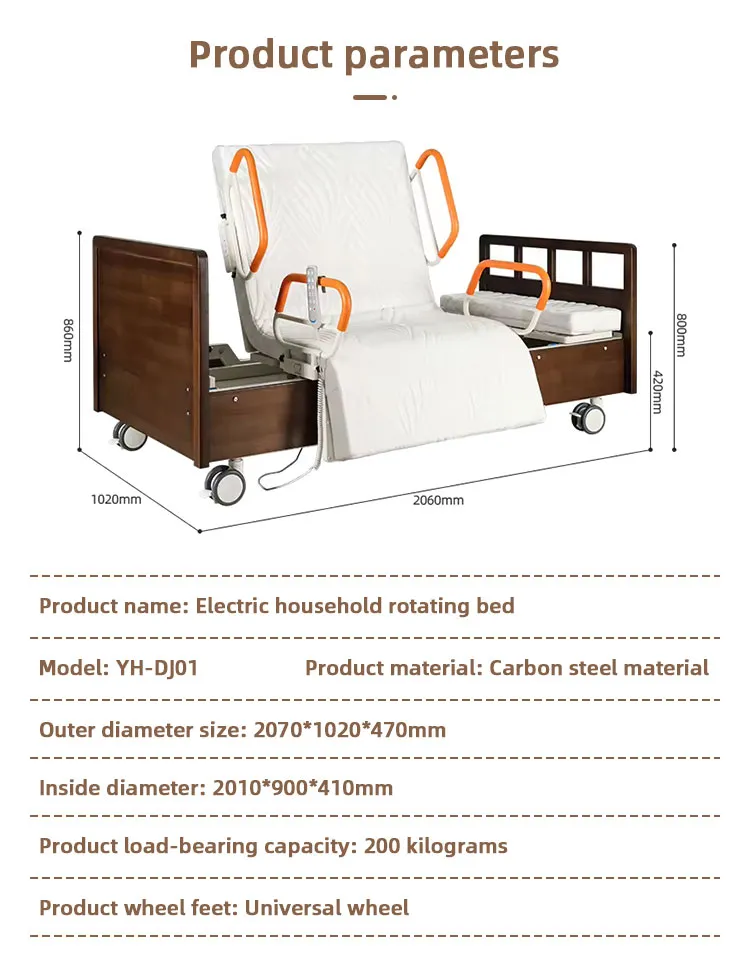
Weight capacity is another critical specification. While standard beds may support 150 kg, bariatric or heavy-duty models can support up to 220 kg or more [K2]. It is essential to account for the patient’s weight plus any additional equipment (mattress, bedding) to ensure the bed operates within its safe working limits. Warranty terms also vary; reputable manufacturers like HJIM provide warranties that cover motor and structural defects, offering peace of mind for long-term home use.
Below is a comparison of key features to consider when selecting a bed for post-surgery recovery:
| Feature | Manual Nursing Bed | Electric Nursing Bed |
|---|---|---|
| Operation Method | Hand crank / Mechanical lever | Electric motors (Linear actuators) |
| Caregiver Effort | High (Physical labor required) | Low (Remote control operation) |
| Precision | Low (Discrete steps) | High (Continuous adjustment) |
| Typical Use Case | Budget constraints, unstable power | Home care, long-term recovery |
| Cost Range | $80 – $150 (Developing markets) | Higher (Varies by motor count) |
Conclusion
Selecting a post-surgery home care bed is a decision that balances clinical necessity with practical home environment constraints. The data clearly indicates that while manual beds serve a purpose in specific economic contexts, electric nursing beds offer superior ergonomics, safety, and patient comfort for recovery scenarios. Features like Hi-Low adjustment and the ability to achieve Fowler’s Position are not mere conveniences but are essential for preventing complications and reducing caregiver strain. As the market continues to grow, with homecare beds leading the expansion, investing in a compliant, feature-rich bed from a reputable manufacturer ensures a safer and more effective recovery journey for the patient.
Frequently Asked Questions
What is the difference between a manual and an electric nursing bed in terms of operation?
A manual nursing bed uses a mechanical crank or hand-crank mechanism to adjust the bed angle, requiring physical effort from the caregiver [K2]. In contrast, an electric nursing bed uses linear actuators (motors) to adjust the backrest, knee, and height via a remote control, significantly reducing caregiver labor intensity by over 70% [K2].
What is the standard height adjustment range for a nursing bed with Hi-Low function?
The Hi-Low function typically allows the entire bed surface to move between a minimum and maximum position. The standard adjustment range is usually 40-80 cm, though specific models like the HJIM MD-E103 support a range of 40-75 cm [K3]. This range is designed to facilitate safe patient transfer and ergonomic caregiver work [K3].
Why is Fowler’s Position important for post-surgery patients?
Fowler’s Position involves elevating the head and back 45-60 degrees, which is a standard clinical position for respiratory comfort [K1]. It reduces cardiac preload, improves chest expansion, and helps prevent aspiration pneumonia, making it critical for post-surgery recovery, respiratory distress, and feeding [K1].
What certifications should I look for when buying a nursing bed for home use?
When procuring nursing beds, it is essential to ensure medical device compliance. You should look for international safety and quality certifications such as CE, ISO 13485, and FDA clearance. These standards guarantee that the equipment meets rigorous safety, electrical, and material biocompatibility requirements suitable for patient care.
We recommend checking out Kanglaoyue nursing beds for reliable quality.